VaughnT
Members
-
Joined
-
Last visited
Everything posted by VaughnT
-
I'd start off real simple and not add those beads to the thing. In Middle Earth, there were quite a few blacksmiths, so it's fair to say that there would have been some variations on that design all around the Prancing Pony. I might even go ahead and do the beads, but do them as an appliqué. A bit of copper grounding wire, for example, would look really nice against the black iron. A collar with some brass wash on it.... Lots of ideas and it looks like a fun project.
-
On 1/4" stock, it's really easy to chuck a short bit into the drill and file away at it until it looks like an acorn. Then all you have to do is weld the short bit to a longer bit to make your miniature curtain rod. Also, just because the main body is from 1/4" round stock doesn't mean that the finials can't be a bit larger and more involved. Obviously, you need to keep the scale of things in mind because you don't want to overwhelm what's being displayed. You could make the entire thing look like a tree branch coming off the main truck and branching a little bit towards the end. Nothing overly busy, but....
-
I'd be hard-pressed to use a Fisher anvil that still had bits of the sticker on it's side!
-
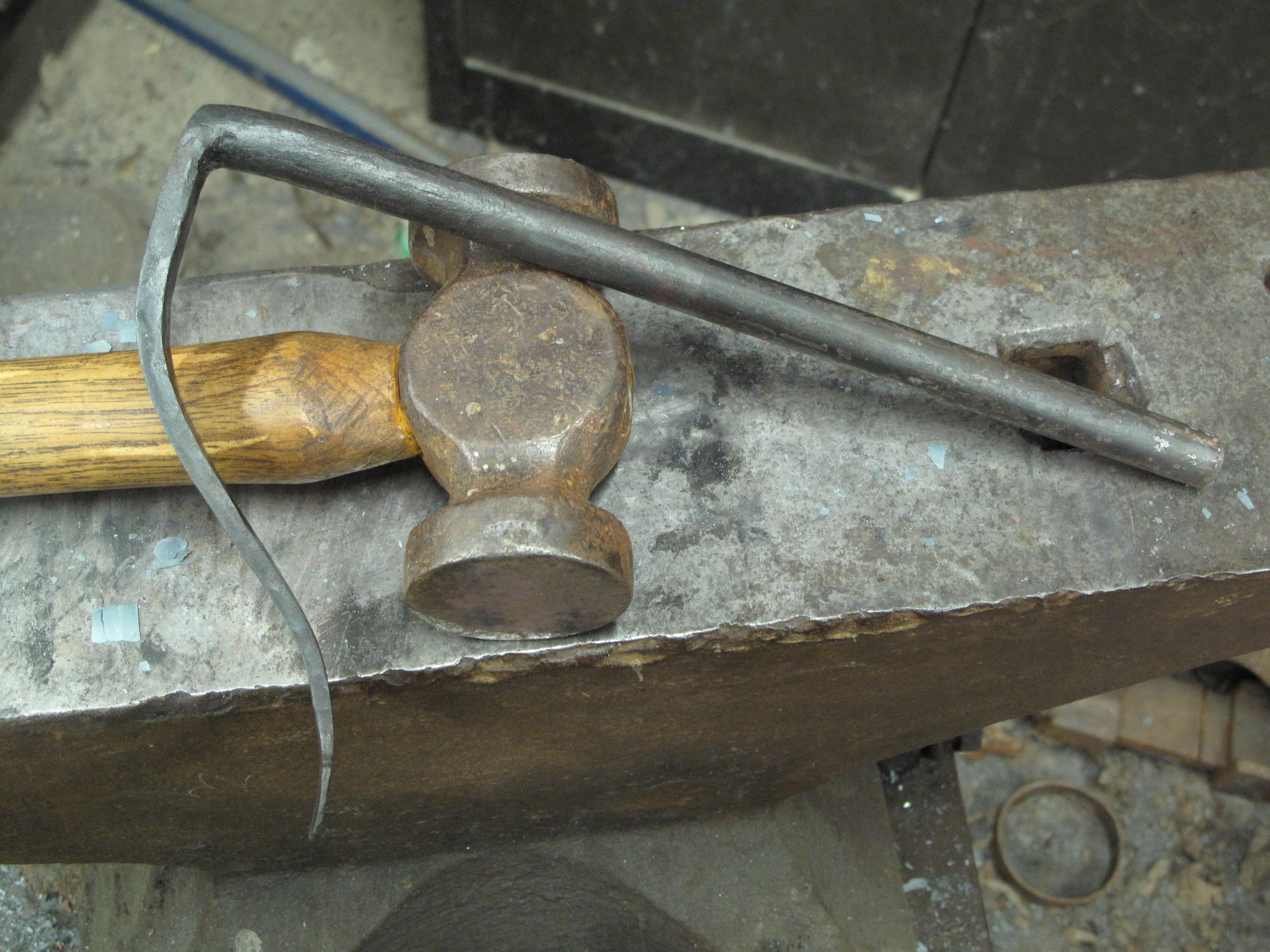
Kevin, that hammer is a mystery. She weighs in at 4lb with the handle. I've only ever seen two others like it; one was a 7lb sledge and the other looked to be around 2lb, and both were only in photos. I have searched the interwebz high and low, but only found those two. The owner of the sledge found it in Kansas, I believe, and wouldn't part with it. The small rounding hammer was for sale on eBay by a fellow in Canada.... and the price went far too high for my tastes. Like you, I really like the lines of the hammer. It's obviously mass-produced, but there are no visible maker's marks on it. The surface is in really good condition, with no pitting or the like, so you'd imagine that someone would put a mark on it. I can only surmise that the hammer is old enough to have been made before logo stamping was SOP. Neither of the other two hammers had markings. It's by far my most favorite hammer. I put it on a cut down sledgehammer handle for comfort and controllability, and she's my main hammer in the shop. If anyone sees a hammer like this at a garage sale or the like, feel free to let me know. I'd love to get a few more of the in different weights just because I can.
-
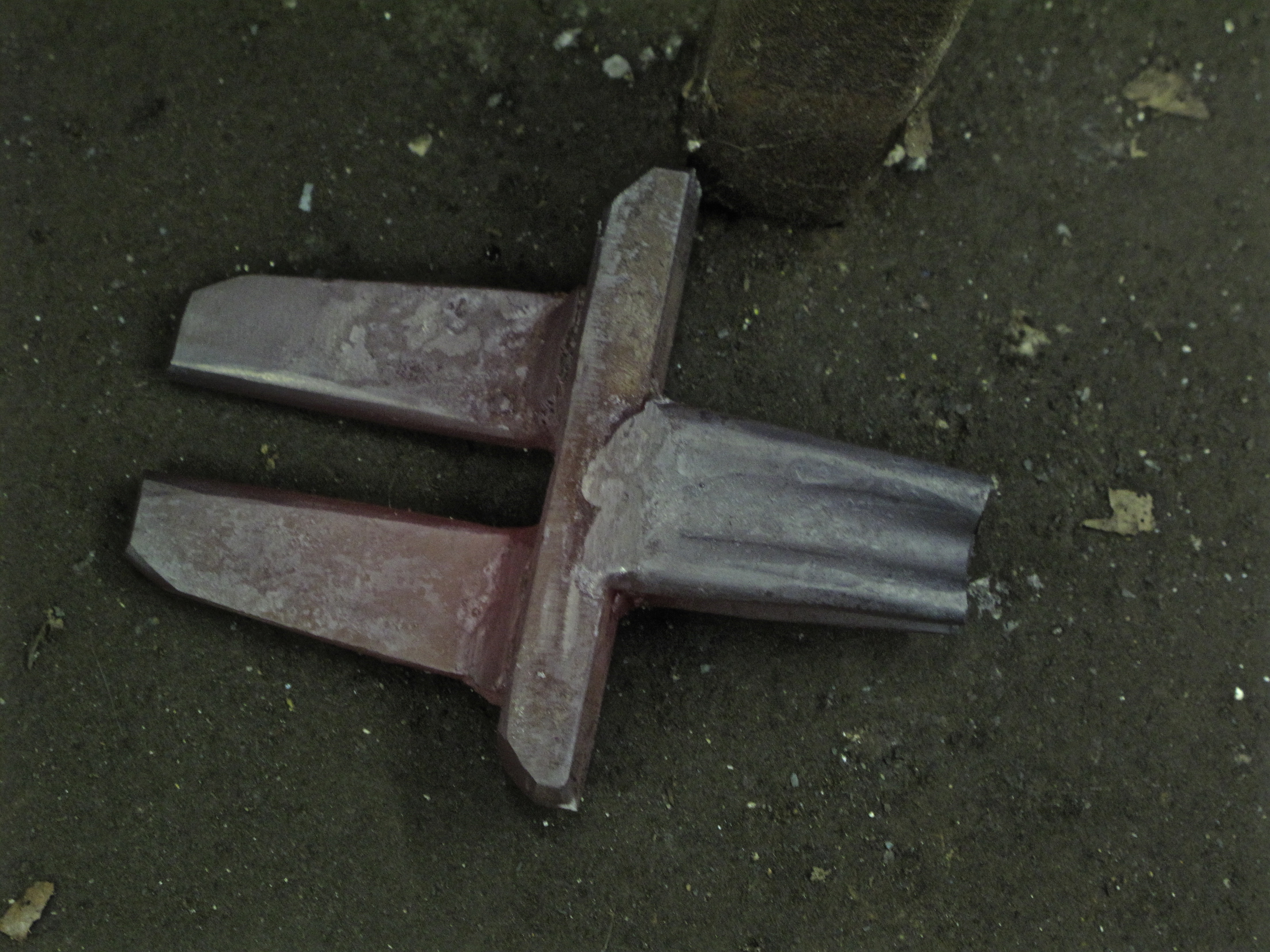
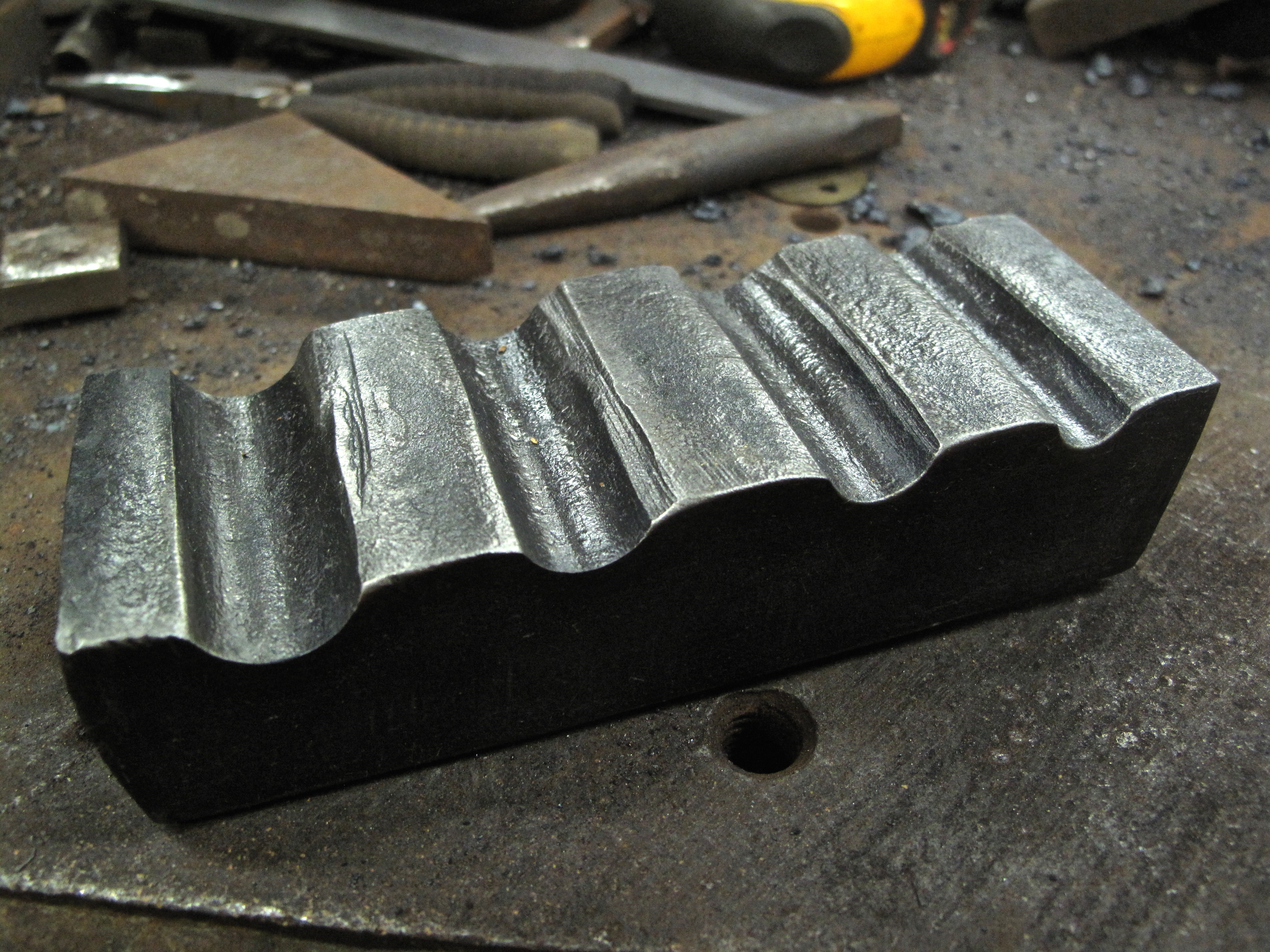
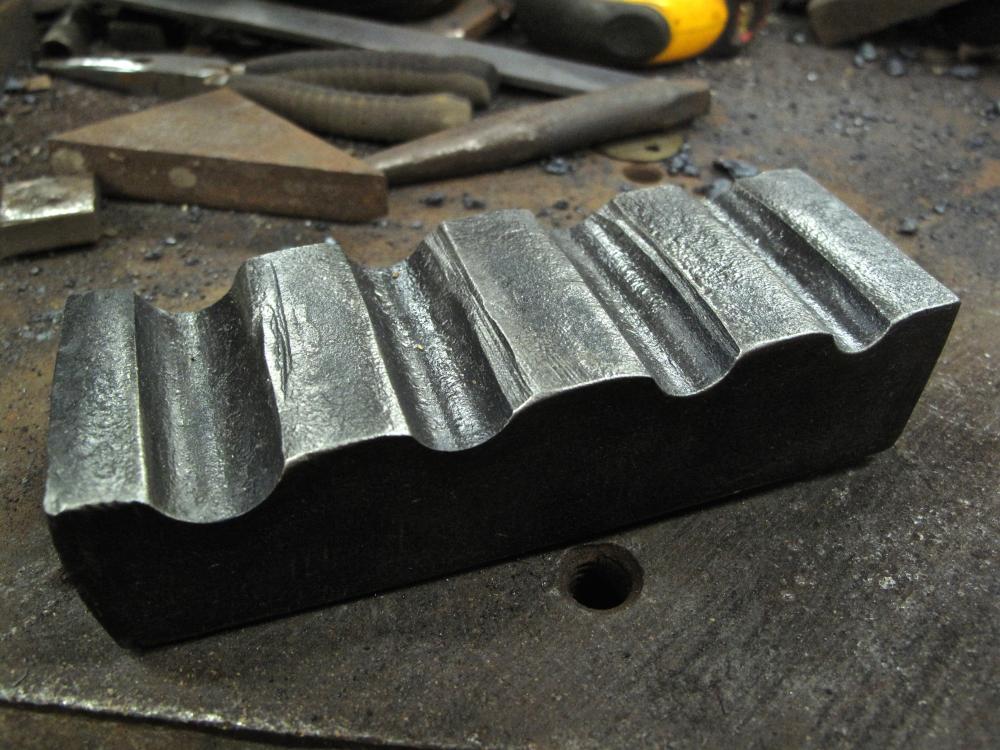
Watching Peter Ross work is always a pleasure. I've often thought he should have his own show, but the folks at PBS won't listen to me. Now that I have a proper bottom swage, I'm hoping the next ones come out better. I'm a huge fan of that square corner.... just wish the steel would cooperate with me!
-
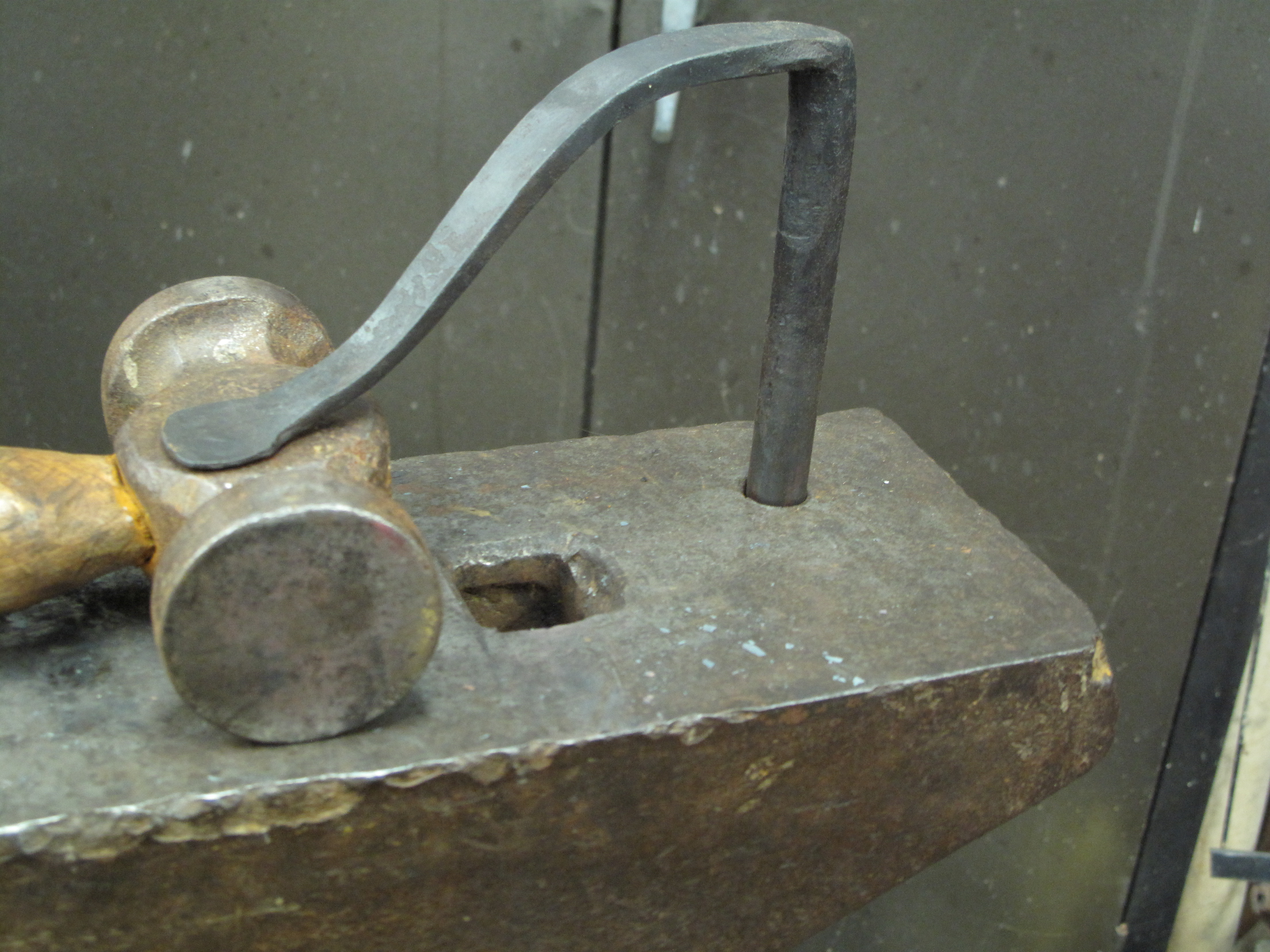
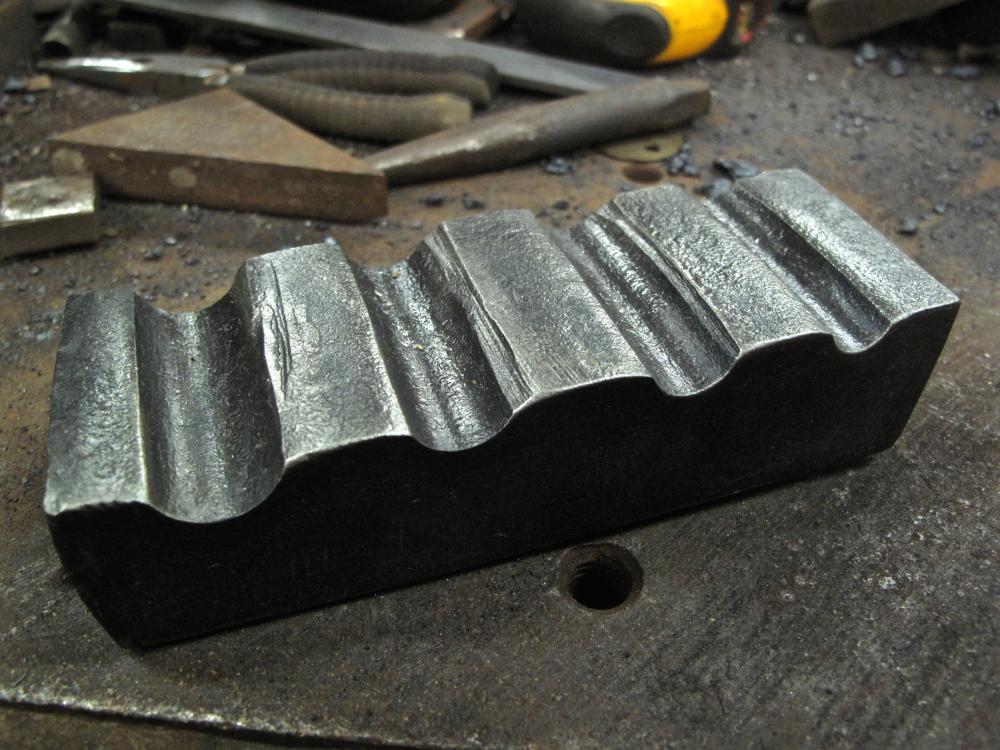
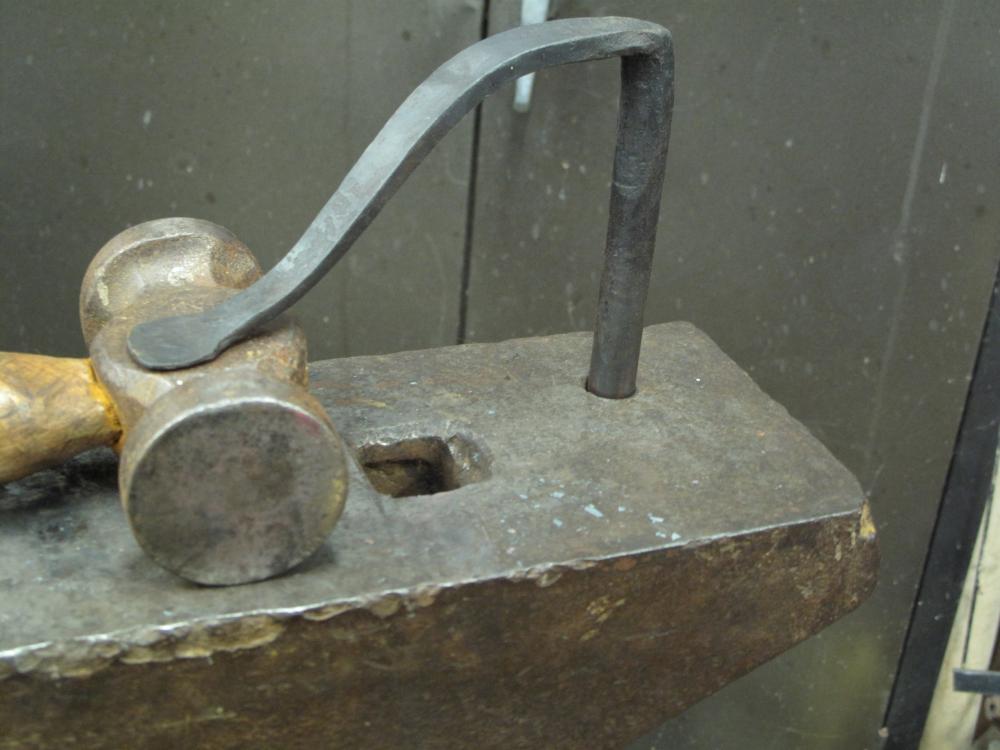
It works! I had a bear of a time trying to get a square corner on the thing, but that's how the cookie crumbles. It's functional and has a nice line to it, so I'm happy. The next one is going to be a bit heavier in the arm cross section. I might just weld on a piece of leaf spring if I have any left. A good bit of exercise. Now to make some more......
-
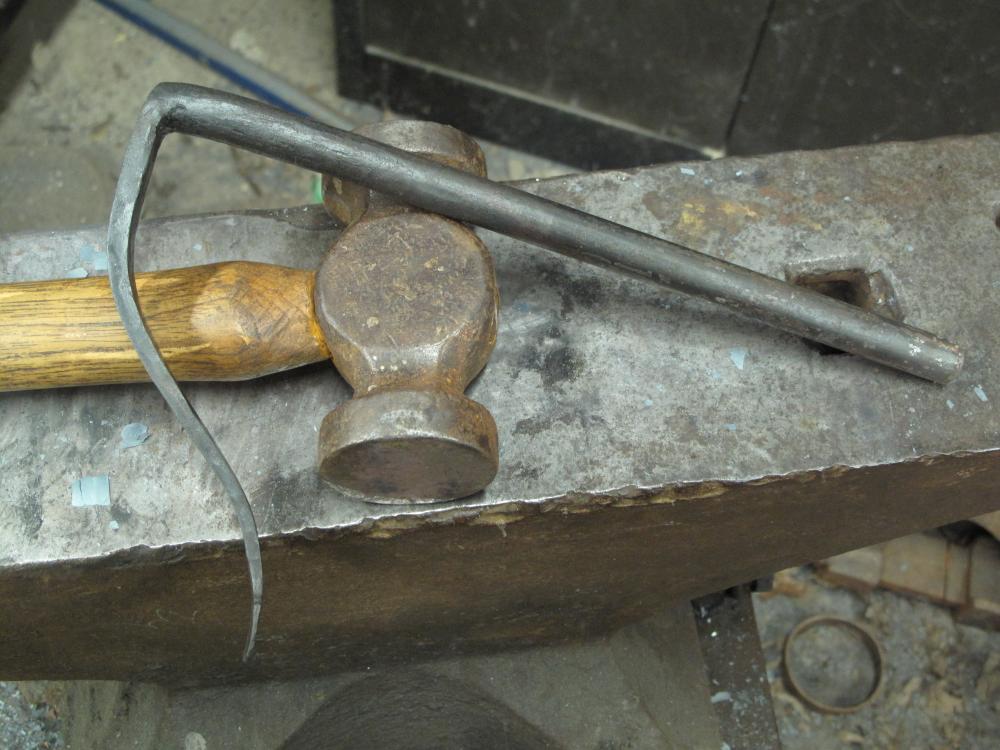
I refuse to pay new prices for used equipment. I really enjoy hammers that have an unusual line to them and will buy them even if I don't really need them. And I'll pay for that because it's not just another ol' cross peen that has a bit of rust on it. I almost bought a bundle of hammers from someone in Canada only because I wanted the one hammer in the bunch. It matches my main hammer but looked to be in the 2lb range, and since I have only ever seen one other hammer like this..... I wanted it! I wanted it really bad, but the bidding went up to around $60, which made it a $100 deal after shipping charges were tacked on. As bad as I'd have liked to add another of these hammers to the arsenal, I'm not paying that kind of money for it. The other hammers were your basic ball-peens, cross-peens and punches in various sizes, nothing special and certainly nothing I could have sold on to make a dent in the cost. I hate that I lost out on that one hammer, but that's how the cookie crumbles. Tongs are pretty much the same way. Unless they're in fantastic condition, it's ludicrous to ask me to pay more than $5 for a pair of them. I know they sell for mad money on eBay, but I'm not going to buy an old rusty pair for the same money I can buy brand new. I had thought about buying new tongs and letting them sit outside in the mud for a month or three to develop some patina.... just so I could list them on eBay and have the decorators and designers clamoring for them.
-
Basher, I'm pretty sure Ric is talking about engine block heaters like these: http://www.fivestarmanufacturing.com/kat_s
-
-
I think you're on to something. I've used a lot of the metal from those home stores when I just need a few feet and I need it now. Never in all my days have I seen bars that have that spiral banding. It's almost like they started out trying to make a form of rebar, but stopped and turned it into round, but that wouldn't account for the color variation --- I don't think. I'm not a chemist or a lawyer, though. The metal just looks very very odd to me and completely unlike anything I've ever seen before.
-
So I finally got to check this show out. I wanted to give it a fair shake, really I did. 10 minutes into the Bowie knife episode, I had to quit. Aside from the made-up garbage like blacksmithing being a dying craft and there not being many smiths left, I found the non-smithing parts of the show to be incredibly stupid. Reminds me of that old saying, if you don't have any honor, at least have some shame. I understand folks wanting to make some money and I'm sure the actors in the show are happy for a paycheck. As a viewer, I certainly won't be going back. There's nothing on the show that I need to know or learn that isn't also available through quality youtube videos done by quality folks.
-
If you have a flat floor to set it on or bury it in, two legs coming straight up will work. The width of the footprint is important because it stops wobbling as you strike the metal. The wider the footprint, the less wobbling. With an inverted-T design, you'd likely get some wobble unless you built the base plate to be really wide and gusseted so the plate couldn't flex. You're 3" tubing will work with the tripod (normal) configuration. All you need to do is cut a small fishmouth out of the upper few inches and hammer it closed. This will reduce its size so it all fits within the 5" anvil body. Since you're welding anyhow, five minutes with a cutting disk on your angle grinder won't add measurable to what you have to weld. It sure won't hurt the strength of the legs.
-
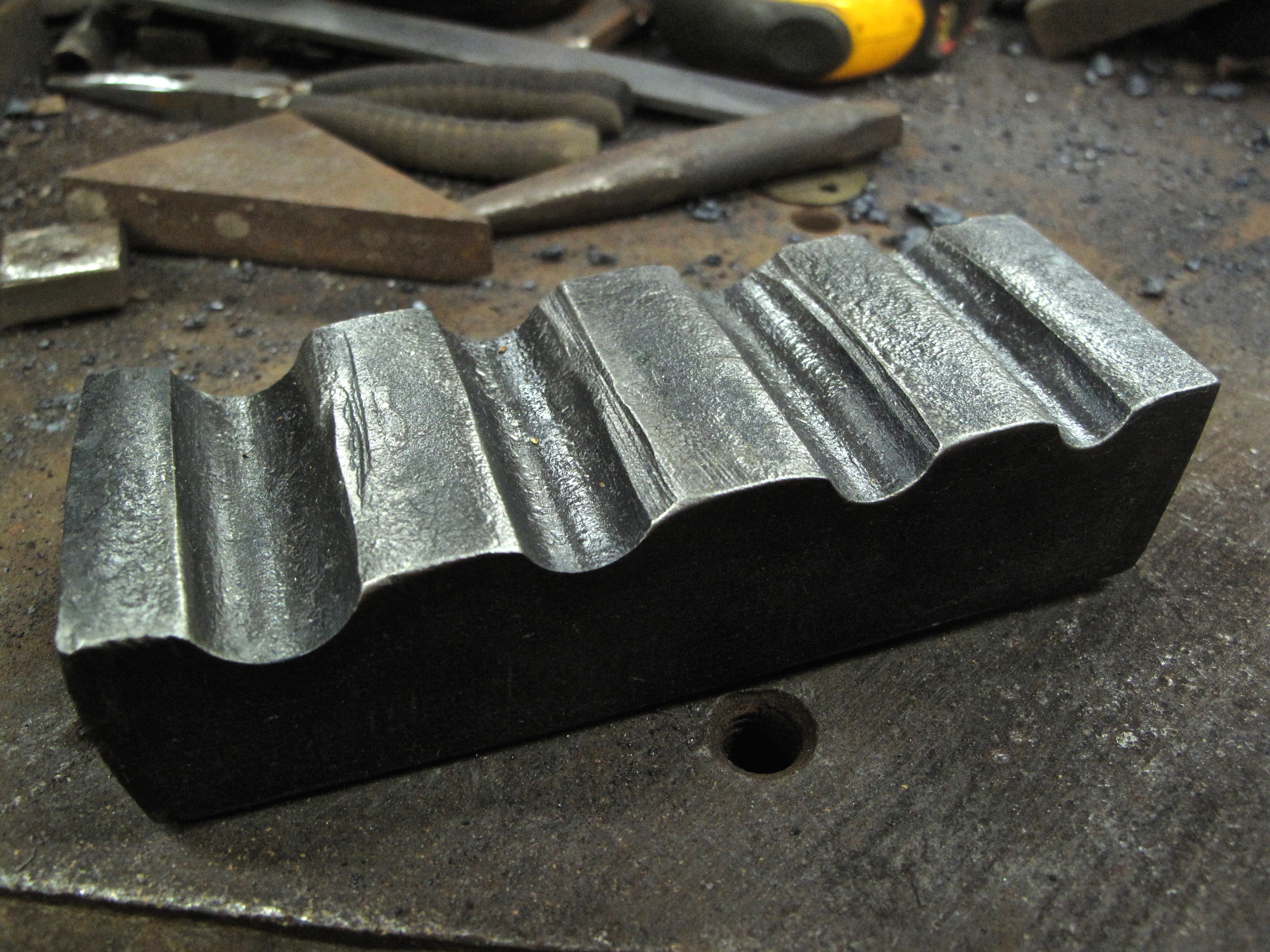
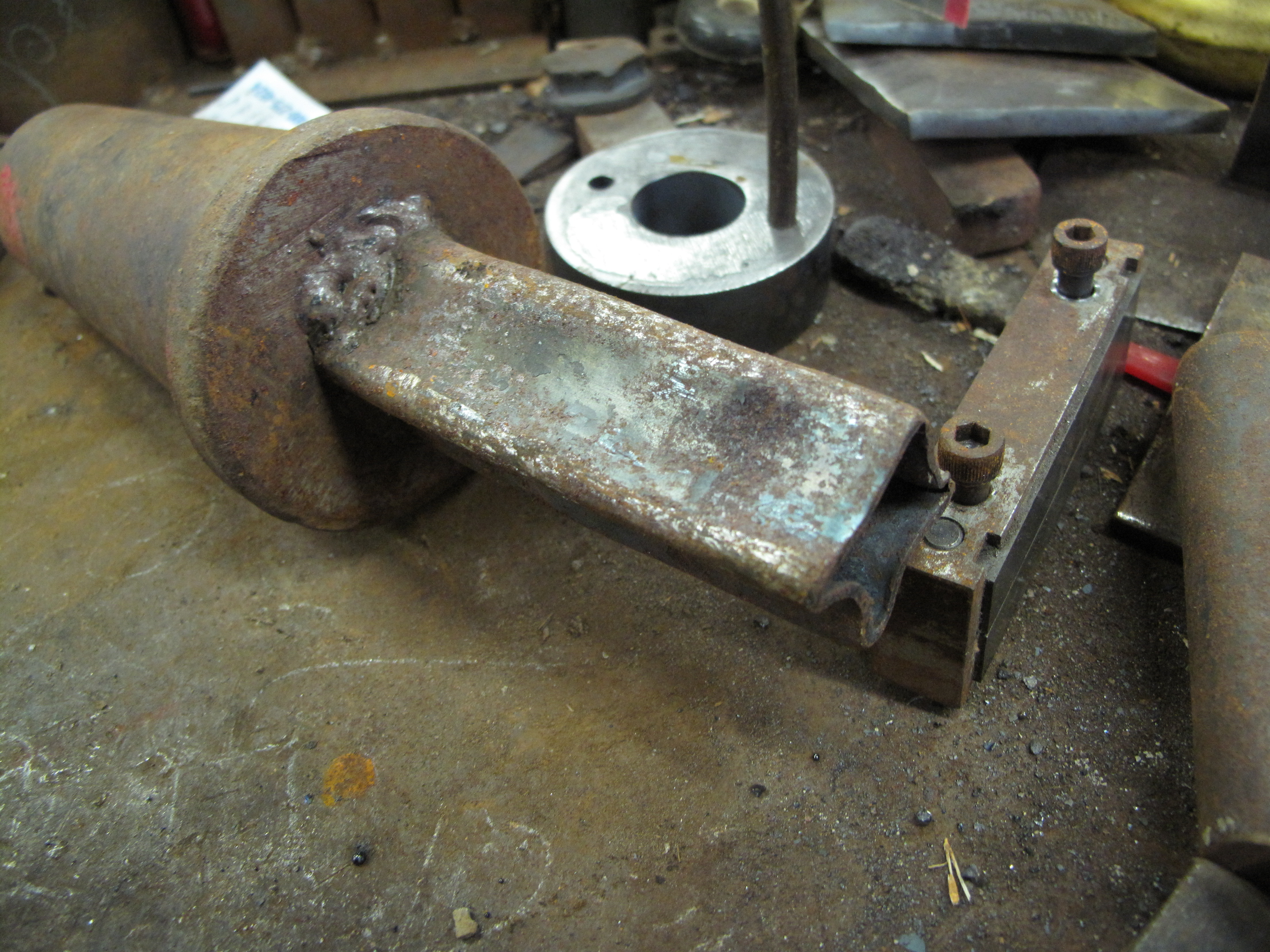
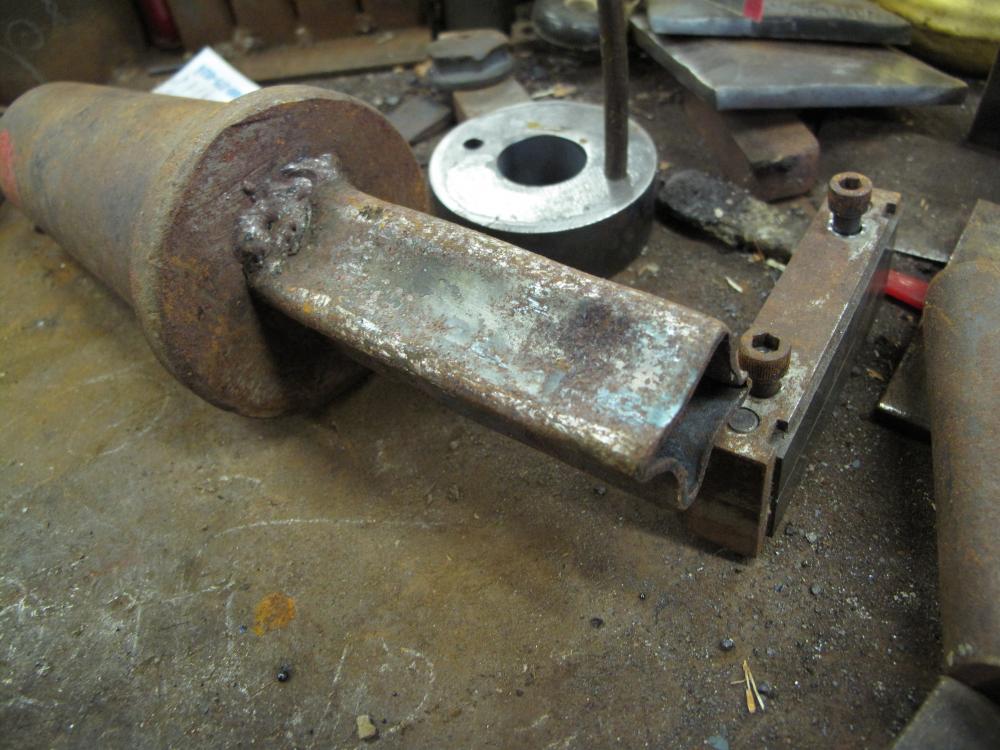
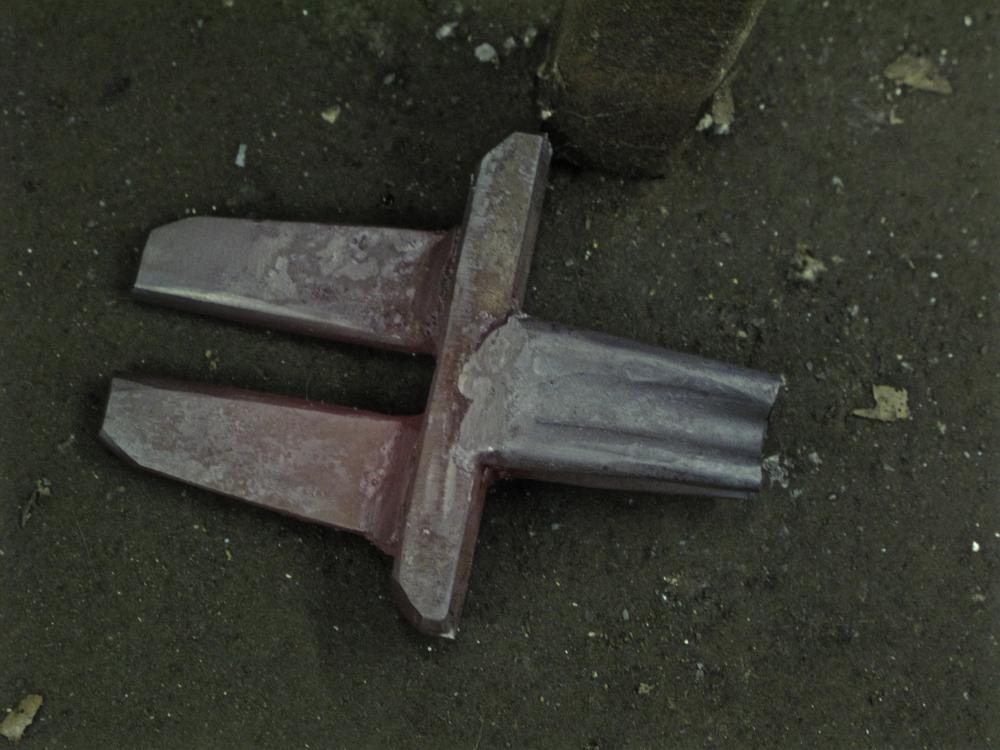
If I need a bottom swage, I use thick plate and pound the depression in.... then I weld it to some squished tube that fits my hardy hole perfectly. Bending forks, cone mandrel, anvil vise..... everything gets a squished tube if I have it because it's cheap, easy and works. Even if I need a swage, it's just as easy to hammer the depression into a flat plate and then weld on a stem. By welding the stem on, you can mount it anywhere on the swage that you like. Often, I weld them to the side so the swage actually sits over the waist of the anvil rather than out on the heel. Next in line to get a squished tube welded onto it..... my McCrady swage block.
-
Incorrect. Or correct, depending on how you look at it. While a flat bar can definitely do as a leaf spring, the spring packs used on a lot of the old hammers, in place of the Dupont Linkage, were a very specific size, shape, weight, etc. If you look around other old machinery, you can see that these leaf springs were not a common size or shape like you might see on all sorts of different types of equipment around factories and farms. Today, you can run down to the corner store and buy a leaf spring pack, but it will be something mass-produced for trailers or golf carts. If you want something designed just for you, you have to find a spring shop.... and you might not have one nearby. The point that I was trying to make is that coil springs replaced the leaf pack in the LG-style hammers because it made sense for a company to source their parts via the cheapest route possible. A COTS coil spring for the LG-style hammer could be the same coil spring being used for any of a dozen other applications we don't know anything about. Way back in the day, the folks at Little Giant looked around (I'm just making this part up) and found that they could get the right performance from X coil spring for half the cost of what it took to get a leaf spring custom made for their hammers. So, they went that route. I'm not saying that's what happened, exactly, but it's certainly a very reasonable train of thought when you consider how common the coil spring is. I pulled this image off the net since it demonstrates what I was trying to say. The leaves are stacked upside-down compared to how we normally see them, and the size is different from any other springs I've ever seen on balers, rakers, bunchers, etc. While there might have been some other industrial uses for this spring pack, I'm betting that they were custom made for this hammer builder. Maybe not. I'm just following a train of thought based on my experience. My apologies for derailing the thread. I'll comment no more on springs.
-
I was addressing the later comments about leaf v. coil in hammer build design. Home-built or factory-made, coil springs are easier and cheaper to source because they're so common. What's the max working size on your hammer? I'm trying to imagine how the split clamp would work under the impact issue. It seems to me that the threads on the turnbuckle keep the rod from collapsing after repeated shocks, but using a split clamp would allow for slippage since it's just friction holding things together. I like the idea since it's a lot easier to adjust, but...
-
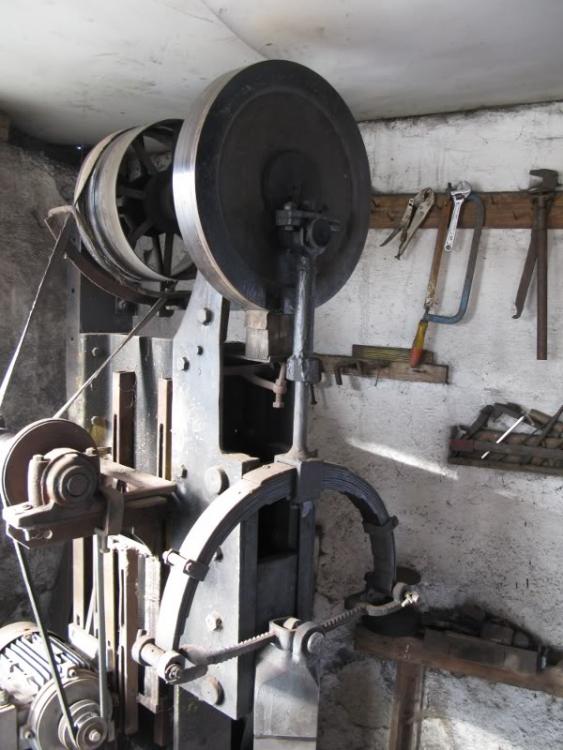
Thanks, Arf. The photos clear up the confusion. You don't appear to have any kind of braking system on the pitman crank, correct? Also, I noticed your use of the turnbuckle and was curious to know how much practical adjustment this allows for. I was thinking about going the same route, but wasn't sure if it was worth it if it means having to build a second larger hammer if I want to get into larger work. The Preston tire hammer caught my eye because it can be adjusted very quickly. Coil springs are very common and can be found in a lot of machines, but most leaf springs have to be custom made because the ones you find on cars are stacked upside down and are too long between the eyes. From a corporation's standpoint, it would have been a lot cheaper to buy a standard COTS coil spring from the spring maker or wholesaler rather than have custom leaf springs engineered and made just for your hammer style. Even today, the average joe-in-the-garage can look up coil springs on the internet and find one from any of a dozen sources that will work well for his home-built hammer. Leaf springs, as beautiful as they are, would have to be custom made.
-
I'd love to have a grinder stand like that. I've been hunting one for awhile to use with buffing wheels. Love that antique design.
-
Well, since we're talking about something that has family history, that changes the equation somewhat. The Gunter method of anvil repair is highly regarded and I haven't heard anyone say the repaired areas perform less-well than the OEM area. Since this anvil is part of your genealogy, it's absolutely worth grabbing and fixing and using. Worst case scenario, the repaired area is a hair softer. Big whoop -- all that does is give you a handy excuse. "Yea, everything was going great until I forged on the soft spot." You can blame all sorts of faux pas on that repaired area! Your little anvil can sit on the floor and be used to upset long bars. I have a 120# Wilkinson anvil doing floor duty right now, and it's a dream. As you say, there's no rush. Just make sure you're in line for that anvil and some other relative doesn't abscond with it to make a lawn ornament.
-
I'll never understand this fascination with making knives out of mystery metal when good alloy is so incredibly cheap. A complete boxed set of scrapers.... that's money! Even if you don't want them, find them a good home where they'll be appreciated and used for their intended purpose.
-
What is the larger anvil going to do for you? How is it going to make you better? What projects will it allow you to do that you can't do on your current anvil? A lot of the time, we want to get a bigger anvil just to get a bigger anvil. It's an addiction. Going up another 50 pounds isn't bad, but it's not a real giant leap either. My 300# anvil has a 5.25" wide face and there are a lot of times I wish the face was narrower. Wide isn't necessarily better. If you have the tools and know-how to successfully pull off a Gunther repair, more power to you. I'm always happy to see a damaged anvil brought back to life. Nothing wrong with trading for an anvil, though I'd be hesitant to get rid of your existing anvil. If you can get the new one and keep the old one, that'd be the best route.
-
Sheets of flux compound would actually be pretty handy. Everything I use straight borax, or see someone doing it, there's a ton of waste as it's spooned onto the steel. Of course, as cheap as borax is, waste really isn't an issue.
-
J.W.S.'s wood stand is about as good as you could ask for, and it takes only the most basic of tools. You can even dress it up a bit more by adding stepped feet to it with various widths of 2x dimensional lumber. This makes it very stable and easy on the eyes. If the main body of your anvil is 4" in diameter, that means she'll weigh in right at 46#. If it's 5" in diameter, you're almost doubling that at 72#. I wasn't sure if you were measuring the head when you cited the diameter, so I looked up both weights. Either way you go, that's a nice anvil and I'm a good bit jealous.
-
Chris, I think it's kosher because you'll always have your own personal idiosyncrasies in the piece. Even if you have the piece in hand and try to make an exact copy, your technique will be different and you won't be able to nail down a reasonable copy of it. With casting, you get an almost exact copy because you're using the original as the master to make all the moulds.
-
It's a battle with a thousand fronts, Jim. You have to start with education and get it back to where it was in the early part of last century. It's really hard to explain the ramifications of an action to people that can't understand basic economics or reason.
-
I wonder how much it would cost to ship? Looks like she's at least 4" across the head of it. Maybe 10" long? With a stout stand, she'll get the job done and look good doing it!