MilwaukeeJon
Members
-
Joined
-
Last visited
Everything posted by MilwaukeeJon
-
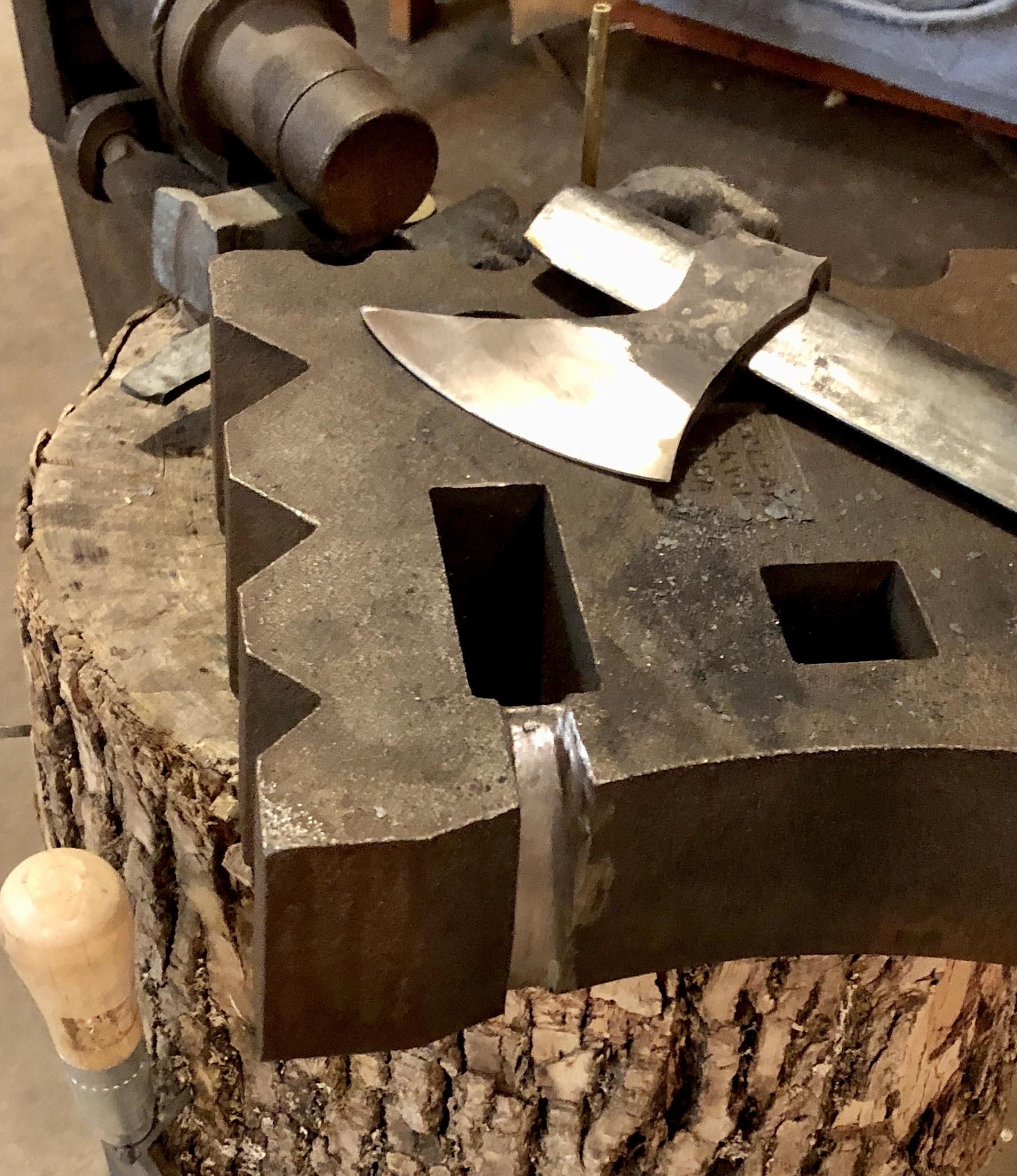
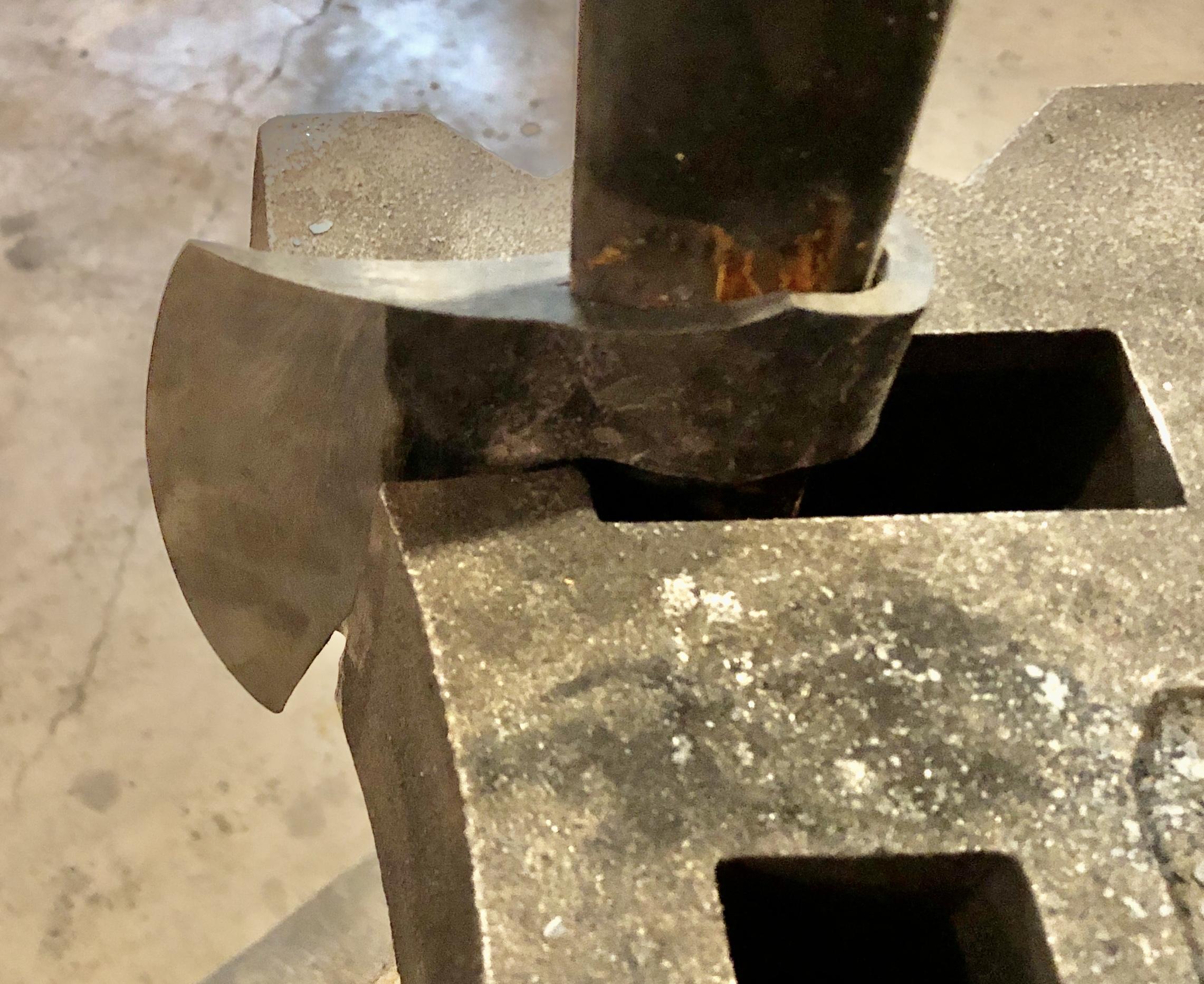
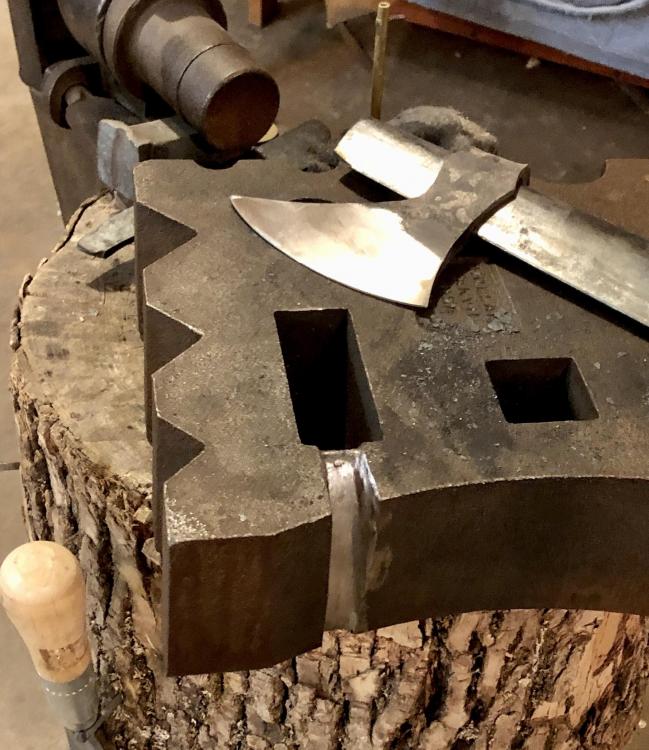
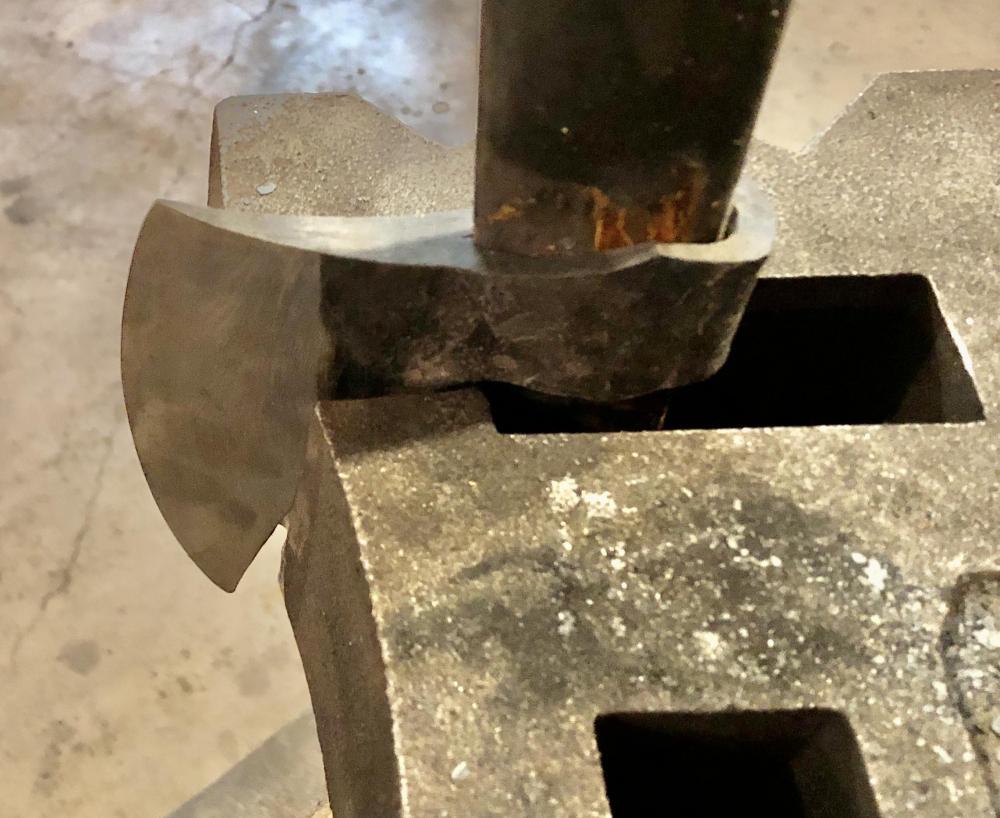
It is an 18oz head....really moves the wood efficiently for a hatchet. The weight feels very nicely distributed across the axe head and the whole tool feels very well balanced in the hand. In any event, I pity the poor Alaskan moose..... The bat wing design with the curved lower profile Is something that very much appeals to my eye but it also can make drifting the eye a little tricky. Didn’t really have anything to hammer into or against that fit right. After some cogitating, a solution was found by making a modification to a swage block (I have several and this is a modern one, not antique). Specifically, I ground in the profile of that lower curve so that when drifting the eye the lower profile of the axe body is also being refined. Works great.
-
Could it be for scoring an arrow-like marks timber of some sort—logs, architectural beams, or something to the effect? Flipping the tool allows you to mark a left and right “<“ “>” while standing on the same side of the thing being struck. The large weight and longer hand make me think it is for striking something rather than carving.
-
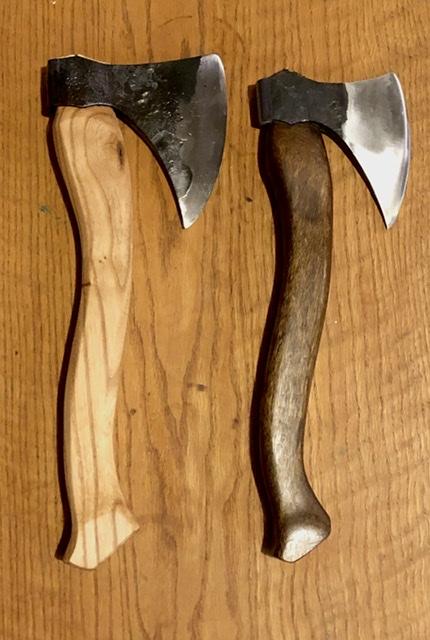
Thanks Jennifer. I’m annealing in vermiculite but in hindsight I clearly need to more thoroughly normalize and anneal the 1075 if I let it cool down too much during forging. Don’t know if it’s the added magnesium that makes it a bit more brittle if not heated enough or just me bring a knucklehead! My bad.... By the way my shop is well heated and I definitely know about creating joints in forge welding that aren’t butted. Here is a pair of my folded 1075 hatchets, the larger one is off to Alaska to my cousin who will use it to chop-up/dress moose in the field!
-
So normalizing results in a more fine grained structure?
-
Thanks. Learning more about grain structure is fascinating and helpful. Didn’t normalize a 5160 herb chopper and had some really interesting lateral splits, looked like delaminations, when working a really thin scroll on the handle.
-
Is the grain structure of a mid to high carbon steel (5160, 8670, 1075,1084) slow cooled in vermiculite fairly close to that when it is air cooled or normalized? In other words, is slow cooling considered a kind of normalizing?
-
The Iron Mountain flux is squirted onto the piece from a condiment-type bottle and I catch the excess in a clean pan. So I'll just put the extra back in the bottle....looks to be the same color and composition as when it was poured so it should work just fine based on your suggestions here. Many thanks again.
-
Thanks....
-
Can I reuse the Iron Mountain flux that doesn’t adhere to my steel when forge welding? Specifically, I hold the heated knife or axe head over a pan when applying the flux before going back in the forge and there is a fair amount that doesn’t stick to the hot steel. OK to put back in the bottle?
-
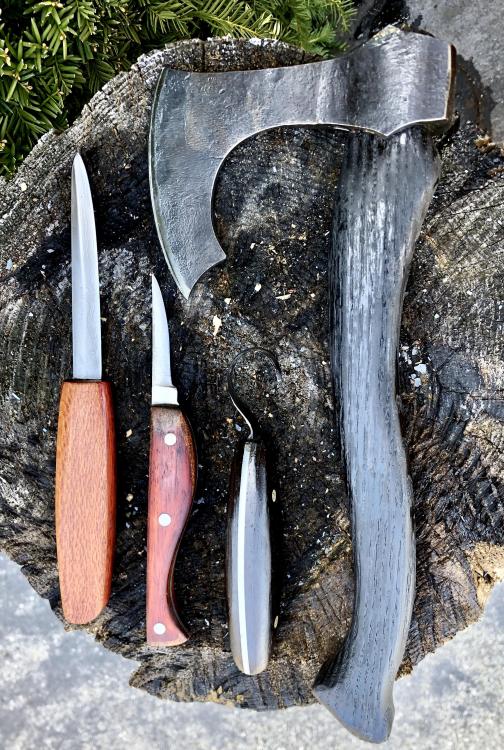
Yup...testing is the next step. Just was surprised by the cracking given the heat I was working at. And to date I've done 5 or 6 bearded axes with an all HC bit forge welded in. Blending the joint is the tricky part. I've been tapering the back side of the bit but only where it contacts the body of the axe. This is done in the manner typically used for an steel axe bit, meaning that I have been tapering it down and thinning the leading edge considerably. Moving forward I'll try rounding that edge but not tapering down too much because of the need for added material to blend in with the lower part of the curved cheek. Shown here is my favorite hatchet along with the other tools I made to complete a greenwood spoon making kit:
-
Thanks
-
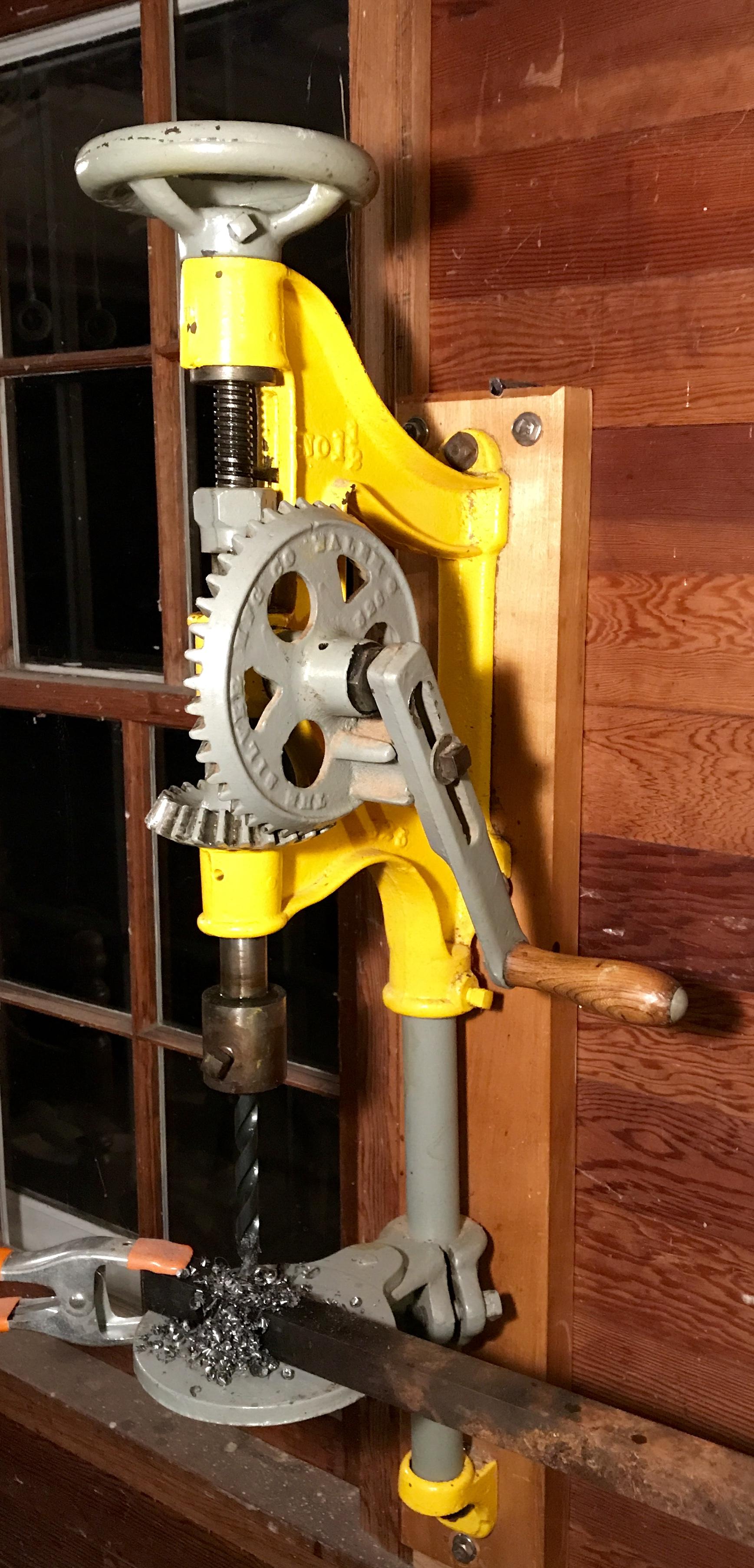
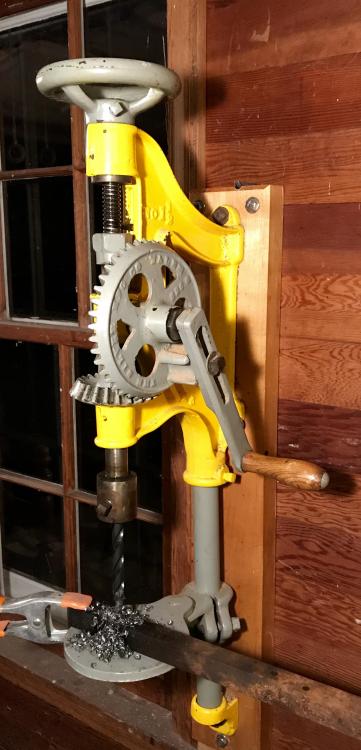
Can't answer your question since I've never taken my Silver 1 1/2 (circa 1900) apart. These are great tools and rip through steel. All my pre-drifting of hammer eyes and pin holes on knives are done on this old beauty:
-
Using my three burner Whisper Daddy forge at about 15psi. Don't ever get spitting sparks, just some smoking, and in fact need to really be patient to get the heat up to bright yellow. In theory if I normalize for three cycles then the grain structure should be ok, right? I realize that this use of 1075 for the whole hatchet is not necessarily economical or logical but the ability to precut the starting blank to a better bearded shape is appealing.
-
Which one for these steels? I don't want anything too fast right?
-
Many thanks indeed! For general 5160/1075/1084 quenching, do you all think that canola is good or should I be using something else? And do you always preheat the oil to 130 or so? I have generally done this as a routine matter when quenching these steels.
-
I've got a nice cylindrical steel kitchen trash can with a galvanized removable insert. Was thinking that it might be a nice large quench tank. Can one safely oil quench (canola) in a galvanized container or would that be problematic?
-
-
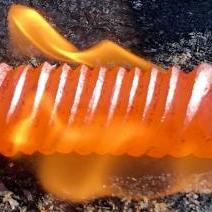
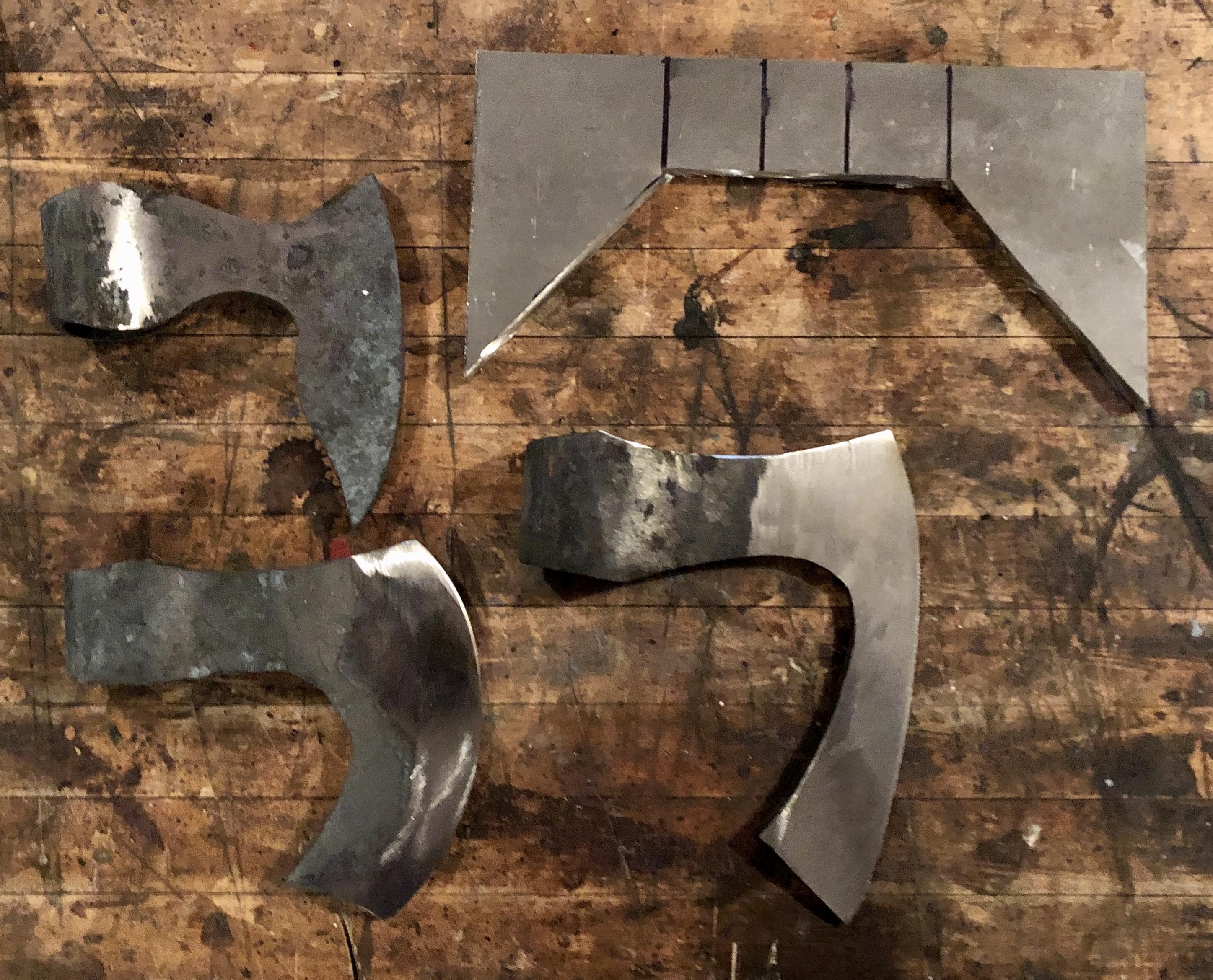
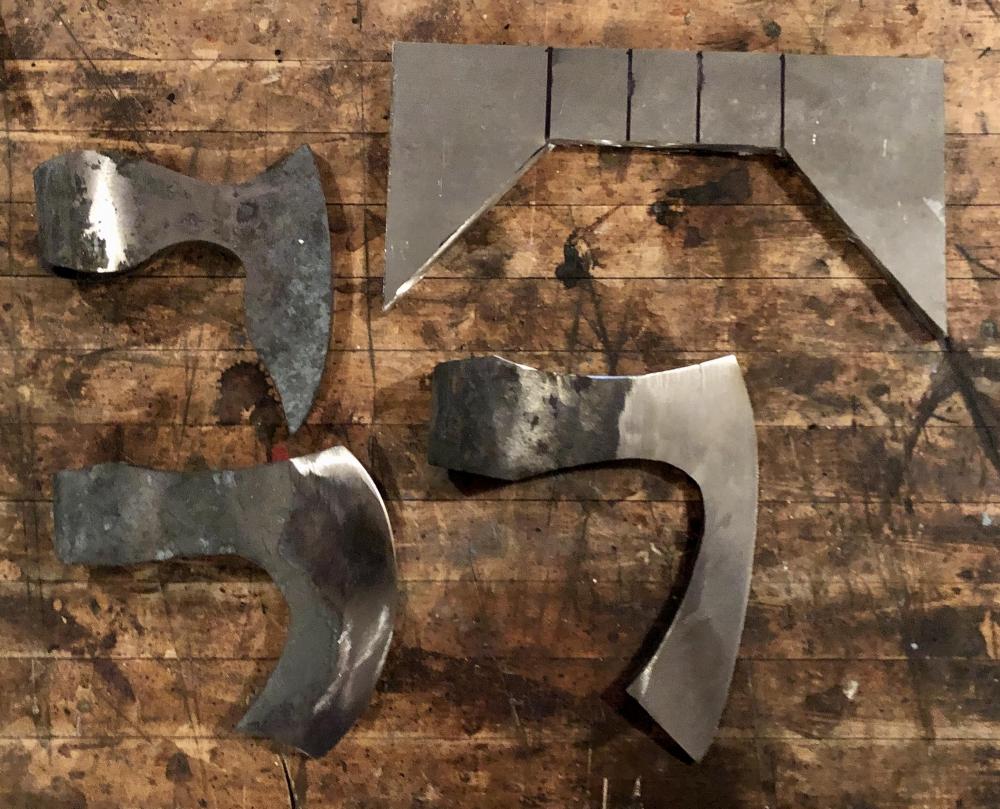
Recently I’ve been making some small (around 1 pound) folded hatchets that will be used for green wood spoon carving. Instead of using the normal method of forge welding a 5160 bit into a 1018 body, I’ve been experimenting with making the whole piece from 1075 that is forge welded to itself, which by the way it does very nicely. The reason for this unusual approach is that these are bearded axes and by using a single piece of steel it is possible to cut the initial template to shape with a nice long part for the bit. As you can see in the picture it sort of looks like a bow tie prior to folding. This unusual method again is in contrast to the traditional process in which there is a joint between a 1018 body and longer mid or high carbon steel bit that can be tricky to blend and dimension properly, especially on the lower part of the cheek/bit joint where the extended blade continues down. The long bearded example below on the lower right is a conventional 1018/5160 example. What I’m noticing with this alternative 1075 method is that if I let it cool and then come back later to do some more forging to refine the shape there is a real tendency to develop cracks (5160 can be rather grumpy in this respect as well if hammered when not hot enough). This happens even when I’m being very careful to make sure the piece is fully heated (long soak at an orange color in the forge). Does the grain structure get radically altered in this steel when it is brought to forge welding heat? Will more careful and thorough normalizing prior to any additional forging alleviate this problem? Of course, one answer I guess is to do all my forging right at the time of forge welding. * Note: I’m not a professional and these are just for use by me and students in my green woodworking tutorials. Have made about 20 hatchets to date of all different types and enjoy learning more about blacksmithing by trying new methods, although this one in particular may in the end simply not be a great idea.
-
Please post pics if you do split it open.
-
Good that you left a hefty amount of steel to work with after the weld. I got rather thin on my first few.
-
Do the bolts spark differently from one another on a grinder? Also, be very careful with that break test. That piece can fly off like a bullet in any direction.
-
How heavy? And do you know the specific maker and year of production?
-
Fantastic! Fantastic!
-
-
I’ve done a few with 8670 which seems to be a good steel for this purpose. Info from Alpha Knife Supply: “This steel is used extensively in the lumber industry for making large circular saw blades. The nickel add toughness and there is enough carbon for good edge holding. There is not enough nickel to make a good shiny layer in damascus. Think of 8670 as an improved version of 5160, better toughness and edge holding.”