MilwaukeeJon
Members
-
Joined
-
Last visited
Everything posted by MilwaukeeJon
-
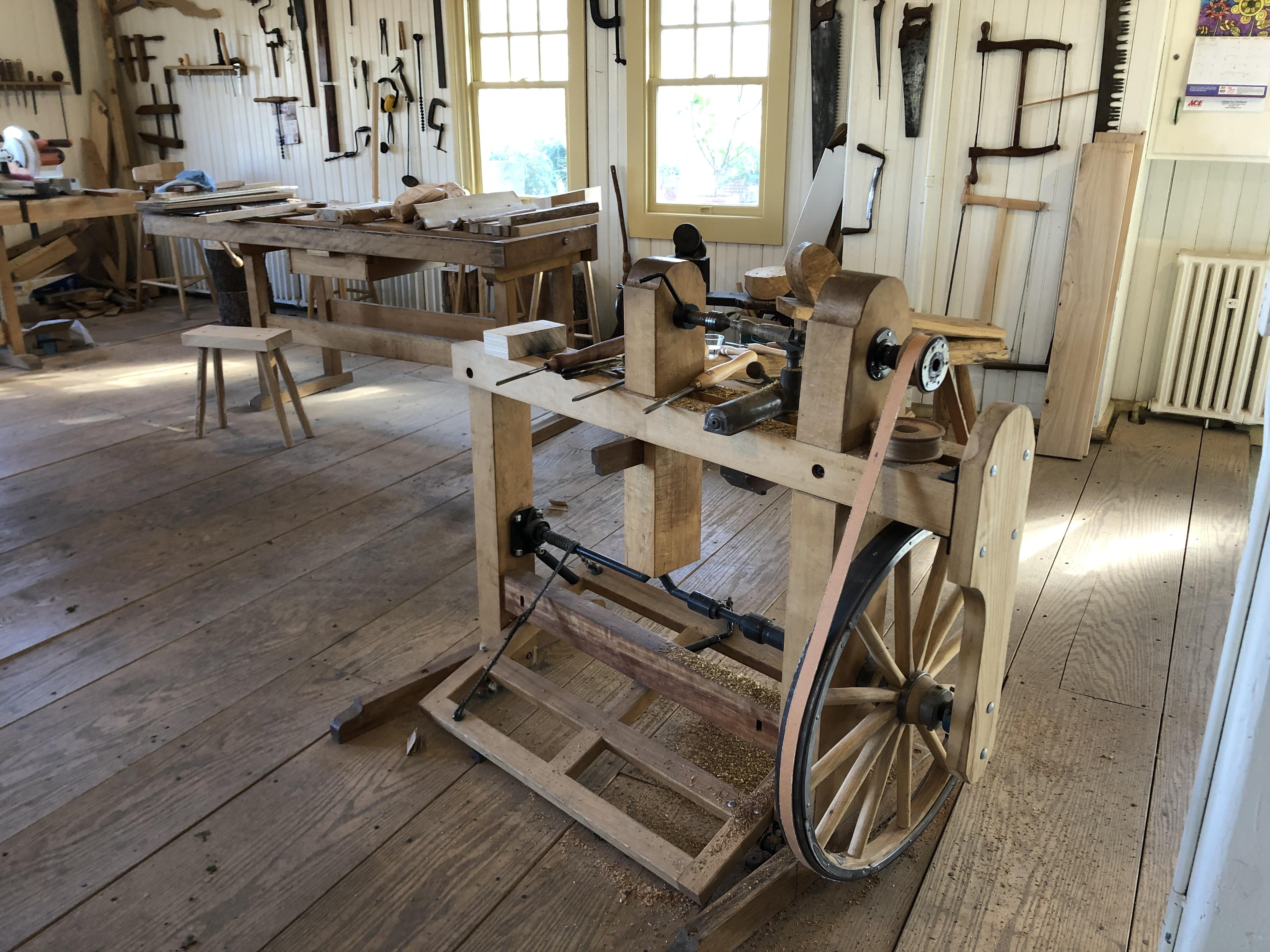
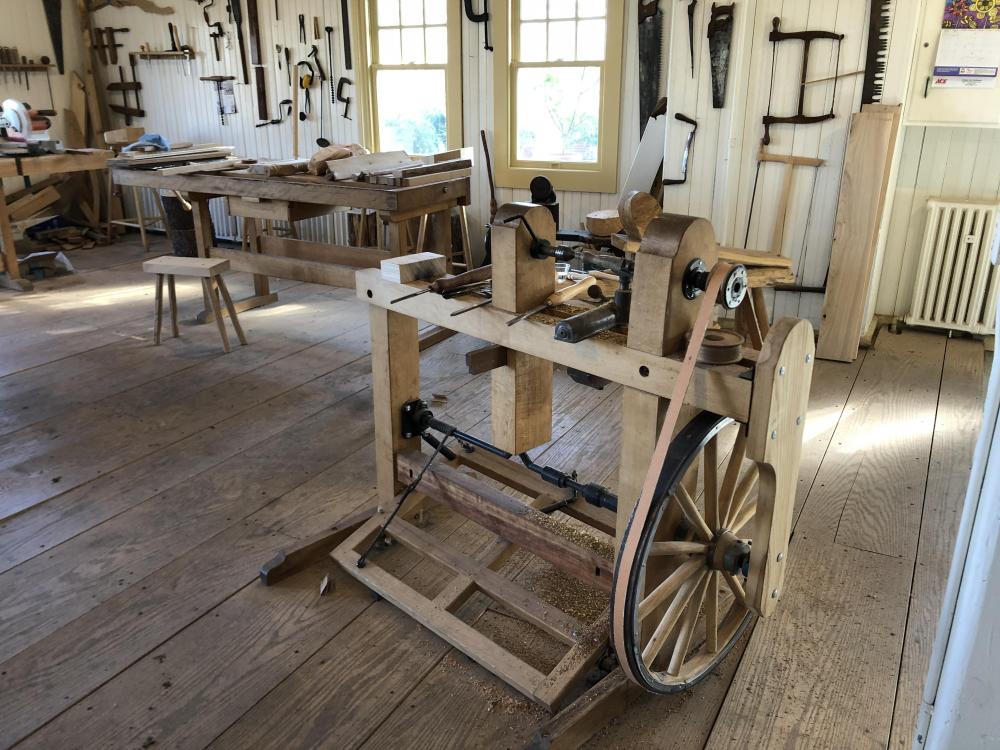
By the way, the handle turning is done on an 18th century style foot-powered treadle lathe.
-
Oh, just by continually screwing up the piece of furniture I’m chiseling on....
-
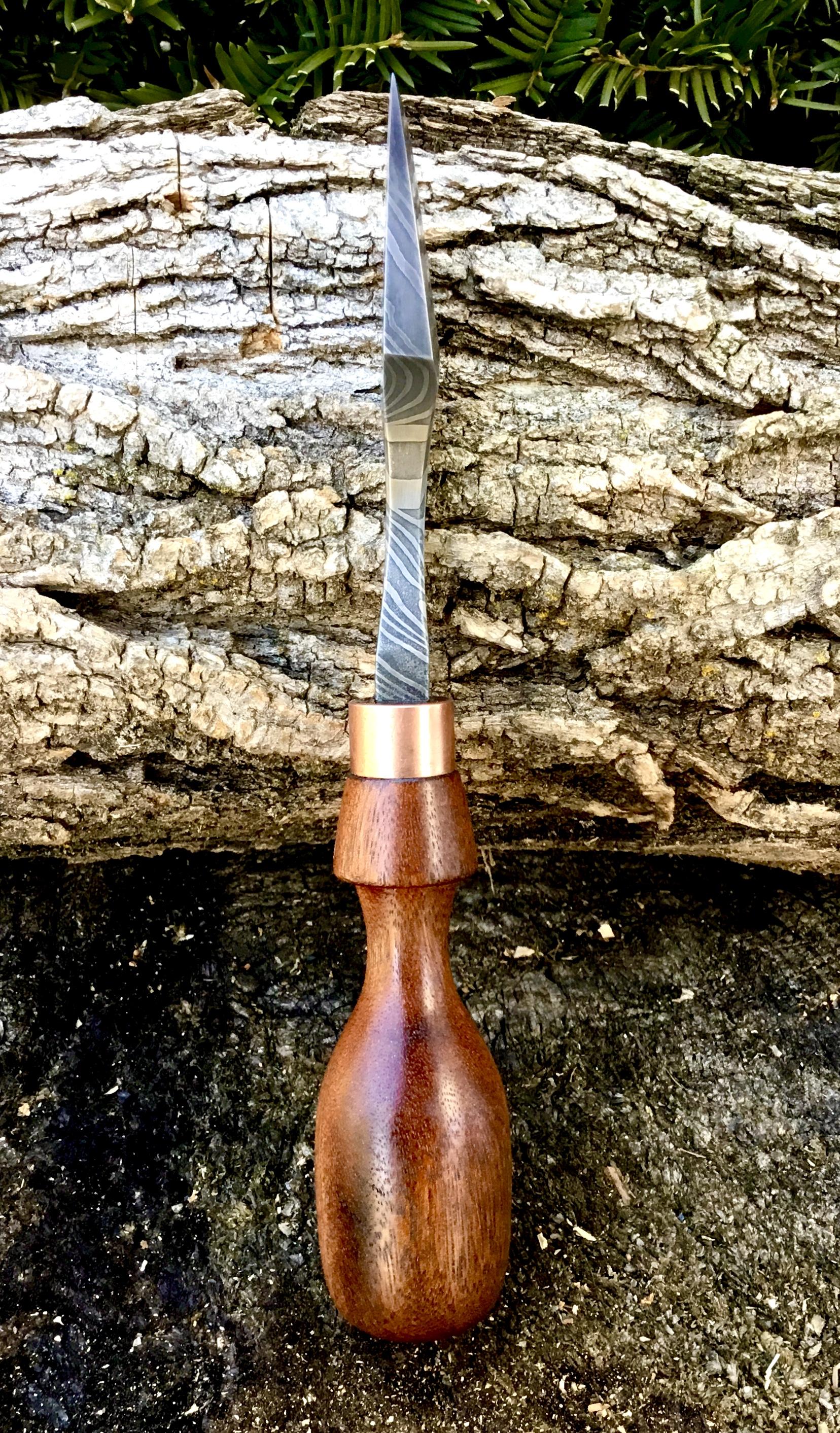
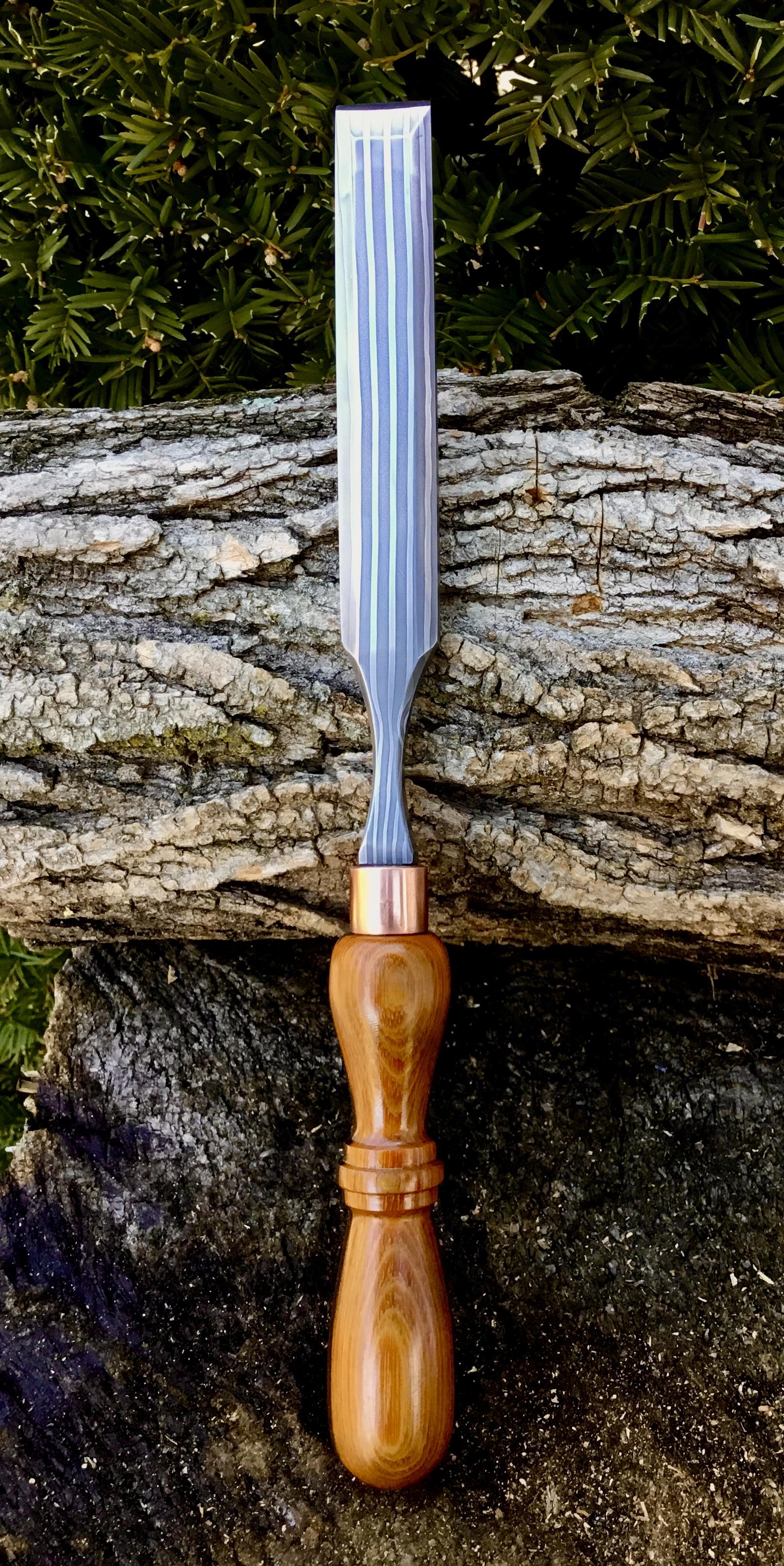
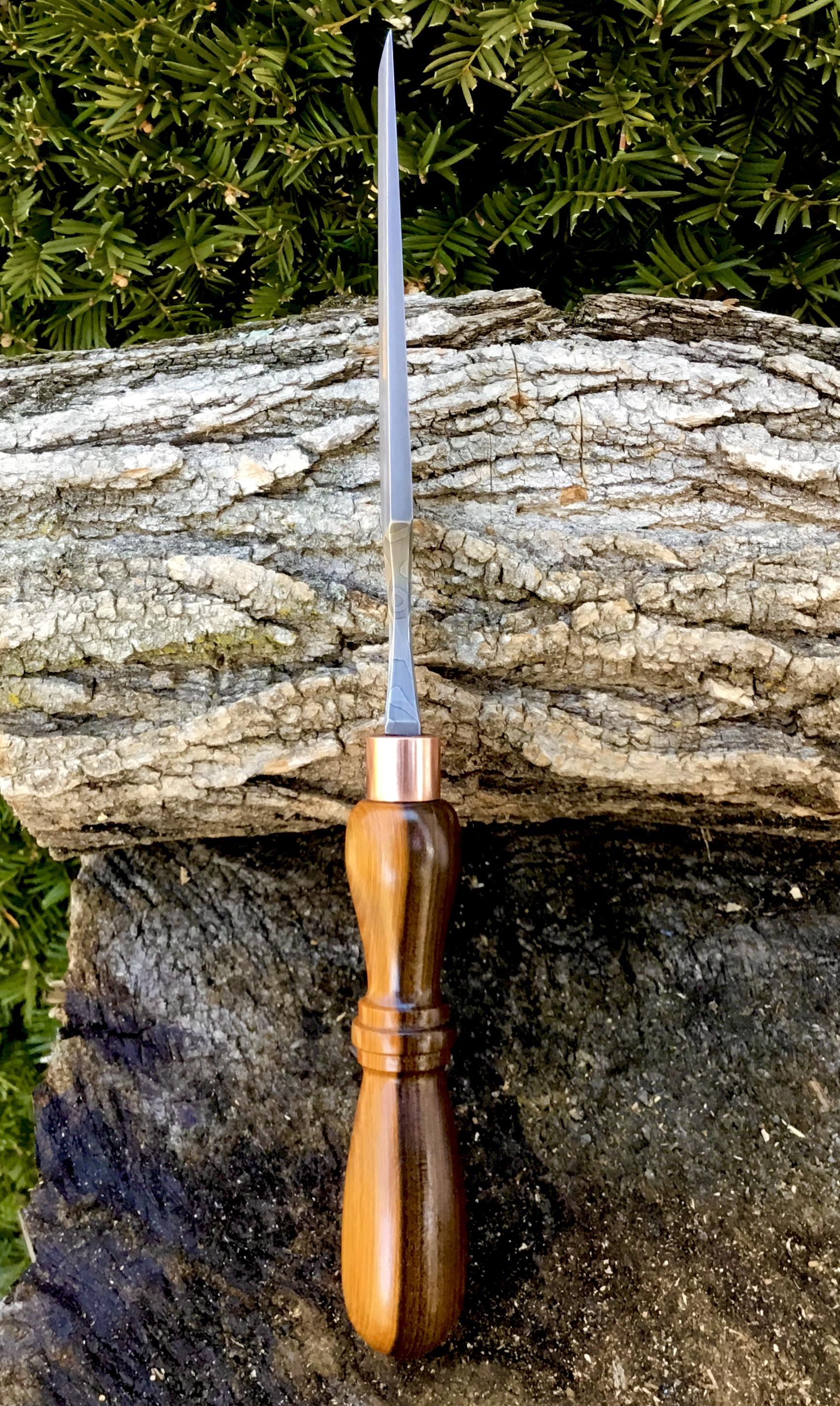
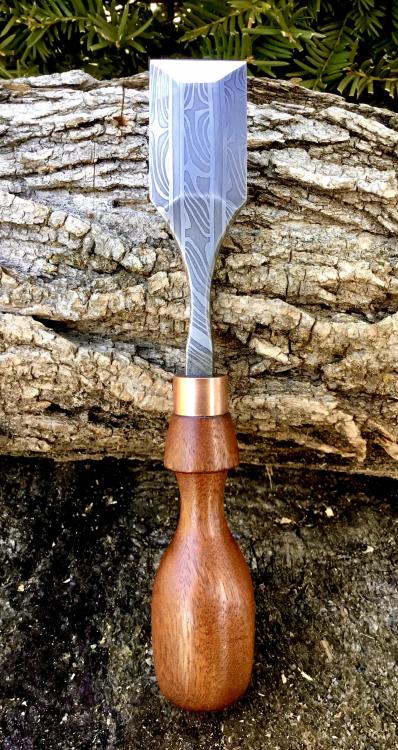
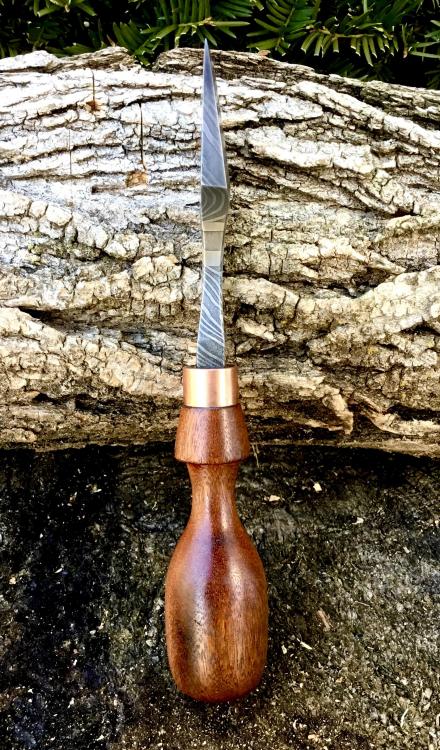
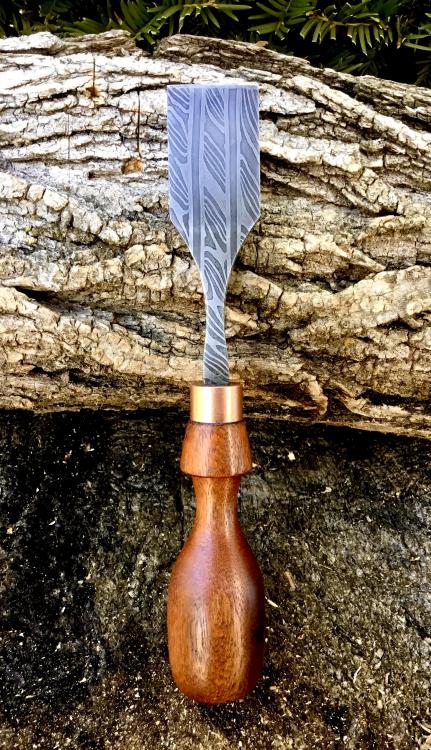
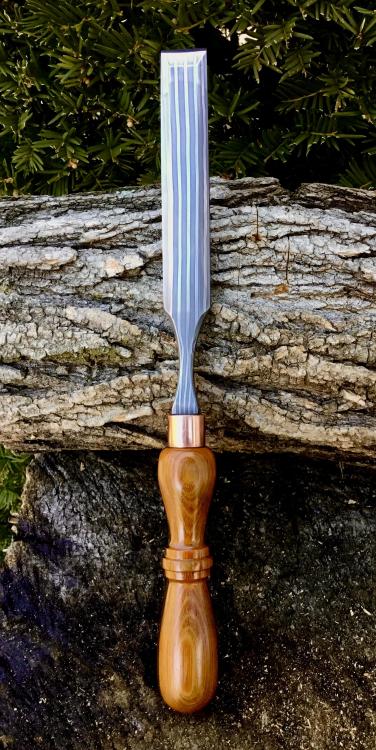
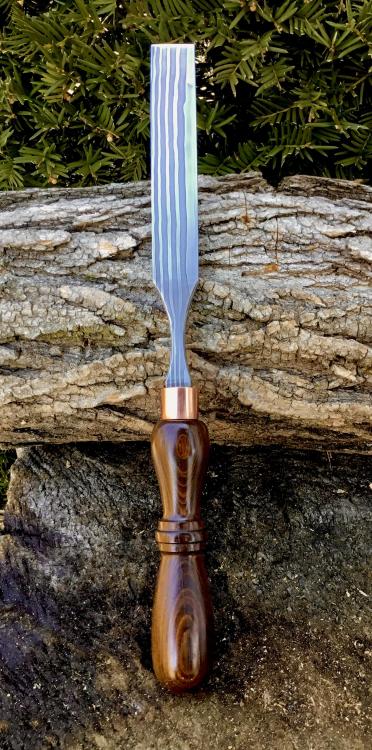
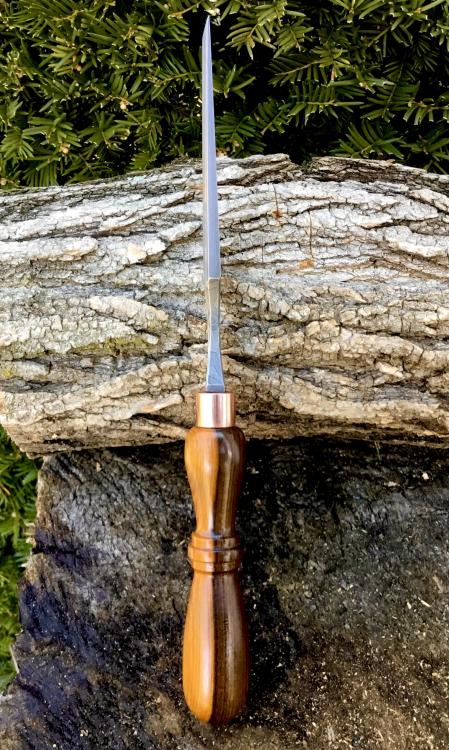
My first try at using low layer pattern welding for these two woodworking chisels. The mahogany handle on the smaller chisel came from a 19th c. Milwaukee floorboard, while the other handle is a nice piece of ironwood.
-
All good advice here. Watch a lot of videos, do a lot of practice with scarf welding rods, and be patient. The initial failed welds that are happening right now will teach you a lot. Examine them closely, and cut them open to see what happened. When you get a weld right, which only can happen when your pieces are at the right heat (and it can be different from one steel to the next), you’ll recognize the needed level of color and also the amount of smoke coming off the surface. You also will come to realize the very different hammering feel when you do a good weld. The hammer blows, a light series of taps to set the initial tack, are dull sounding and the material is suprisingly soft. You can both hear and feel a good weld.
-
It is an herb chopper so the rocker profile is intentional. Thanks much Thomas. Which AG parts in particular should I try to find?
-
Nice work on the draw knife. It is such a nimble tool. Blade up it can really rip the bark off of a log, while blade down it is possible to tear into a wood billet for removal and shaping or do incredibly fine surface work.
-
TA’s wonderful videos include this one, and to date I’ve probably made at least a dozen of them, large and small. At the start he partially cuts an end section that then gets drawn out to become the handle (his hammer work is really fine). I’ve made these from 1075, 5160, 1084, 80Crv2, 1080, and 8760, and he uses O1, which I’ve not tried. Even when working carefully and keeping the steel very hot it is not uncommon to develop small stress fractures, and sometimes catastrophic ones, at the initial bend point where the handle gets drawn out. What I’m curious about is what you all think might be the best carbon steel for this particular forging move? The technique really is useful for creating handles and tangs for all sorts of choppers and also woodworking tools. But the bend seems to be very high stress and drawing out the handle sends a lot of vibrations back to this stressed area (from the start you can see definite stretch marks in the steel). Are chromium or magnesium desirable addition to the alloy or more prone to fracturing? Could it be that the bend needs to be done at near forge welding heat? I’ve not really thought about to date but I also am curious as to what steel you would think is best suited for this type of single steel project.
-
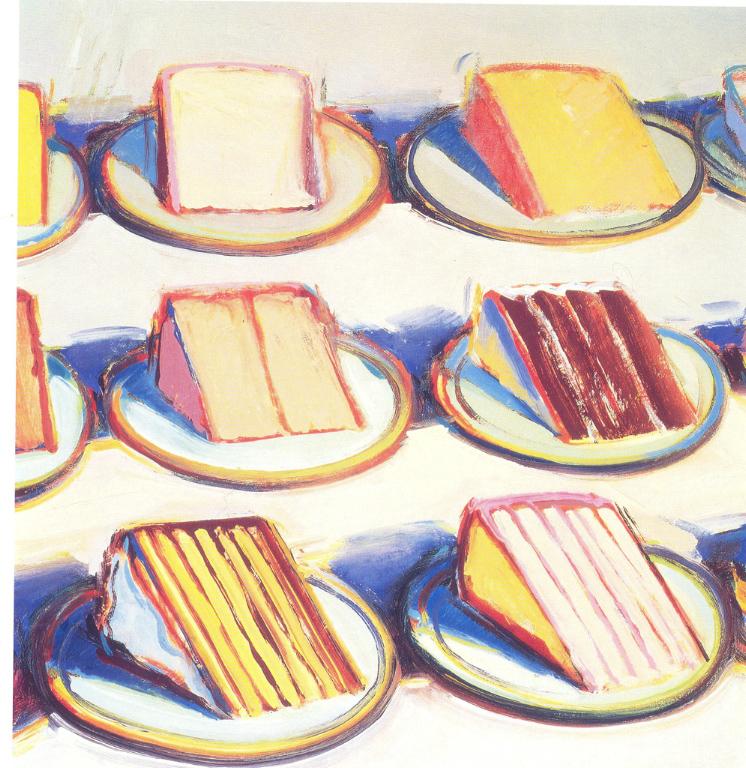
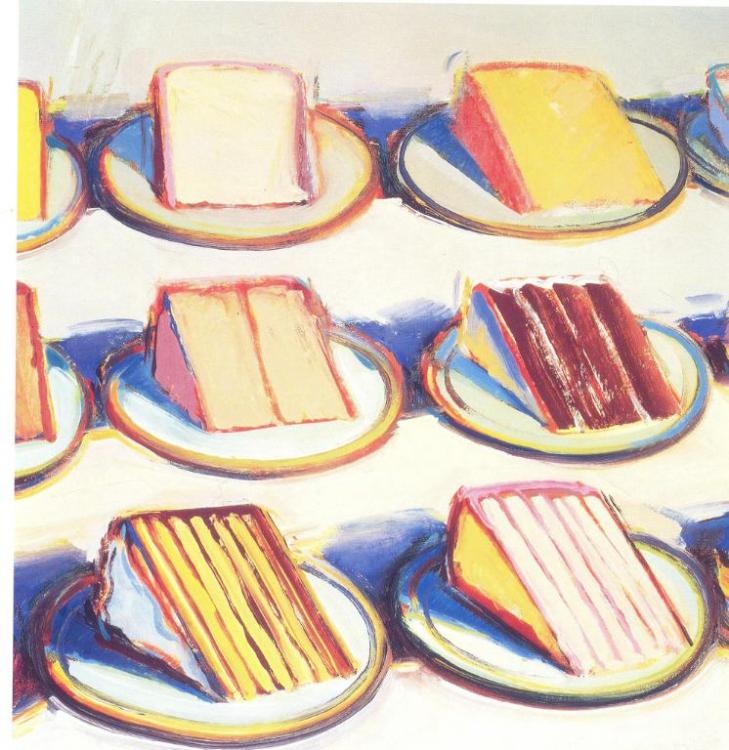
The painter Wayne Thiebaud paints wedding cakes and makes millions....last year one went for $8,760,000! Wish I could make that kind of money for a wedding cake hatchet....
-
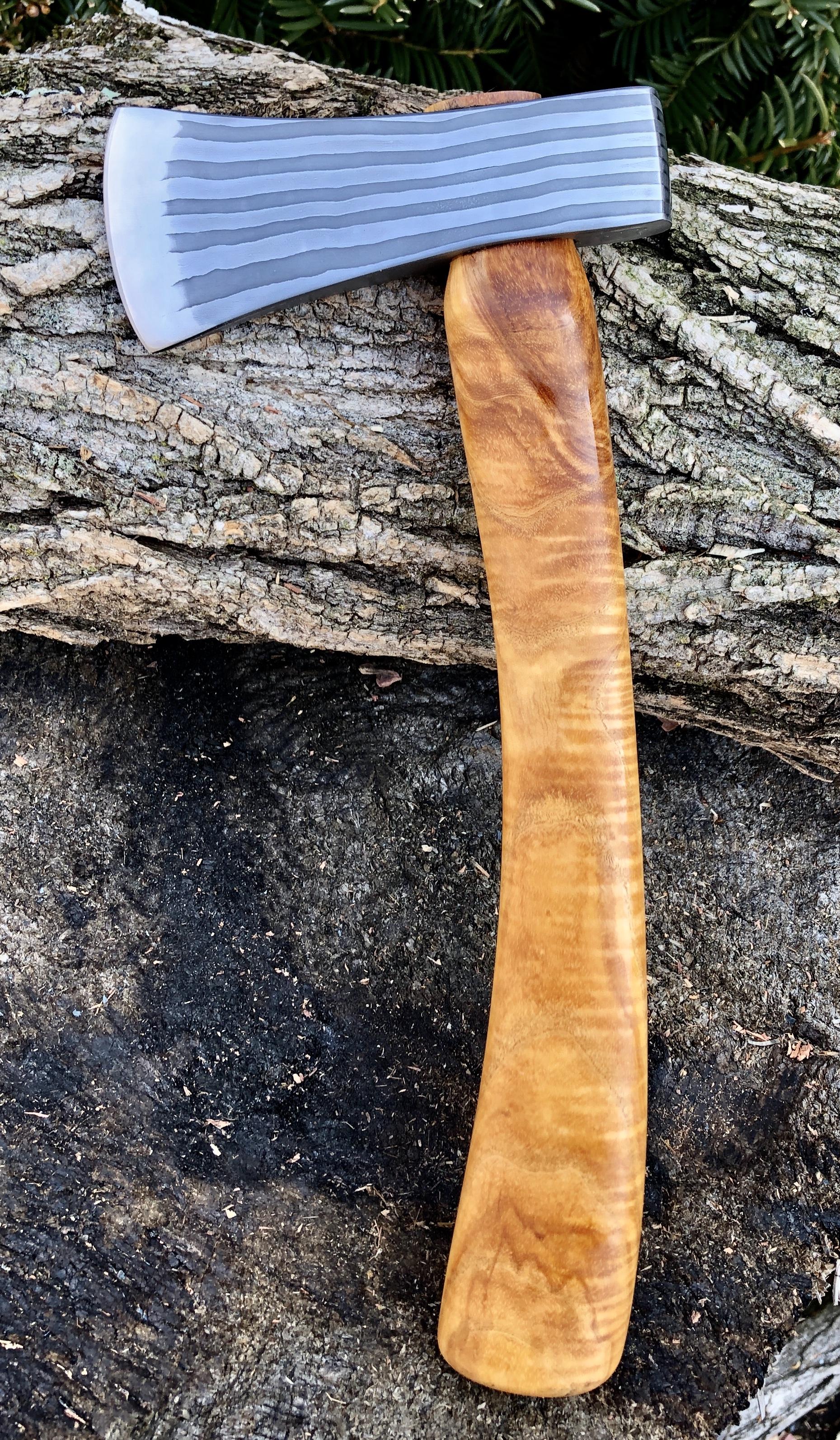
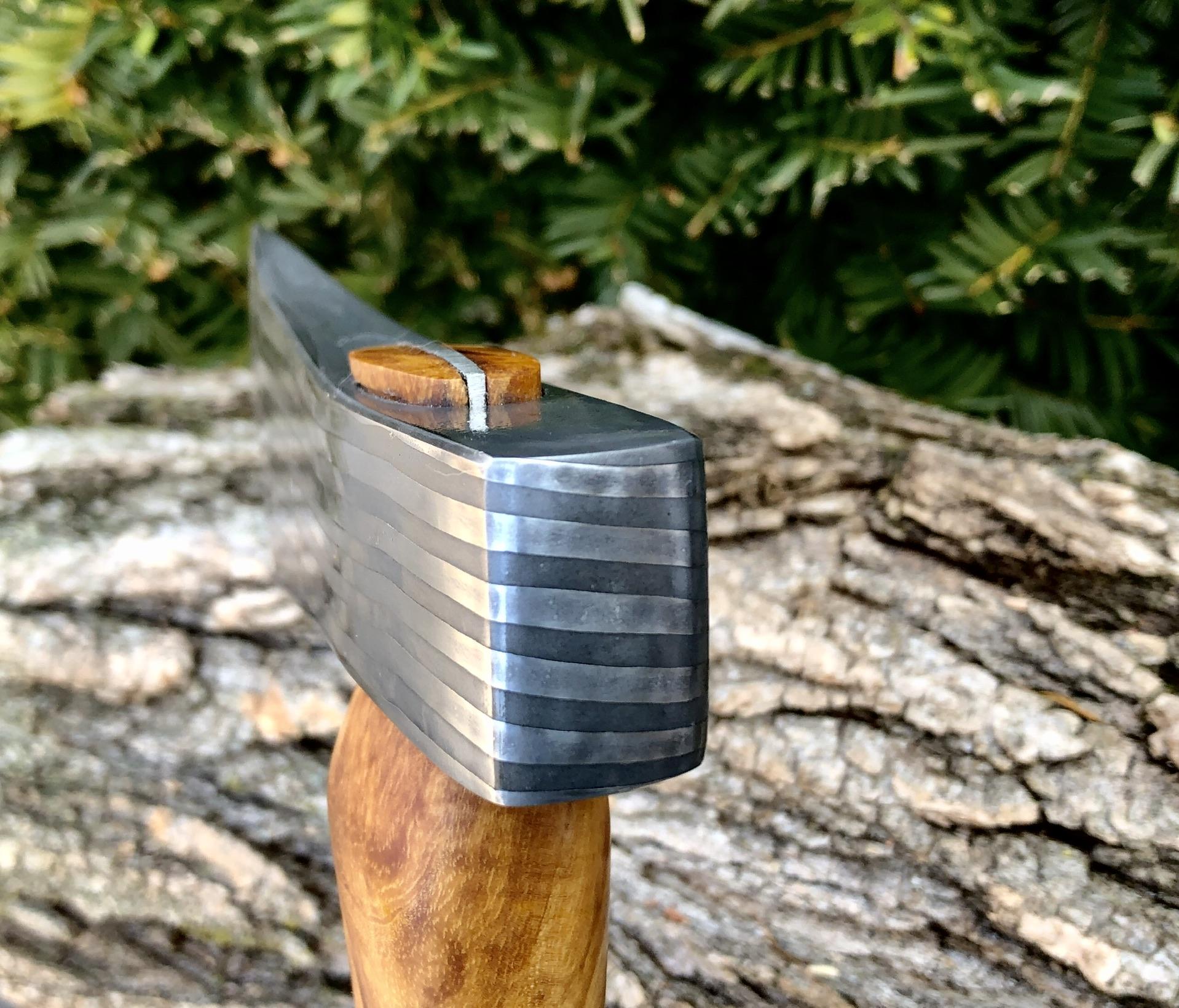
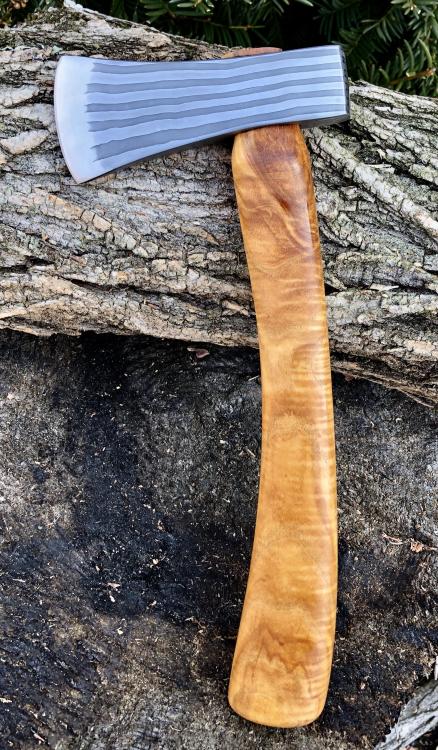
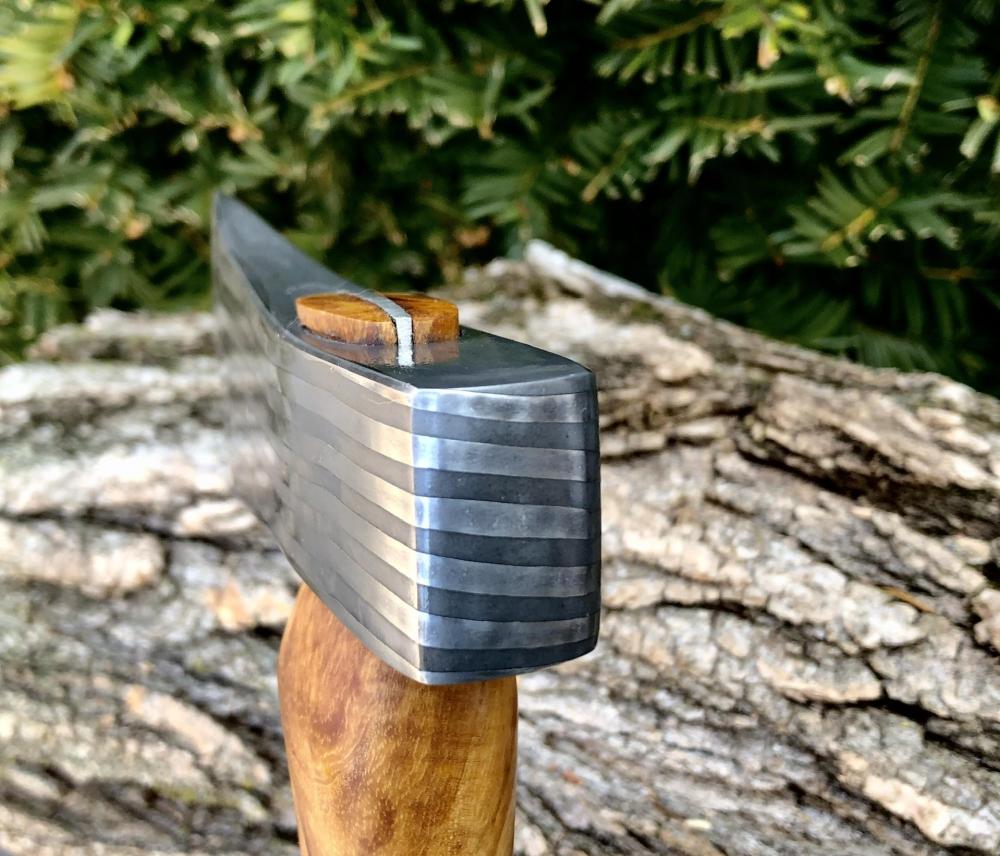
In educating myself on low layer pattern welding, I decided to give a stab at the simplest possible approach. The original 1084/15n20 stack had 14 layers, and the handle is from a rescued horse chestnut branch that was trimmed near here last year.
-
Would love to see a picture of that.
-
Nicely done indeed! I too am a year out from a broken collarbone and then, last summer, follow up 95% rotator cuff repair. One arm blacksmithing ain't easy....
-
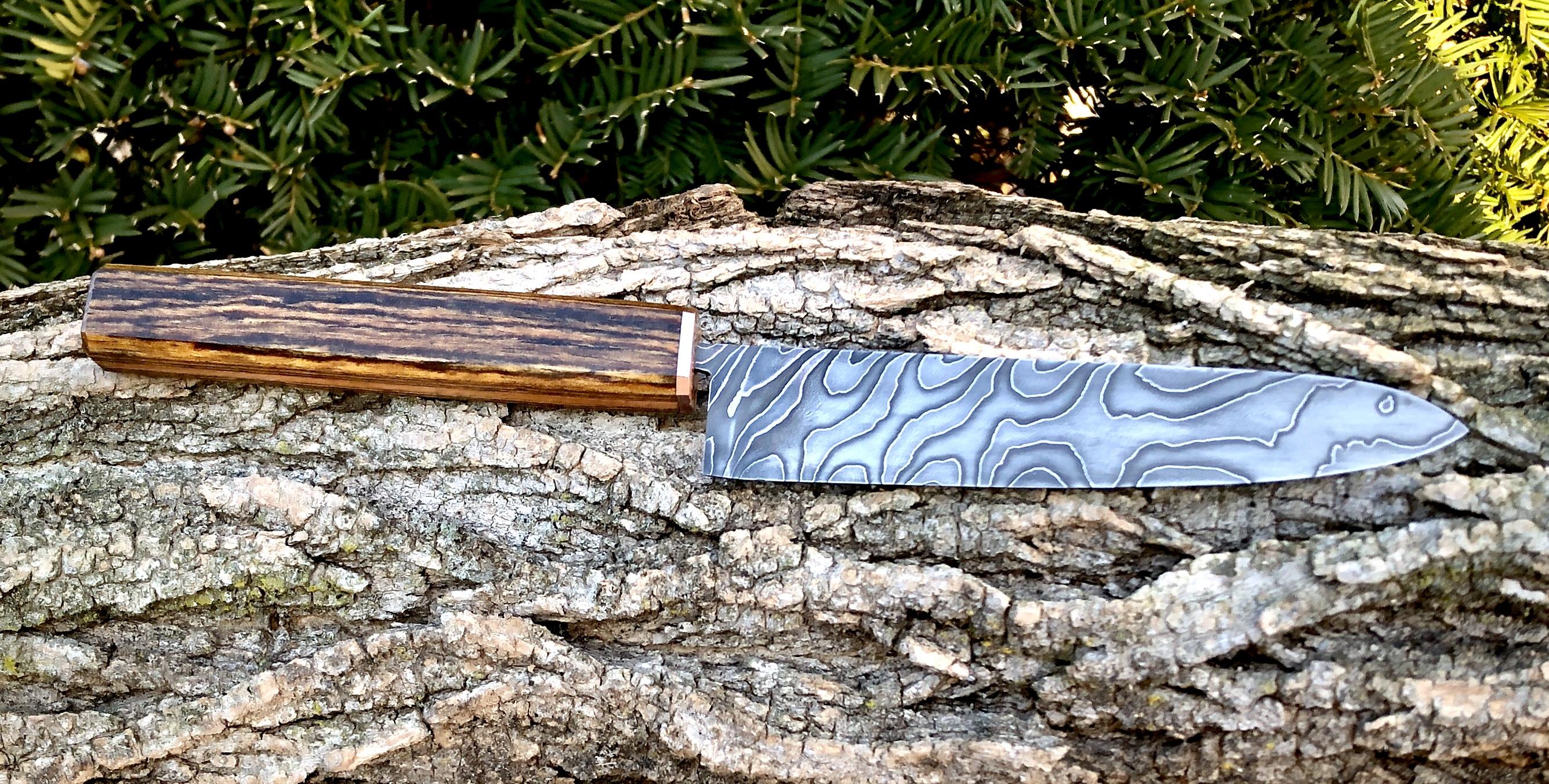
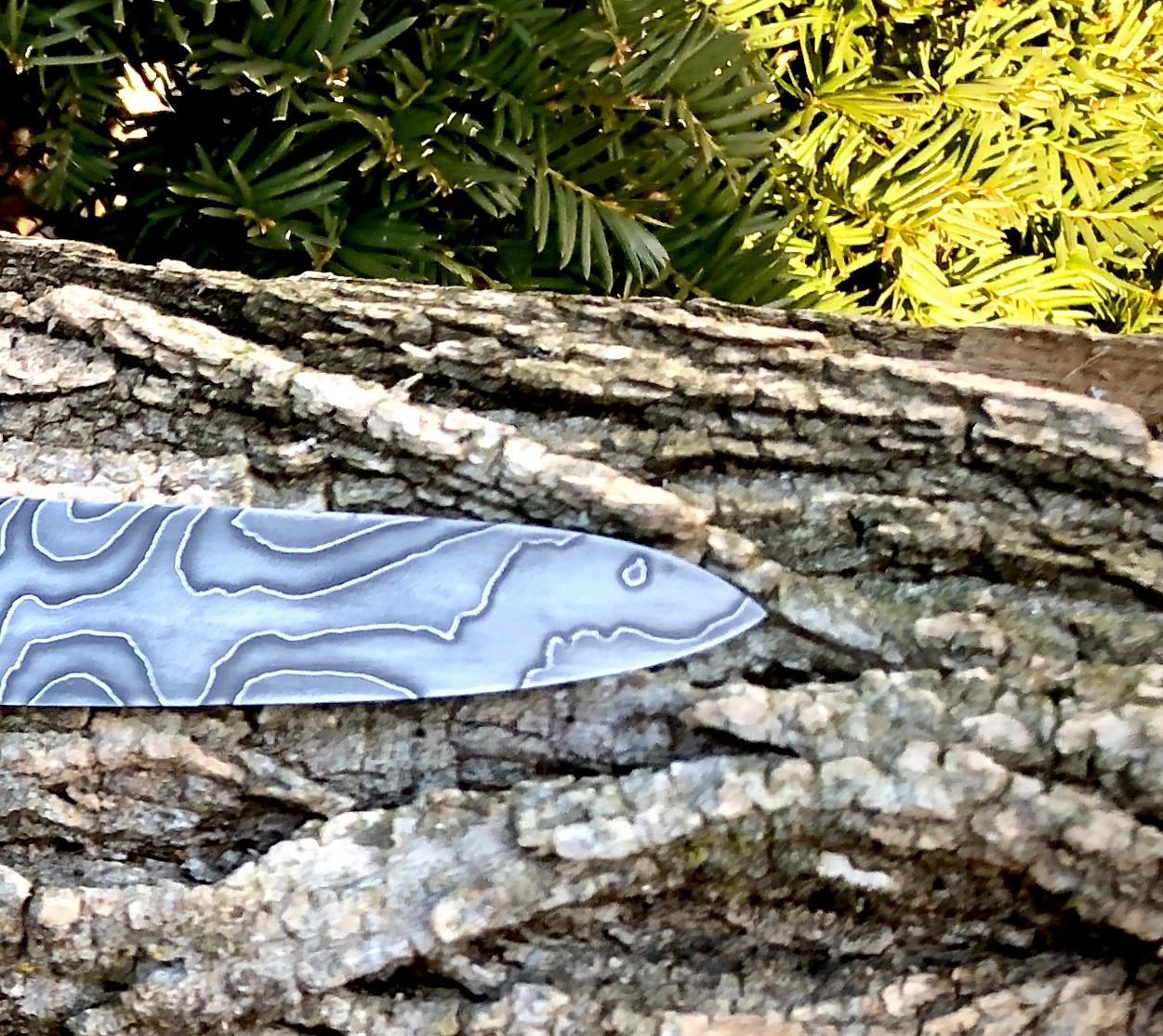
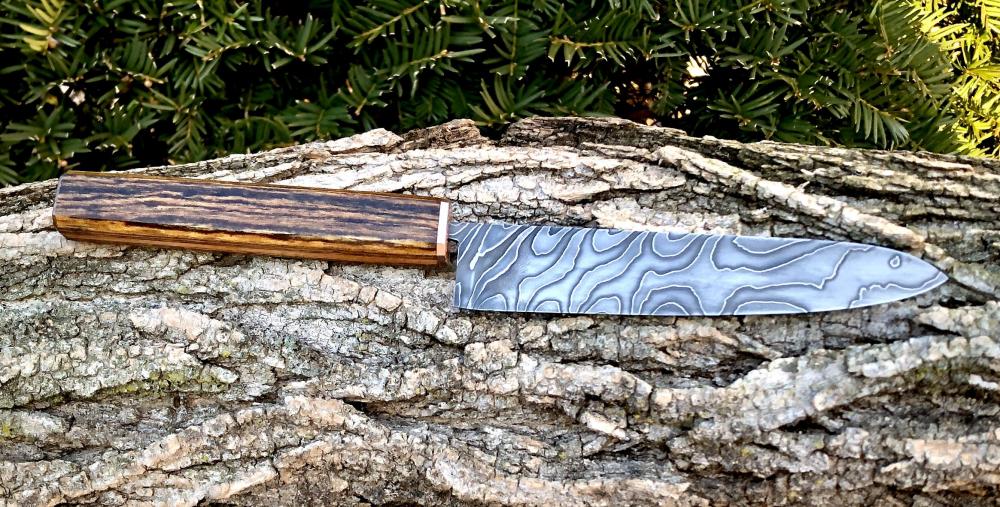
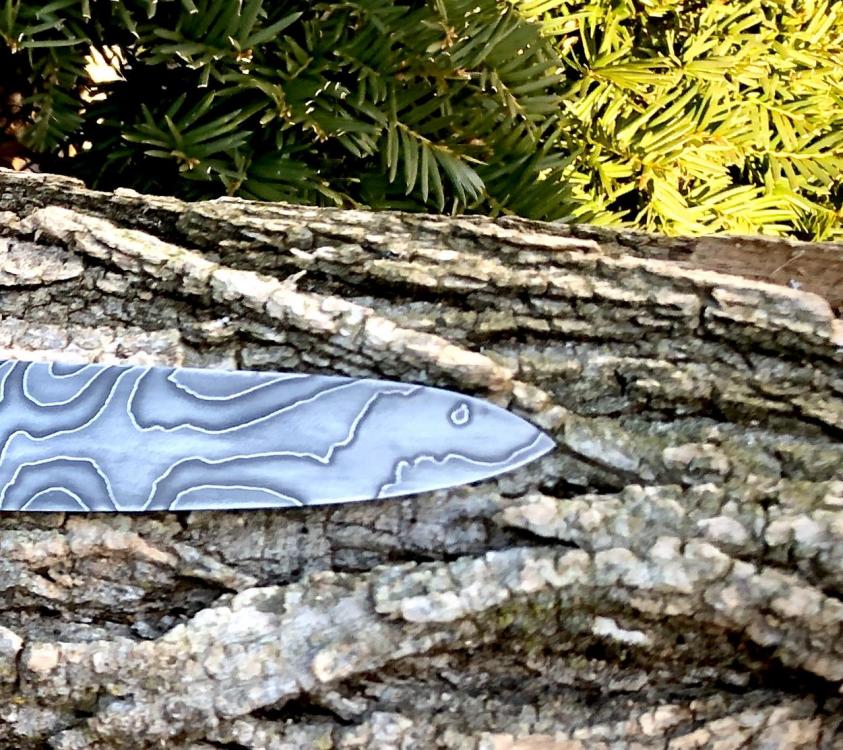
In an effort to do a simple twist Damascus knife, I ended up uncovering an odd fish who was hiding in there!
-
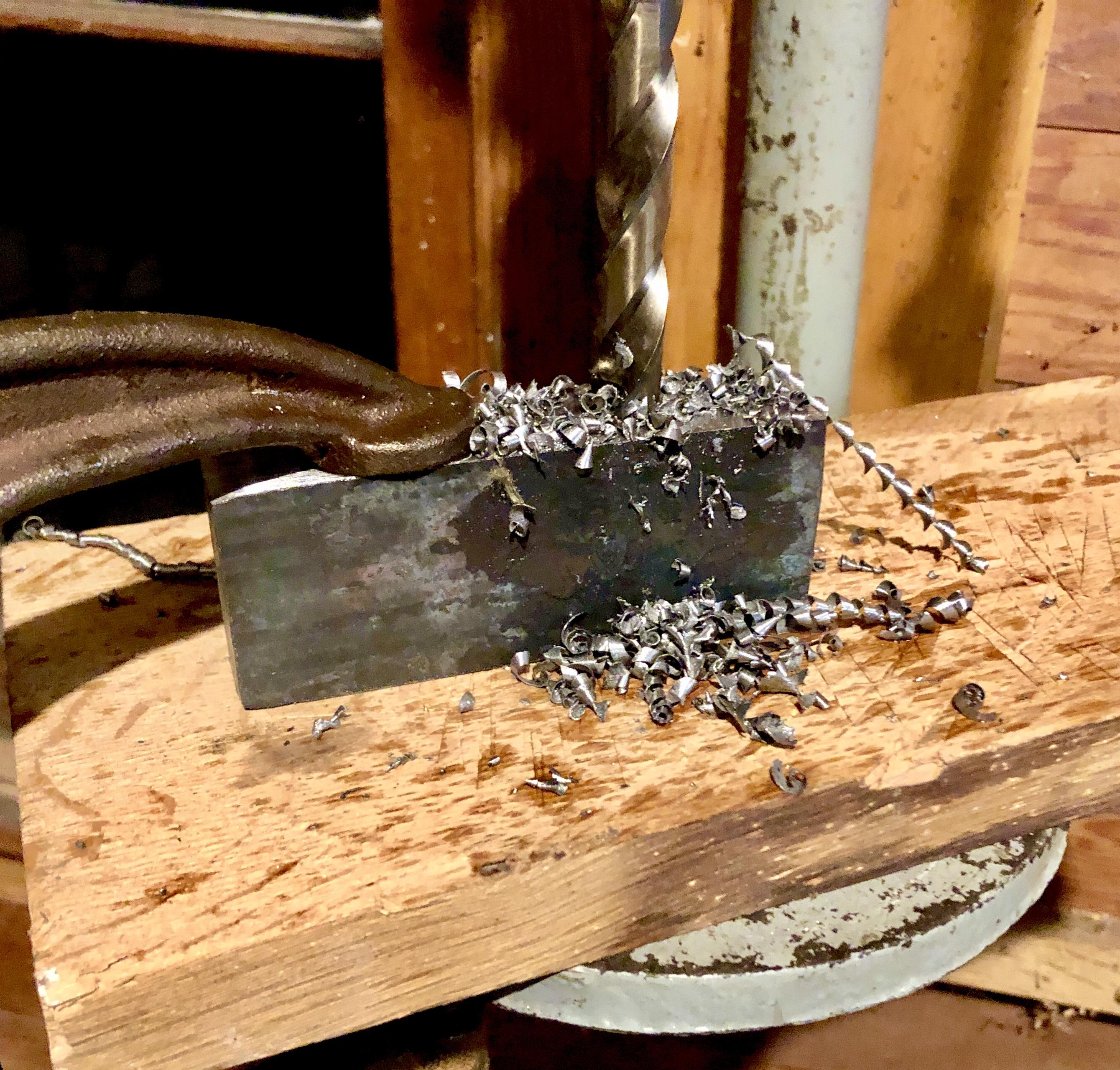
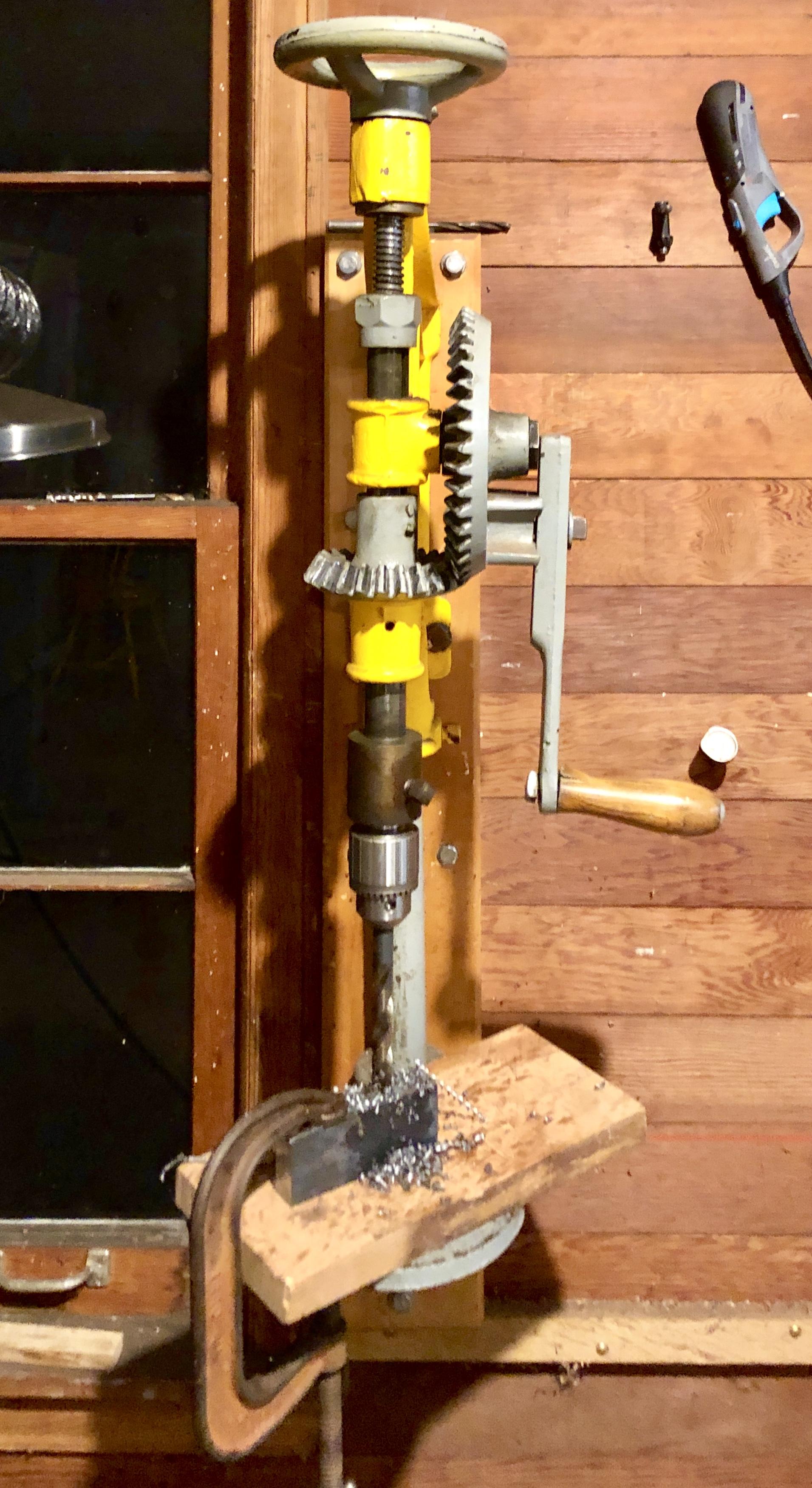
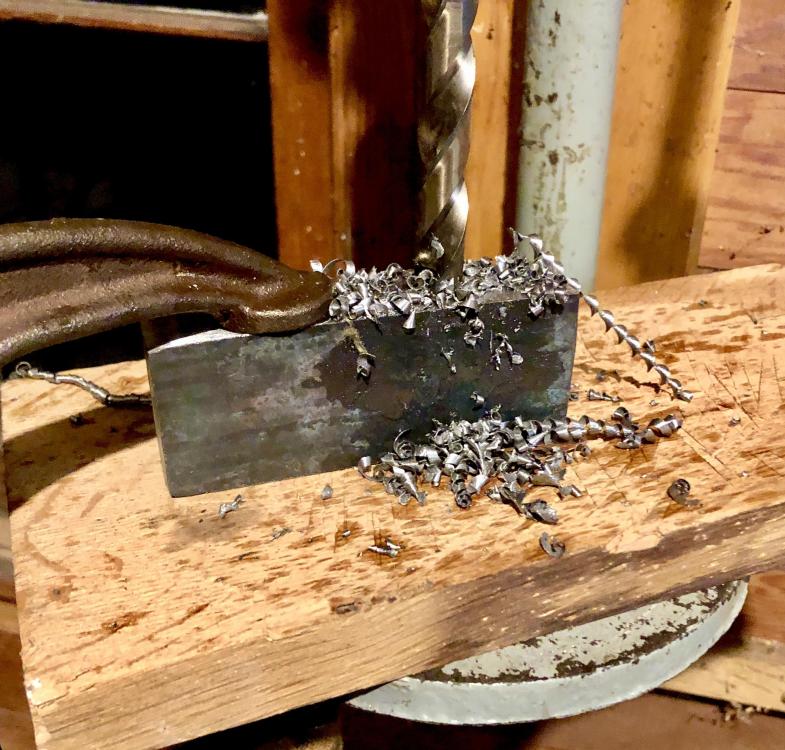
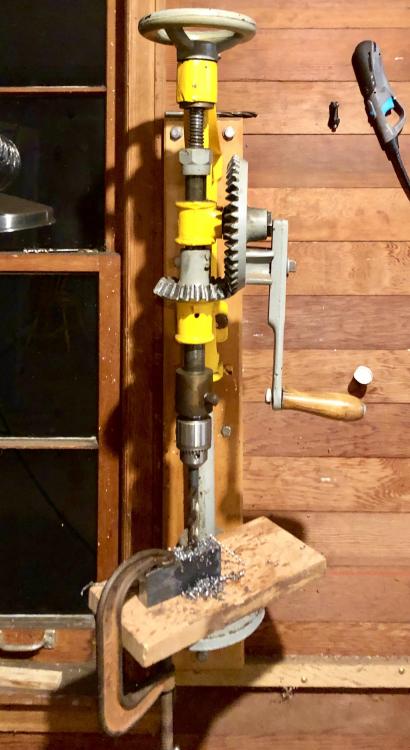
While it is hard to drill an 1/8” hole in the thin 15n20 pieces, my good old Silver Mfg. 1 1/2 post drill ripped a 3/8” hole through a 15 layer forge welded axe billet:
-
Which brand/model do you have?
-
Stunning workmanship. Beautifully done and the patination is perfect.
-
Thanks Thomas....wow, those better quality bench punches are pricey!
-
One question to follow up on this: drilling 15n20 is a beast! Even when I drill slowly (using a post drill) and even when being careful not to overheat and work harden the steel I still am struggling to get through the 1/8" pieces. Broken a few bits in this process. Any suggestions? By the way, what gauge wire do you use?
-
-
I'm my own striker and not a very impressive one at that! Henceforward, I shall march on with my quest to be the Master of the Mini Billet.
-
Yes, but they were mighty and powerful, unlike me......
-
Very cool that you've contacted him. He is the Master of the Hydraulic Press! I'm gonna try a stacked laminate axe like the one above. I figure at least 24 layers (the one shown has more but it likely was squished with a big power hammer or press so I won't have as much compression with the hand hammering.
-
So do I. Just doing simple patterns...the fancy stuff is way above my pay grade!
-
Just to add, we are very lucky to have access to the internet for learning. There are many wonderful videos and websites that, in addition to hands on experience in the shop, can greatly accelerate our knowledge about steel, knife making, and the history of blacksmithing in general. Yes, there are more than a few bad videos out there but you can begin to sort out the good from the not so good. Once you start experimenting with other knife steels you will begin to see that it is really important to know about the different compositions, material properties, and individual quirks associated with each. And yes it is very much a pattern of trial through error. I have a bucket in my shop filled with my dozens of failures and I often reference them often when either talking to others about blacksmithing or when it is useful to remind myself of a past error!
-
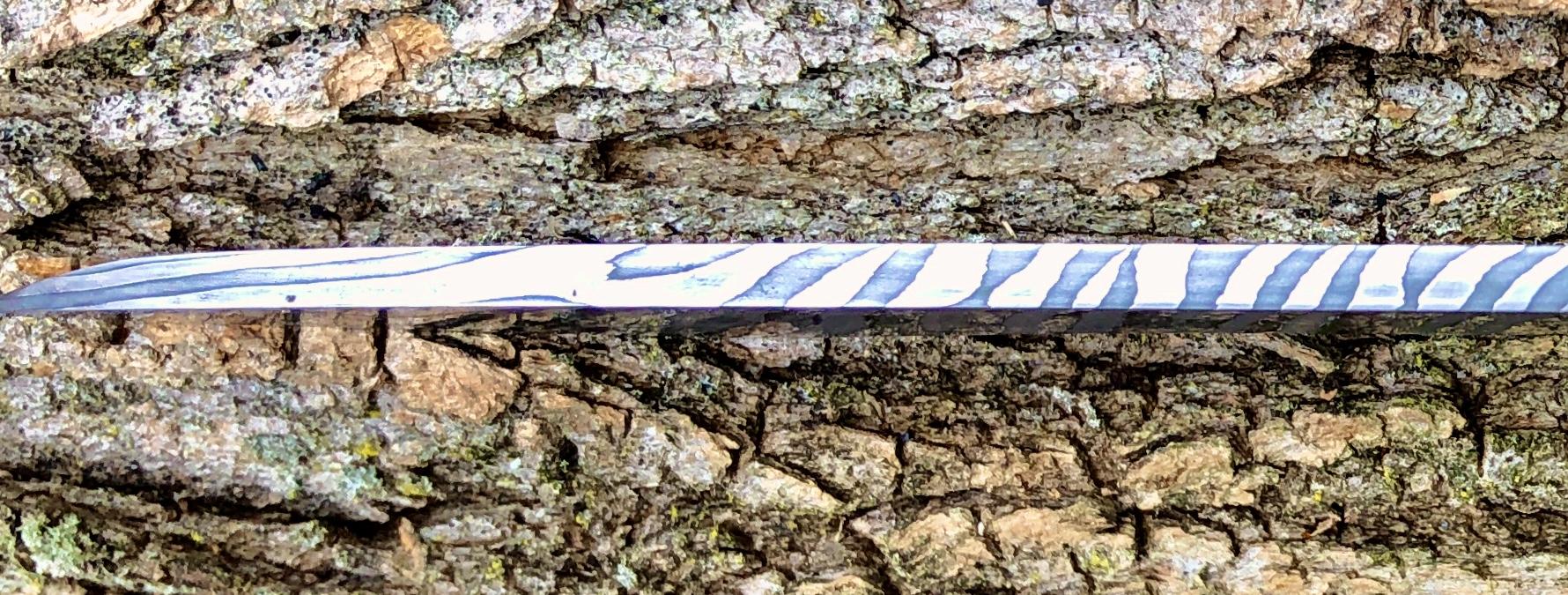
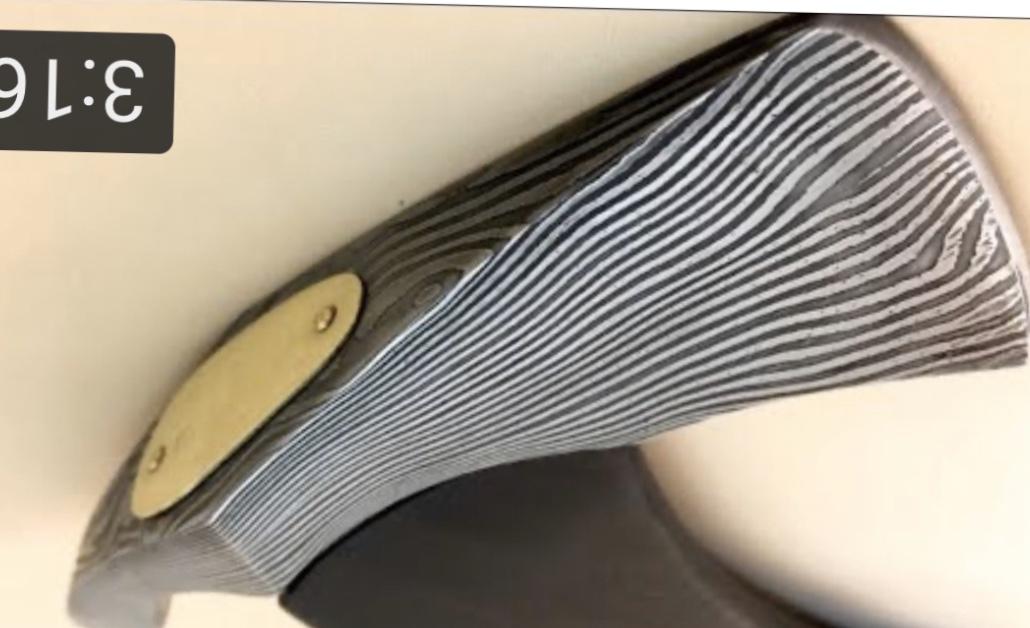
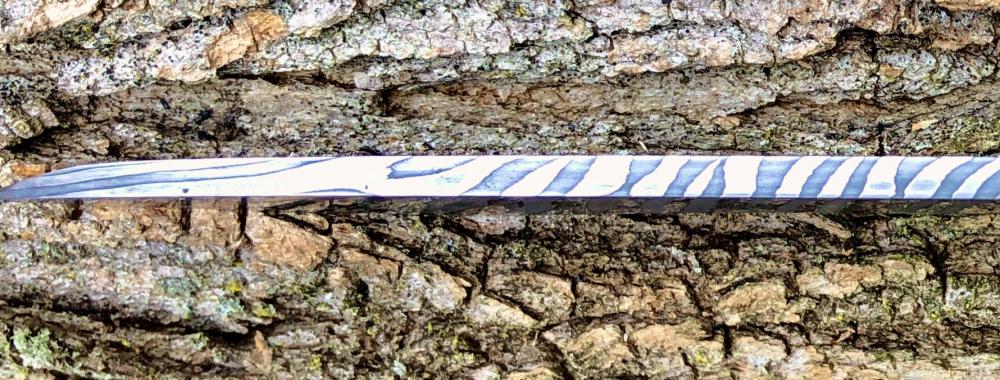
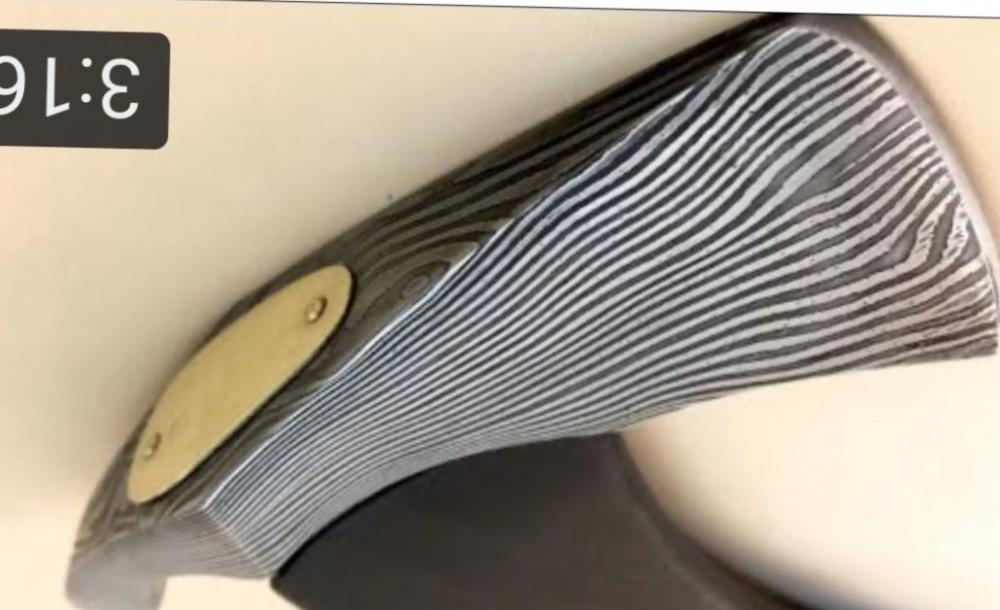
Not really....the twist reveals the two metals. On a flat stacked billet, untwisted, with a few possible exceptions where the nickel steel comes through the outer layer you would pretty much only see a fine linear, layered pattern on the spine. Now if I were stacking 30 layers or so and flattening the billets across the layers it would be possible to orient it to show the two different metals--not sure however if the structural integrity would hold up in such a thin, striated blade. Picture shows spine pattern on the twist Damascus. Found the cool layered axe online.
-
I'm a huge believer in the power of being an apprentice for a while....even if you are 59 years old like I am. Traditionally an apprenticeship could be as long as 7 years before one was considered a journeyman blacksmith capable of going pro. Not that one has to wait that long today to sell your goods but maybe there is merit in producing another 20-30 knives of different types and, importantly, made with knife-quality higher carbon steel. It is a moment to embrace because this initial time of learning is a such an incredible experience. There in fact is a lot going on in a hand-made knife--materially, technologically, ergonomically, and aesthetically--and as a part of that there is a lot that can go wrong. Experiencing these failures first-hand has for me been essential to becoming a better and more well informed maker. Latticino and Thomas offer really good advice about how to move forward. Certainly you can give your early knives away as a gift, always a nice thing to do and there are no heavy expectations if they fail. The safety questions raised above are really important. A blade or a handle that breaks while being used can do real damage to the user and/or to the item being cut. In the process of learning how to harden and temper different steels properly I quickly discovered through many highly instructive failures that improperly hardened steel on a hammer, axe, or a knife can not only crack but it can actually break in mean ways that potentially send out bullet-like projectiles. With that said, you indeed are off to a nice start. Keep it rolling.