MilwaukeeJon
Members
-
Joined
-
Last visited
Everything posted by MilwaukeeJon
-
Seems to be very common in both folded and drifted ax bodies to to taper down to a thin edge where the similarly tapered bit gets welded. I definitely will keep on practicing....
-
Thanks for the suggestions. Still working out the ax welding approach that works best for me (and my forge). Maybe this is common but I find that the thin edges of the slit end of the body don’t tend to weld so well. As a result there is a bit of grinding or filing to get back to a solid weld.
-
I’ve been making more axes recently and so far have used 1080, 1080+, 5160, 1045, and 1084 as bits. Any thoughts on which is the easiest to forge weld (in a gas forge) to a 1018 ax body or do they all generally weld the same?
-
Nicely done!
-
JHCC, what size was the stock, what kind of steel, and what was the finished size?
-
Great thread. My new treadle hammer (a prototype by a maker who may go public once his design/construction is dialed in) has nearly 50lbs of lead in the head. It is fun getting to learn the tool and certainly when doing fullering/flatting this machine can greatly speed up what I can do with a hand hammer. Still I love having the option to either use a hand hammer, which can offer a very different type of control and power. On another recent project, drew out the tang for a knife on the treadle and it was so easy. Far more efficient movement of the steel per heat than with a hand hammer, and far cleaner result because of the flattness of each blow. Looking forward to doing more piercing, cutting, and drifting to see how that does as well. Expect that to be far easier on my arm and faster as well. Will never crush big pieces of steel anywhere near as well as a power hammer or a hydraulic press....not even close! But it is going to be an arm saver for me in the months and years to come. Ahead, I will need to make some additional smaller flat dies to help target the blow (1 1/2" top and bottom will be good for me) and make also some some rounded/angled dies for specific fullering. Already made a little angled fuller for setting the initial V-shaped grooves on a folded axe billet. Fun stuff!
-
Thanks
-
Thanks Buzzkill. I've never used an electric welder and am looking for a solution that is really easy and inexpensive for this small scale stack/rebar handle work.
-
About to start doing some small billet pattern welding (hand hammered) with 1084 and 15n20 steel, or should I use some other high carbon instead of 1084 which I have in stock. Will be making some knives, nothing too fancy. I've never welded so what is the proper type of welding tool to get to secure the stack and to put on a rebar handle? Thanks in advance.
-
Relatively quiet...don’t know if the company can offer you a dB rating.
-
https://www.ventafume.com/
-
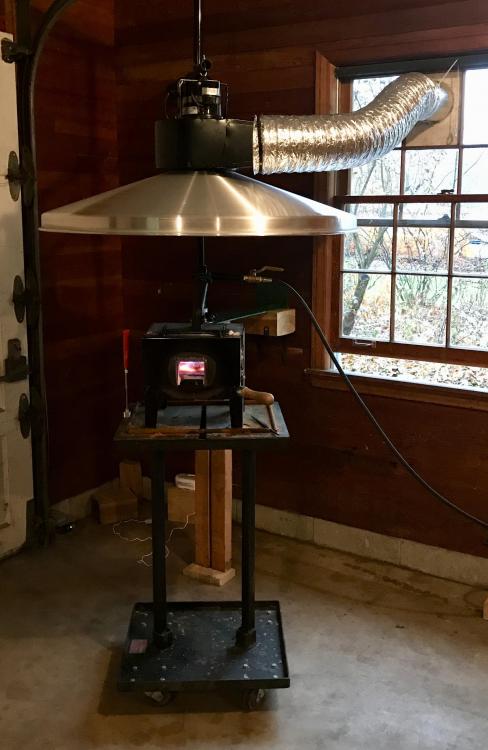
Motor does run hot but that apparently is normal. Air coming out of the pipe is merely warm. Brilliant design and surprisingly inexpensive.
-
Have had great luck controlling dragon’s breath/heat and dangerous fumes with a 37” Vent-A-Fume hood. Surprisingly powerful yet also quiet. Also works very well on my 3 burner Whisper Daddy forge.
-
That is good to know, Jspool, although I did try some of my really good Japanese and German knives for comparison and they did pretty well against the oak. The wood tested is really dense white oak and even a 1/4" piece is pretty tough. Clearly, my initial quench failed miserably and probably due to being too hot at the start. So last week I knocked off the really nicely shaped wooden scales and ornamental pins (yes, the knife was finished before I realized the bad blade!) and heat treated all over again. Much better results this time. Still learning about 1084 and also am going to start a new quench bucket given that the other oil had been in a year and may have impurities in it that don't help a successful quench.
-
One added bit of info. I did a 2nd tempering cycle, during which time I used a steel bar, two spacers and a C clamp to remove a small warp. In a rush to get back out to the shop I rapidly squirted the whole thing with cold water from the kitchen sink. My thought, perhaps mistaken, was that folks rapidly cool objects on which they are letting the colors run. Bad idea for me to quench right out of the 410 degree oven?
-
What else would be helpful to know? Normalized three times before quench (10-15 minutes, heated to orange color...can say that my gas forge seemed a tad hotter than normal). Also, I did not overheat blade during grinding/polishing.
-
Forged a larger kitchen knife from 1084 this weekend and thought all was well but after sharpening and honing it is clear the blade lacks integrity. Specifically, the edge crumbles pretty badly when chopping a 1/4" thick piece of white oak (using a hewing stroke as with an axe). Also, when I polish the blade with green compound on the buffing wheel (soft) the edge shows evidence of hair like pieces coming off. Not good! Looking back, it seemed as if the whole making process went well. however I did do a second heat treat because the quenched blade initially had a nasty warp (the straightening process involved reheating the blade to orange, bending/lightly hammering out the warp, reheating to critical and quenching again in 140m degree canola oil). It may be worth noting that the after the first quench the blade looked better, more like my other more successful blades (right color, large black flakes that came off during the quench). The second heat treat did not do the same. Any assistance on where you think this went wrong would be appreciated. No big deal messing up this knife and maybe I can use it for light duty work in the kitchen. But certainly am interested in not repeated whatever mistake I made. Thanks in advance for your advice.
-
-
-
Jason that is a neat machine. Sent you a PM.
-
-
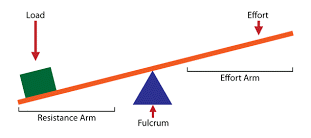
Great idea. I need to keep messing around with drawings. The wall mounted spring could cause some bodily harm if the hook end let go and flew back at me! In theory, and again this is just playing around with the mechanical concept and not necessarily logical or practical at all, would a kind of “see-saw” logic work for a hammer of this sort....with a nearly central balance or pivot point and a rear spring between the extended (think twice the normal length) sledge handle and the floor? This of course makes use of the basic fulcrum idea, and would include a sledge on the end of the “effort arm” and a spring under the “resistance arm”: And would one gain more power by sliding the sledge handle into a longer metal pipe (or “arm”) to gain more leverage? This could lead to the creation of a totally ridiculous looking 10’ or 15’ long see-saw hammer! By the way, some lids on historical American and European desks (1790-1840 or so) use internal L shaped interior brackets with heavy balls on one end that act almost like a hidden sash weight, helping the lid open and close more gracefully.
-
Thanks much Frosty. Regarding studs, I do know what they are. I was talking specifically about adding an external reinforcing stud on the outside of the wall (in drawing) but probably not needed. Will play around with this design a bit and I appreciate your helpful input. As for the hinge for the handle an old-style blanket chest hinge with equal 8-10” long plates would possibly work nicely. And I think I can handle the screw hole dimensioning and not get too confused.......have been building furniture with traditional hand tools for a long time now. Just very new to smithing as well as any sort of metal fabricating and machine making.

-
-