jason0012
Members
-
Joined
-
Last visited
Everything posted by jason0012
-
Just hanging a curtain of moving blankets would cut noise. I doubt there is anything terribly special about the sound absorbing blankets. It might be worth using welding blankets for fire resistance, and they are good and heavy.
-
If you are more geared twords fabricating work anyway, have the scrolls plasma cut from plate and weld up with flat bar to build a tube in the scroll shape. You likely are already equipped for this.
-
I have tried renting shop space a few times. Moving a blacksmith shop is an awful and traumatic endeavor. Unless you expect to move shortly it would be advisable to buy rather than rent. I rented a large farm shop for a few months, and only got half moved in when the owner started changing locks on me. I tried to rent several times from artist co-ops, and after four of them strongly sugest you not even consider them. Of three of them who declined my lease based on fire hazards, one burned to the ground, and two have blacksmiths working there now. One doubled the rent every time I spoke to them until my 800 sq ft space was reduced to quite literaly a 10x10 meat locker for four times the initial rent. The last was a comercial building in an industrial park. They were actually not a bad situation but the opportunity to buy my new place arose. I had concerns about noise, vibration, and security in the industrial park, as the building was shared with several not so "open to the public" looking businesses. Having to pack up and move machinery and steel overnight is enough of a concern to make me exceedingly reluctant to rent.
-
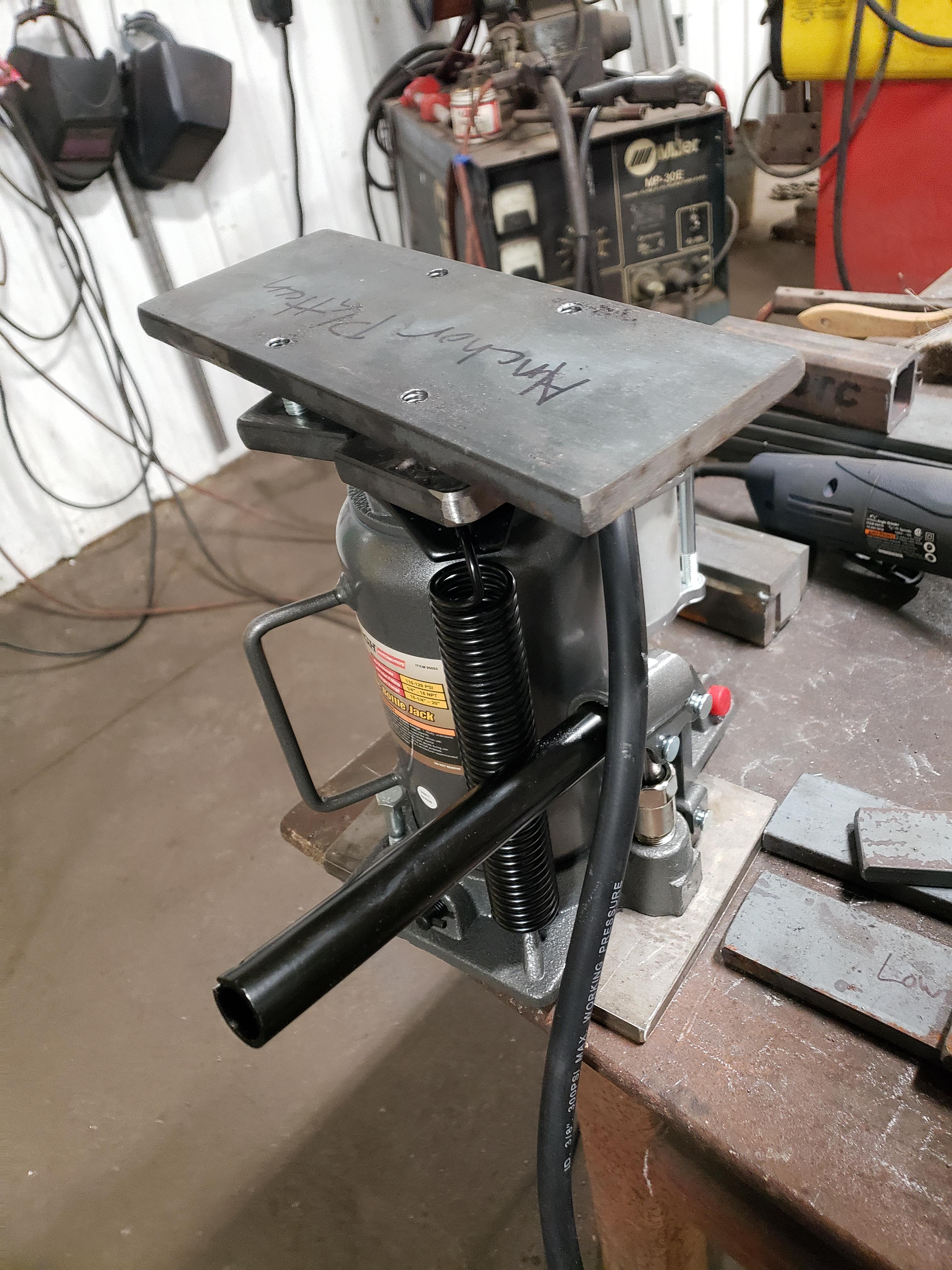
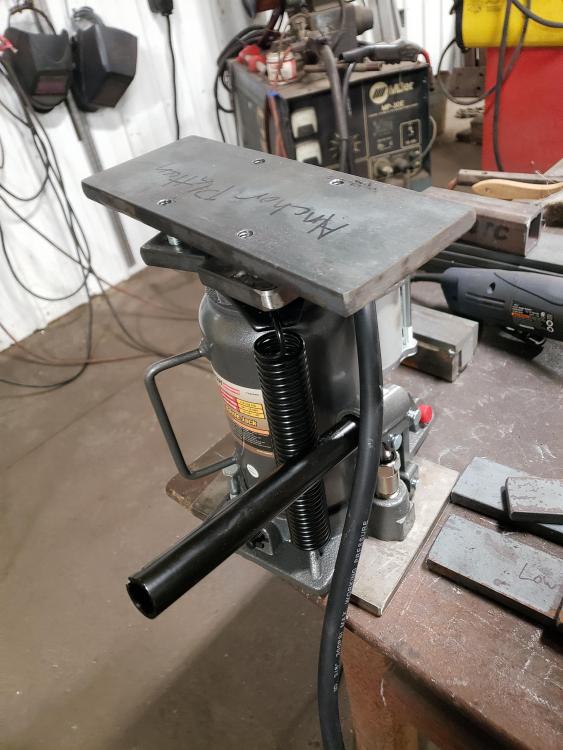
Picked up the jack today. I got sidetracked on assembly but it needs to come together tomorrow as real work is looming. I dont expect much from it, but do hope it will be up to punching holes.
-
Rotary converters are super easy to build, and if its wired right can give true 3 phase which means full power. That doesn't help much though if you just don't have enough power though. If it means you can get it runing although having to run to the neighbors I think I would be inclined to do so just because part time access to tools is more productive than no access. I have loaned out loads of tools over the years and sometimes things go wrong and I regret it, lose tools and materials ect. For every time things did not work out, there were the times it saved someone's butt, or worked out well. Go with your gut if you trust this neighbor. If it goes as planned you will both win. You just have to weigh how likely you think it is for things to go badly.
-
There is good reason I avoided them. I never felt it was even possible to get a decent edge on such a blade. I was thinking of the scalloped sort of edge some chefs knives are inflicted with. Like it or not I actually have one and it baffles me how one would touch up the edge on such a knife, not that it is really important.
-
In a recent conversation I was asked about serrated edges. I own only one knife with serrations, a Shun bread knife. I generally try to steer clear of them since I have no great idea how to set up/sharpen such an edge. Does anyone here have good tricks for a serrated edge? My only idea is to do a profile dressing to a hard wheel, and honing I am just at a loss. I will admit, I have not experimented with this.
-
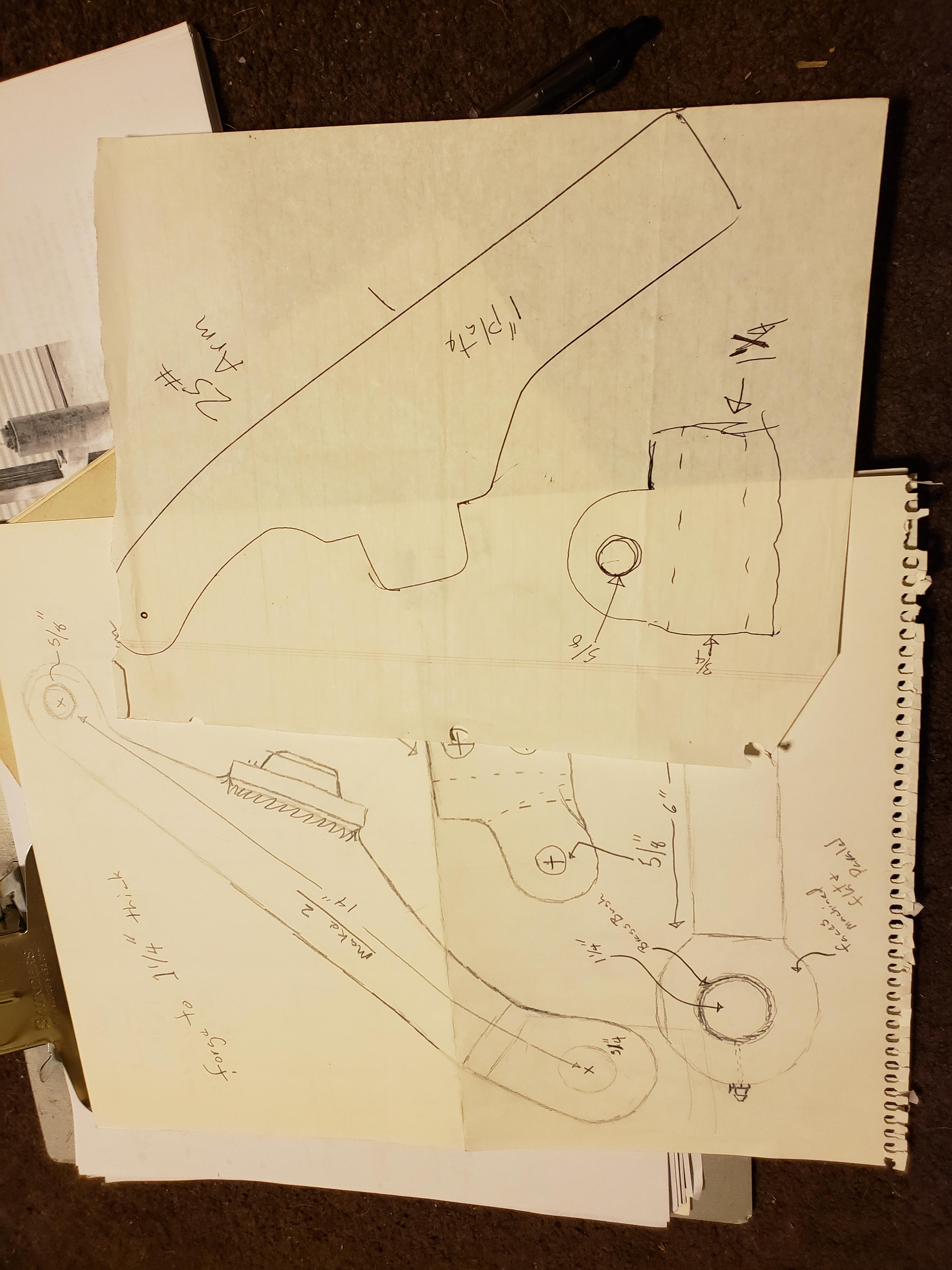
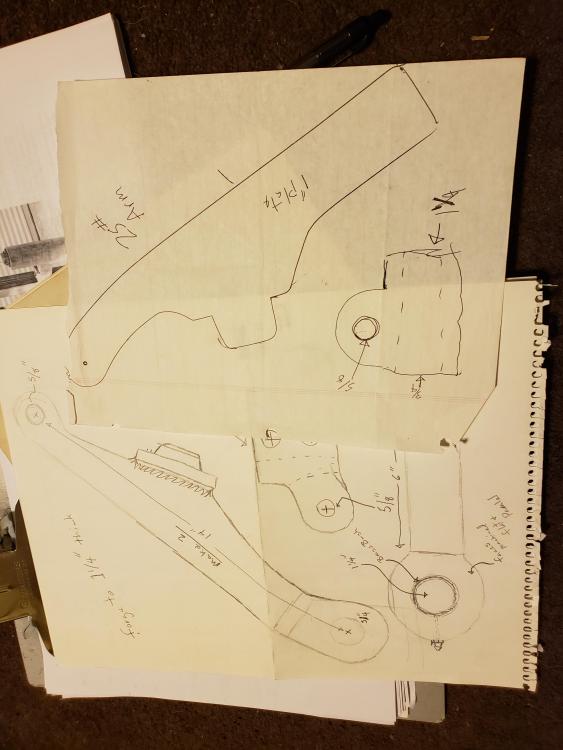
Here are a pair of tracing from when I worked in a shop that flamecut arms fro 1 inch for a 25, and 1 1/4 for a 50. For the clevis, we would weld tabs of 2x5/8 with pin holes to the end. Pin to pin should be 14" i think for a 50. These were the easiest arms i have ever fabricated.
-
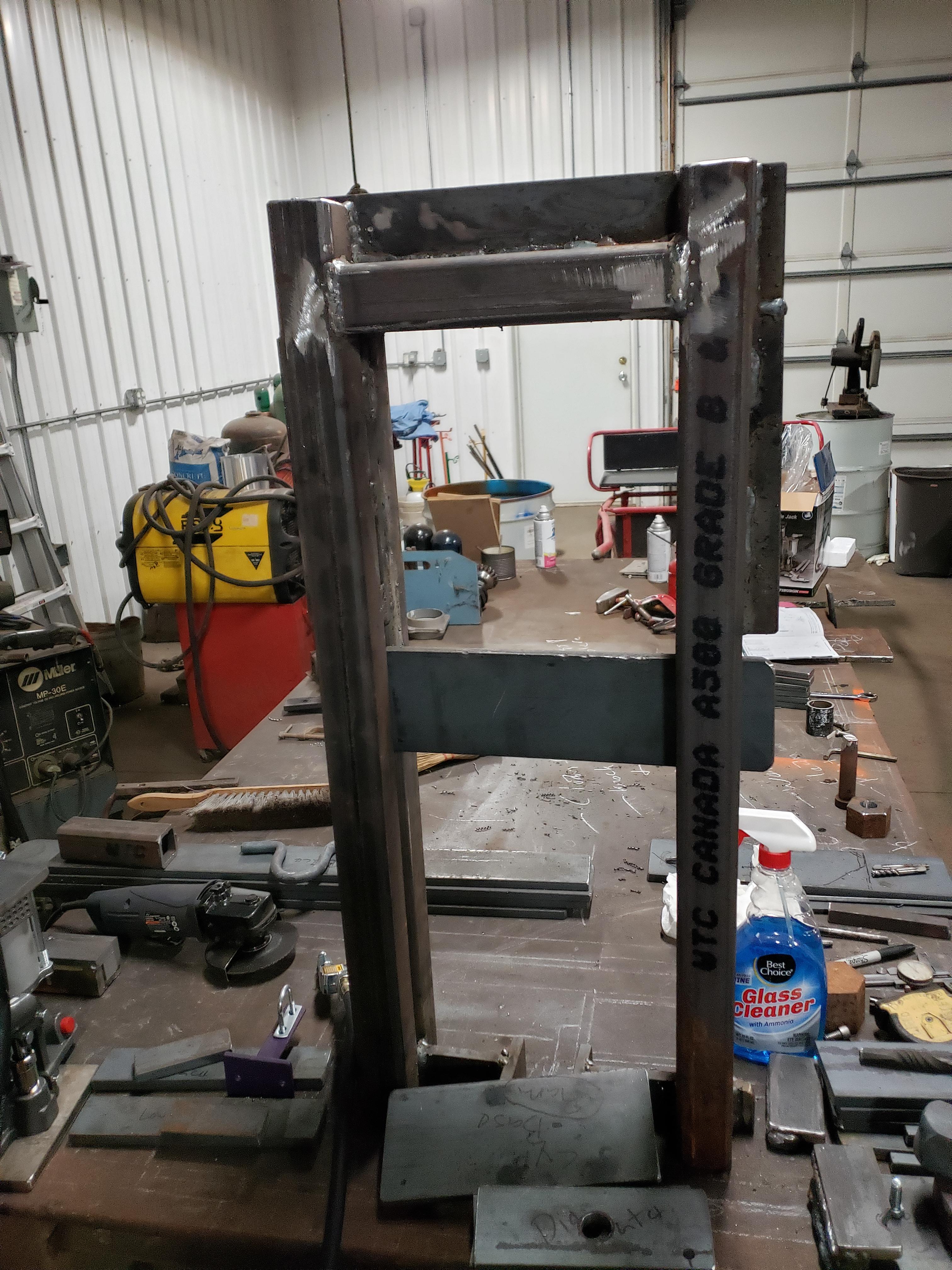
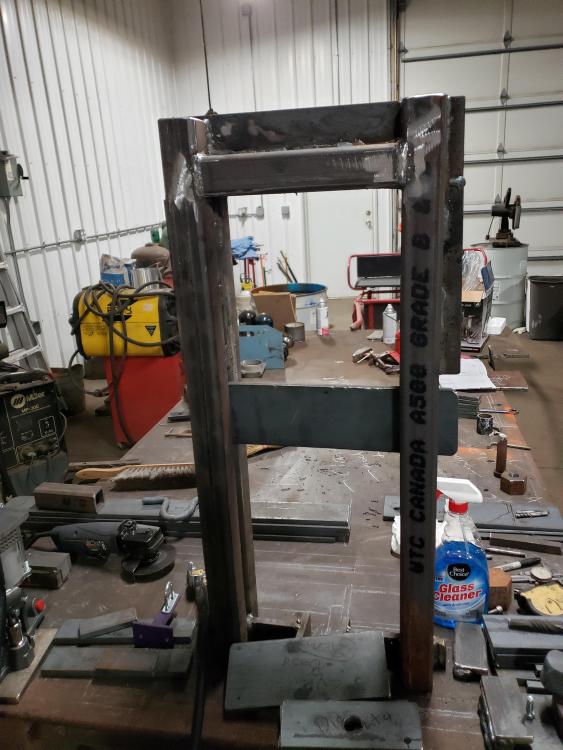
Welding is for tomorrow. I ran the saw for 10+ hours today. I figure if the jack is garbage, this can be adapted to a 2-3"×8 cylinder and run off electric.
-
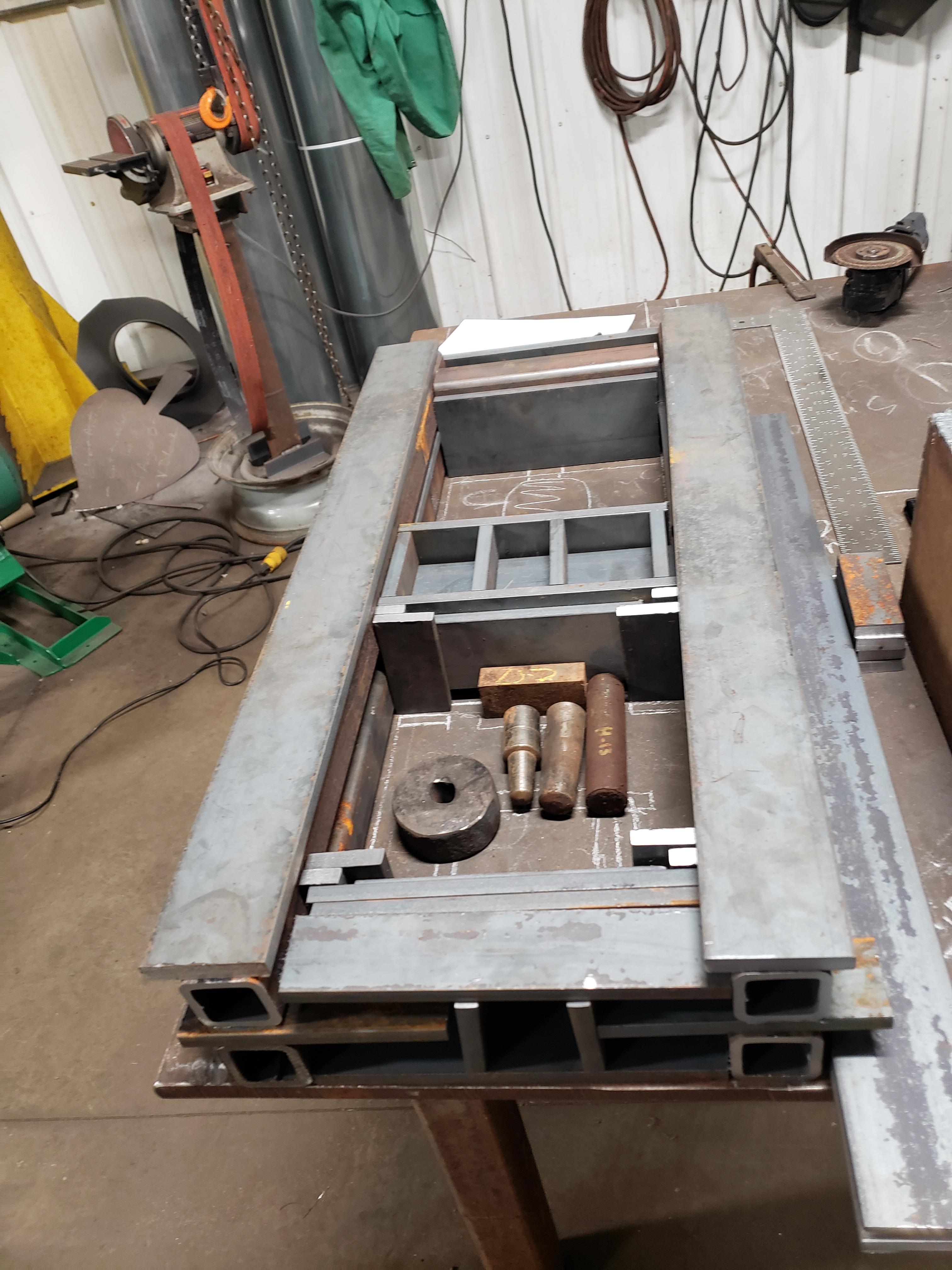
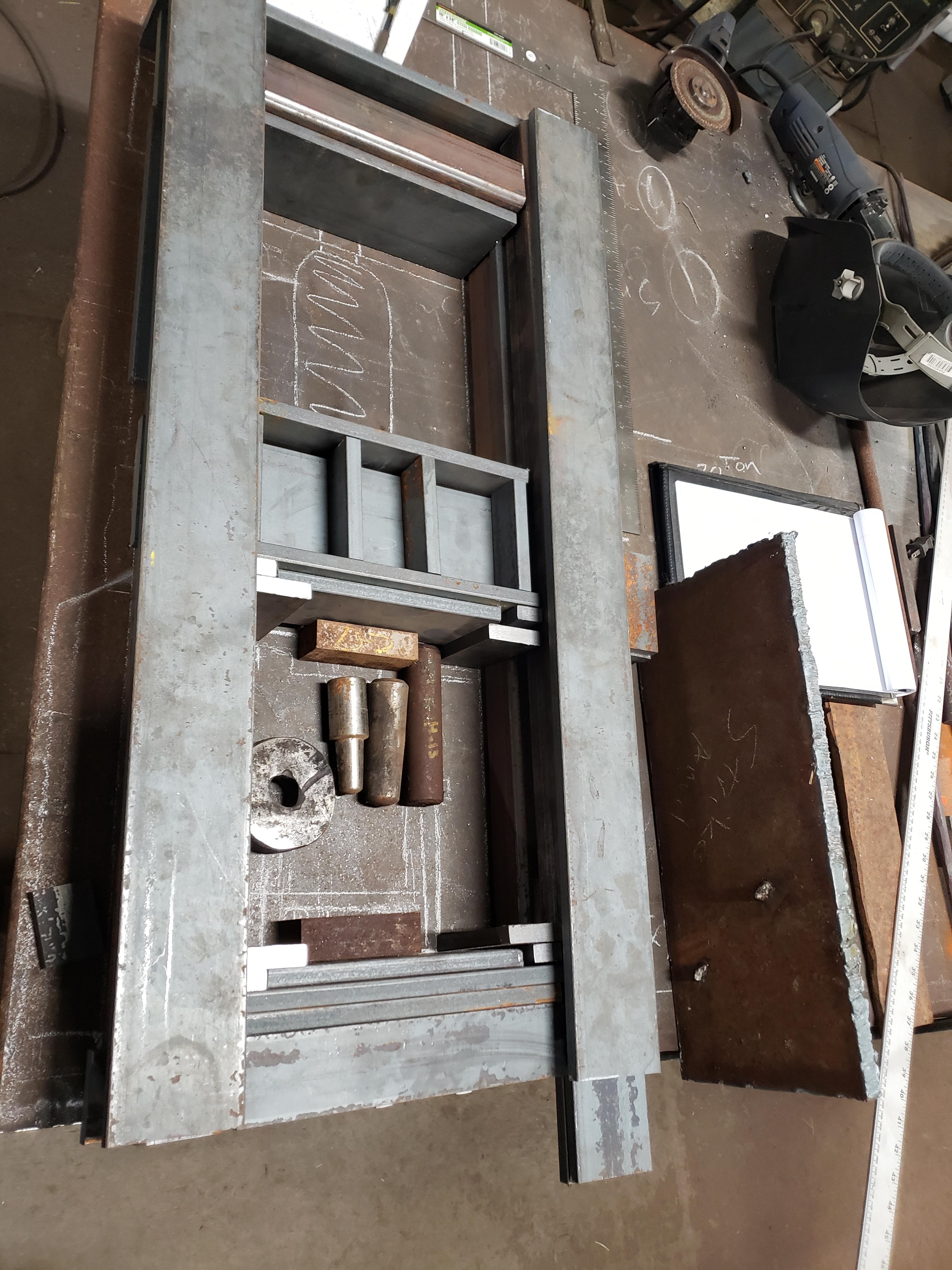
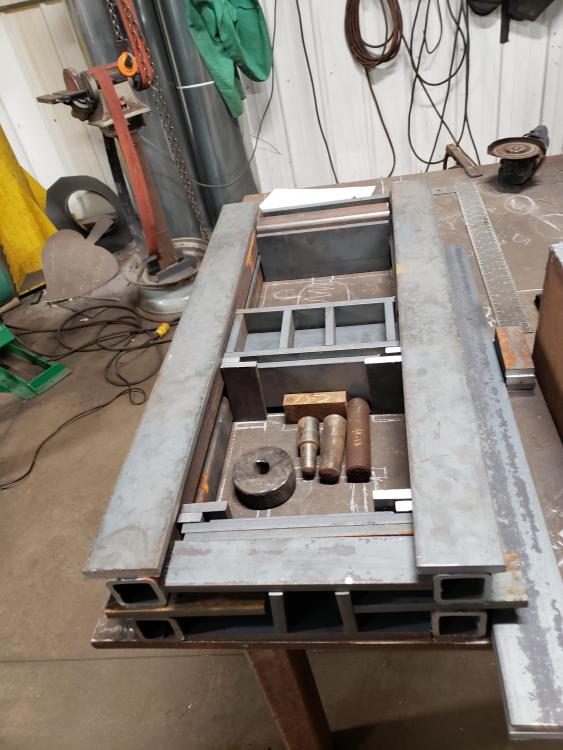
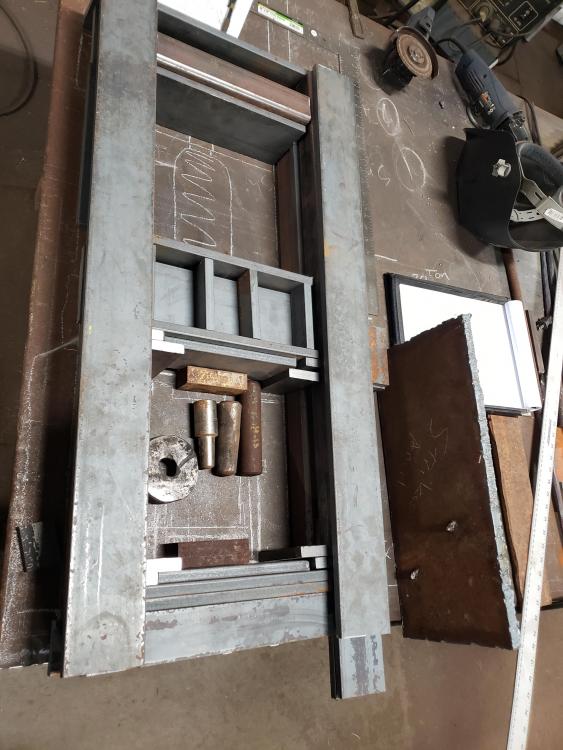
I have a good start on collecting parts for a Batson press, but the big build projects for this year are all either finished or pushed back to January. The idea hit me recently, after moving my bearing press out of my work area. I am looking at putting a frame together for a 12 ton jack. If I cant make it work for forging perhaps I can build shear dies for it and use it to cut stock... I got side tracked today cutting material for such a press
-
I am curious why you need 90 tons. A 12-16 ton press will move a lot of steel. Log splitters really are the budget way to go. 18-24 tons in a pre-built system for under $1000 is a pretty good start, and enough power to work some decently large stuff.
-
You might look into a rolling mill. Google "Hughe McDonald rolling mill", he was an austrailian fellow who designed and published plans for a roll forging machine specifically for damascus. Briefly Kayne and sons built and sold the machine but there was some sort of legal scuffle over it and the whole thing kind of fizzled.
-
I am looking at upgrading my shop anvils. I currently have a peter wright and a vulcan. Both are fair anvils and have served well, but I have wanted a Nimba anvil since I first saw them. Then I stumbled on the Rat Hole anvil and now the Holland. I am looking at the 400# versions of whichever and am sore tempted to just get one of each, but they are a good chunk of $ so getting all three, at least at the same time is unlikely. I was saving for an upgrade when I bought my bigger power hammer. 2021 will be the anvil year hopefully. So anyone owning any of these or an anvil i don't know about have any sugestions? I am looking for an upgrade to a big flat face and decent heat treat. I have worked on this vulcan too long and it is kind of soft. Which would you get first?
-
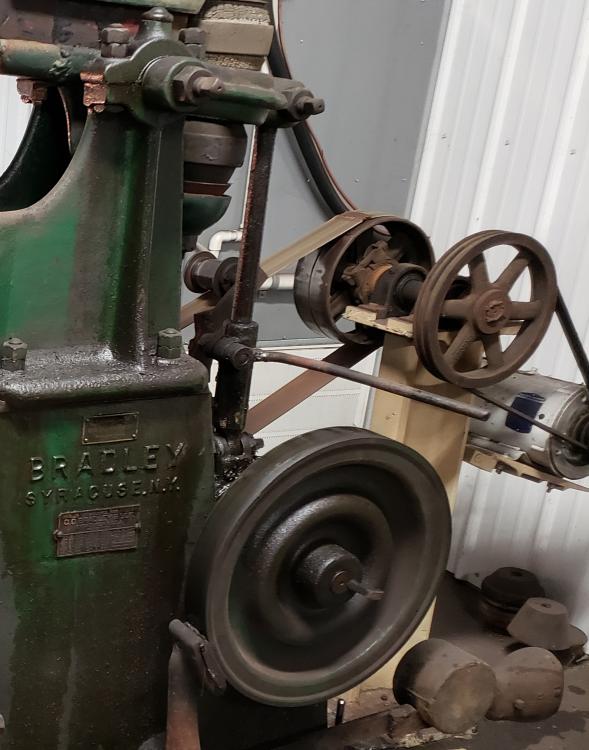
My driving pulley is just a hair under 12 inches. The driven pulley (on the hammer) is 14". It would be ideal for the driving pulley to be bigger than the driven. This helps keep the belt moving, rather than hanging stationary on a moving pulley. When i tried the direct drive I went through a few pulleys from 3 1/2- 5 inch diameter. None worked for long without eating up belts. Sadley, flat pulleys are not terribly easy to find so the one i am using was a compromise.
-
Does anyone here know who clifton got to make his custom oversized springs? I swear I used to have contact info but just can't find it.
-
I believe Jock redesigned it with springs.
-
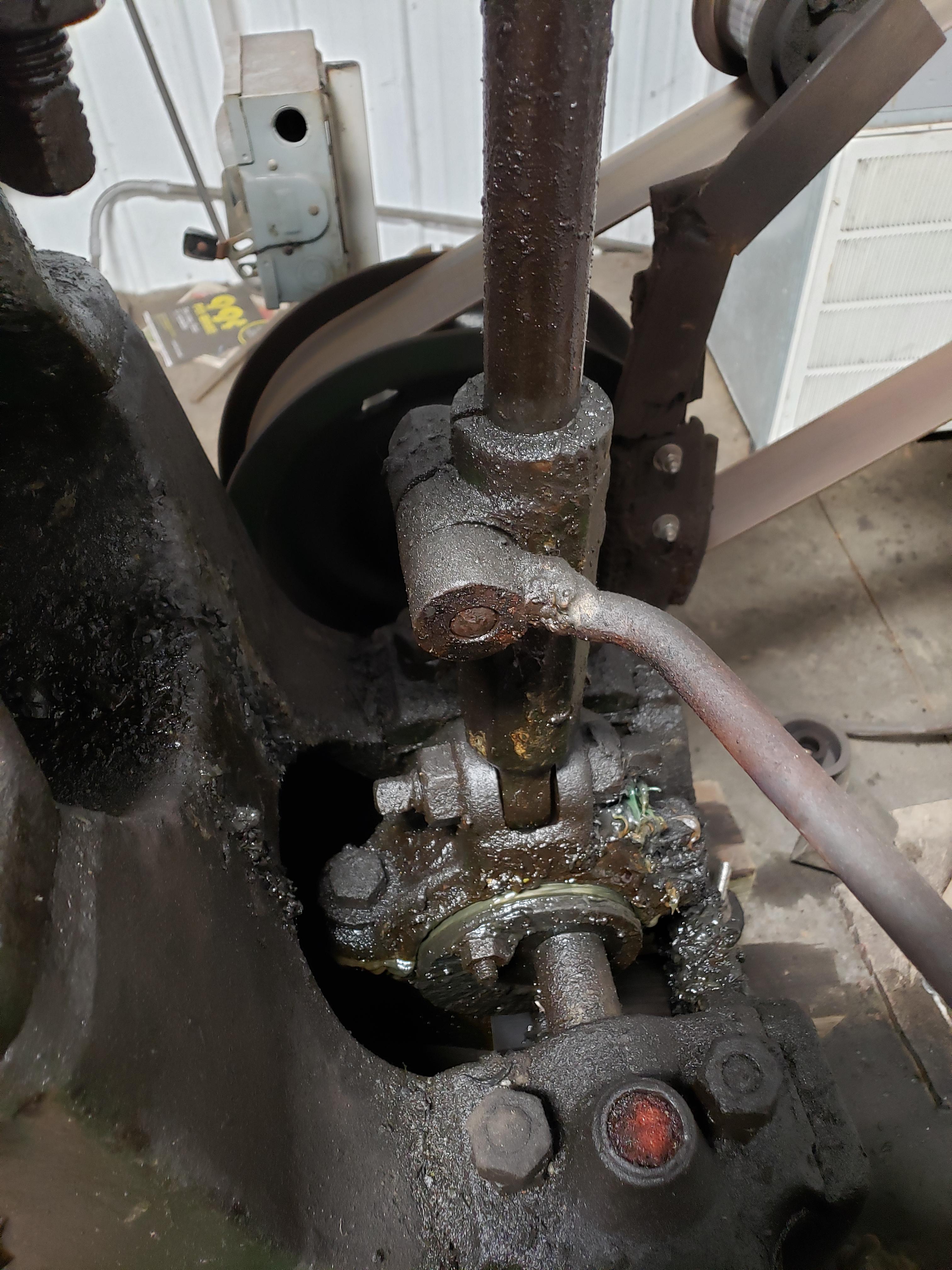
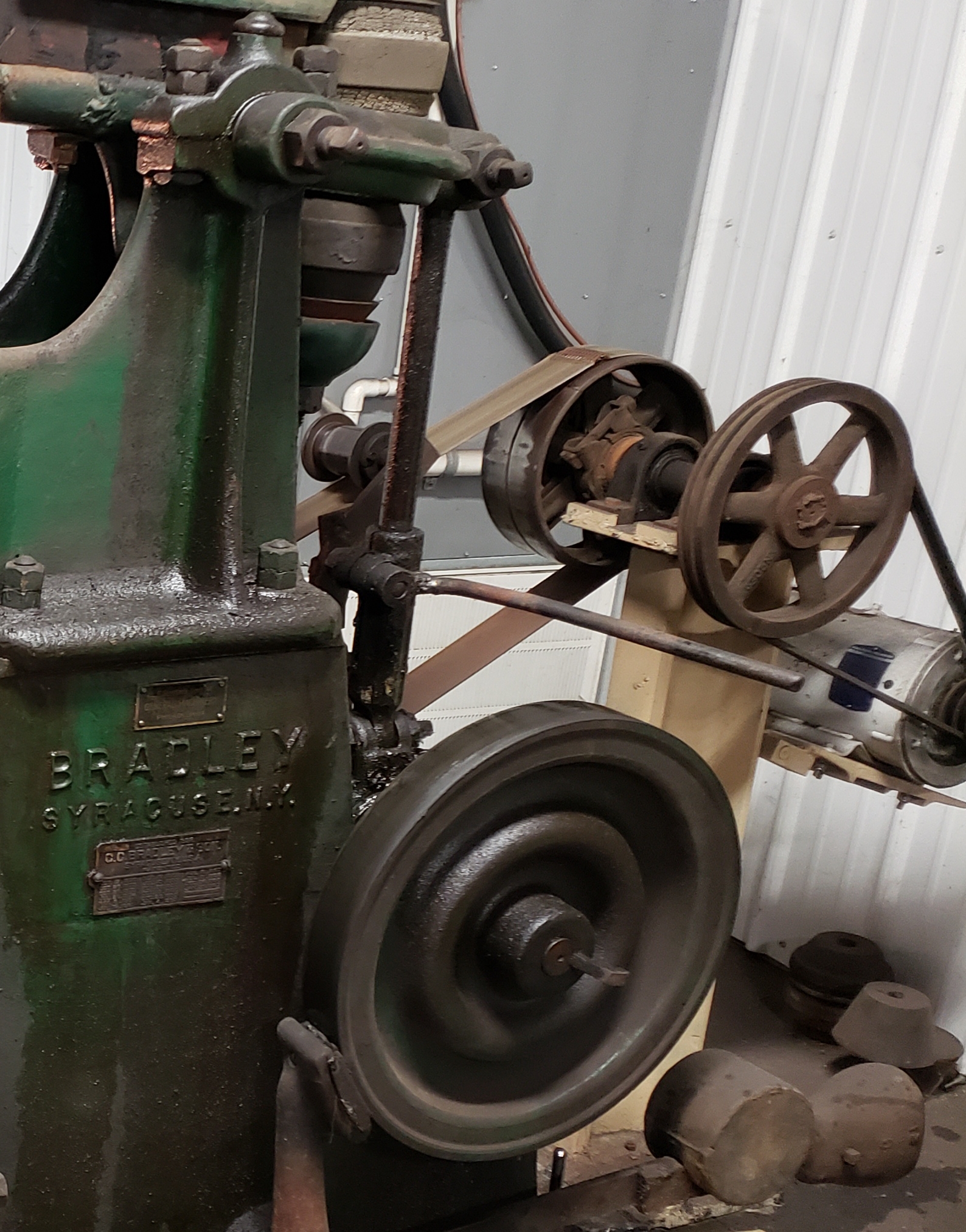
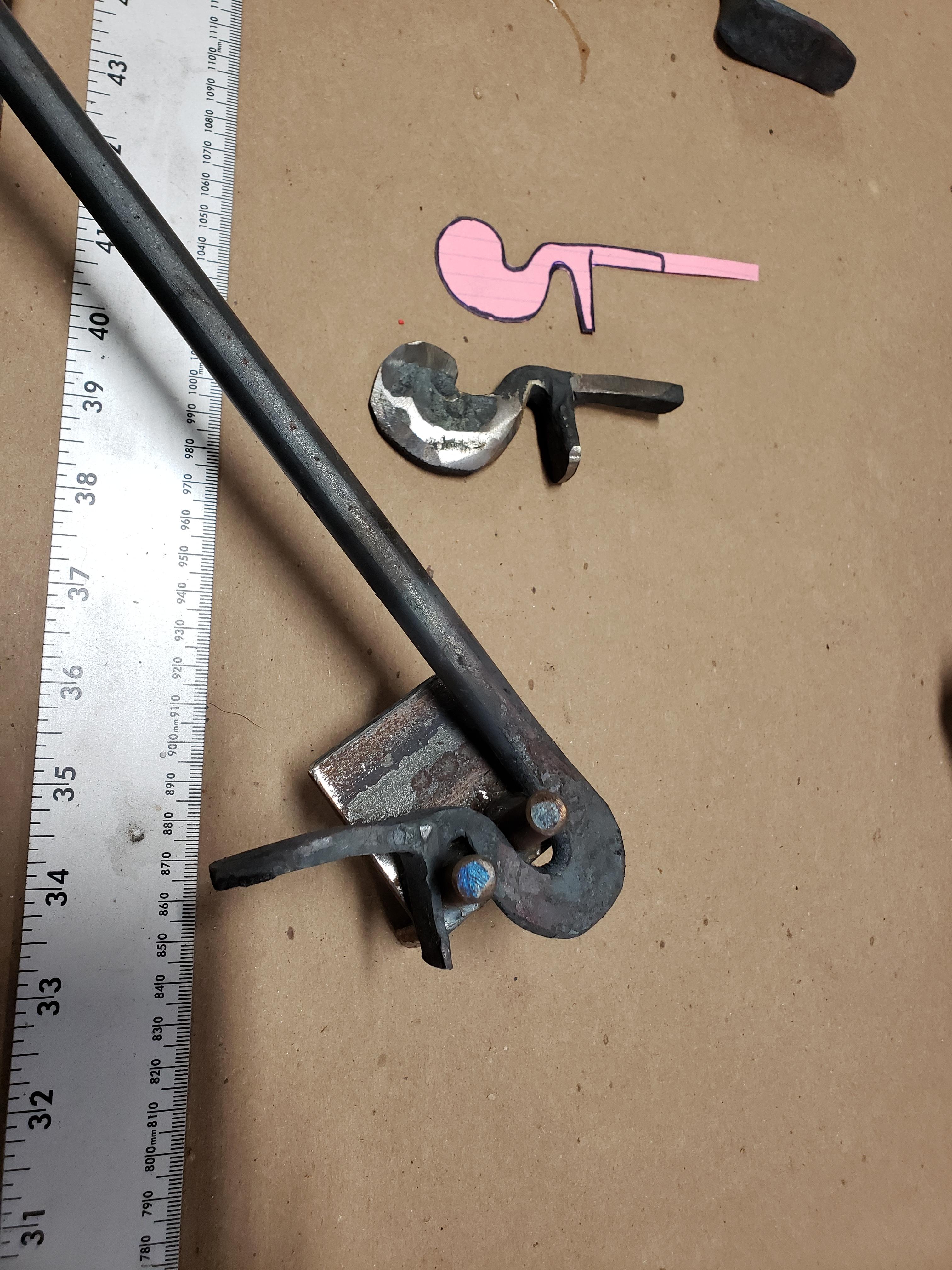
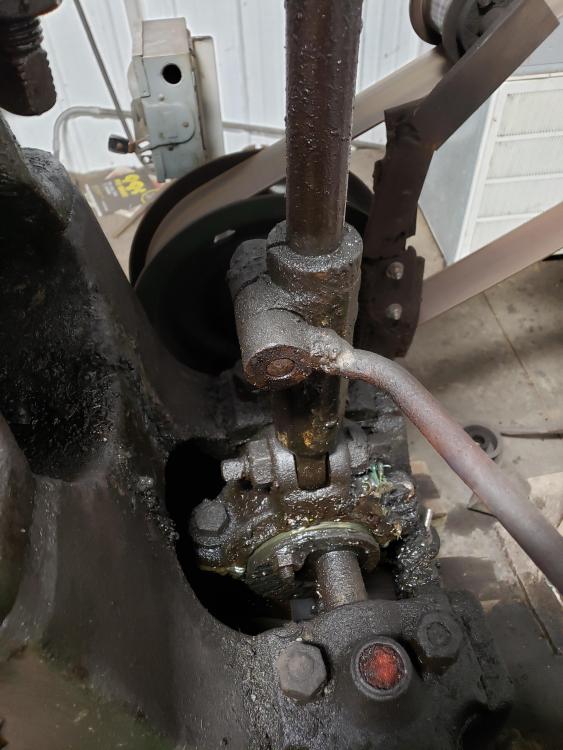
I have really good control at low speeds and fair single blow control now. It does have a tendency to collect oil on the flywheel which makes the break slip, but i likely need to replace the wood block.there are two points of adjustment. The split sleeve is the one that gets moved outside of special circumstances. It is a smooth (more or less, it is 120 yrs old) shift held in a split sleeve, the big lever is part of the clamp screw that catches it. On top of this, the eccentric is adjustable. You can see two nuts in this picture. This hammer is adjustable from 0-5 inches stroke. It runs best at around a 4- 4.5 inch throw. When I first got it I played with this a bit, but it gets out of balance so this is where it is kept. This is a " I really need fast short strokes for the next 50,000 parts kind of thing and not a 10 changes a day kind of adjustment.
-
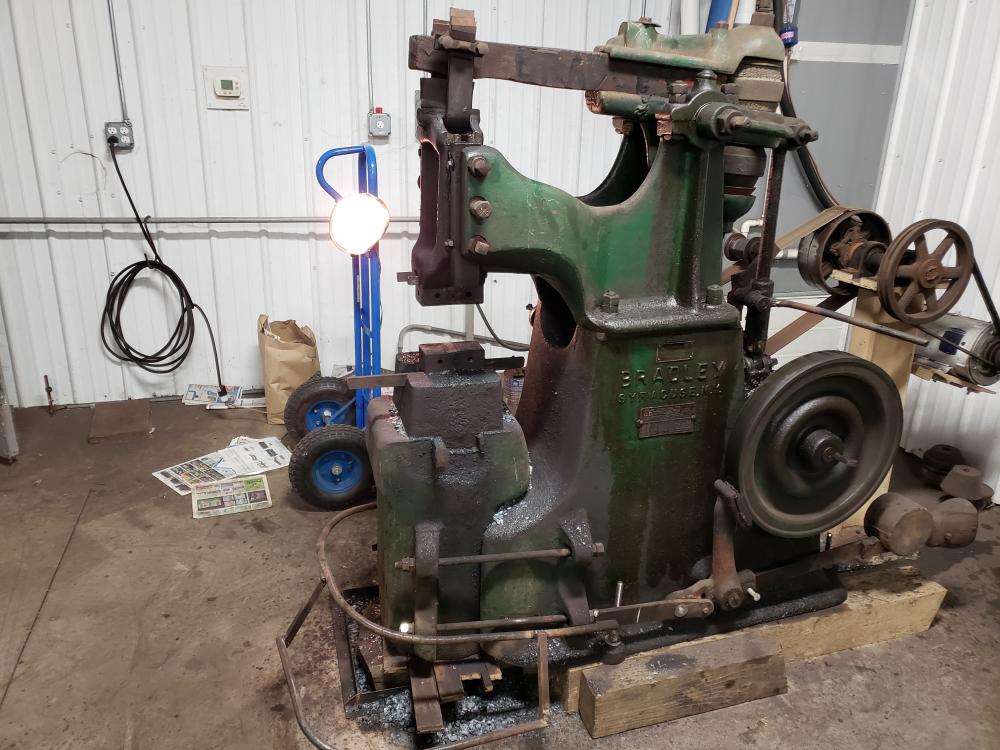
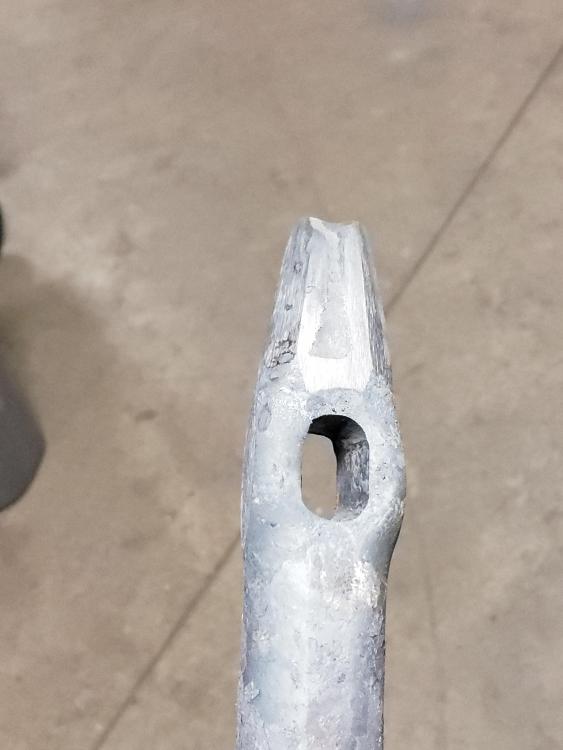
A bradley is an awsome hammer. Mine is a 75/100 pound upright helve Franken hammer- ( assembled from the parts of several machines at whatever factory it used to belong to) Space between the dies is the limitation of these hammers. Adjusting on the fly is not too hard, but gets annoying. I have punched hammer heads on this hammer and worked down stock as big as 5 inch round. I can hit a piece 8 inches tall but it is at its limit. The normal slap of this hammer is 4-4.5 inch, with 1.5 inch opening i can easily hit a piece 5 inches tall then die to die on the next stroke which I think is probably close to what your 50# will do if memory serves. Bradleys are seriously overbuilt machines. Mine runs a full 370 bpm with a 110 pound ram. Punching is not its strong point, but i can draw steel faster on this hammer than any air hammer. I have been using this hammer daily since '95. Air hammers are more versatile but these machines have personality, and few air hammers today are built as heavy.
-
The heat on the factory system is a result of the belt stopping on the small pulley. When it sits stationary, it gets hot. By switching to a larger drive pulley the belt remains in motion with more contact on the driving pulley. You may have the wrong composition of belt. These systems are tough on belts in a way that static pulleys won't be. I run what the farm supply calls "bailer belt", or "tobacco belt", which is a canvas/rubber belt, spliced with alligator lacing. A friend of mine runs a quite large Beaudry on a canvass belt. All of these were meant to run on leather belting, which was all that was available in the day.
-
Adhesive? You gooped up your belt? Clean everything. Both pulleys, idler and belt. Try acetone or denatured alchol. If that fails make up a new belt. In my experience it all works best when a clean belt is running on clean pulleys. Belts will heat, it happens, but should not be enough to be an issue. I never got my bradley to run right on the factory set up with the teeny motor pulley directly on the motor. Switching to a jackstand made a world of difference. Slack belt systems work best when the driving pulley is near the same size or bigger than the driven pulley.
-
no, and no idea who they might be- that is why I asked.
-
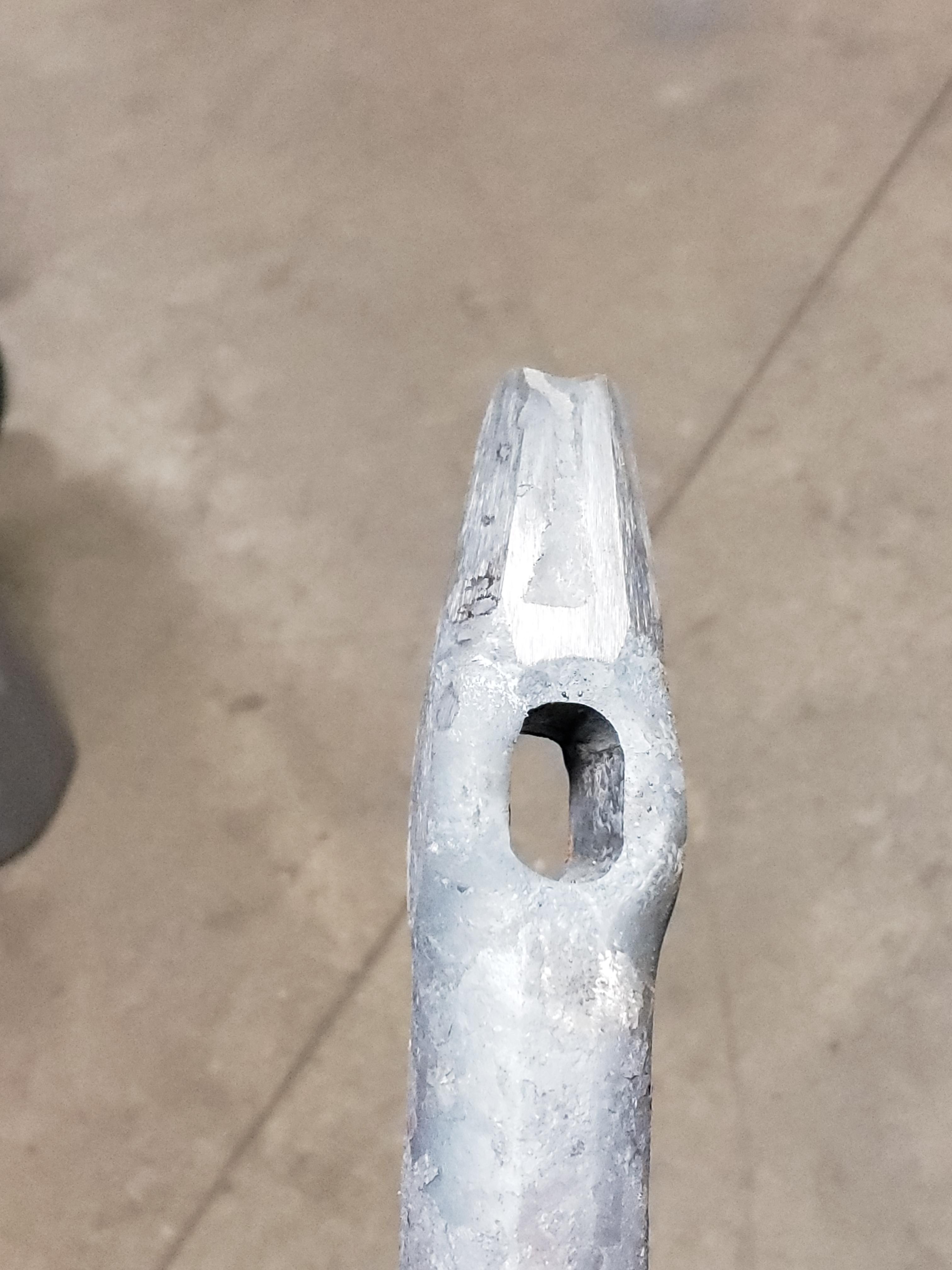
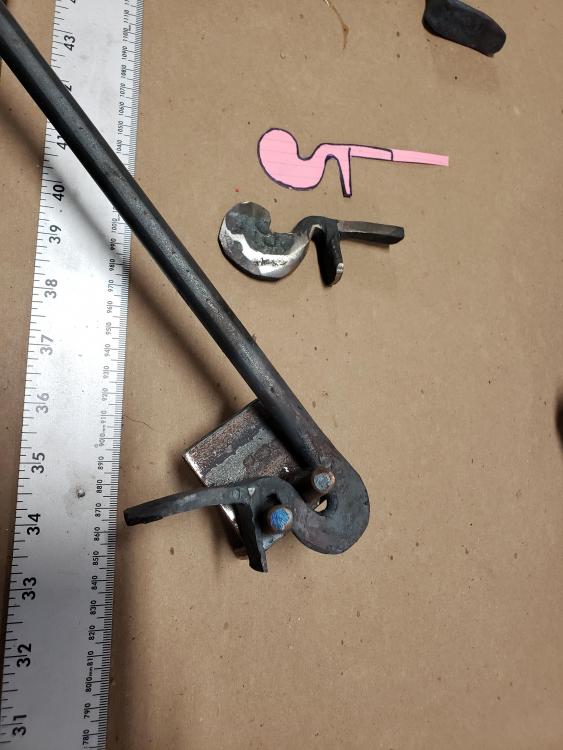
Getting proportions right is giving me a hard time, the cardboard template has helped. There just is not enough material in the 1/2 inch. I may try square stock next.
-
I have found the article from anvil magazine on Bob Patrick, and can post it. Would that violate any rules?
-
One of my earliest blades had a red cedar handle. It is currently in use as a patch knife and has held up ok. I was 13(?) When I made that knife so it has seen 32 years of use or thereabouts. The blade has more issues i am embarrassed about than the handle. It is just bare cedar, but has a fair application of skin oils, sweat, and dirt
-
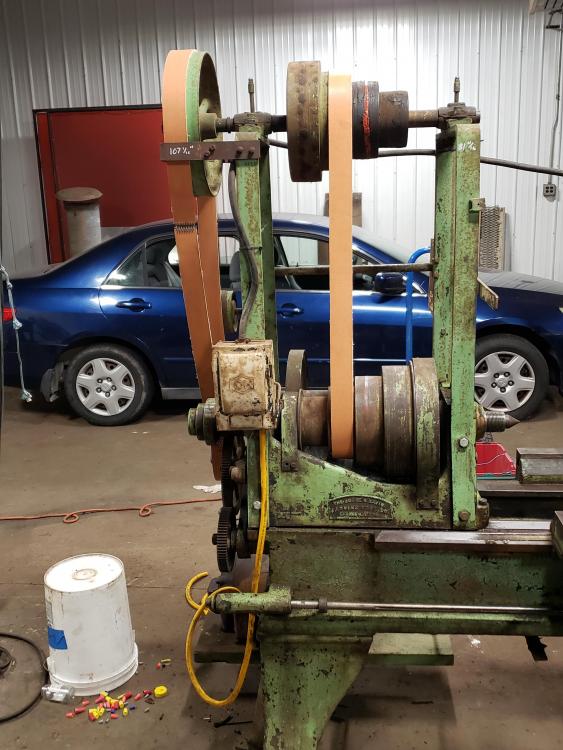
I have a 13 inch craftsman atlas that was given to me by a neighbor over 20 years ago. It is a nice lathe with lots of tooling, but in the new shop I really was ready for bigger. Back in March I got a call out of the blue from a neighbor about a barn find lathe, would I be interested, 20200729_122013.mp4 20200729_122013.mp4 he needed the space. So I now have this cool Lodge and Davis 18 inch swing monster. Now to make some new tooling....