caotropheus
2023 Donor
-
Joined
-
Last visited
-
These are pictures of four anvils a friend recently acquired. They look like were manufactured a long, long ago, probably prior to the XIX century. Even under all the rust, they look they are made of wrought iron. And yes, they deserve a better treatment they received so far, starting with a nice electrolysis cleaning. All these anvils were acquired in France. Please experts, give your opinion on origin, age and material of construction. Thank you for the input. First anvil 80 kg, very, very deep corrosion pitting Second anvil 85 kg The last anvil, I tried to make a close up picture of the wrought iron






-
What? An Ozzie using the imperial system? That is why the anvil on top of that dolly seemed too small for "685 kg"!
-
A friend of mine is a local dealer on blacksmith tooling. He imports used anvils from Northern Europe (Germany, The Netherlands, Belgium and France). He always has in stock a couple of these "Rhino/donkey back" anvils. Not long ago, he sold one weighing about 400 kg. Larks, according to the shape of the feet, your anvil looks like either France or Belgium made.
-
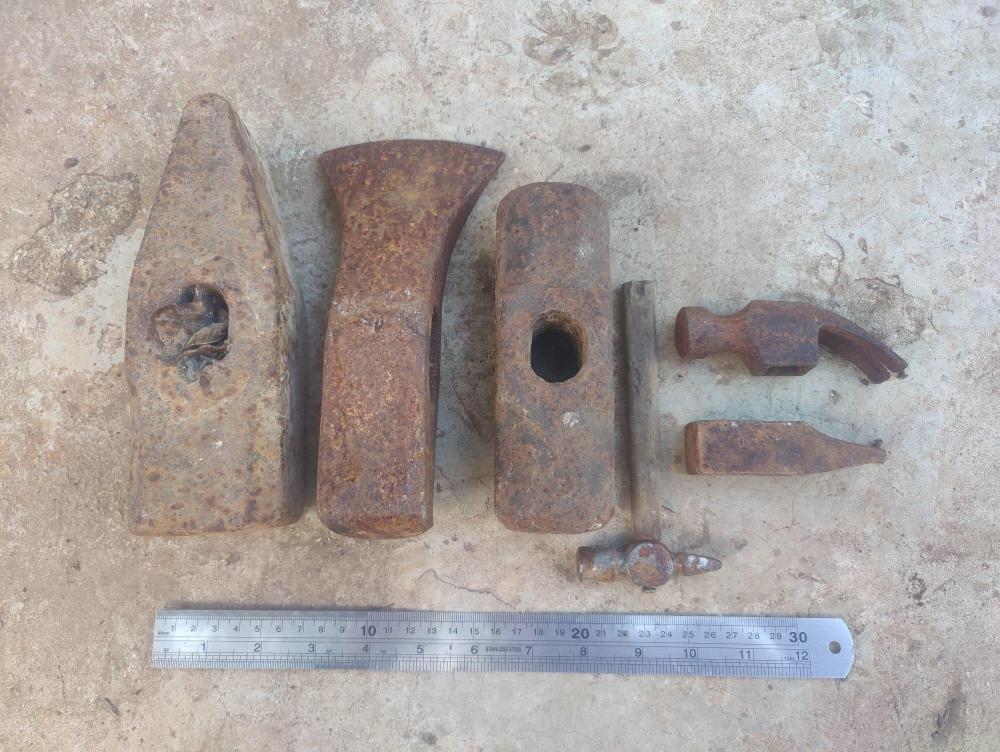
From a garage sale. Straight pein sledge 4.5 kg (10 lb - I am going to have a lot of work cleaning the remains of a metal handle someone welded to the sledge); splitting maul 2.5 kg, sledge 2.5 kg; cross pein machinist hammer (jewelers hammer?) 75 g; carpenter hammer; french hammer 260 g.
-
Every time I forge I use the fly press. Probably because I have no hydraulic press or power hammer and my fly press generates around 12 ton pressure. It is a big one I can operate by my self in a very uncomfortable way, so often I ask help from someone else to swing the "flywheel" (more correctly flybar). I enjoy a lot how silent these tools are. Momatt, I was lucky enough to find someone that was willing to offer me the fly press. It was a block of rust and it was missing the counterweights. It had been sitting outdoors for years under the rain, scorching sun and ice. Luckily nothing was broken or cracked. Probably just like me, you do not need to buy a flypress. Factories used them and once not in use, just placed them outdoors. Often people took them and placed them in gardens as an ornament. Look around, you may be lucky, though it may take some time. I saw a smaller fly press missing the flywheel. I asked the owner to sell it to me but the guy tossed a number that belongs to the realm of fantasy. What was important is that the frame, screw and ram were in very good condition. You can always make a flywheel at home.
-
Oh, I almost forgot! The anvil might not have followed me home, but this bit of mild steel did! 150 mm diameter, 95 mm tall. The seller was very nice and offered me this bit of stock that was "seating" there, just beside the anvil
-
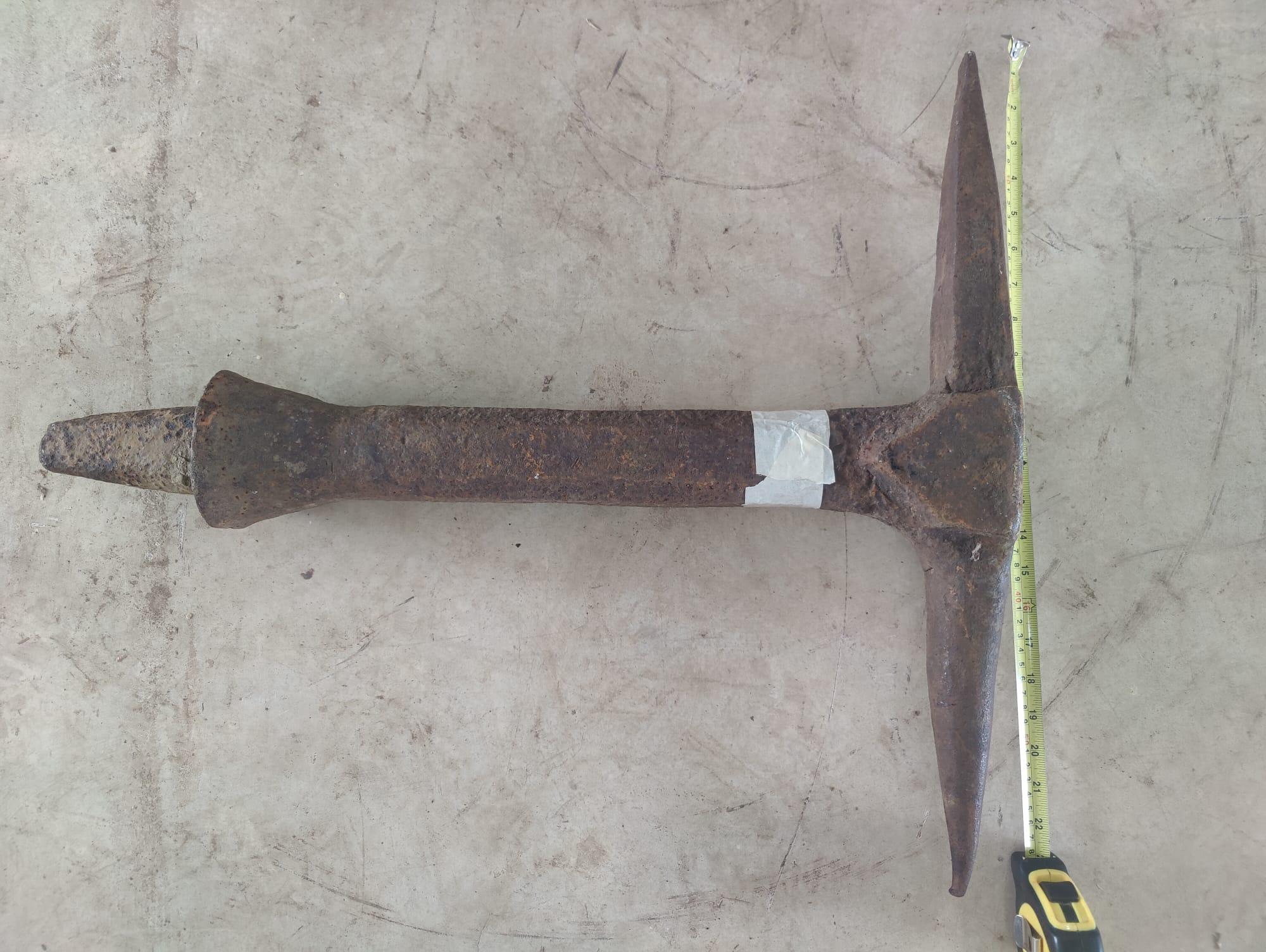
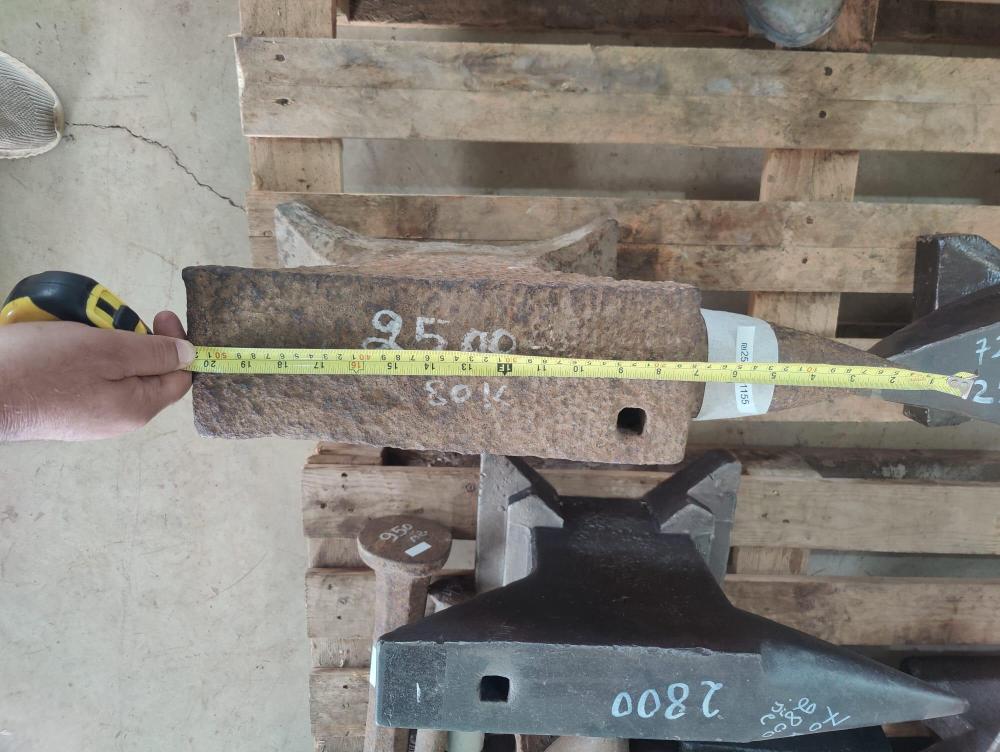
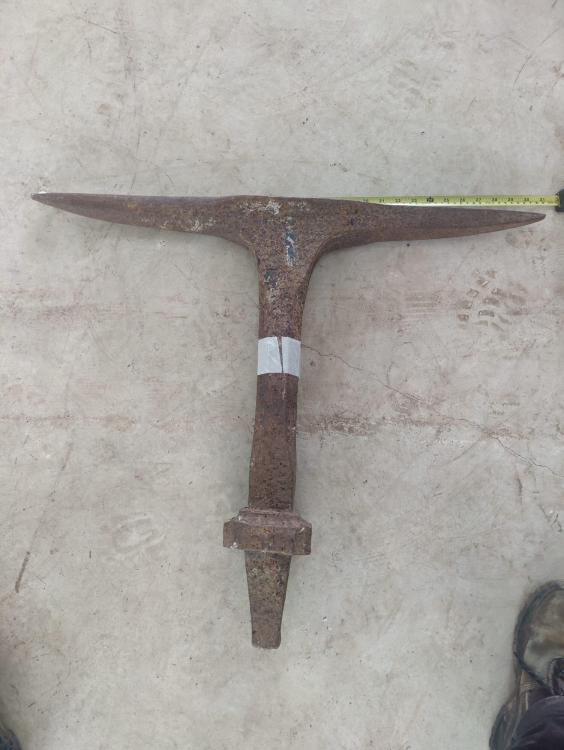
Well, it did not follow me home, actually I had to go and pick it up!... A friend (he is a blacksmith tools/equipment dealer) called me and asked if I wanted to buy this sawyer's anvil for about 250 USD He claimed it was too expensive for his business! . Before we finished the call, I had already arrived to the seller's place . I did not weigh it yet, my estimate is that it weighs between 120 kg to 140 kg. The surface and edges are in mint condition, there are some markings I could not read, I need to clean it. According to the seller, this was an import from Germany by the end of the XX century. It was in a saw factory. The rebound is fantastic and even without horns, it rings ... too much for my likings . The pictures are from the seller and measurements in centimetre
-
I am no electrician, so I may babble a lot of non-sense. Here in Israel and in Europe we have 240 V 50 Hz. I travel between my home country and my residence country without even looking at "electrical compatibility" for my computer or cellphone power supply. What I see often on home appliances are labels that give both a range of voltage (220 V - 240 V) and frequency range (50 Hz - 60 Hz) they can operate. At least here in Israel people have several air conditioning throughout the house, a water boiler, a dish washer, laundry machine + laundry dryer, cooking oven, fridge + separated freezer, microwave, often more than half operate simultaneously, that is why private homes are provided with 3 phase X 40 Amp these days. Oh, I almost forgot, not just we (Europe + Israel) have 3 phase electricity at home, we also live in real houses, you know the ones built on stone, brick and reinforced concrete, not play houses made out of wood and cardboard!
-
Here in Israel, same as in Europe, we mostly use 1 phase 220 V - 240 V, 50 to 60 Hz for 99.9% of all apliances. Houses are supplied with 3 phase, but no one asks to install a 3 phase socket at home, except of course, caotropheus! Some people use more powerful air conditioners that may be 3 phase, electricians make all the connections, but no socket of course. I have several 3 phase sockets 380 V, 3 X 40 Amp in my playground https://en.wikipedia.org/wiki/Mains_electricity_by_country all my toys are 3 phase like, welder machine, mill, drill press and lathe. 3 phase electrical motors are more simple and easier to maintain.
-
Today's haul These "beauties" did not exactly follow me home. I had to pay more than I am willing to admit but for a good cause. The owner of a machine shop had the bad habit of gambling! He passed away and his widow was left with no support except for a meager amount from the social security. His children decided to sell the machine shop to support their mother, so a friend of mine specialized on metal working machinery is helping them to sell two lathes, one mill, one drill press (this one in the picture), all sort of equipment for those machines, all sorts of hand tools and a lot of stock, different steels and aluminium. The drill press dates back from the 1950's (probably beginning of the 1960's) it accepts Morse 3 tapers, 3 phase, 380 V, 3/4 HP, pillar solid "chunk" of steel, 70 mm diameter, 1.7 m tall The big slug (180 mm diameter, 270 mm height) is some sort of heat treated steel, weighs around 53 kg, the ball peen hammer does not dent it. The small slug (140 mm diameter, 120 mm height) is mild steel, easily marred by the ball peen hammer, weighs around 14.5 kg. All in all, I payed what is considered average for the local market...
-
This is the third time I've been helping a friend transport blacksmithing/antique items for his business, 2 hour drive. This time I got this payment She weighs 24 kg, arrived from France (either French or Belgian origin) rebound above 90% Next step: electrolysis cleaning
-
Not mine, I just helped a friend gather this haul. We can say "It followed him home". The big anvils weigh on the range of 180 kg to 220 kg. The small anvil weighs about 50 kg, it is in lovely condition and has a rebound above 90%. He refuses to sell it to me The vice is a French bench vice also in lovely condition. There were some hot cuts of different sizes among the hand tools he bought (including several sickles of different sizes). I kept the sheep shears, nice addition to may scissors collection.
-
I have a locksmith vice very similar to this one. They are very nice and mine is made out of wrought iron https://www.youtube.com/watch?v=R8N0G7NMlFQ
-
Here it is a video of the restauration
-
I am not sure but it looks like a German vice. Make a search for "RB Schraubstock" in google.de (Germany) and see the results.