David Thomas
Members
-
Joined
-
Last visited
Everything posted by David Thomas
-
Corn, just like propane, doesn't burn hot enough to "melt" steel. Yet one can forge weld with propane by turning up the pressure (burning more fuel quickly) and insulating the heated area. I haven't tried this yet, but I think the key to forge welding with corn is to build a large "oven" with coked corn. Pile on a huge amount of corn on a hot fire and allow it to coke. Poke a hole in front and back. Keep adding fuel from the back while pushing the air to it. Try to preserve the coke dome as you work the iron. Another thought I had is to use insulating fire brick to build the "oven" with, again with openings in front and back.
-
Perhaps you could consider alternative solid fuels. Charcoal (too expensive for me) and dry whole feed corn would not produce as toxic a smoke.
-
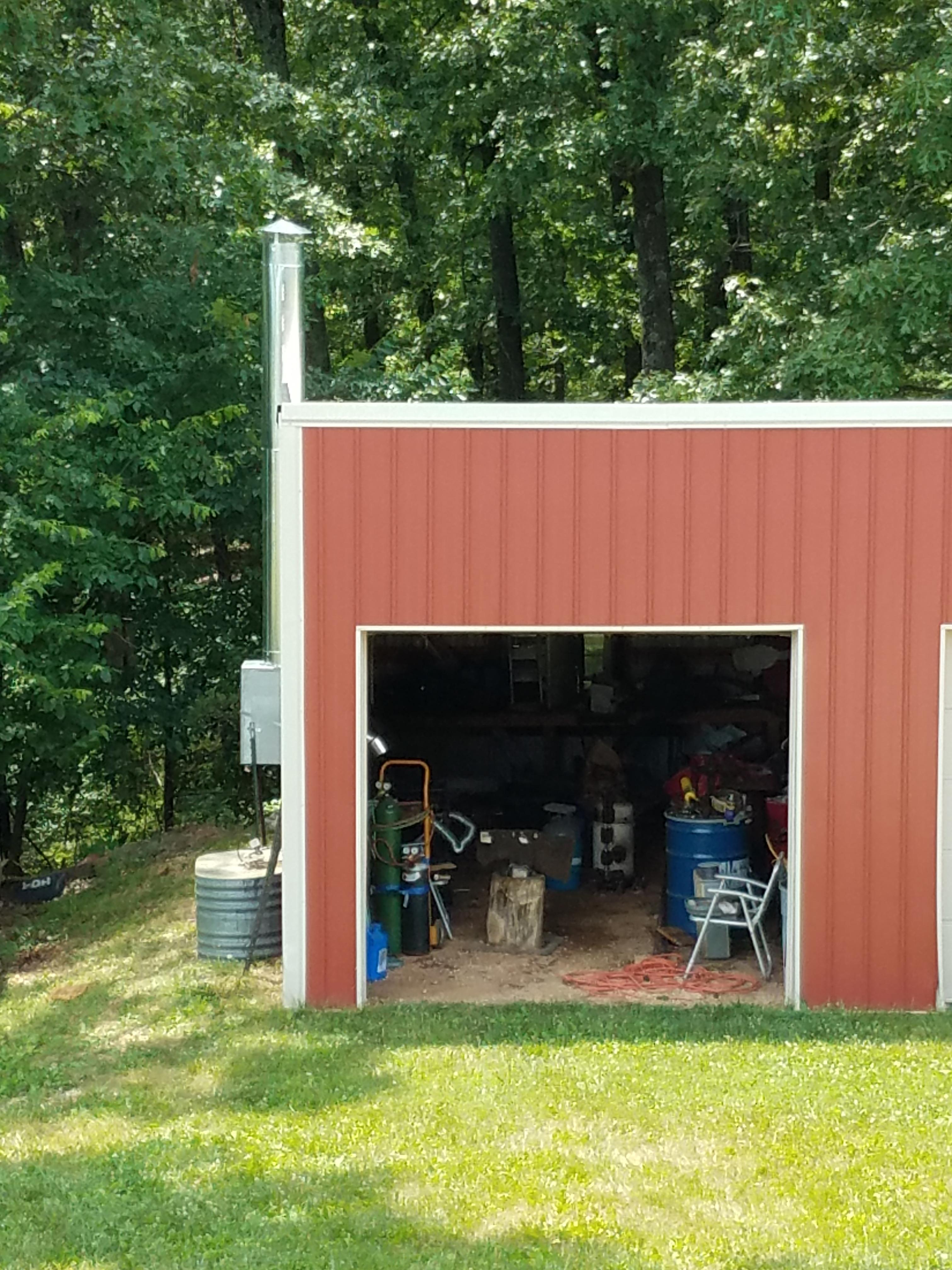
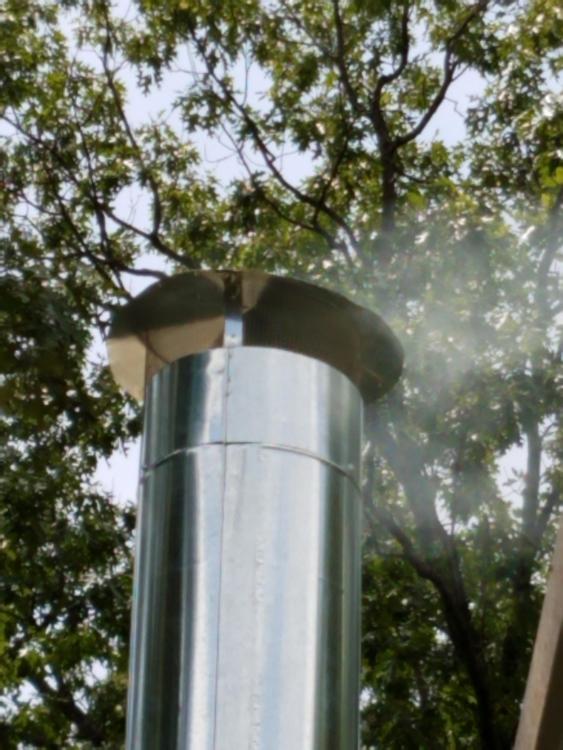
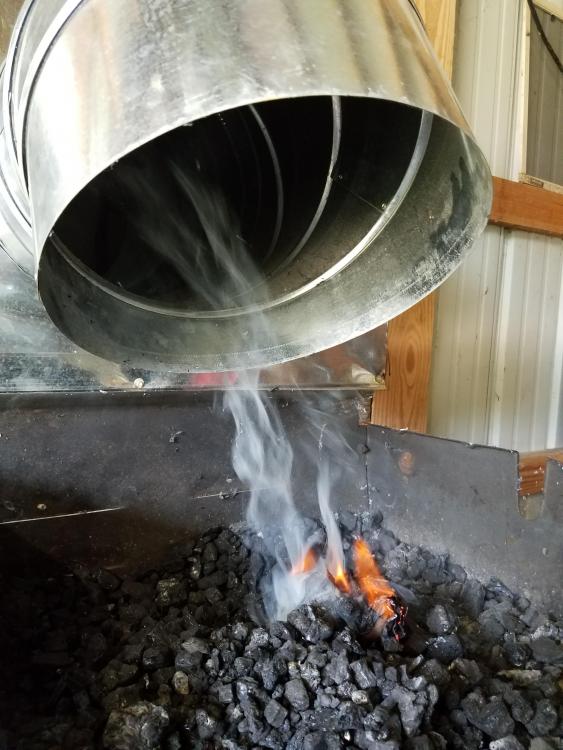
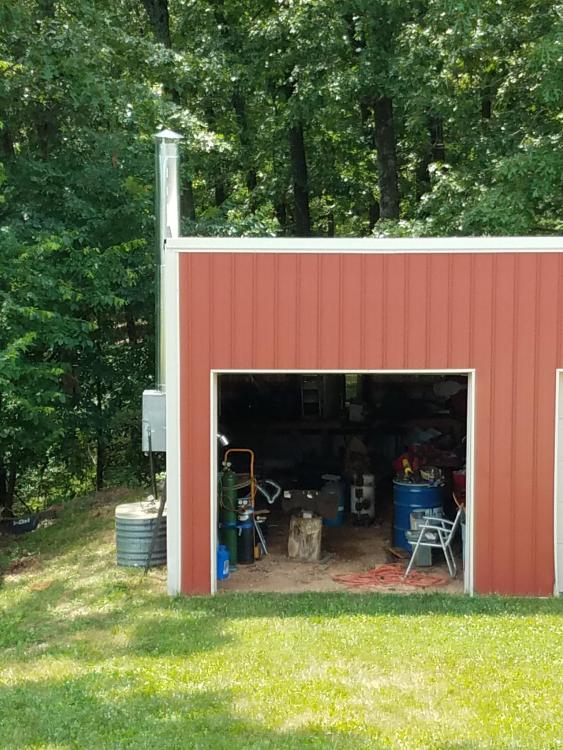
I considered that design but just couldn't quite get past the "rarely" as rarely ain't never. And then there's keeping critters and debris out of the flue. 1/4" hardware cloth will work to keep most critters out but what to do about leaves and acorns? Add an inner 'hat' made from hardware cloth so debris slides off? Decided if I'd have to do conical hat anyway, the traditional solid 'hat' with a vertical ring of hardware cloth under the cap would suffice. The free surface area of the angular gap needing to be 1.5x the cross sectional area of the flue makes more sense to me than 1.5x the diameter. In my case, with a 12" diameter flue, that would be roughly 4.5 inches of height between the lip of the flue and the weather cap.
-
No disrespect intended guys, but 1.5x the diameter? Where is that coming from? I have a 12" diameter flue, so by your calculation I should have a 18" clearance between the lip of the flue and the weather cap?. I have 4". The reasoning I used was the area of the flue, Pi x (radius squared). Call it 113 square inches. Now the circumference of that flue is Pi x diameter, call it 37.7 inches, divide that into the area 113 and I get 3 inches to have the same area as the pipe. I went 4 inches. It draws fine.
-
Didn't realize you were getting an actual bearing. The vise needs the friction of solid washers to keep the jaws from loosening under a load. The bearing removes that friction. You may notice the vise won't be able to keep a tight hold, especially while hammering on if you use a bearing.
-
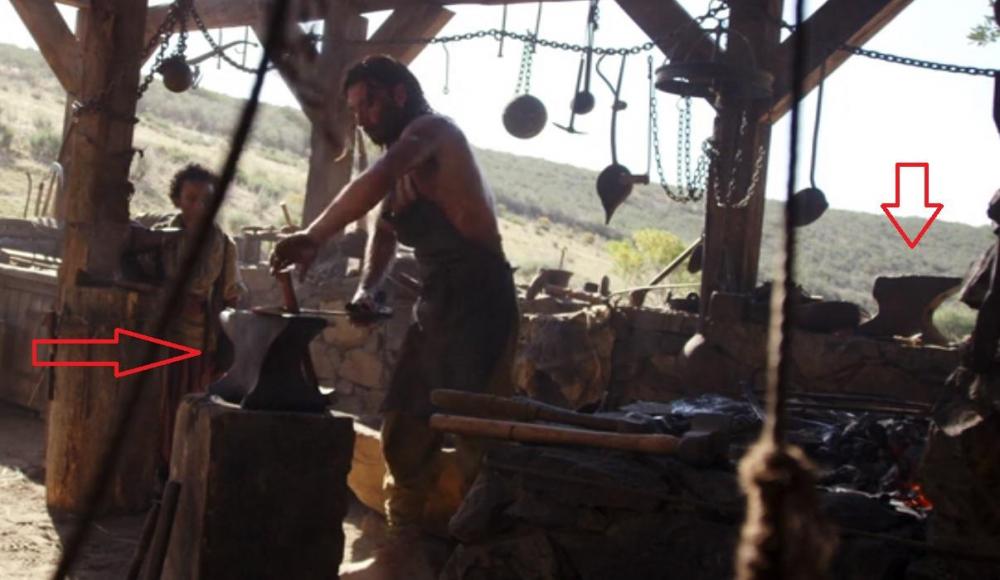
I also liked the manufactured handle on the hammer in the foreground. They did at least use charcoal in the forge.
-
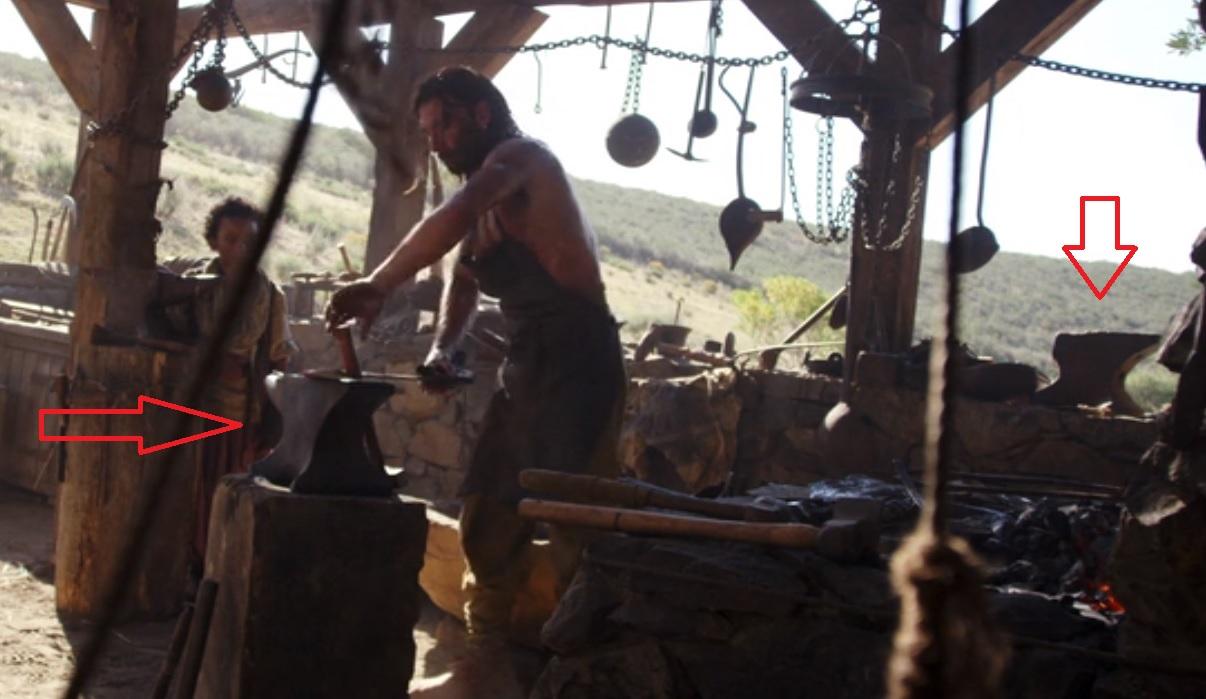
What??? You mean that the main character in Scorpion King 5: Book of Souls should not have had what appear to be London pattern anvils while work in the smithy of an ancient middle eastern village? The things we notice since taking up the hammer.
-
It will be a lot cheaper just to get a small cone mandrel (as a hardy tool or to clamp in a vise) than to repair the horn. A damaged area of only inch can be worked around. Not worth the cost to fix. As Thomas said, pics from multiple angles and a location where you are would certainly help. "I know a guy in Texas that does great work on anvil repairs" (which I do), doesn't help if you are located in Alaska.
-
A fair price in California may very well be $2,000, so I agree with Thomas. Doesn't hurt anyone to start high.
-
-
First character is an A followed by what could most likely be a 3 (since Hay Budden serial numbers stop at A57,000 in 1925). Next is either a 0 or a 9 followed by 370. This puts the manufacture date as 1921. I pretty sure this is a wrought iron anvil (not cast) with a hardened steel face plate. I'd value it (based on my locality) between $1,000 and $1,250 USD.
-
You got steel toed boots? LOL Seriously, Looks like it will do the job for now. You might want to see if you can mount the rail vertically if you can grind one end smooth. More mass under the hammer will move steel easier for you.
-
-
If the screw is the issue, you should be able to close the jaws by hand. If you can't. look to the checks at the pivot. A new bolt could have tighten things up to where the cheeks are pinching at the leg. Remove the screw and spring and see of the jaws can close completely to confirm.
-
I have an idea that requires about 6 soft insulating firebricks but I'm not ready to shell out the cash for new bricks (not yet, anyway) as it may not work. If any are rebuilding gas forges and have a surplus of used soft fire brick (4.5x9x1 or 2 inch or there about) and are willing to donate the bricks, I'd be willing to pay the delivery cost (within reason) to Missouri. Not looking for perfect bricks, but at least two (or enough partials to make two) need to be able to span 6-7 inches on their own to form a top. Thanks.
-
I've not had any issues with the blower (mounted on the forge as the forge is portable) probably because I never shut the blower off during a session. I just turn the dimmer switch down or up as needed. I have toyed with the idea of moving it to the back side of the forge mainly to give me cleaner access to the ash dump. I do like corn as a forge fuel. It has its own set of pros and cons to be sure, no better or worse than coal or charcoal. The biggest pro in my mind is the cost. Even burning twice as fast as coal, my fuel cost is less than $10 for an eight hour day, lower than coal by 25-50%. Small world and it gets smaller every day.
-
-
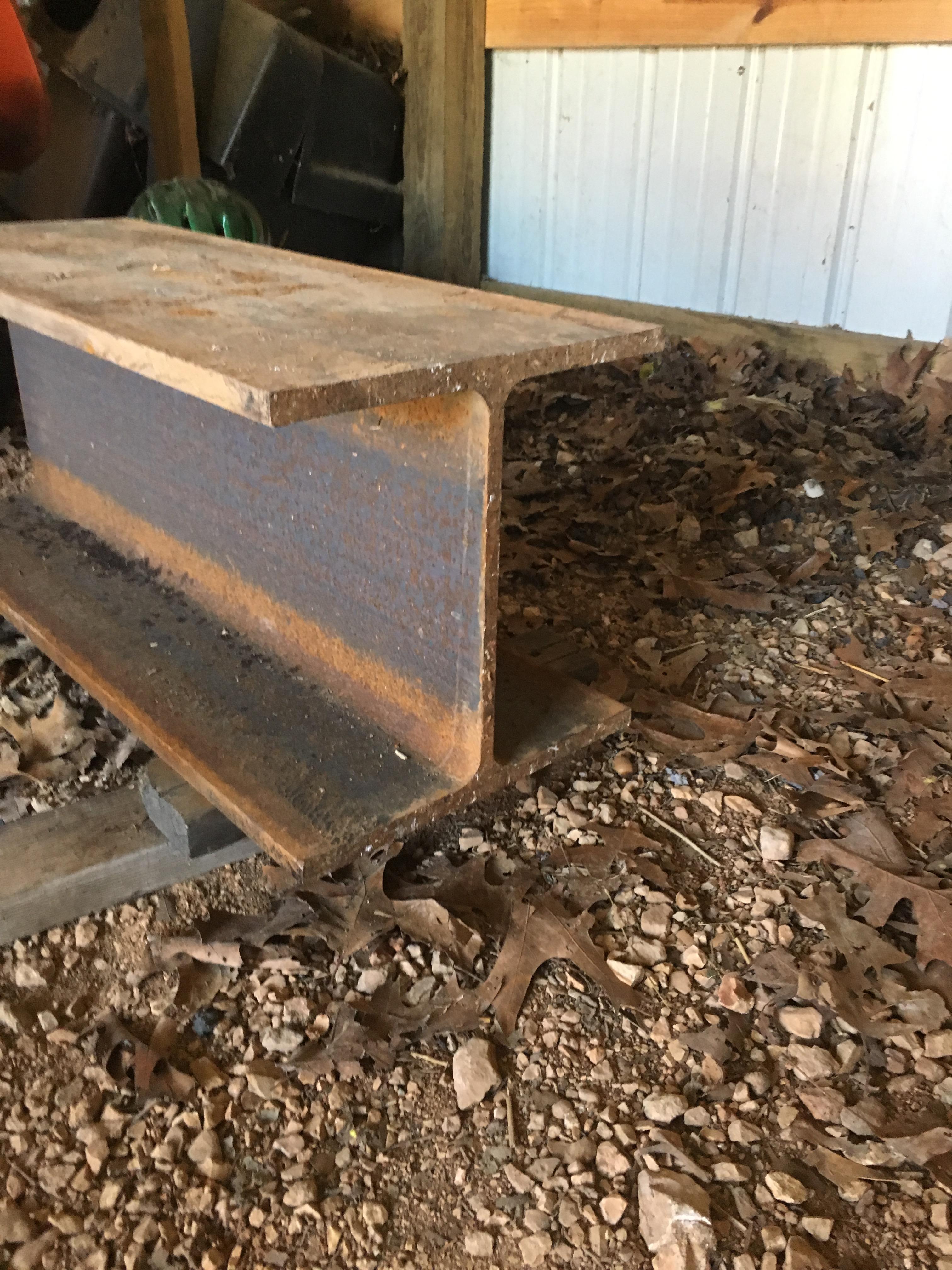
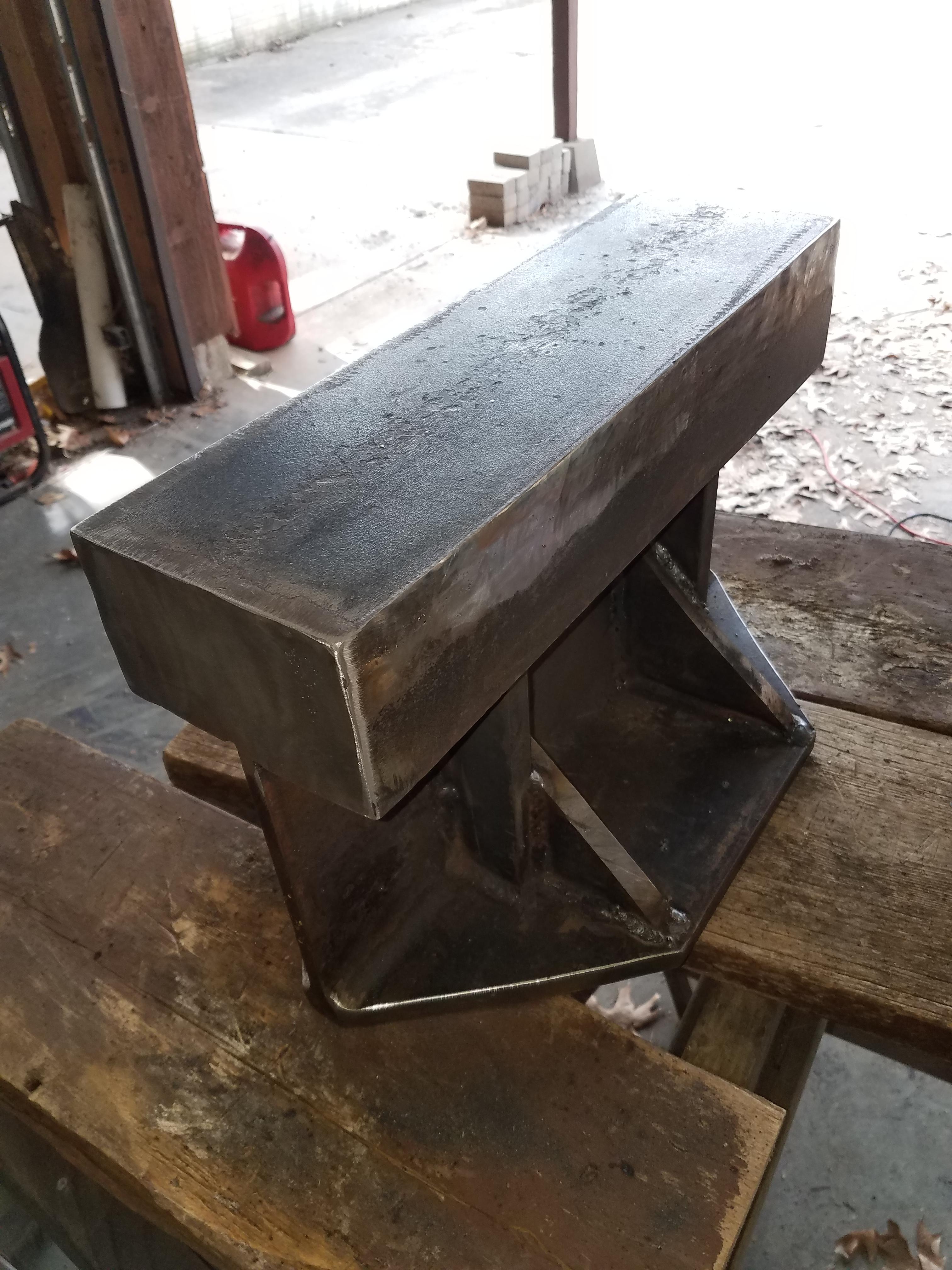
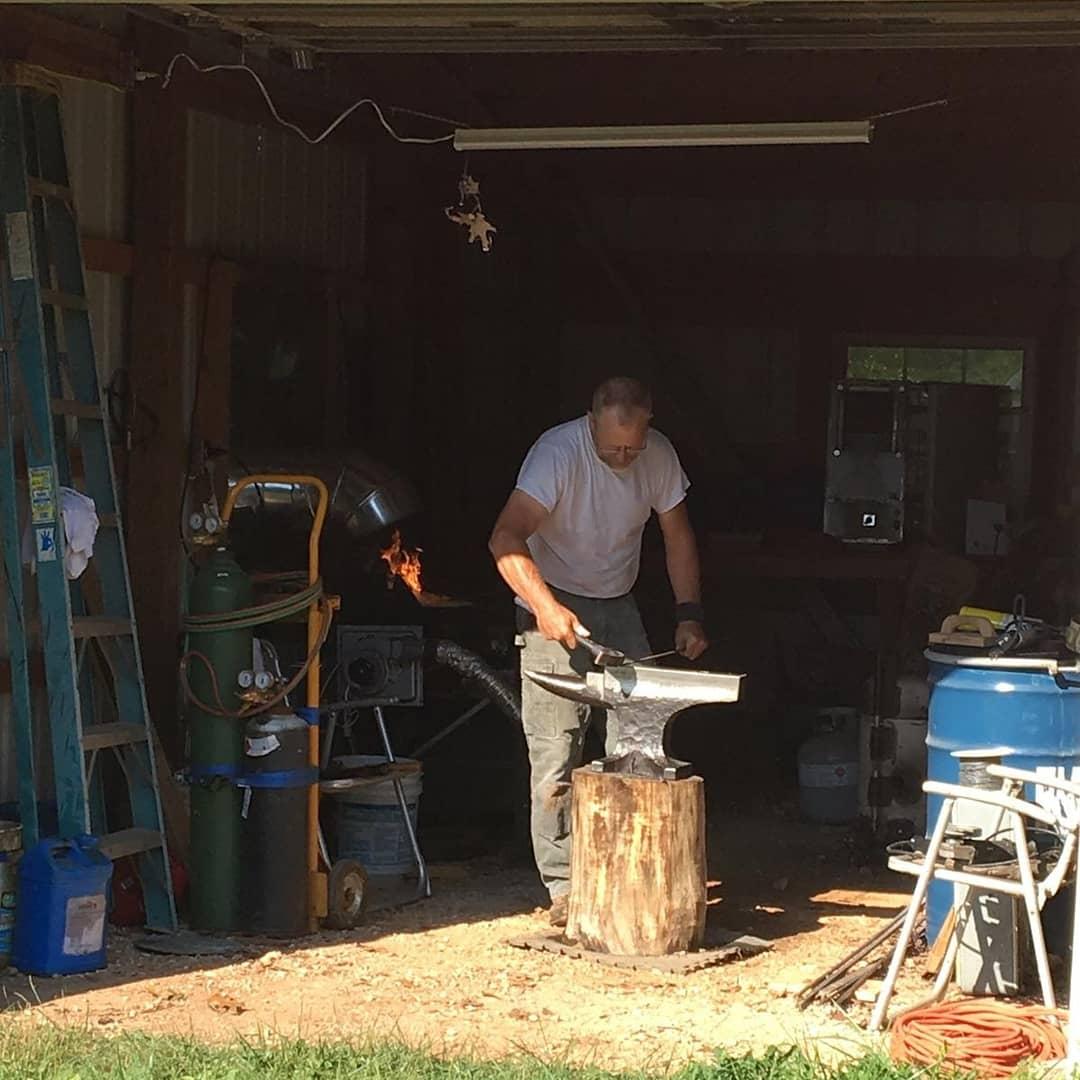
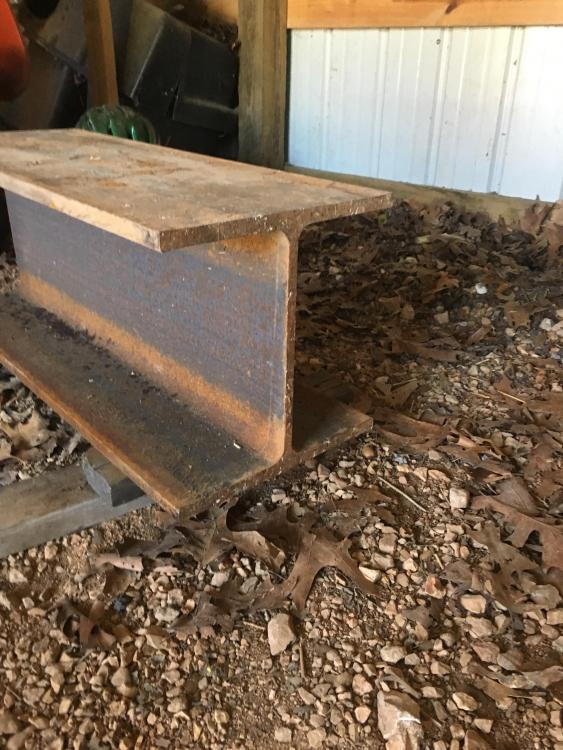
Started life as a 12"x12" I=beam drop. Cut 3" off either side of the top plate and the corners off the bottom plate. Welded the 3" strips back on the bottom of the top plate as skirts and the corners back on the bottom plate as web braces. Then added vertical bracing to the web. And finally plugged the ends of the top plate. I have plans to cut in a hardy hole and a pritchel hole and then fill the underside of the top plate and between the vertical braces with lead. Working face is 19"x6". Work on this project has slowed since I obtained a 125 lb 1907 Hay Budden. Still, my ALO is a good striking anvil at nearly 100 lbs even without the lead.
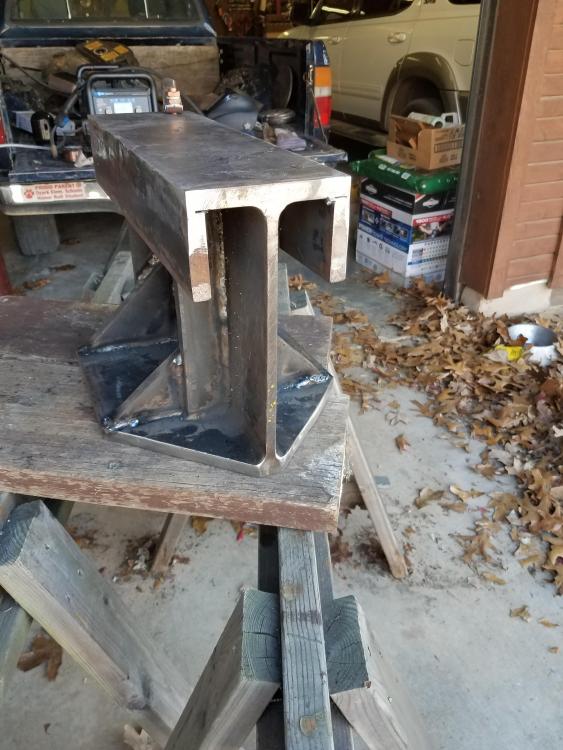
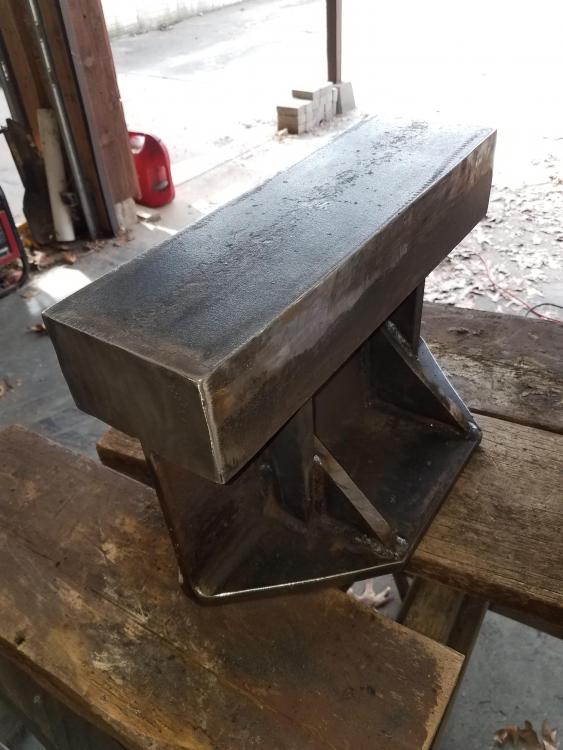
-
-
-
-
-
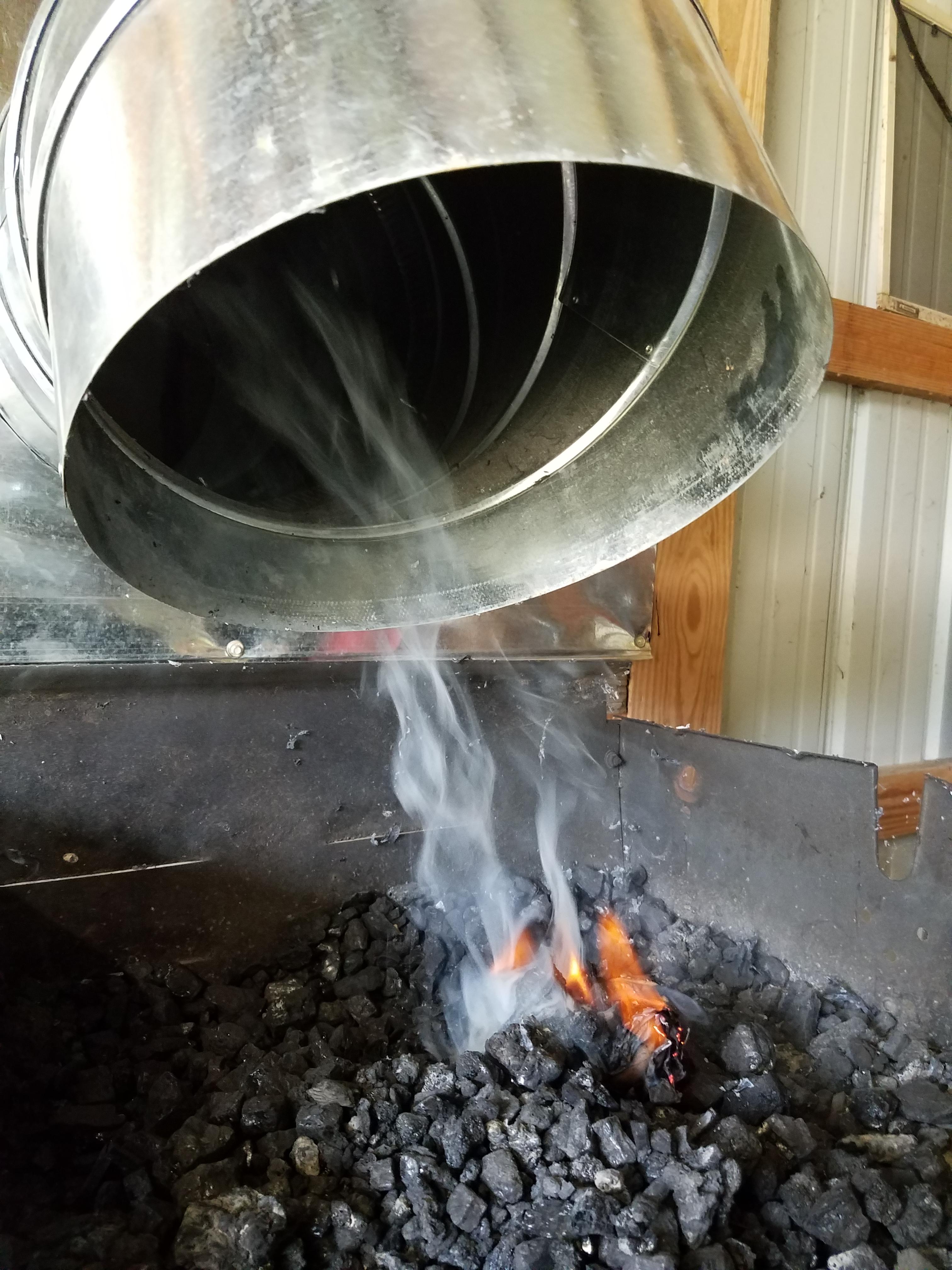
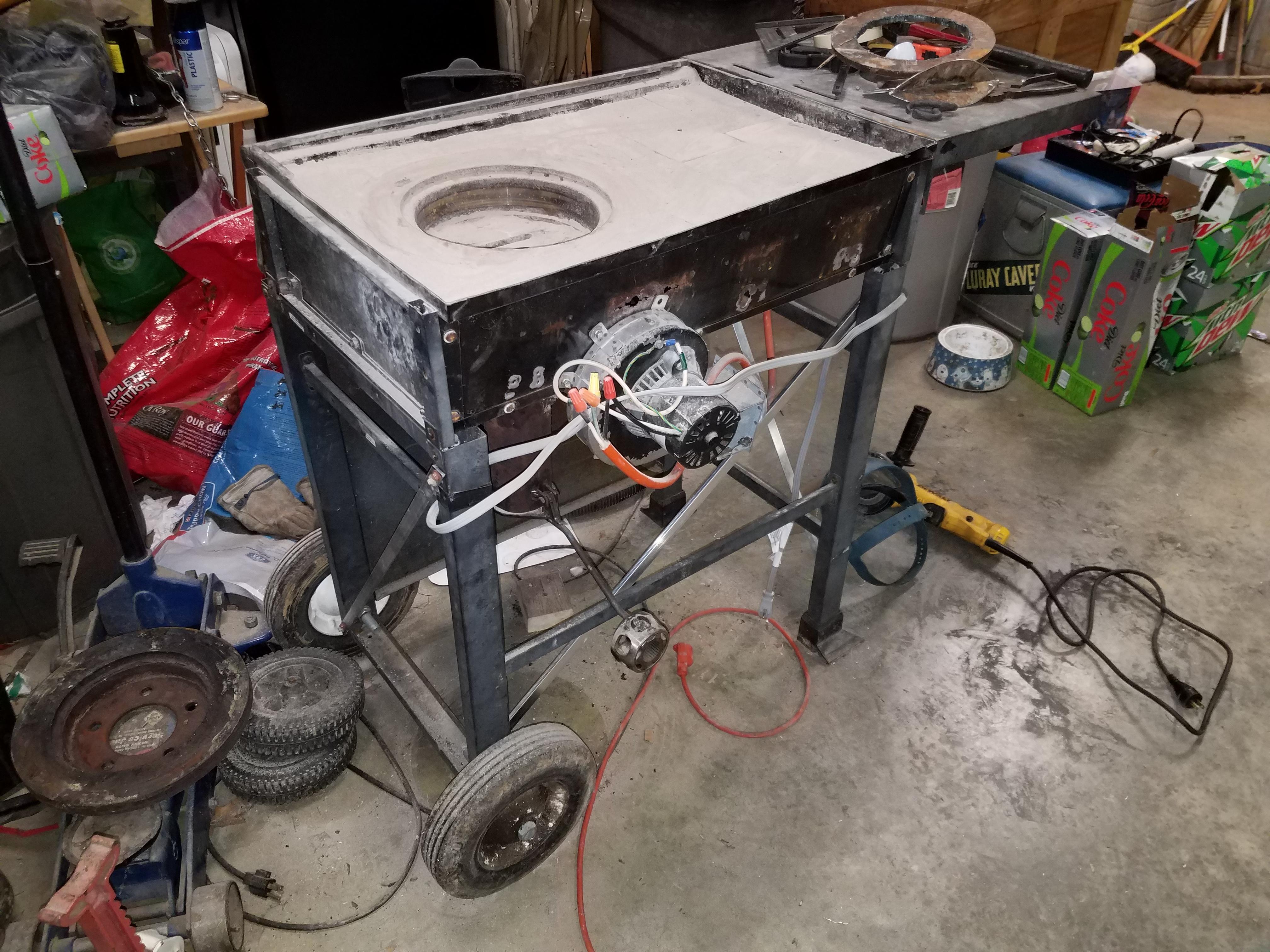
Thought I'd post a link to a video I made of the construction of my solid fuel forge from a gas grill. More of a 'What I did' than a "How to'. https://www.youtube.com/watch?v=lBLp4Ma9ngA I've burned lump charcoal, coal and corn. Currently corn is my cheapest fuel and therefore my goto fuel. Check out the companion video if your curious about corn fires.
-
Actually, I think that's another pro with using corn. I've never burned a piece in a corn fire. I can't say the same when using coal.
-
From my experience with corn, I'd say the guy was looking for things to do. A corn fire can be fiddly but its not going to go out while you're working the iron on the anvil as long as you have some air going to it (a lot like anthracite that way), even working two or three pieces at a time. Push the cold piece in, poke the fire a couple of times, grab a hot pieces and go back to the anvil. Heat, beat, repeat.