January 17, 20179 yr No idea what kind of nails they're making, but those sure are some masterful fellows! I really need to practice making nails more often......
January 17, 20179 yr Author That's a great video, VaughnT -- thanks! I could be very wrong, but I think they're making hobnails to go on the soles of boots for increased traction. Take a look at the photos of some WWII German officer's alpine boots on this page.
January 18, 20179 yr 10 hours ago, JHCC said: That's a great video, VaughnT -- thanks! I could be very wrong, but I think they're making hobnails to go on the soles of boots for increased traction. Take a look at the photos of some WWII German officer's alpine boots on this page. Great photos, JHCC. Those boots look like you definitely don't want to get kicked by the guy wearing them!!
January 18, 20179 yr The video states that ordinary nails can be made with a machine but "zwecke" nails (a short nail with a wide head) have to be made by hand. A nail maker needs 30 to 60 hammer strikes for each nail and strikes 5 million times a year. [Those nails give more traction to the shoes in snow or ice but make it very hard to keep the shoes water tight and also drain the heat out of the shoe fast and lead to frostbite.] Check how the nailmaker holds the hammer and remember next time you hear someone talking about "choking the hammer" as a negative.
January 18, 20179 yr Author Light hammer with short handle, working about sternum height. Interesting cutoff too, with lugs on either side of the blade to keep it from being hit with the hammer face.
January 18, 20179 yr 1 hour ago, JHCC said: Interesting cutoff too, with lugs on either side... That's actually the type of cut-off I learned on. The idea was that the lugs, as you note, keep you from dinging the cutting area but also serves to keep your metal from flying around because you accidentally cut too far. They work great because you can set the depth to whatever you like and know you'll always have just the right amount of meat left to twist the bar free.
January 18, 20179 yr Lovely video. He says he can no longer find round head rivets and that the reeds he needs to seal the top and bottom are protected.
January 18, 20179 yr Author A Swedish smith and his striker forging a scythe in 1922: https://www.youtube.com/watch?v=xNO2T-U2mEE
January 18, 20179 yr Author Getting back to the nailmaking, the round-headed tack on the right at 0:18 is an upholstery tack. The raised rim around the edge of the underside keeps the fabric from shifting.
January 18, 20179 yr Author 8 hours ago, VaughnT said: That's actually the type of cut-off I learned on. The idea was that the lugs, as you note, keep you from dinging the cutting area but also serves to keep your metal from flying around because you accidentally cut too far. They work great because you can set the depth to whatever you like and know you'll always have just the right amount of meat left to twist the bar free. There's a cut-off of that type in the Colonial Williamsburg nailmaking station, which is actually very similar to what's used in this video.
January 18, 20179 yr Author Which leads me to this orphan:Blacksmith Making Nails at Colonial Williamsburg
November 16, 20178 yr Great. Brings to mind Joey can der Steegs explanation for quitting professionally. Kind of the other view ( in a way). Thanks JHCC.
November 16, 20178 yr Author Indeed. Joey emphasizes "forging", because he wants to focus exclusively on traditional technique. Joel OF says he prefers "metal artist" to "blacksmith" because it frees him from the preconceptions that go along with the latter term. Both of them are clear about what they want to do and how they describe it, even though their different priorities lead them to make different choices, both professionally and technically. A great demonstration of the breadth of our craft, and how excellence can be found and artistry expressed in a number of different ways.
November 16, 20178 yr Perfectly stated. Yet we all have the forging tie in here, there are many different ideals/ takes on that. I have ( in my life) learned so much from all walks of life ( including differing ideals) I can respect differing opinions to gain knowledge to help me learn what interests I have. And I appreciate all who have worked hard to be wherever they are and shared their knowledge or story.
December 2, 20178 yr I think I've watched this video 30+ times. For the sake of non Brits, "arf" means "half", it's not a type of welding!
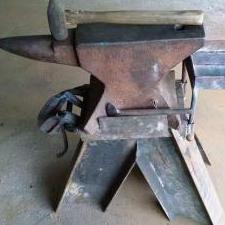
August 14, 20205 yr I thought maybe this video is of interest, it's in swedish, but english subtitles are available. I figured this is the kinda video most english people wouldn't find on their own. Also uses an anvil very similar to mine I see.
August 15, 20205 yr I found it really instructive as well. I never knew that the flux would hurt the finish and so should be removed once forge welding was done. Whole video was like that, a bunch of small things I've never thought of but were useful pieces of information.
Join the conversation
You can post now and register later. If you have an account, sign in now to post with your account.