Pault17
Members
-
Joined
-
Last visited
-
Jono, great job. Both in making a tool that works and in being able to use tools that you have made to assist in making another tool. That is awesome, mate.
-
I've been on and off here for a few years now. I always appreciated Frosty's reprimands. I always knew that he actually had my best interest in mind. He was a very likeable guy in so many ways. Eternal rest Jerry.
-
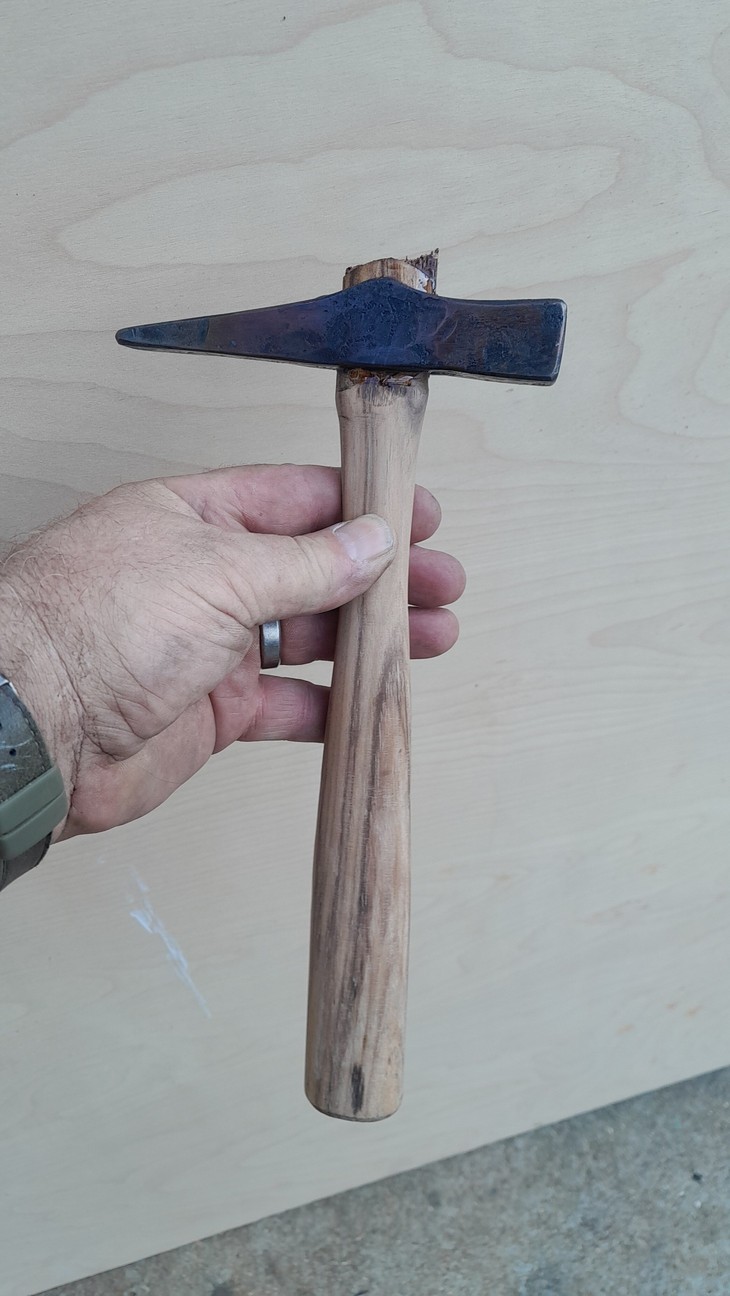
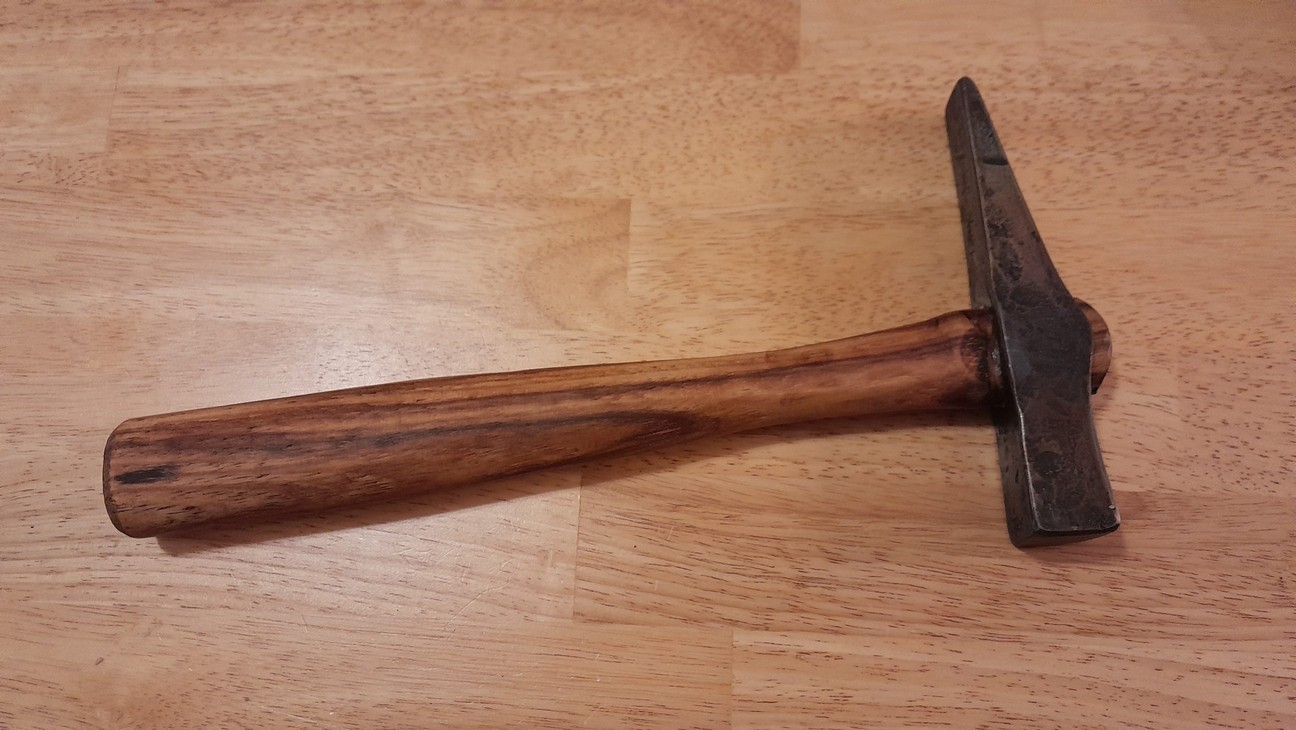
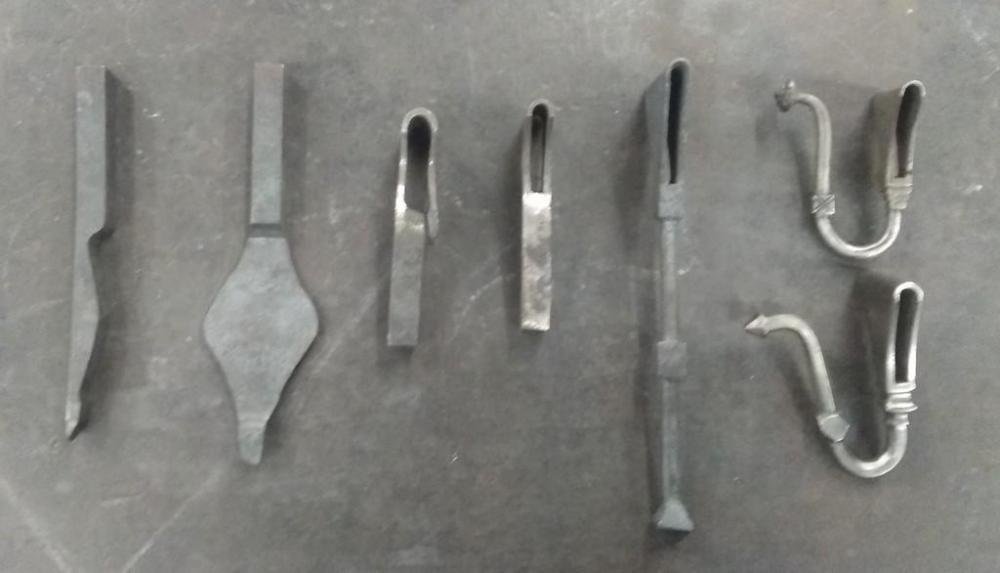
Thanks Frosty, I needed to hear it that way. BillyO and everbody here on IFI, I apologize to all for letting my hackles stand up. The two lower ones are 'traditional' wrapped hawks with a high carbon bit forge-welded in. the two upper ones are actually small belt hand-axes forged like the one done by Gerald Boggs. They were made from, as Terry Sheridan put it, "wrought iron anchor chain from a shipwreck from 1810", again folded over with a high-carbon bit.
-
Pault17 changed their profile photo
-
Overseers, I am not trying to throw stones here, just trying to look at things objectively. Please delete this if it is inappropriate. thank you. I appreciate and understand the concern with stewardship of the planet and its environment. My blacksmithing tries to make use of as many recycled materials as possible, including metal for product, and wood for charcoal (when I forge with that). As for the quantities of chromium released into this same environment, here are a few calculations (I will be bouncing back and forth between standard and metric measurements) Using the calculator from online metals, 12 inches or 2-inch round 4140 is approximately 10.6257 lbs. With this I could get three 3+lbs hammers. The average thickness of chromium on these rods is between 25~50 μm (from xsl hydraulics website). Using the high end of that number equates to 0.05mm in thickness. The surface area of the rod is about 75.4 square inches. when you do the math, this equates to about 0.0038 cubic centimeters of chrome that comes off in the smoke. Without going into the physics of electron transfer and all of that, this amount, if completely inhaled, would likely result in cancer or even death. Using the flue of your coal forge as a breather mask would likely do the same. Grinding the metal off makes it a friable particulate, which can be breathed in, likely resulting in the same issues, and you have to dispose of the dust somehow. Before I, myself, would get emotionally worked up about the amount of damage to the environment I am doing by making a couple of hammers, I would research the environmental impact of the production and disposal of rechargeable lithium batteries and photovoltaic/solar panels. I am just trying to make something that I can use, as affordably as I can produce it. Oh, and Terry is Canadian, which is just as, if not more concerned with tree huggery than us in the US
-
I took a class at the John C Campbell school in western NC, led by Terry Sheridan. He uses those rods for hammer stock. he said it was pretty much 4140 and the chrome was microns thin. we were working with coal forges and he wasn't concerned with heavy metal stuff. He had twenty to thirty years as a metal worker and blacksmith in canada. He also said that, because he was close to the shores of one of the great lakes, he has been able to collect more than 5 tons of anchor chain from shipwrecks in the 1800's - 5 tons of high quality wrought iron. We made wood-working tools using chain from an 1810 shipwreck. very cool.

-
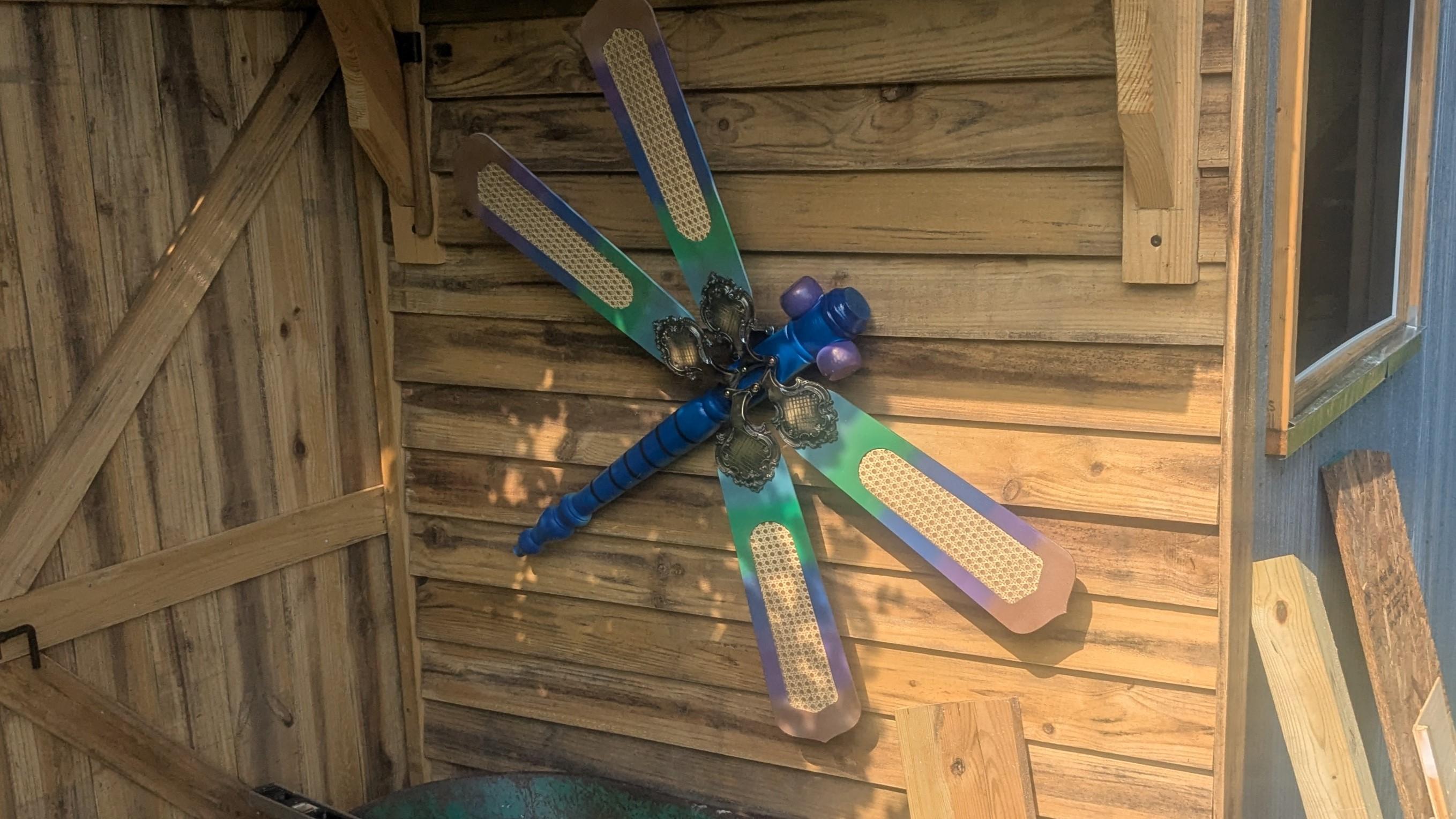
Frosty, The strange art is a dragonfly fashioned from an old newel post, a couple of ceiling fan blades and some random pieces of wood. I made the dragonfly for my wife (a favorite of hers) and she said it was too big for inside the house. I had a large blank space on the front of the shop, so there it went. Here in east central NC, snowshoes are things magazines

-
ShoreB, thanks for asking. I have used this to punch hammer eyes and it is way faster than doing it by hand (previous method, still used). It pays to have short punches because of the striking distance, etc. I wanted one of these because of the small footprint, adjustability, and ease of use. It is a lighter hammer, but way better than just hand hammering. I use mine just about every time I am working in the forge. Very pleased with it.
-
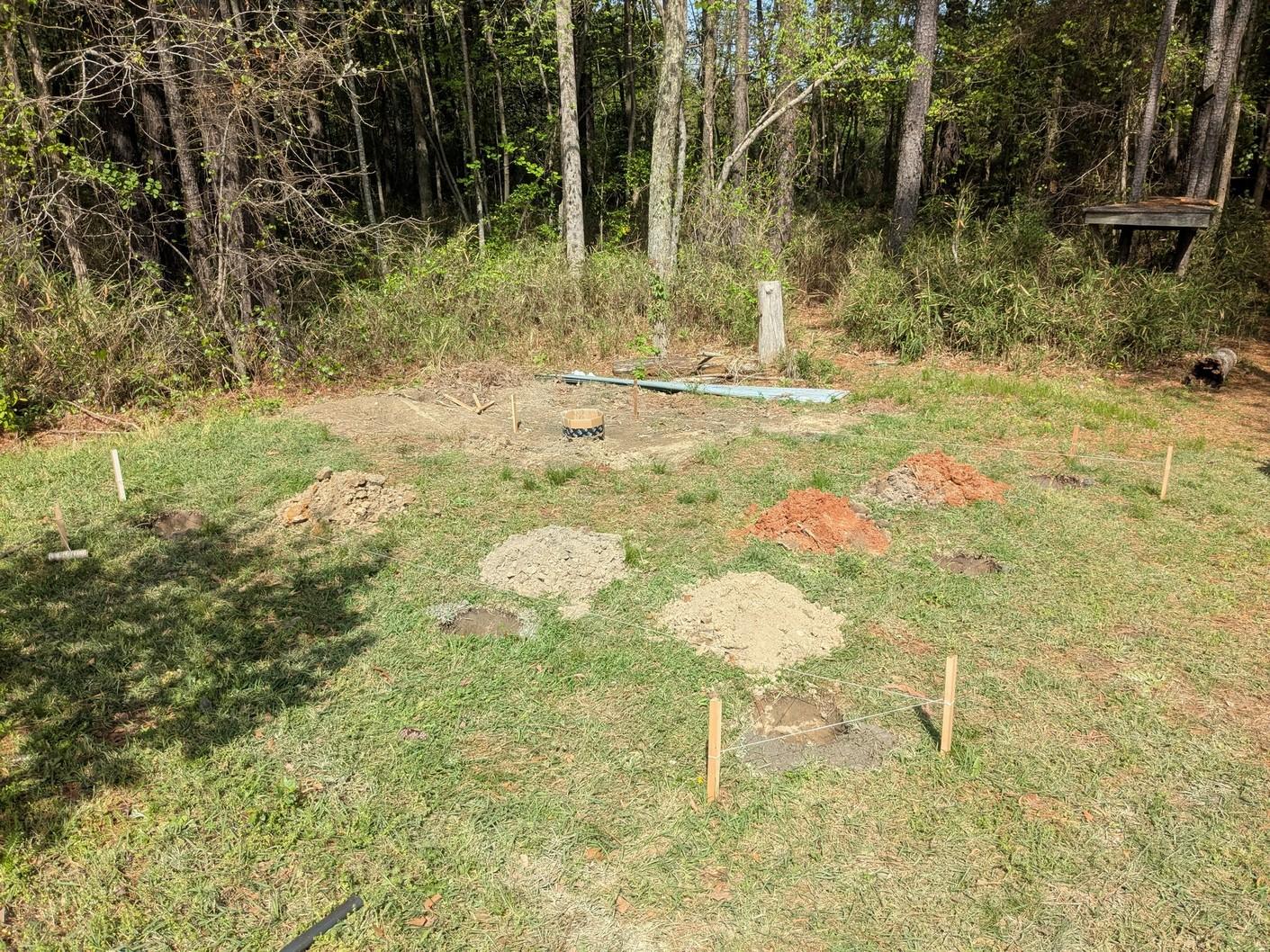
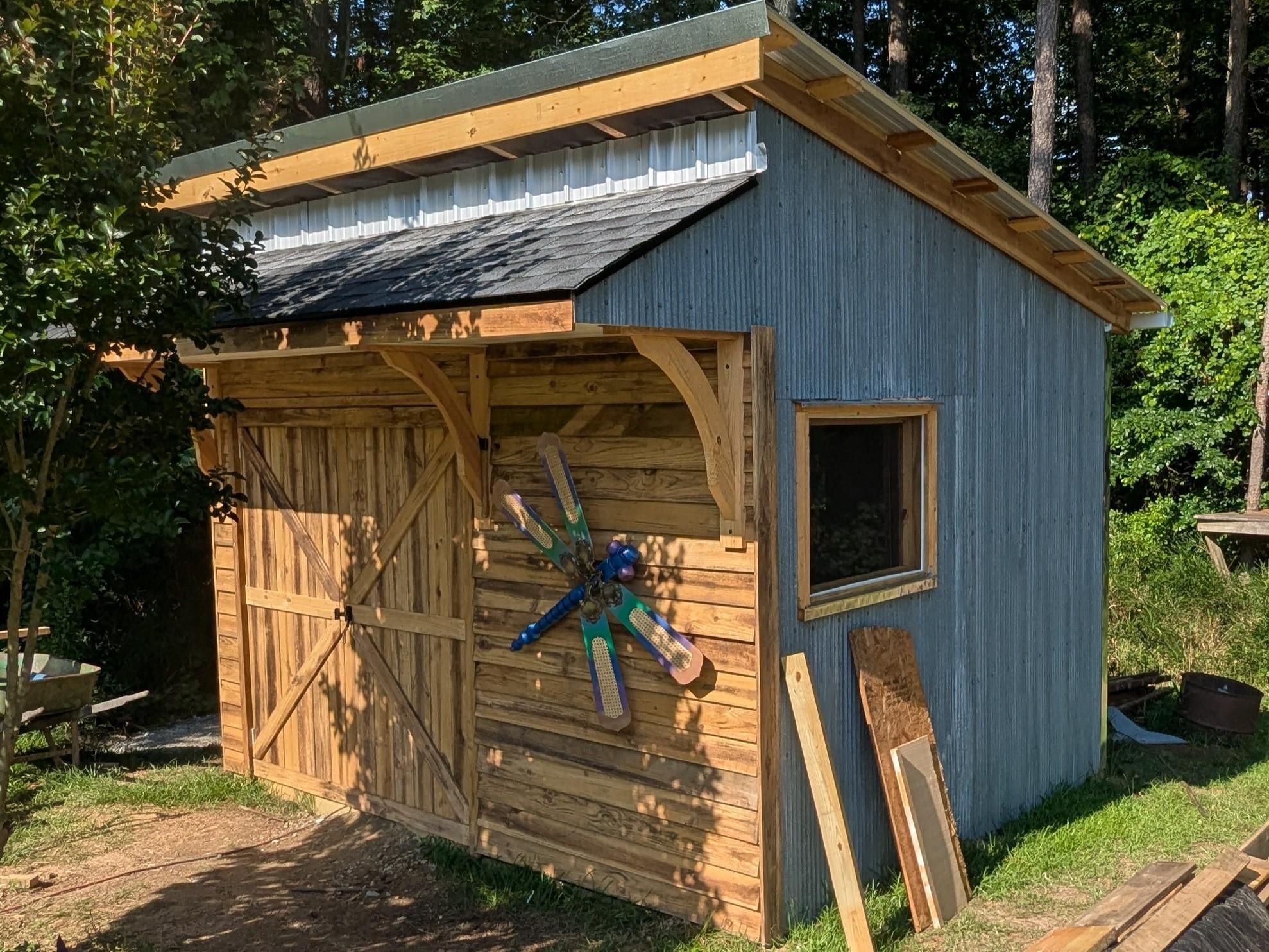
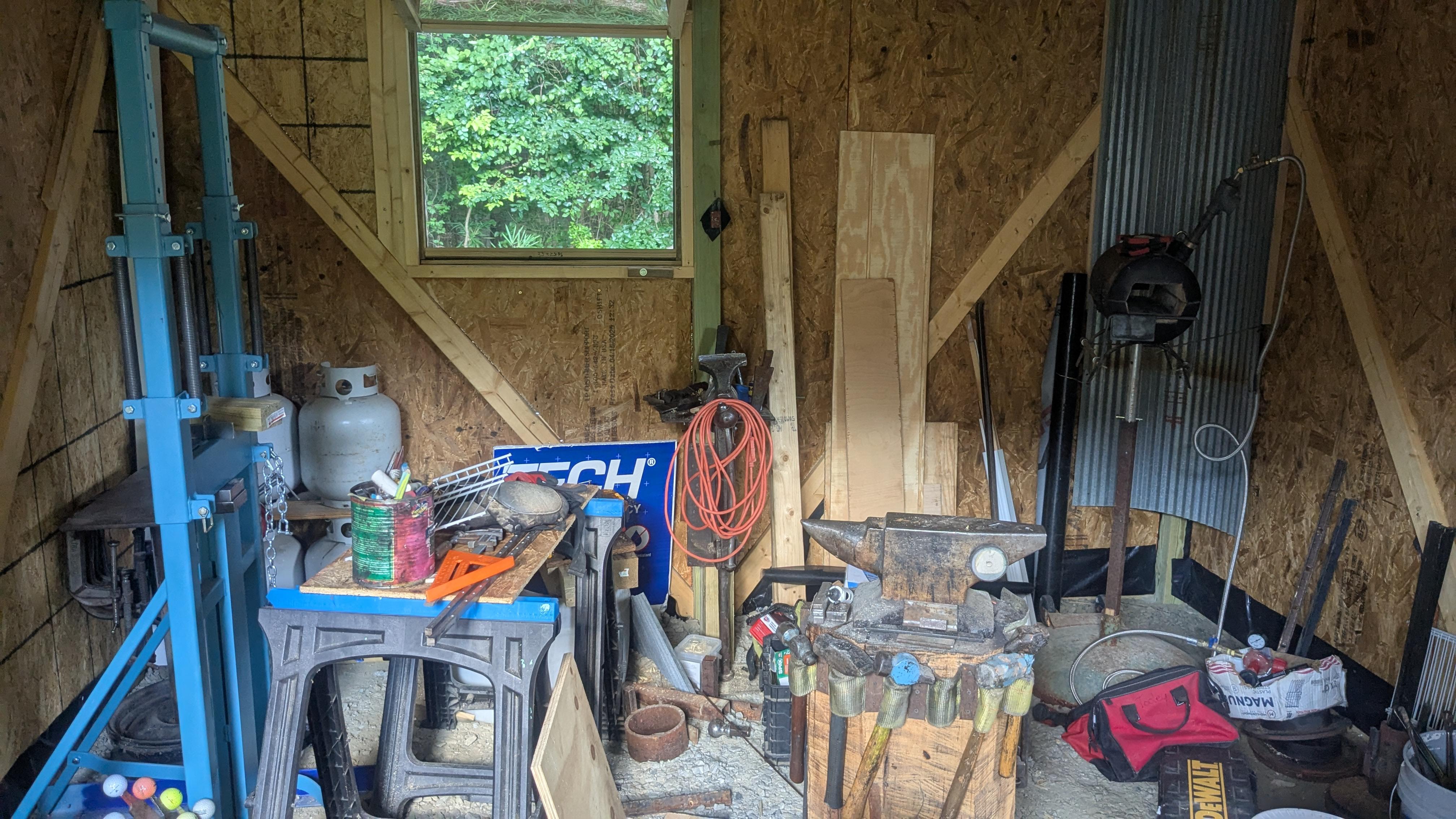
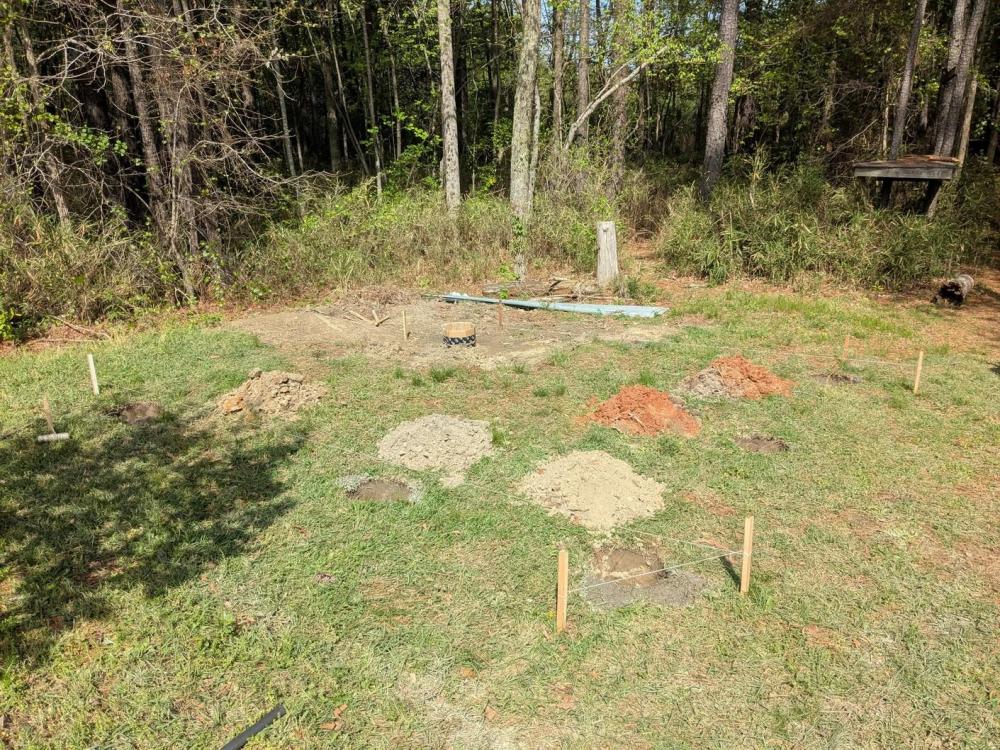
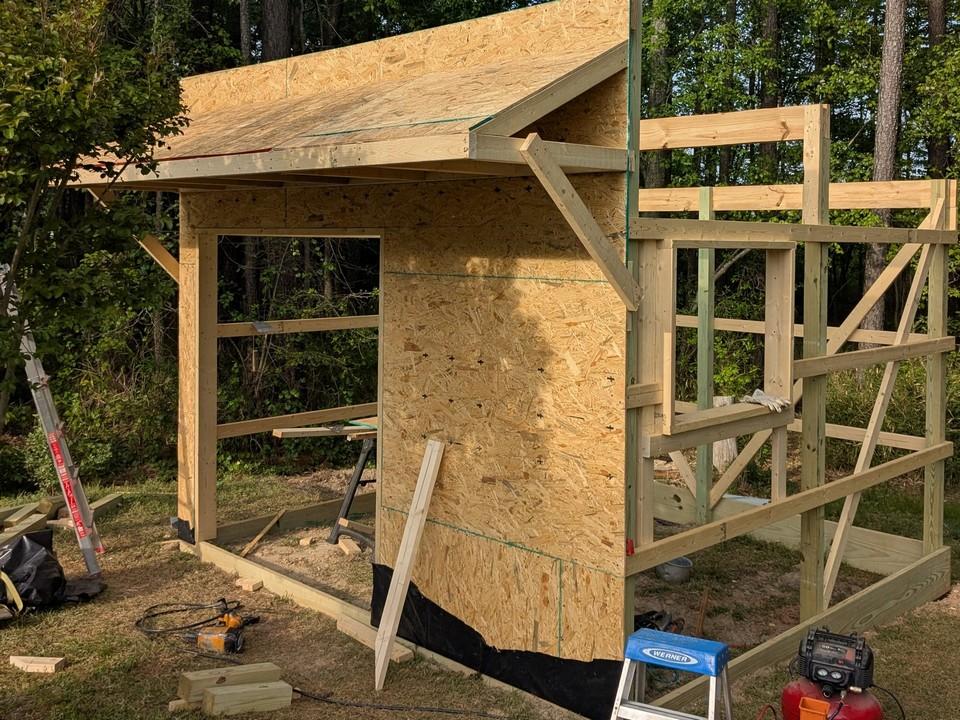
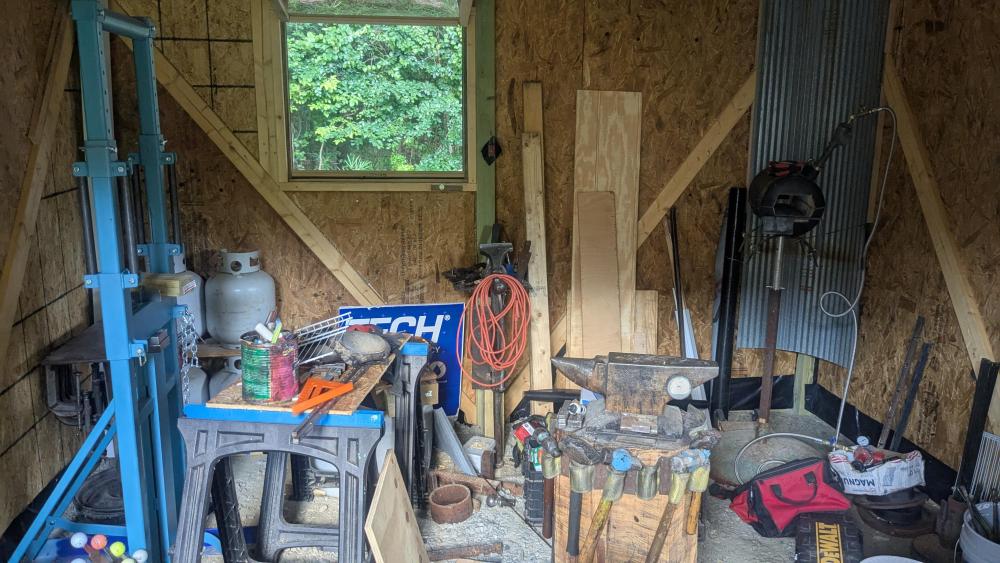
Finally managed to cobble together a "dedicated" shed/shop for my hobby. it is a 12x12 shed-roof design, post and beam affair. The town inspector said that he thought it was "a little overbuilt", but that is my style. No power yet, but that is in the works. The inside is functional but crowded, mostly because I have been slowly trying to move everything out of the garage where I used to work. The walls have 1" or foam insulation covered in aluminized bubble-wrap. The interior is clad in 1/2 OSB. The ceiling is covered with the same bubble-wrap under metal roofing. Full soffit venting at front and rear with two large screened windows (we have mosquitos here).



-
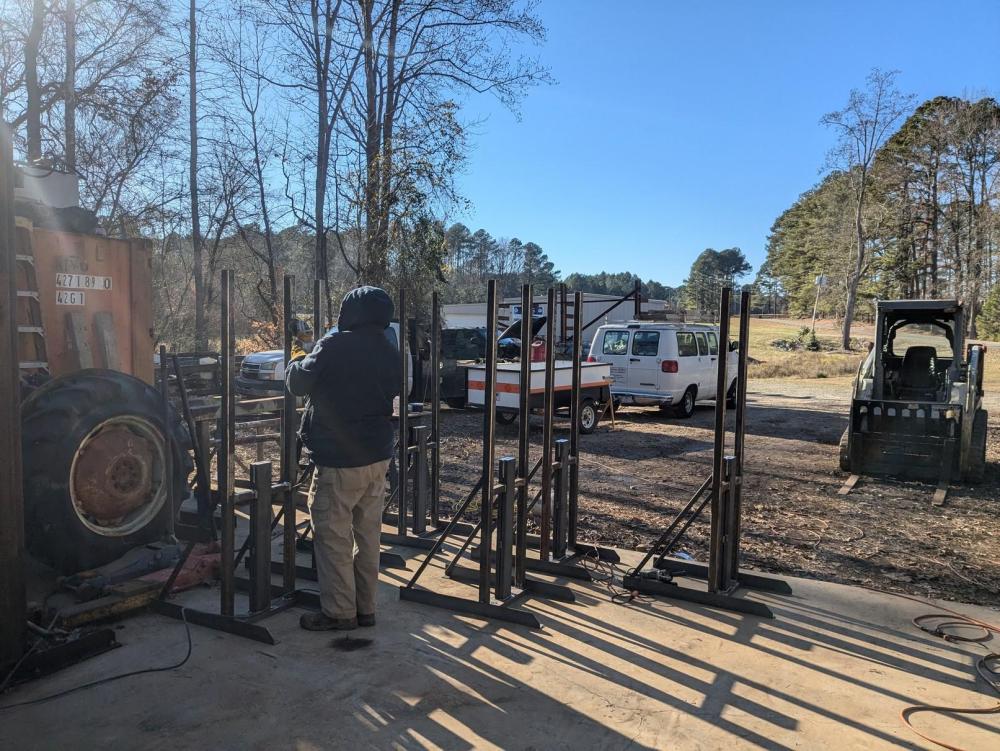
A group of us here in NC just finished a "build" of a dozen of these. The head weight is something between 50 and 60 lbs. There is no 'mechanical advantage' of any compound mechanical linkages, but there is very little friction anywhere but the treadle pivots and the springs supporting the head. Noise is a relatively mild chain rattle. The inertia of a 60-lb head (which has up to 10-inches of vertical adjustment) helps with the chisel and punch work it is kind of intended for, I think. Not so much for forging candle sticks out of 3" round bar. I will try and get some pictures up in the near future. The total weight is something less than 350 lbs, so relocation is not as laborious. Also, the total size is like 20"x32" by 6' high, so the footprint is relatively tiny. Also, the base is easy enough to bolt or weigh down without affecting the treadle action. When scraping enough money together to buy fuel (coal or propane, or the wood to make charcoal) is tough, the idea of spending a couple of grand turns into 'life-time bucket list' material. Not including my volunteered labor, we were able to get these built for below $500. I will be trying it out on punching hammer eyes in the near (hopefully) future, and will let you know how it goes.


-
This is from Frosty, and it is very true: "folk learn faster and remember more if they're entertained by the lesson, make them laugh and they never forget."
-
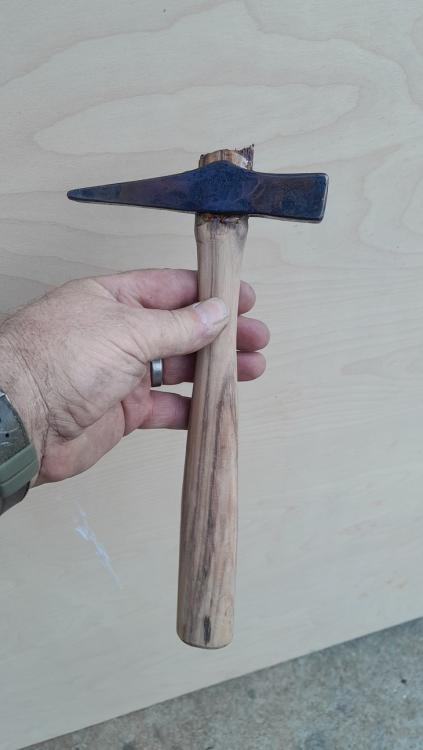
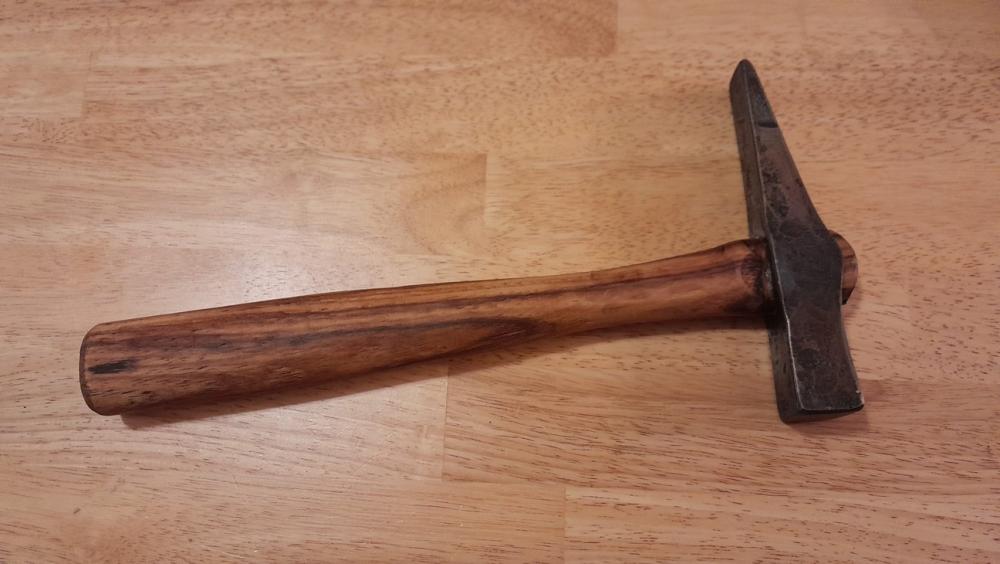
I was browsing through some Aspery videos and watched his leafing hammer tutorial. I had a piece of 7/8 square mystery hardenable steel and decided to try a viking-style design. I used about 4.5 inches of the bar to get a just-over 1 lb hammer. I upset the striking end to 1-inch forged to shape. I triple annealed then tried hardening in vege-oil. The hammer got hard, but a file stuck a little. I started over again and quenched in water, and the file skated like glass. I blacksmith-tempered with a hot drift and got the face and the been to bronze/straw. I repurposed an old handle that had broken off, and finished with tung oil. The handle is shorter, but I favor the shorter handles anyway.
-
I will try this again. I was putzing around in the "shop" and decided to do spark-test videos of several known metals. I did wrought, mild, 1045, 1075, 1095, A2, D2, H13, and 4140. When I get a chance, I will try to add some more metals. The clips are all 15-25 seconds, and I cut out the sound (you can make your own crunchy, screeching, grinding noises). If I do more, I will probably switch to "phone orientation" to get the whole spark pattern, and do it in front of a dark background. Admins, I searched but couldn't find anything like this. Please feel free to move or delete. thanks, Paul A2 - Mild - D2 - 4140 - 1095 - 1045 - 1075 -
-
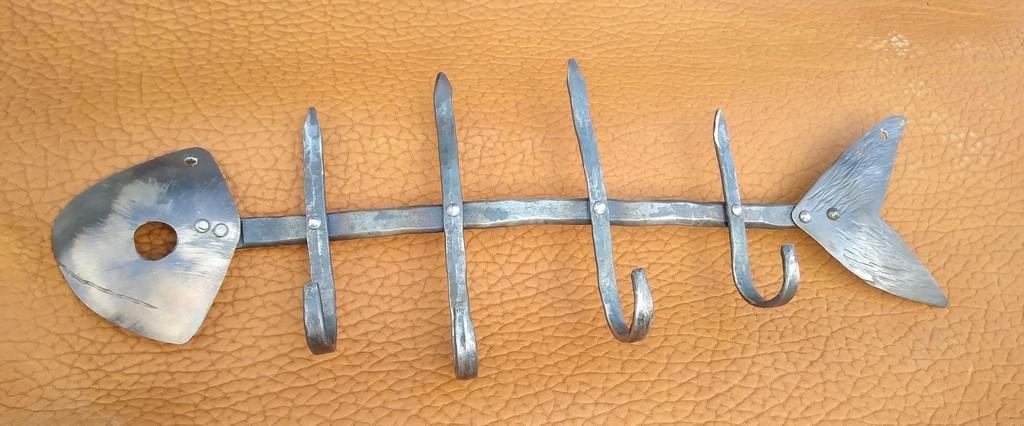
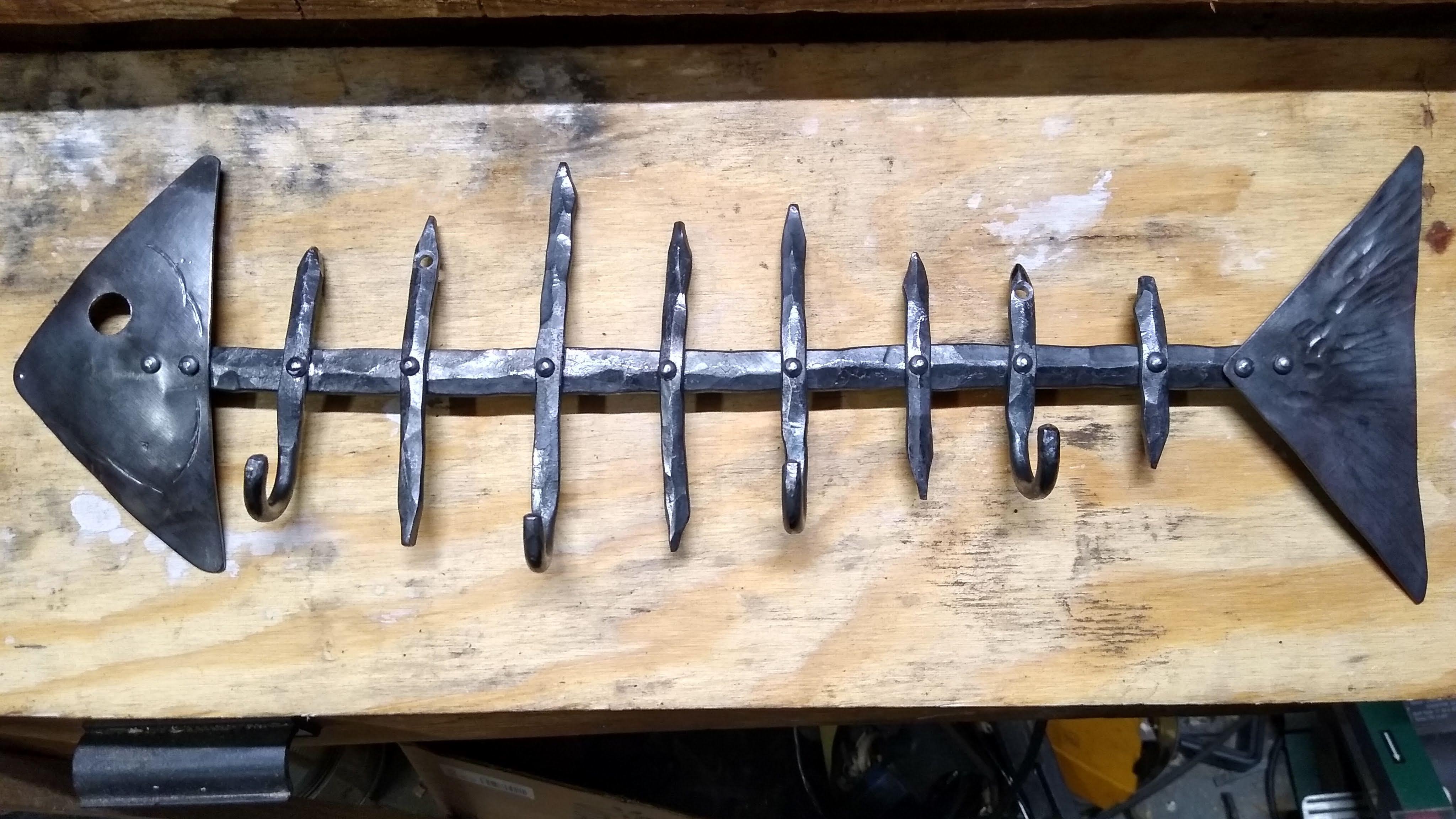
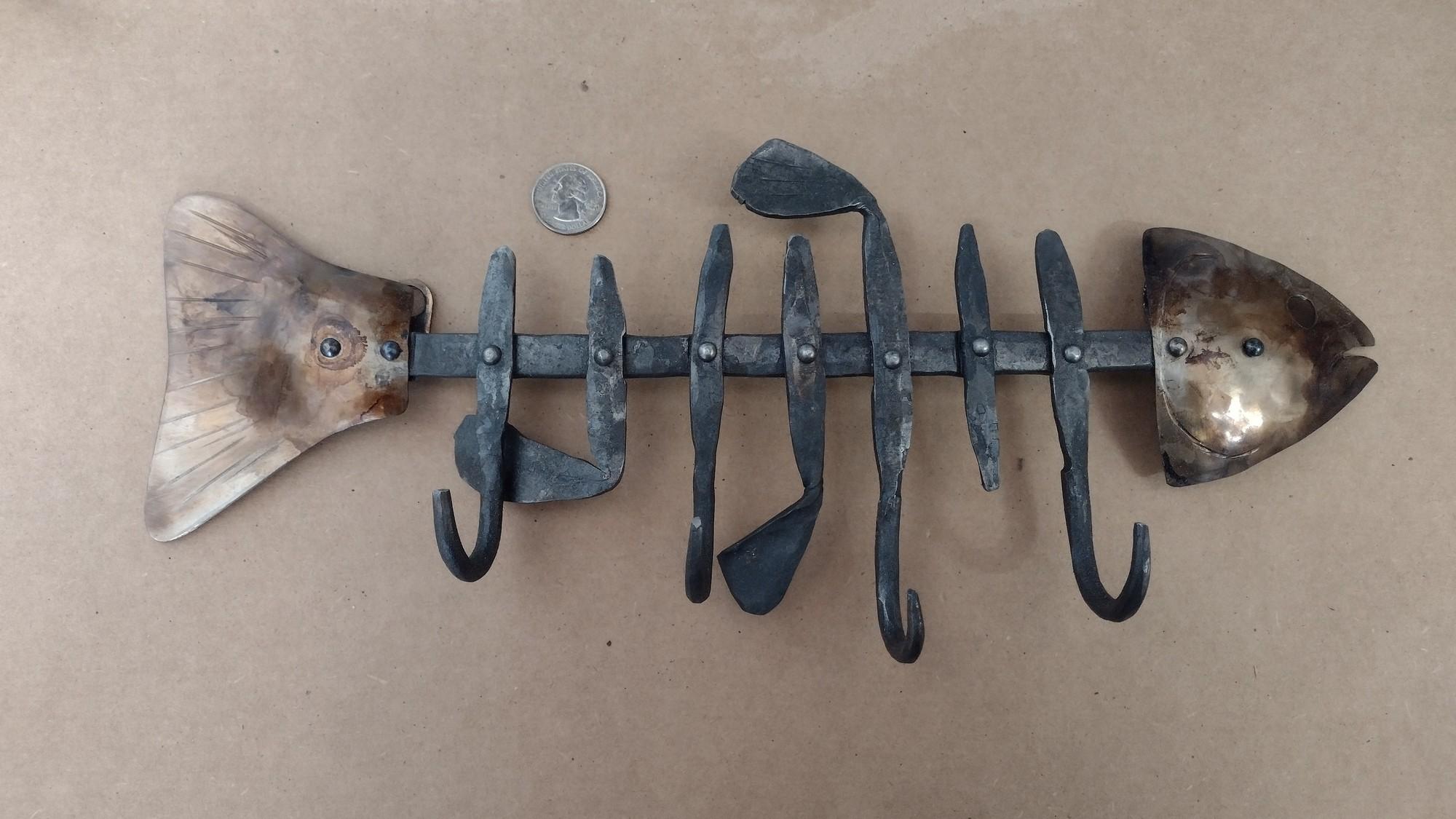
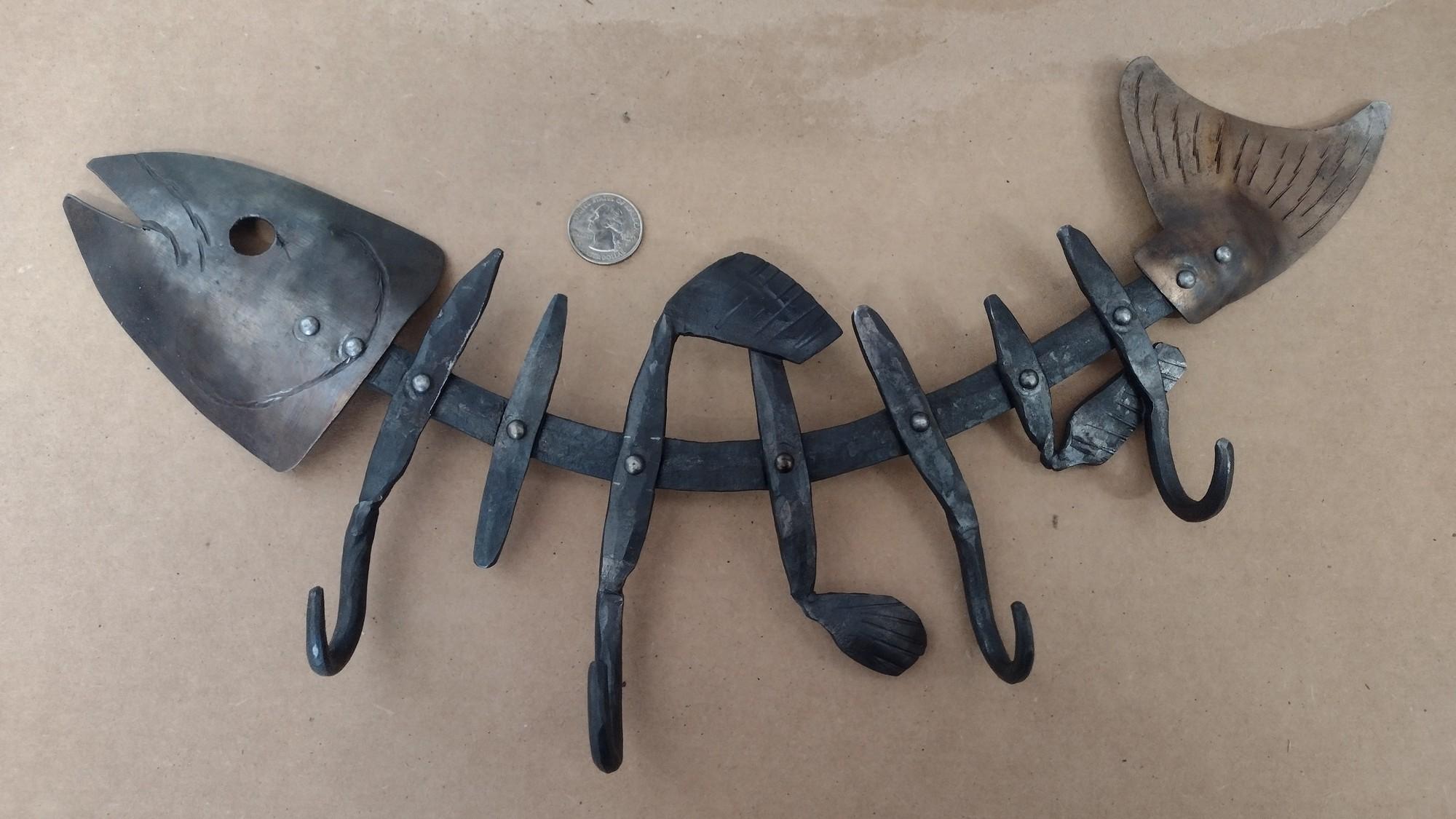
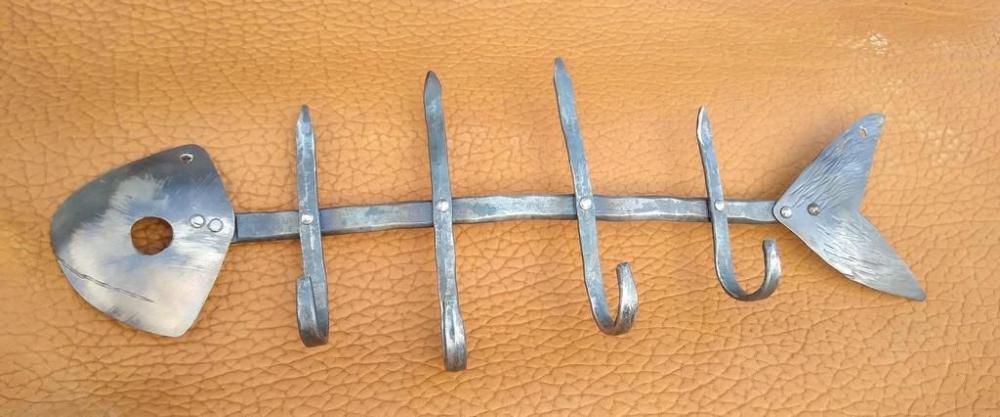
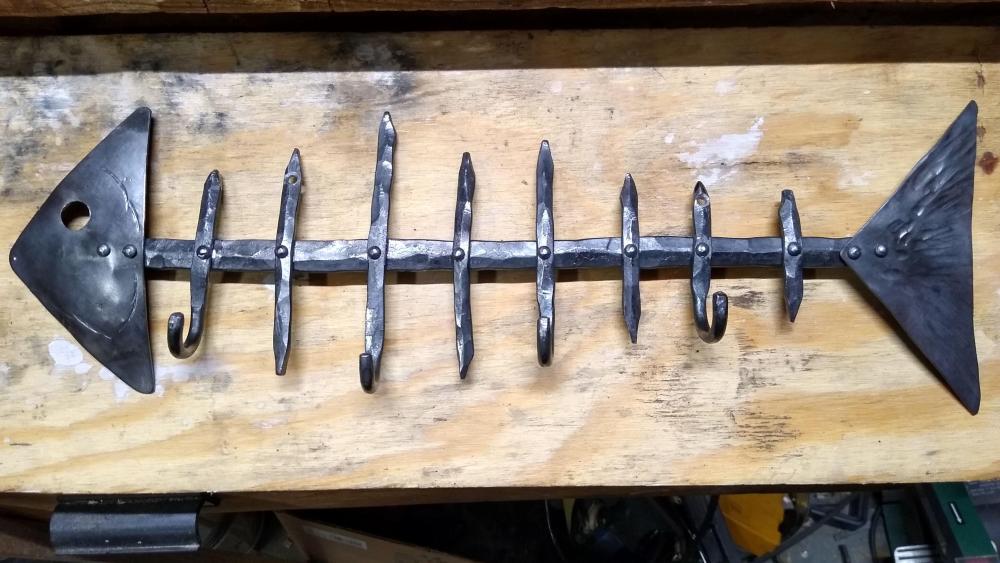
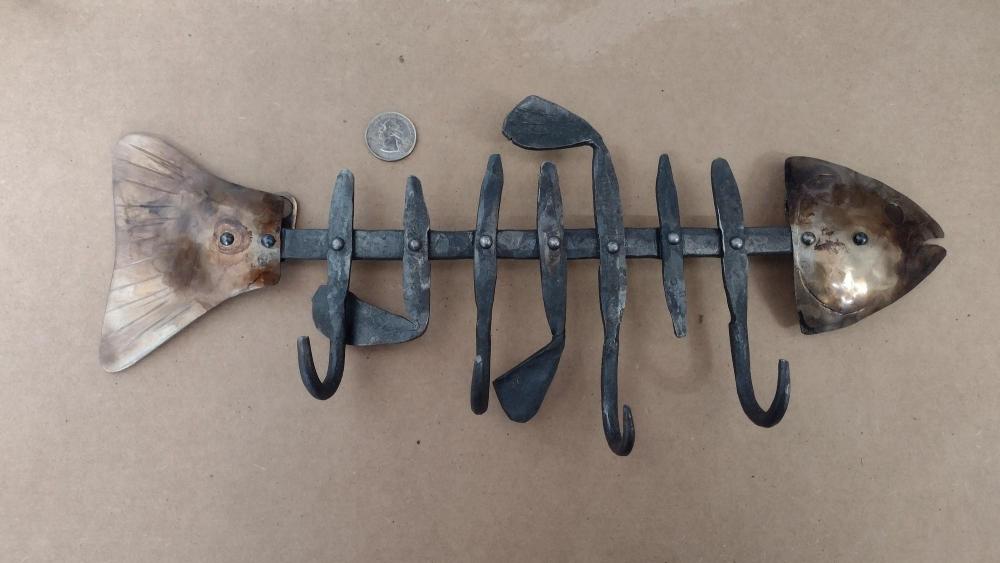
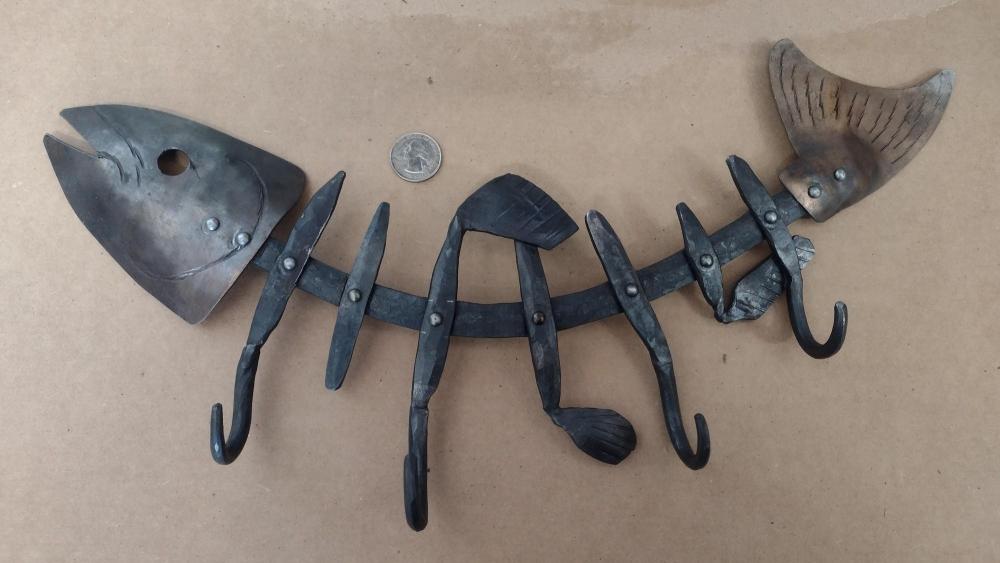
Play on a fishing theme. The simple one was my first. The less simple was next, then, and then. The skeletons are mild scrap and the heads n tails are sheet stainless (scrap, again)
-
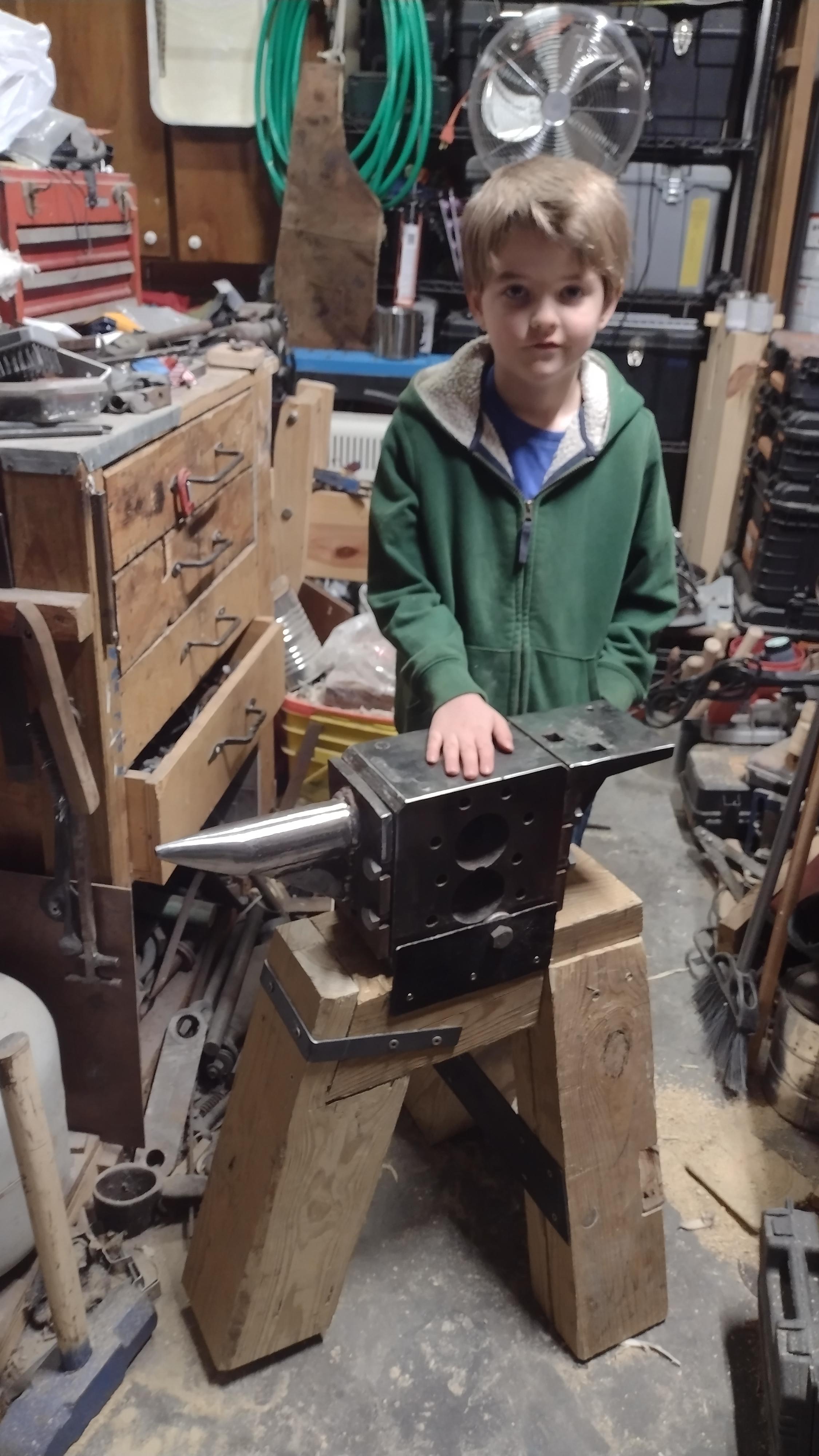
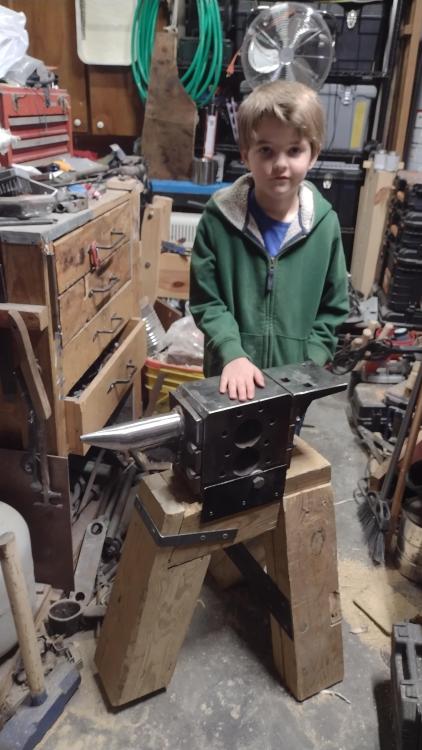
I fabbed a quick stand from a bunch of 4x6 wood scrap. My youngest is modeling for me the stand survived a long day of beating by a bunch of 10-13 year-olds TommyVee, I sorta envy your cone mandrel. that is one thing I have a shortage of - cones of any sort
-
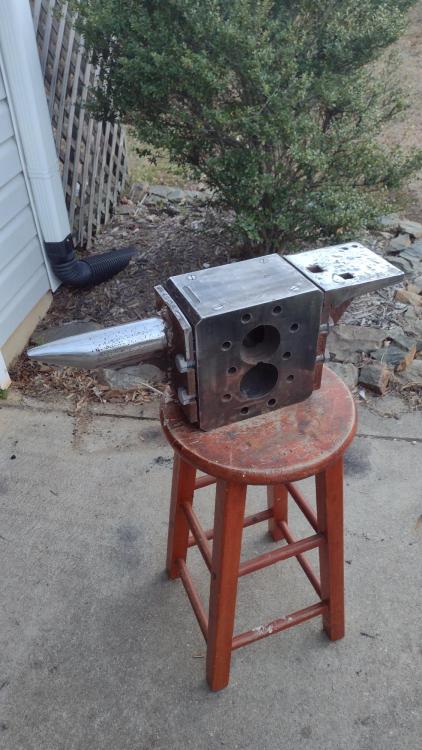
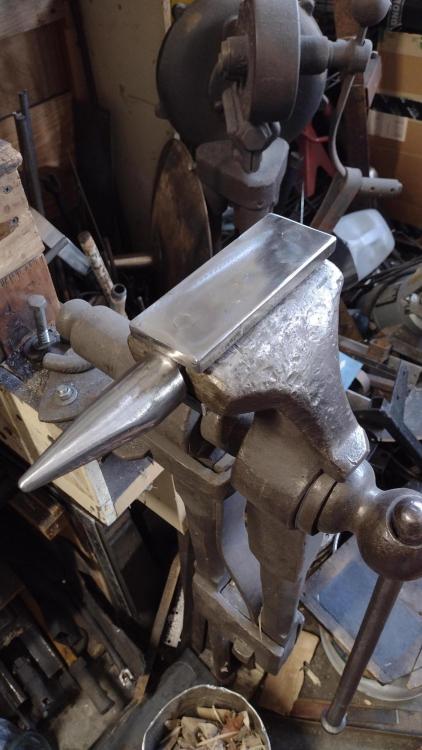
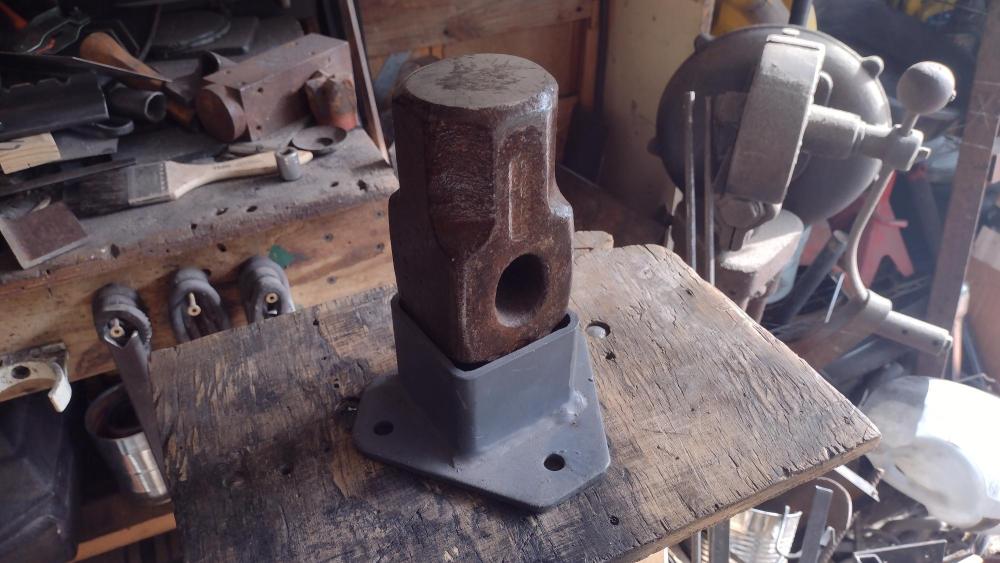
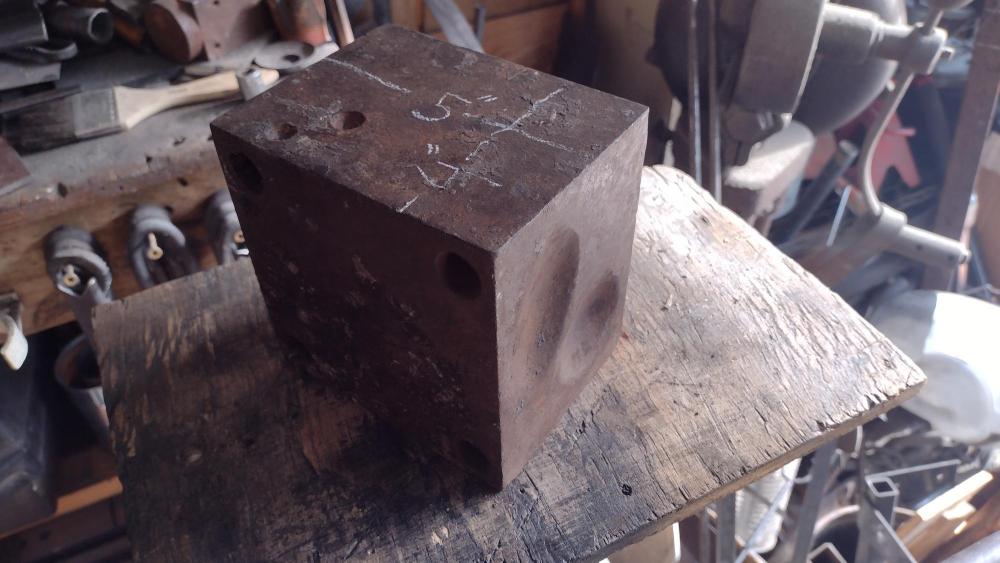
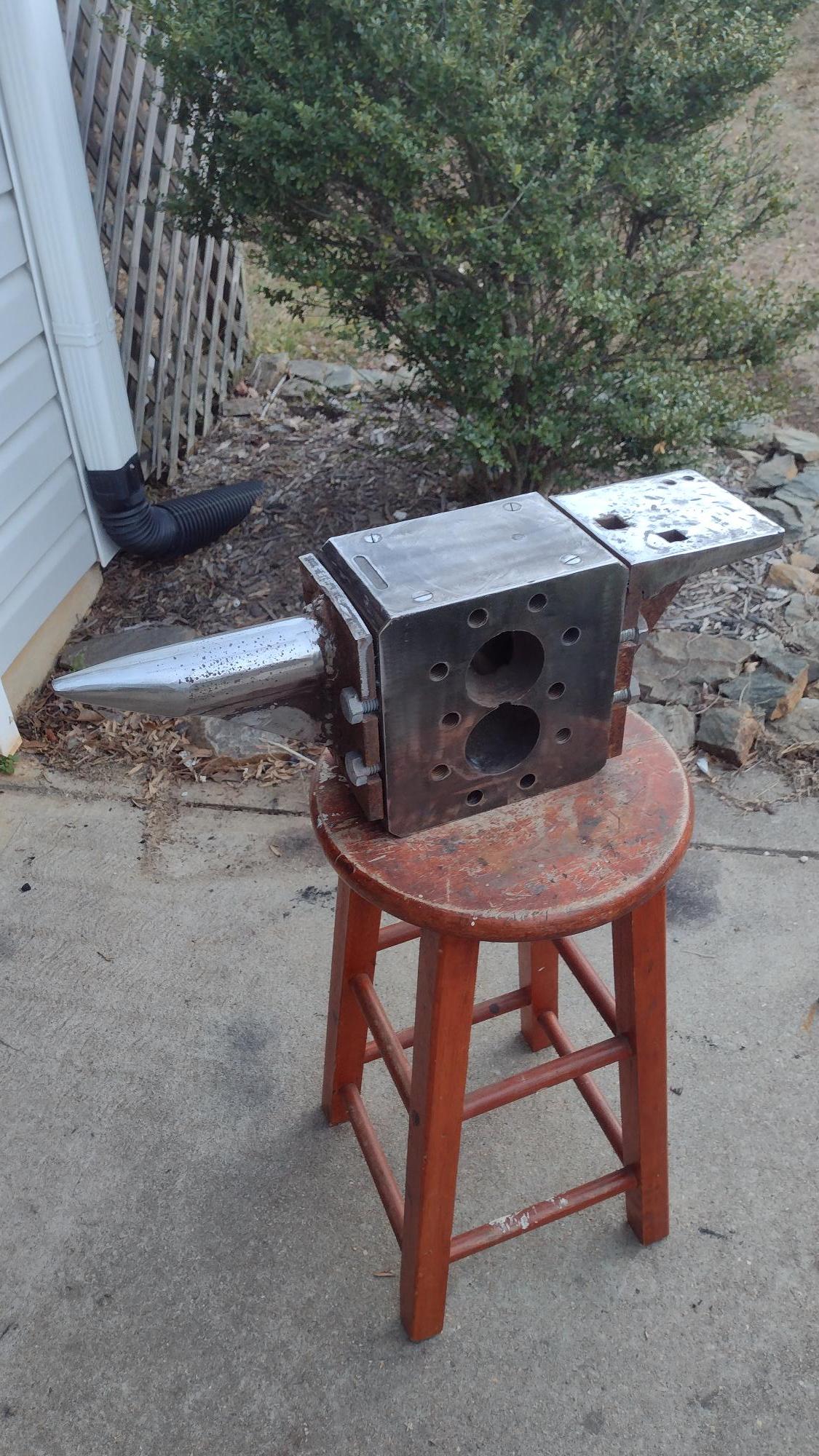
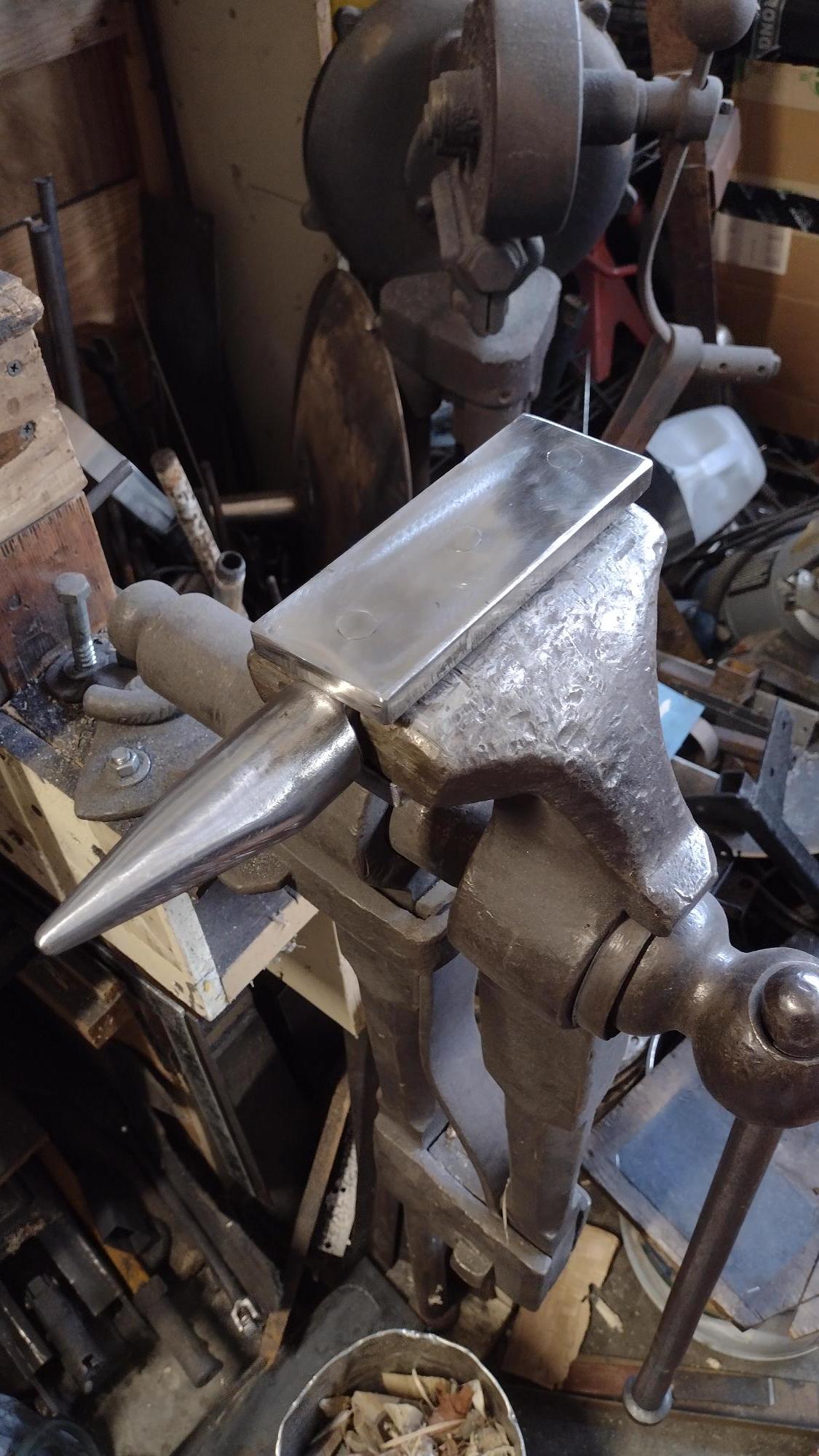
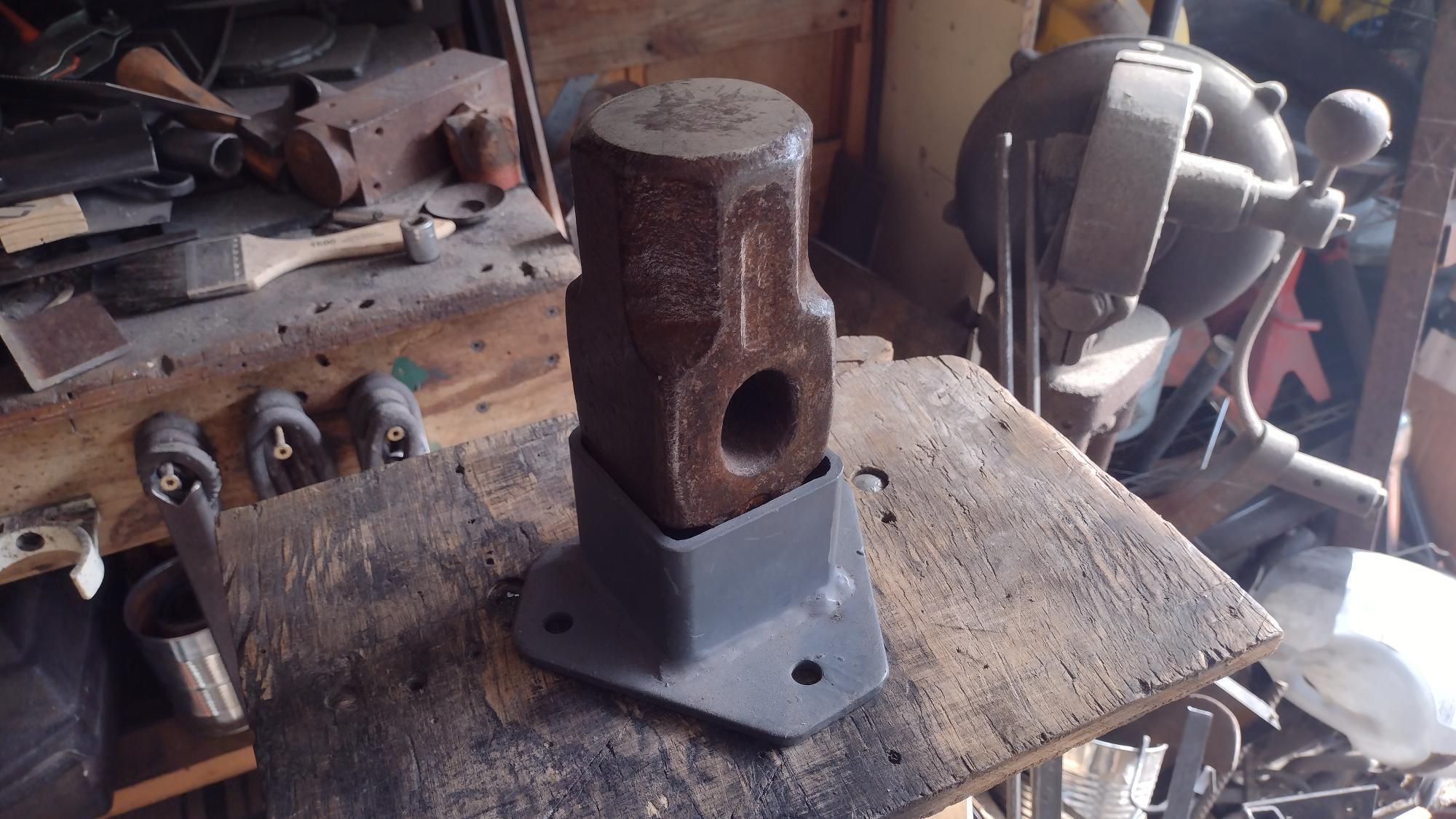
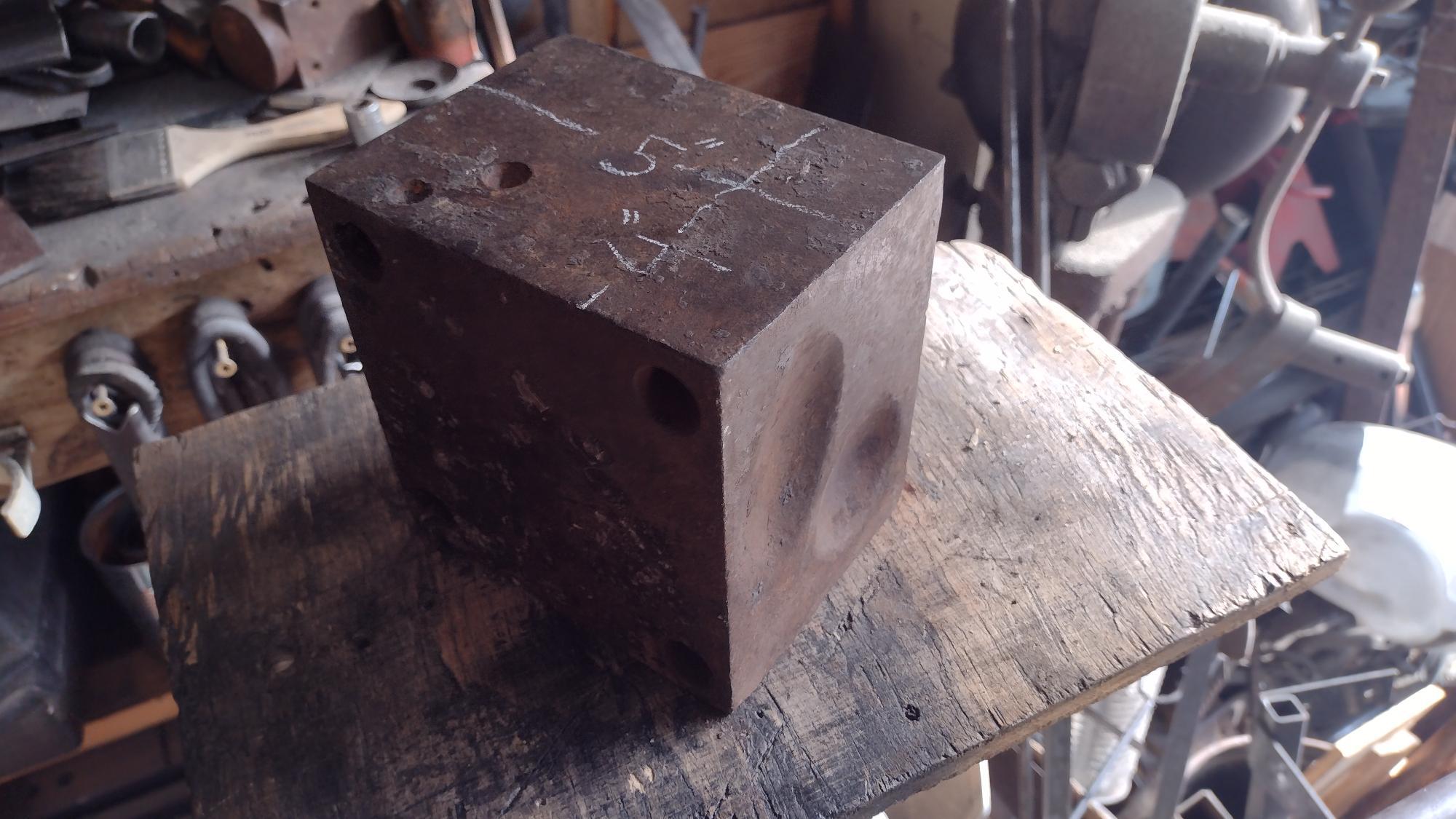
This is a very interesting thread. I have long believed that an anvil does not have to look like something Wile-E-Coyote needs to drop - I actually came by that belief from the wonderful folks here on IFI. Here are a few that I have handy to use or loan out. This is just a 20+lb block I found in the woods. This one has three smooth faces and three with shapes This one is what it looks like. The hammer head is a 10-lb with both faces ground flat. kids don't hurt it This one I made from an article I saw more than 10 years ago. The round bar is 1-5/8 hardenable mystery metal This one is my oldest pride and joy, called the Frankanvil. The heel is RR tie plate. The horn is 2.25 inch round. The body is a hydraulic pump body that was in a scrap pile. The machinest who gave it to me said it is solid through-hardened D2 with 5/8 tapped holes all over the place. It is from a caterpillar place. I made it look like an "anvil" because it was useful that way. total weight is just over 100lb.