Joel OF
Members
-
Joined
-
Last visited
Everything posted by Joel OF
-
I'm sold.
-
What factors influence your decision making whether to use tension or compression braces in items such as gates and sign brackets?
-
On the other side of the pond do you get a choice between cold rolled or hot rolled when buying solid steel bar? As far as I'm aware in Britain you only get a choice between hot and cold when your buying sheet or pipe.
-
If I'm understanding you correctly you've hit the nail on the head with one of the reasons it's a pain to use - the material you're rolling rides up the roller. Twinned with the fact the rollers lean backwards at the top (due to no support at the top) if the material rides up the rollers, you can get uneven curves if you're not careful. This usually requires pausing, knocking the material back down to the bottom of the roller, then continuing. To be honest it's a heap of junk but I kinda like it because I'm new to all this metalworking malarky & I'm learning as I go.
-
Yep, the perils of making stuff up as you go, on a whim, using only scrap stuff you've got to hand!
-
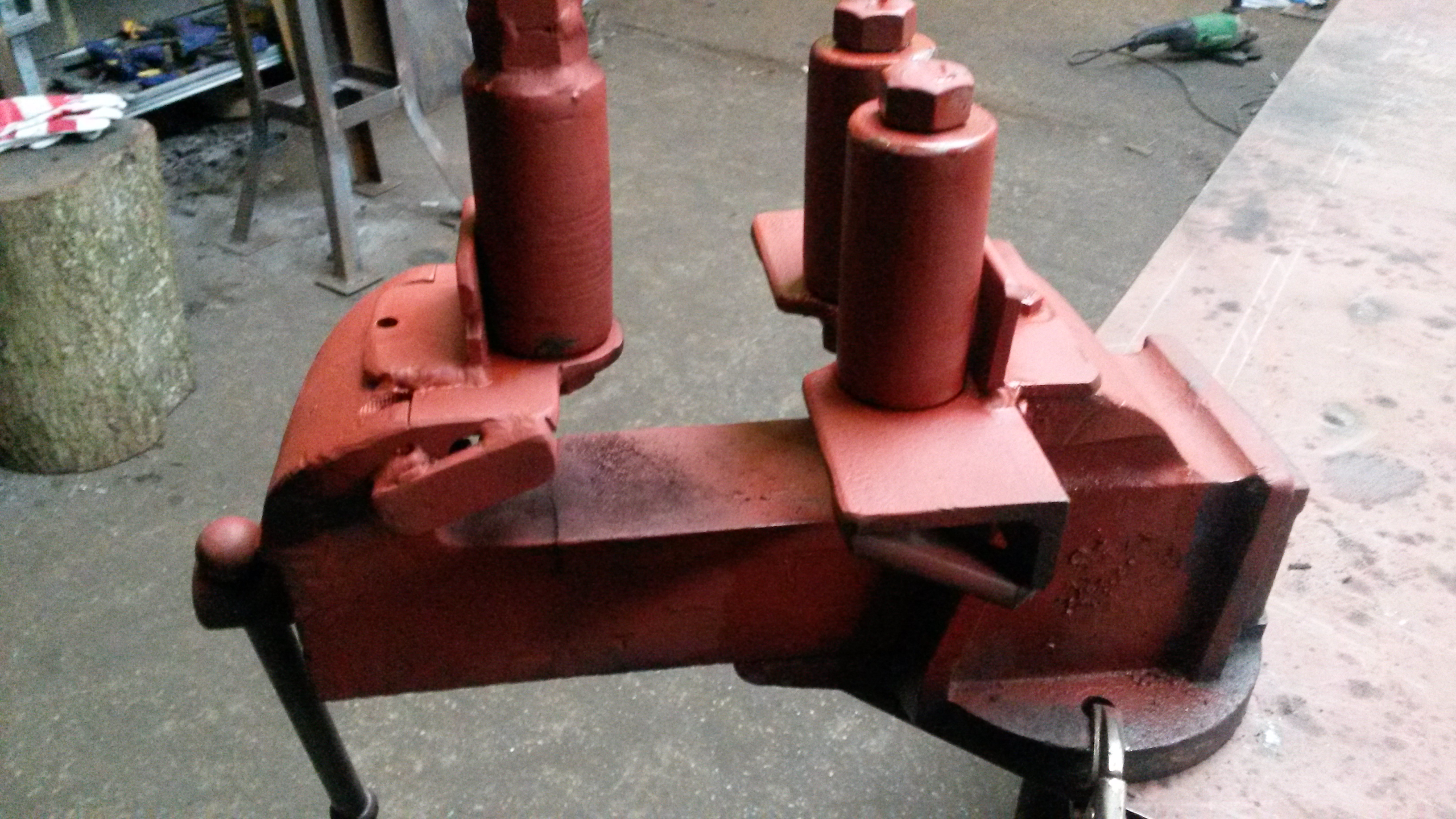
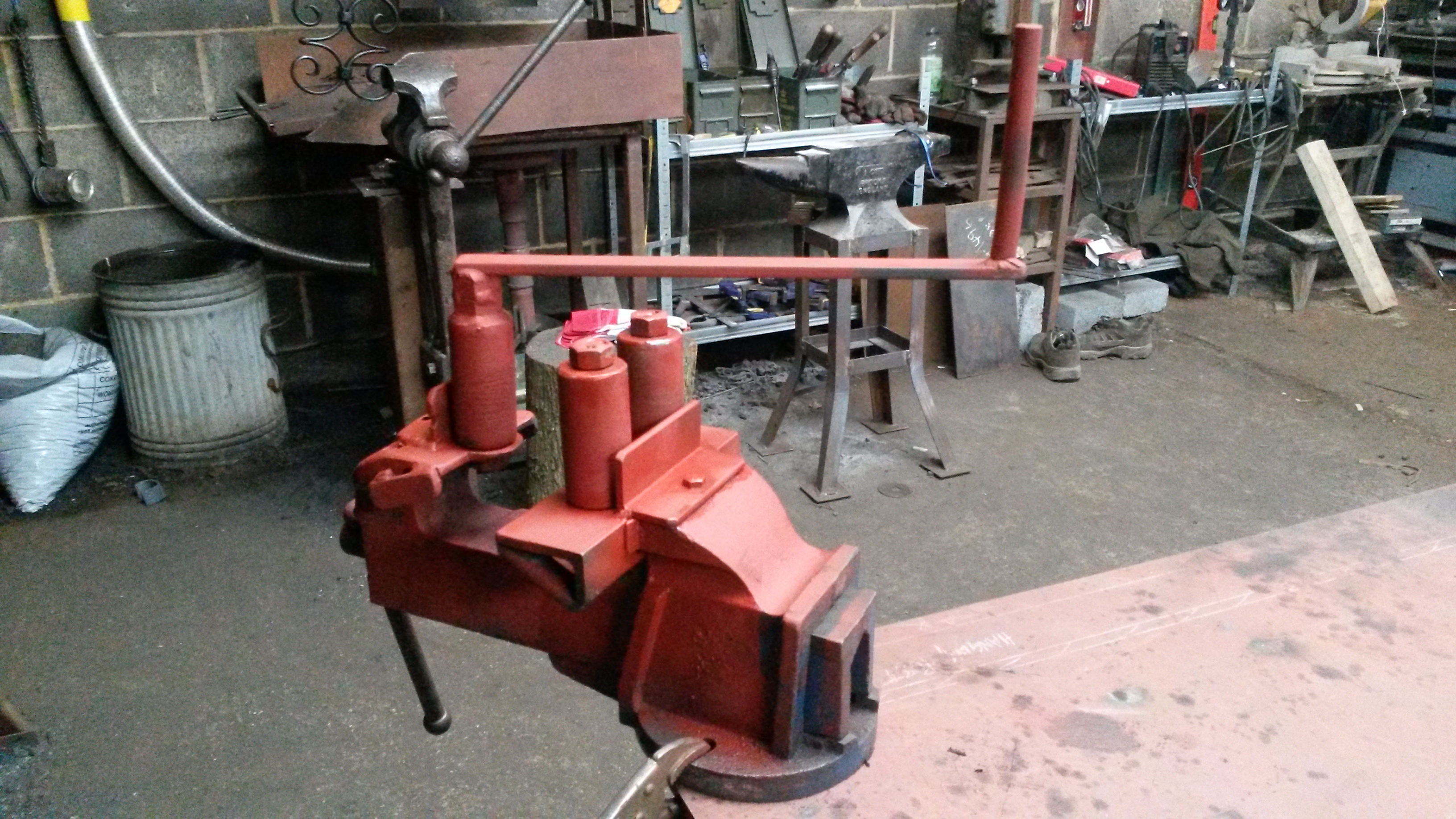
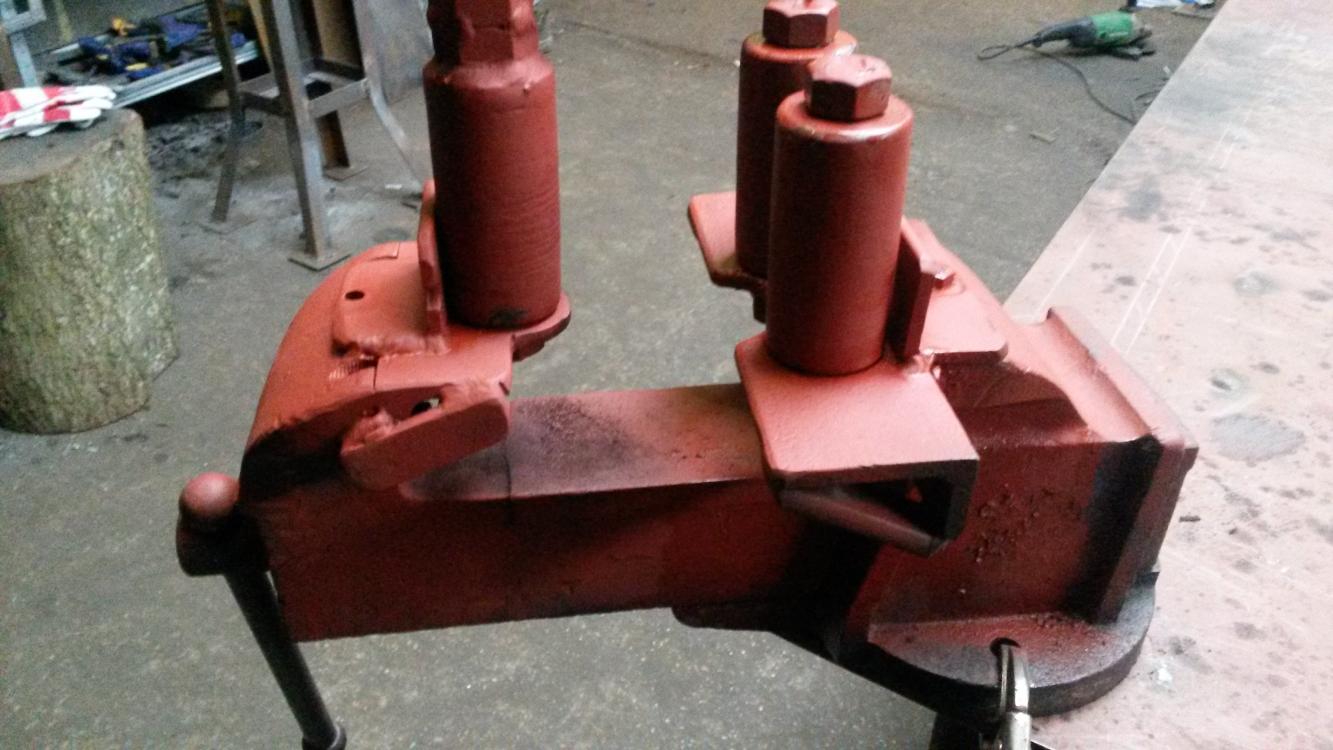
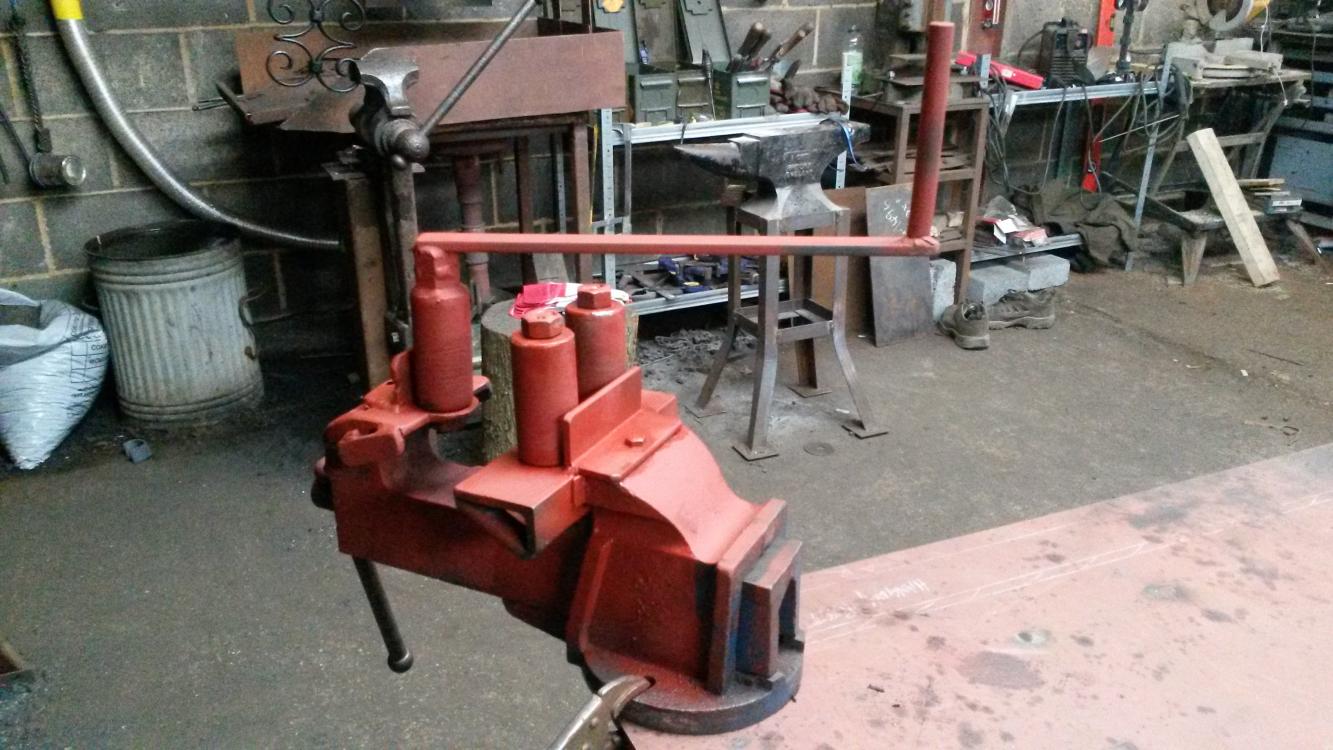
Hi folks, just thought I'd share a couple pics of a small badly made ring roller I constructed from a busted vice. It's a pain in the proverbial to use & there's a million and one possible improvements but I thought I'd share a pic nonetheless as it's a good idea in principal & people can run with the idea as they see fit. As you can probably tell I tried making it one way, which didn't work, so I re-butchered it into another setup. With a fair bit of heave-ho I've used it to bend some fluid S curves out of 25mm x 8mm bar & even tweaked a bit of 25mm x 10mm bar, but it's happiest on the thinner stuff. The rollers & are on M16 threaded bar pins, the single roller with attached handle lifts off. The angle iron backrests are to stop the pins/rollers tilting back when bending thicker stuff. As and when I make it's bigger brother I'll use M24 threaded bar for the pins. As per the lyrics to a Down song; "learn from my mistake".
-
I'm working on a floral gate commission at the minute that uses a lot of small diameter round bar steel wrapped around the frame (leaf stems and climbing shoots) and I realized I needed a way of calculating steel lengths for the wraps etc. After a bit of research I came across braid on braid mariners rope which is sold (in the UK at least) in the same diameters as round bar steel, which is very handy. I'm sure there's lots of other objects that will do the same job but some plus points are - it's perfectly round, if you're careful with it it doesn't kink and will hold it's round shape when bending/wrapping it at sharp angles, it's pre-stretched, it's colourful so it's easy to find, if you buy each diameter in a different colour you can differentiate each piece without needing a caliper, cheap to buy online (though I bought mine in a shop). I did see some small diameter rope that held it's shape when bent because it had a wire centre, but it was a lot dearer and I think that only come's in 6mm. Needless to say you can't use it on hot steel.
-
Google image search Giacometti for possible inspiration.
-
Cheers guys. I've pitched the idea in the drawings to the estate manager so I'll see what he says. I'm a one man band without a forklift or lifting gear at the minute so moving heavy plates of steel - or just anything awkward and heavy for that matter - is a hassle I'd rather avoid, I'd rather have something set in position in the floor I can rely on. With regards to the position - away from the low tie beam is probably my biggest concern.
-
It is expensive but supposedly it's re-usable.
-
I'm probably jumping the gun by posting this as I've not used the stuff yet on metalwork (though I have no reason to think it won't work) but I thought I'd post whilst it's on my mind... I heard about this stuff called Sugru on the radio a while ago, it's a moldable putty that hardens, not rock hard but kinda dent-with-your-fingernail hard. The inventor said she originally made it from a mix of decorator's caulk and saw dust. Anyway, it comes in a variety of colours and is good for fixing a million and one things, Google it. Reason I'm posting about it is because I make bowls, sometimes with feet, so I'm going to try using it on the bottom of the feet so they won't scratch tables. It's probably got a million and one uses within a workshop. I gave my Mum some a while ago and she fixed her iPhone charger where it'd started to split around the jack.
-
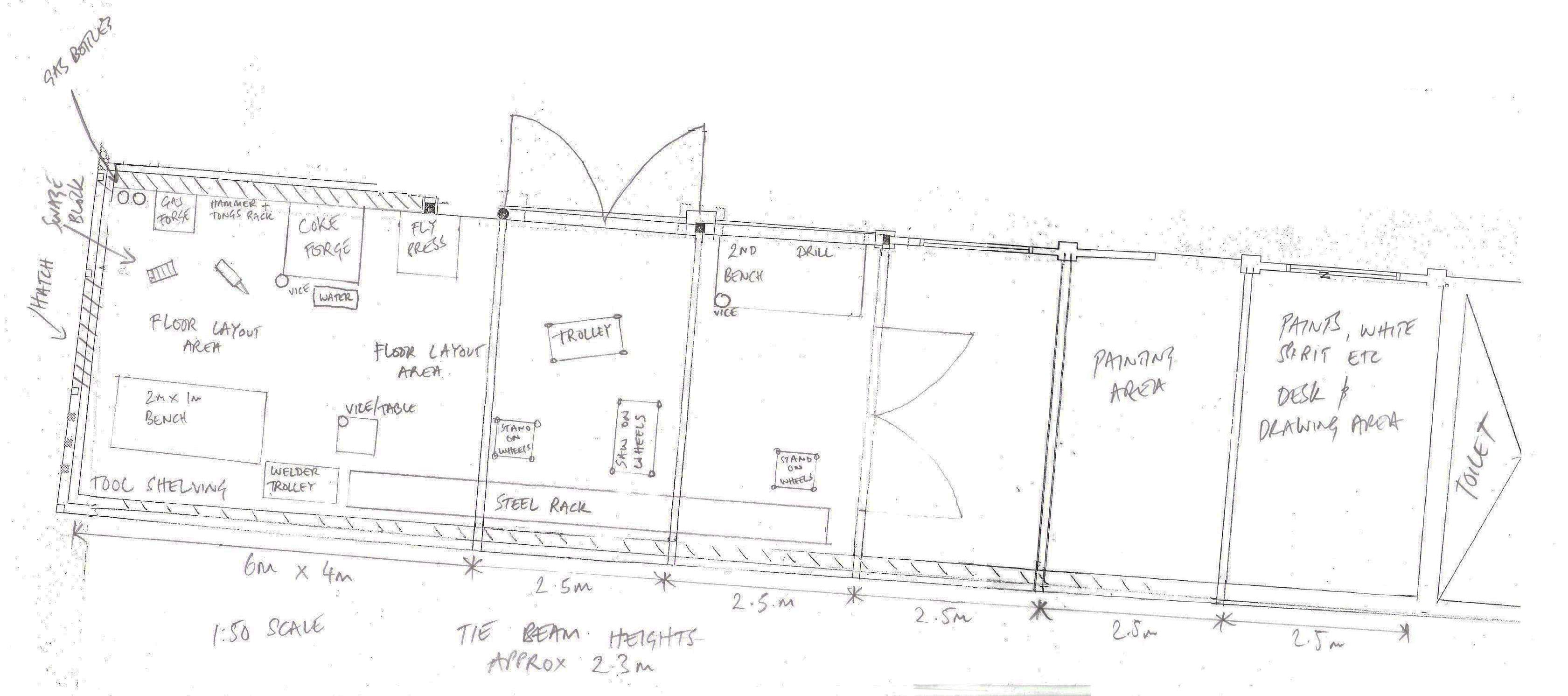
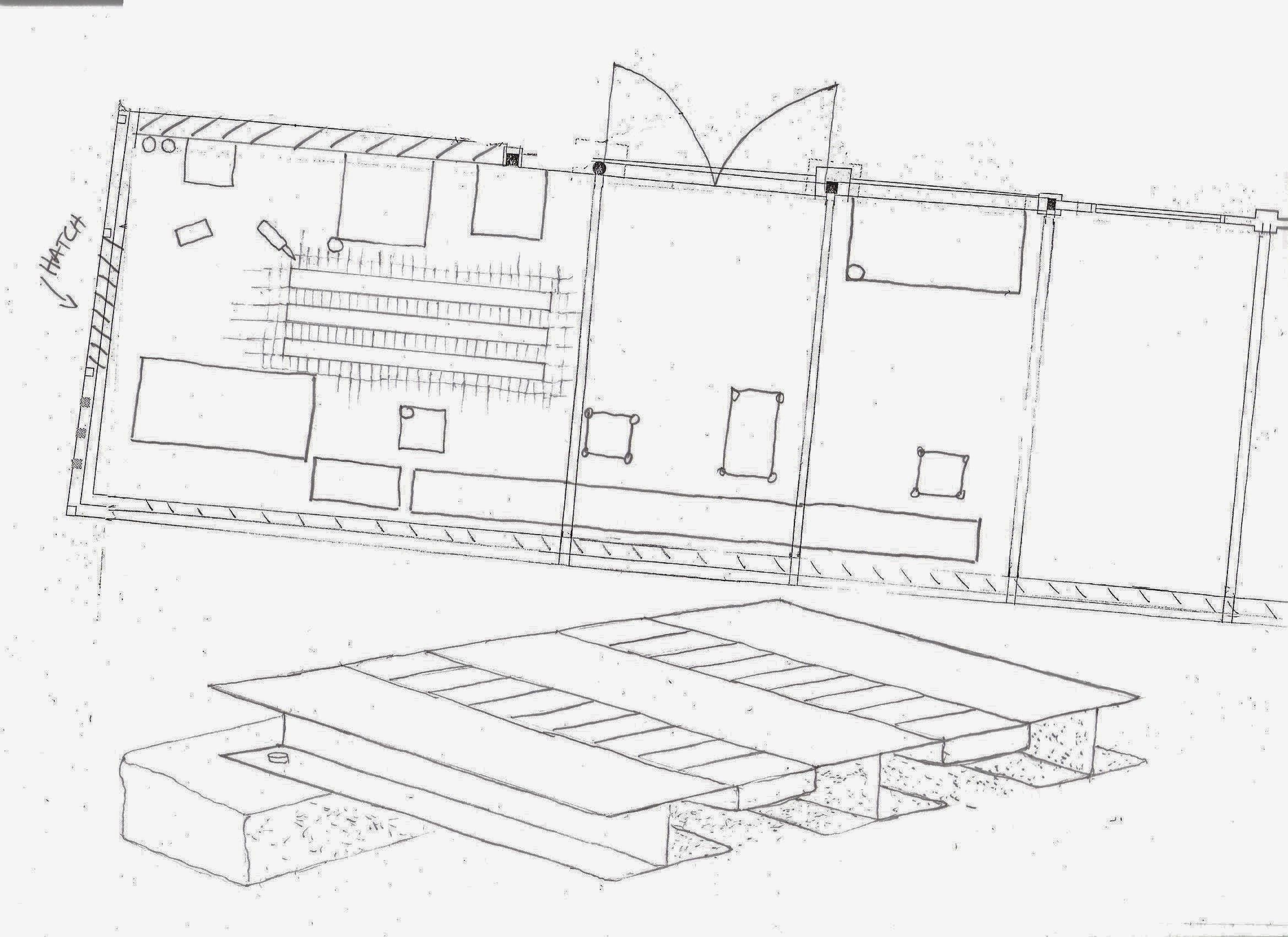
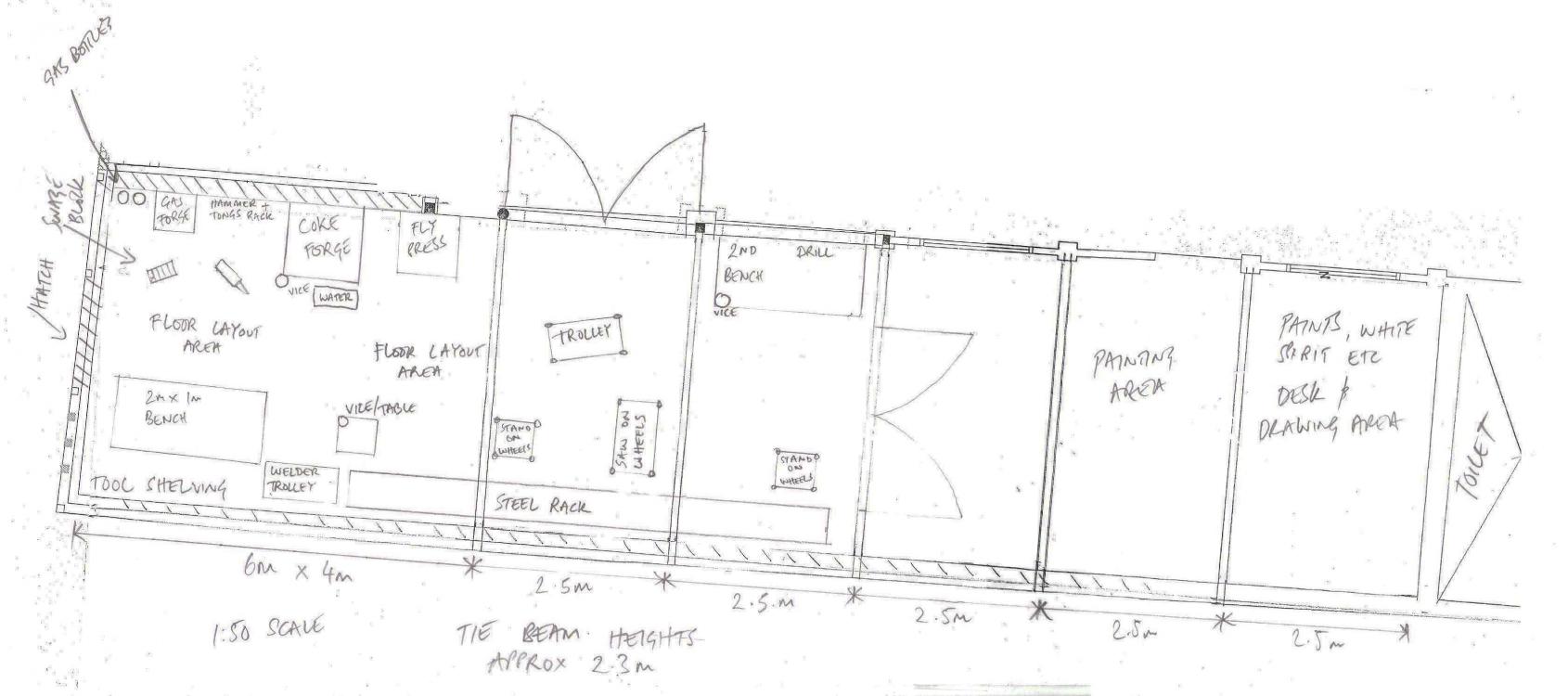
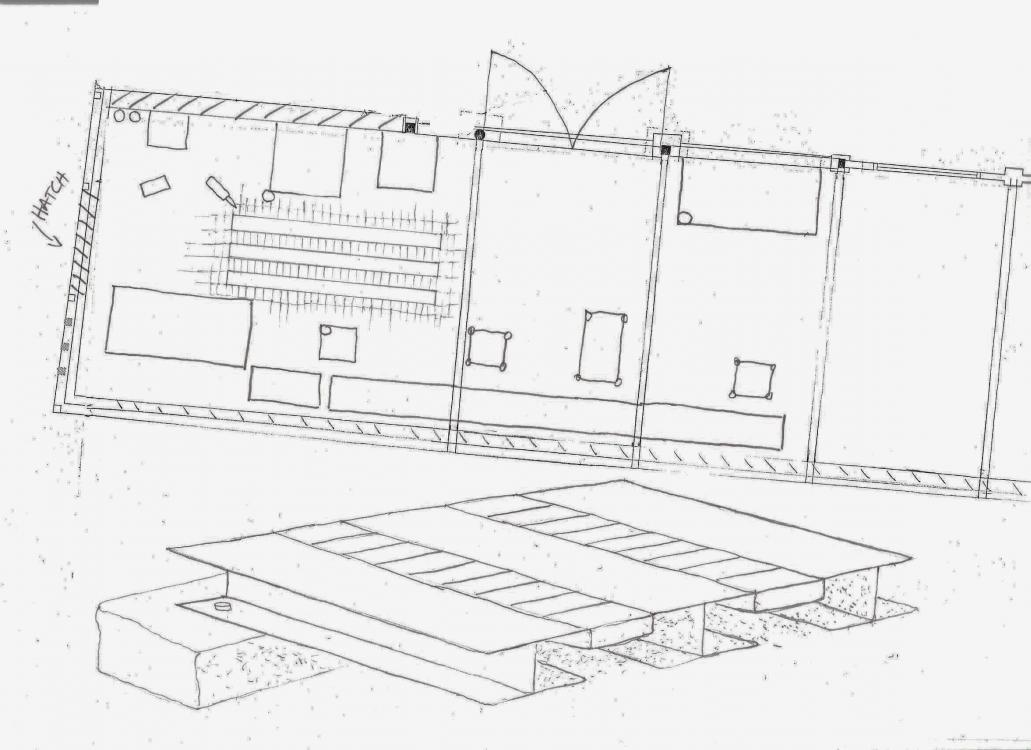
Apologies for the terrible scan quality but would you guys mind giving me your opinion on this workshop layout, and also my adaptation of Alan's steel in the floor suggestion? I was given some 1:50 scale drawings by the estate manager which detailed all the parts of the building that need restoration, I deleted out that info and drew in a workshop layout + a sketch of some RSJs imbedded in the floor. The RSJs would be bolted down at either end to concrete pads, compacted earth between them then bricks laid on top of the earth to sit flush with the RSJs. Ultimately it'd give me an area of about 1m x 3 that I know is flat, and as Alan says, you can tack weld hard to assemble items down to it. Thanks a million
-
Nice one Frosty. PS I sent you a PM.
-
You joke but I was 99% of the way to stripping naked and walking up my city's highstreet with "I am a blacksmith, I take commissions" written in permanent marker across my chest not so long ago. I'd happily settle for putting some food on the table and making gates that don't buckle under their own weight.
-
Are we talking about blacksmithing? Cheers for the structural tips guys.
-
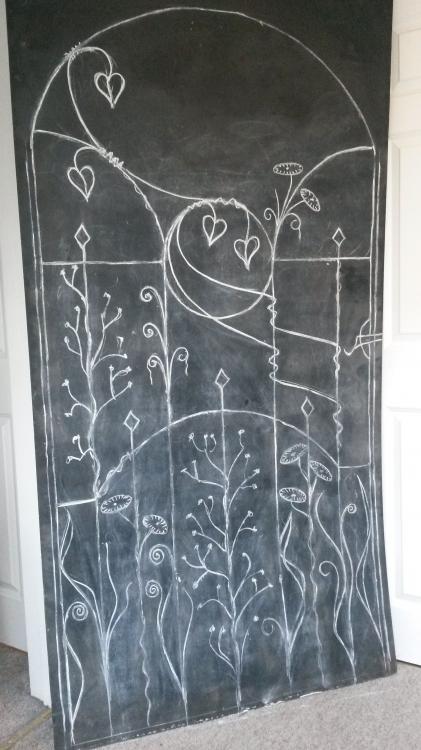
Cheers guys. All the stuff at the bottom is going to be made from very lightweight steels so it probably looks heavier than it is. I tried to work in some diagonal bracing via the trailing leaves but have agreed with the client there's going to be a bit of artistic license along the way as it takes shape.
-
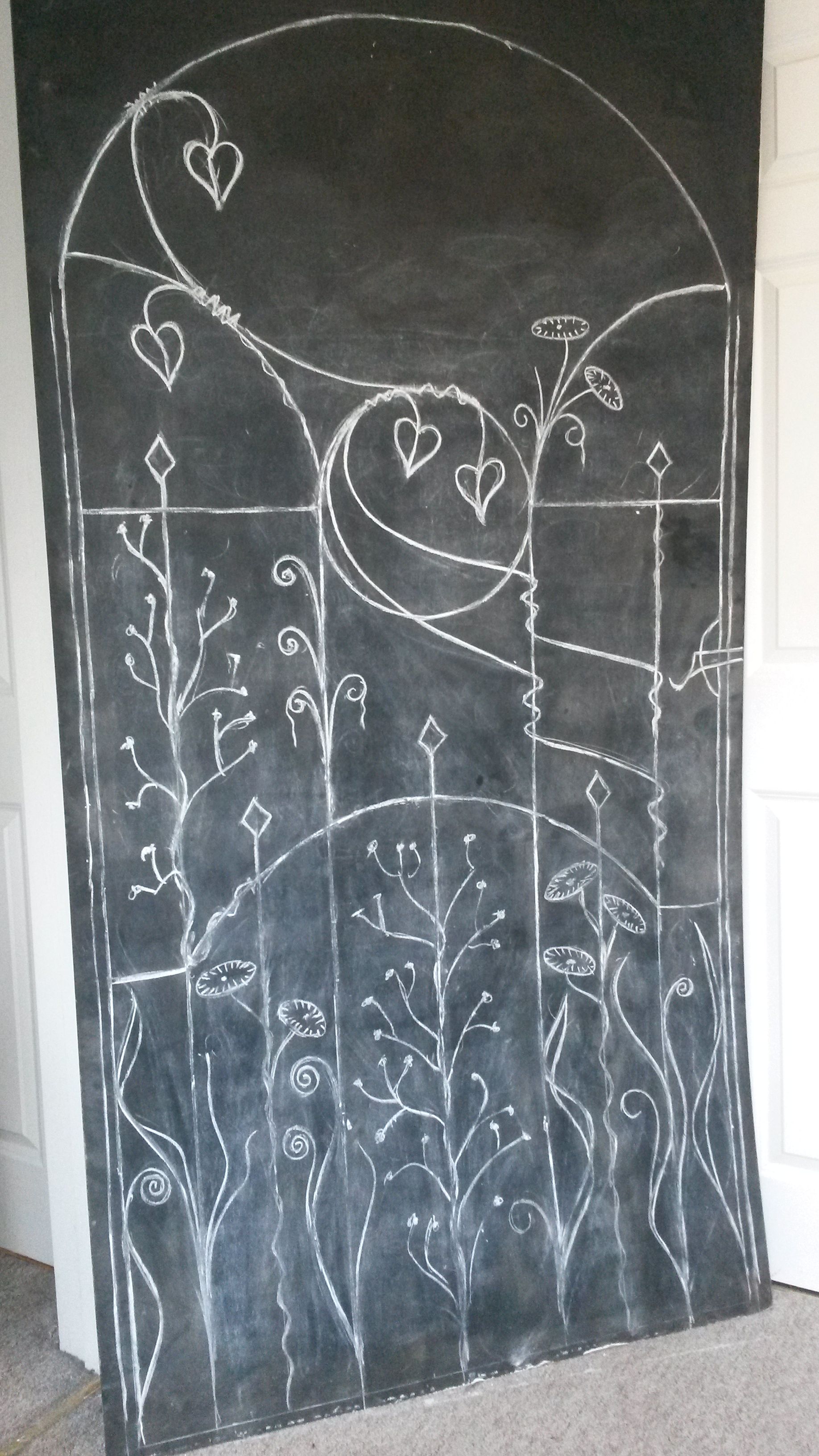
I just got the go ahead for my 2nd gate commission! It's going to be incredible fun and a good challenge! The client wanted a wildflower themed gate to open into their garden which is next to their wildflower meadow so I came up with the concept of having a simple traditional gate which the flowers have overgrown. The top is purposefully left undecorated to leave a clear view through to the meadow. This is a life size drawing which I took to the client, 920mm x 1830mm. Although it's a very rough drawing it works well because it's lifesize, and I made the client sample pieces for each section so they'd understand what each section would look like in the flesh. I find I can only get so far when desiging scaled down on a sketch pad and then I hit a point when I can't get a true sense of what the item is going to feel like in the flesh so I buy sheets of MDF and paint them with blackboard paint then I can draw-scrub out-redraw-scrub out-redraw till my heart's content...then I can then take the life size chalkboard drawing to the client. It's going to be blasted and zinc sprayed then left like that without a top coat.
-
Thanks very much for all the advice and anecdotes, it's nice to hear that the experienced guys have gone through their own share of "fun and games" with workshop spaces. I guess you guys didn't get / don't get problems with tools or benches sinking into the floor? Or tilting unevenly over time? The other day when I was discussing the floor and ways to bolt down tools with the estate manager he was brainstorming ideas and suggested something that's not too different to your steels in the floor suggestion Alan - he suggested putting a concrete pads and bolting RSJs to that so that tools could be fixed to the RSJs. I didn't give the idea much creedance as I felt it would limit the locations I could site tools, but if he's not too offended by concrete pads and RSJs visible then maybe I could sell him on your grid system idea as I think that could be a great asset.
-
Cheers Alan, great info as always, many thanks. That exposed steel rail thing you mentioned is top banana. What did you do about bolting down vices/flypress etc when you were in the loose laid brick workshops? Or even what did you do about the uneven floor level for assembling work that's too big to fit on a 2m x 1m bench? The estate are concerned about the cost of laying a concrete slab & are also keen to keep the bricks for their charm, (the workshops are very idyllic), but obviously my main concern is having a safe trip hazard free floor that I can also use as a work surface. My workshop a.t.m has a concrete floor so I've become used to the luxury & the prospect of not having one makes me squirm a bit. No I wouldn't be an attraction so to speak the workshops are set back from the house & gardens in an area that's only accessible by appointment only. I desperately want the workshop to work out, y'know when you get that gut feeling that if it happens you're onto something great...
-
Well, since starting this thread I've come quite a way with finding a workshop and as things stand I'm talking with the estate manager of a stately home that's open to the public about a workshop space in the grounds of the estate. Although I only ever intended to find a workspace approx 50 sq/m the estate manager has offered me a space that's approx 85 sq/m for £3000 a year including VAT...which is very appealing. No rates, electric on top. The space they have available needs a lot of restoration to get it usable again as it was originally a cow shed though they have a good track record with restoring the building (which is in a U shape with a courtyard in the middle of the U) as one wing of the U has been restored and is now used by a green woods craftsman (who has clients and pupils visit regularly). His wing was originally in the same delapidated condition but the estate restored it to a very good standard. The estate will pretty much be restoring my wing to my specifications, within reason. The linking section of the U is also in a poor state of repair but is due to be restored as a furniture restorer is keen on renting it. There are niggles like low tie beams approx 2.3m from ground height where the building is in bays but there is a good working space of 4.5m x 4.5m at one end where there's no tie beams and the roof is very high and in general the positives outweigh the niggles so I think it'll be a great location for my business to grow. The estate hold sculpture shows in the summer, the gardens will be able to use my plants supports, and elsewhere on the estate are conservation builders and stone masons...all in all I couldn't really wish for a better location in terms of profile. The floor needs attention too as it's only brick laid on compacted soil but we're in discussion about that...
-
Cheers for all your input folks. I decided to just bite the bullet and get an Axminster swivel bandsaw in the end, even if it does take some setting up. I don't have engineering knowledge yet to get involved with tuning up 2nd hand stuff, and anything has got to be an upgrade from cutting everything with a grinder! I've got my fingers and toes tightly crossed that I'm moving into a new workshop later this year (in the grounds of a stately home that's open to the public) alongside a green wood craftsman and a furniture restorer so I need a cutting machine that's not really antisocial and noisy, given the that this Axminster machine comes with a warranty and runs quietly I thought I might as well take the plunge. Cheers again.
-
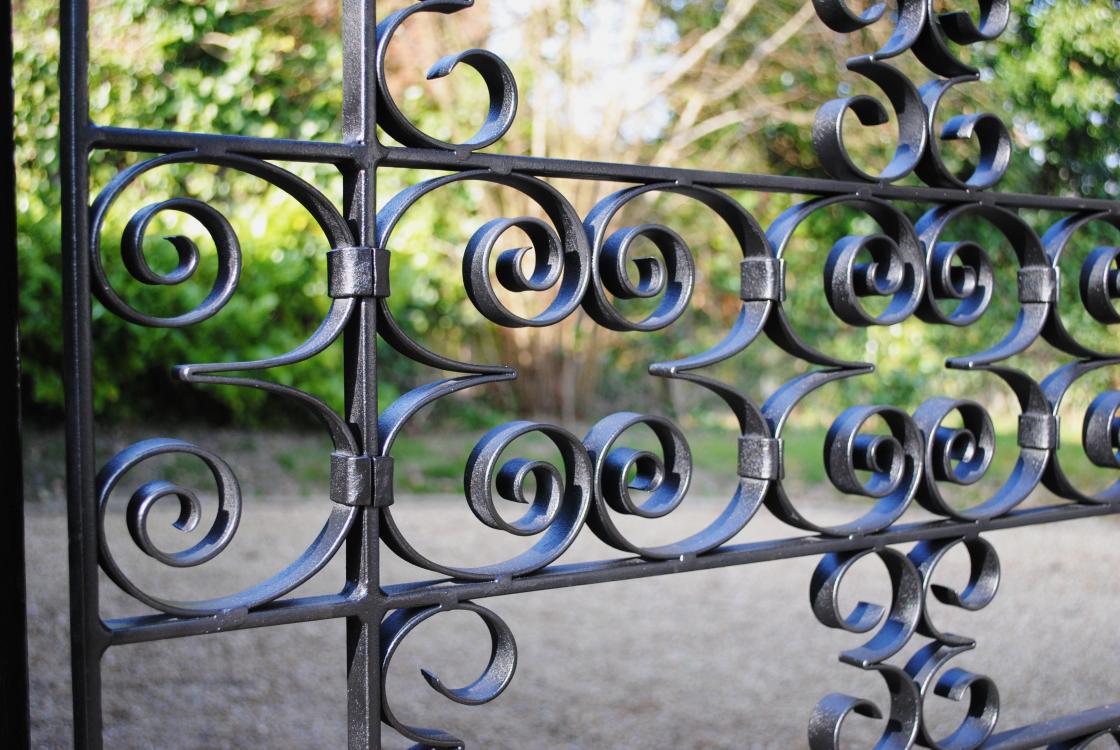
I actually filmed myself on my phone making the scrolls and the collars so I could post videos on my Facebook page. They videos are deliberately lacking in technical info so I didn't bore my "fans", (or whatever it is Facebook calls you Page Likers), to tears. The scroll jig in the video is a bit worse for wear because after using it on the first gate I then tweaked to make it also work for the second gate, that involved cutting bits out and welding it back together. My scrolling process varied slightly in real life but I just kept things simple for the sake of the video. I should also point out that because the collar material was so thin it cooled very quickly so I was working the collars into shape at a pretty low temperature, which ain't ideal.
-
Thanks folks. I can't claim they're perfect as there's a few imperfections but for someone who's completely self taught and only learned how to taper two years ago (self taught stick welder for about the same time too) I'm pretty happy with them, they're a nice milestone anyway. Now I've just gotta stop under quoting by light years...
-
Cheers. I uploaded the pics in order per gate but they've become jumbled up.
-
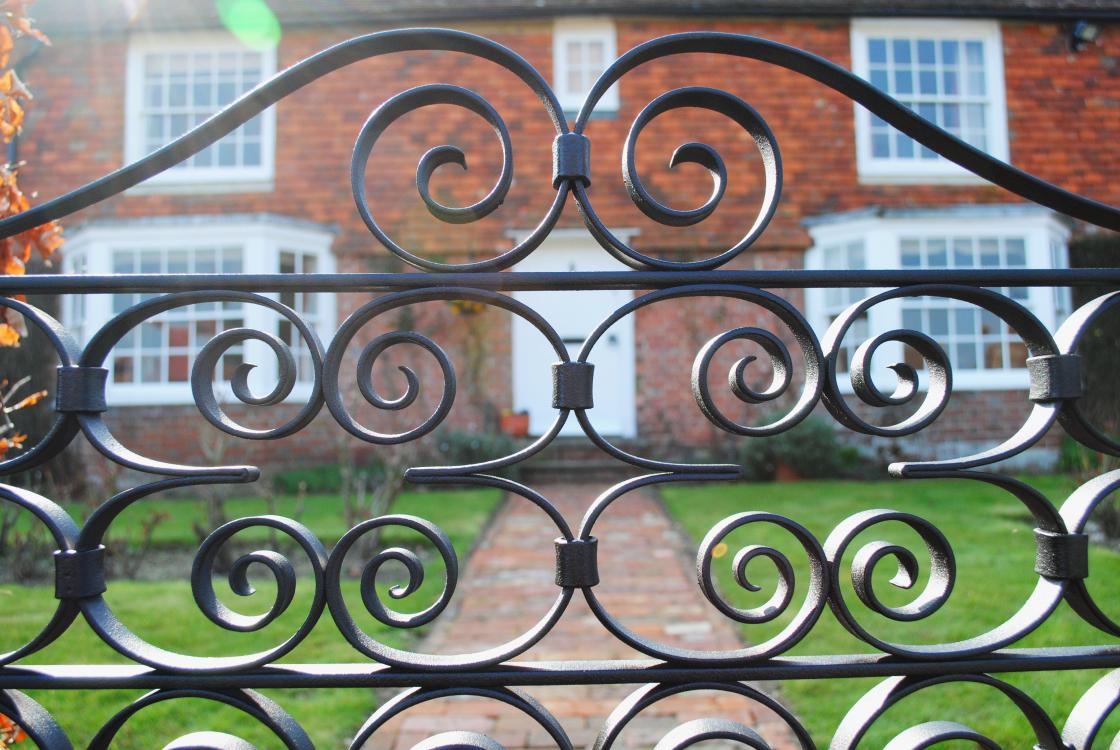
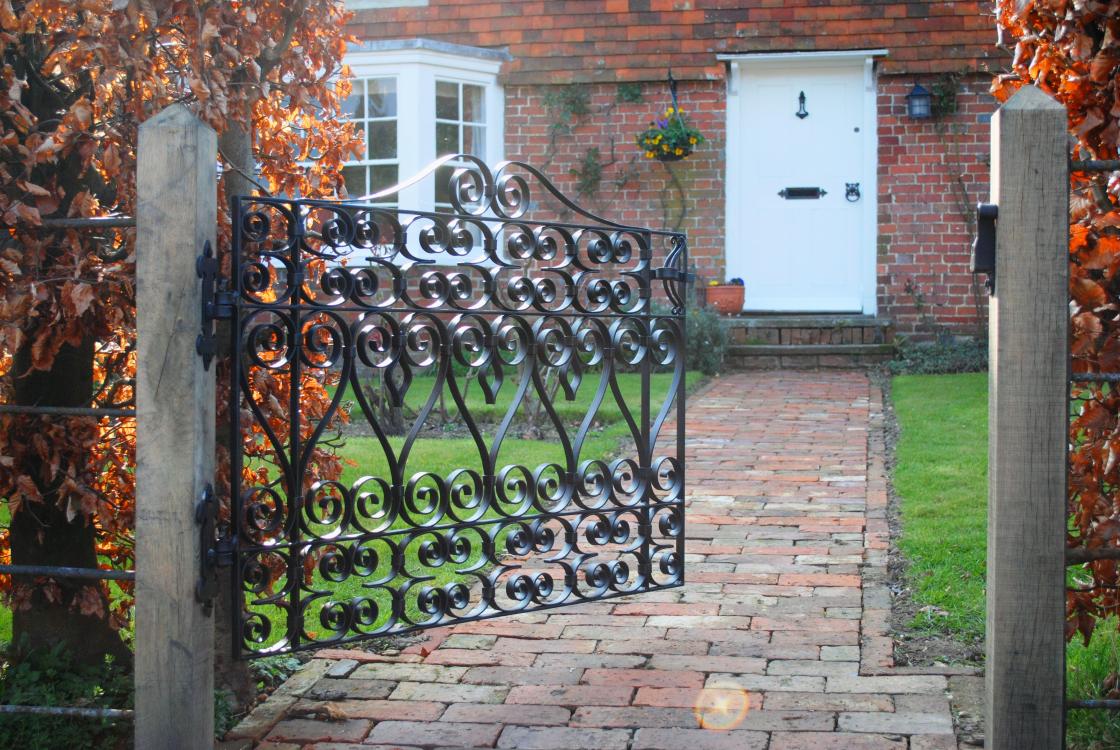
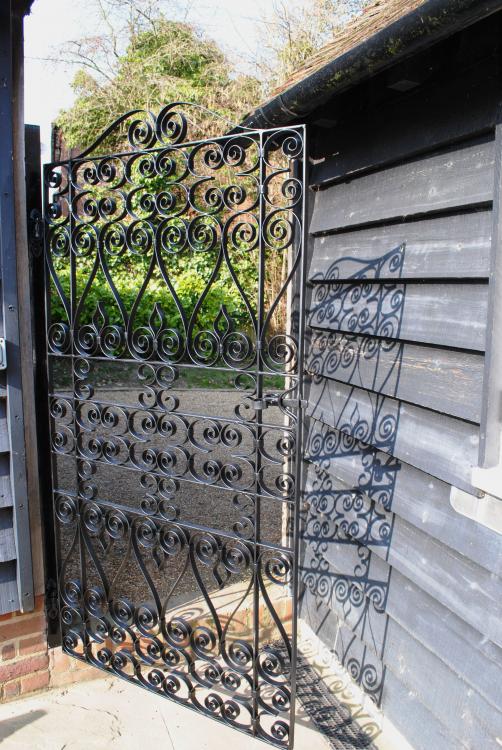
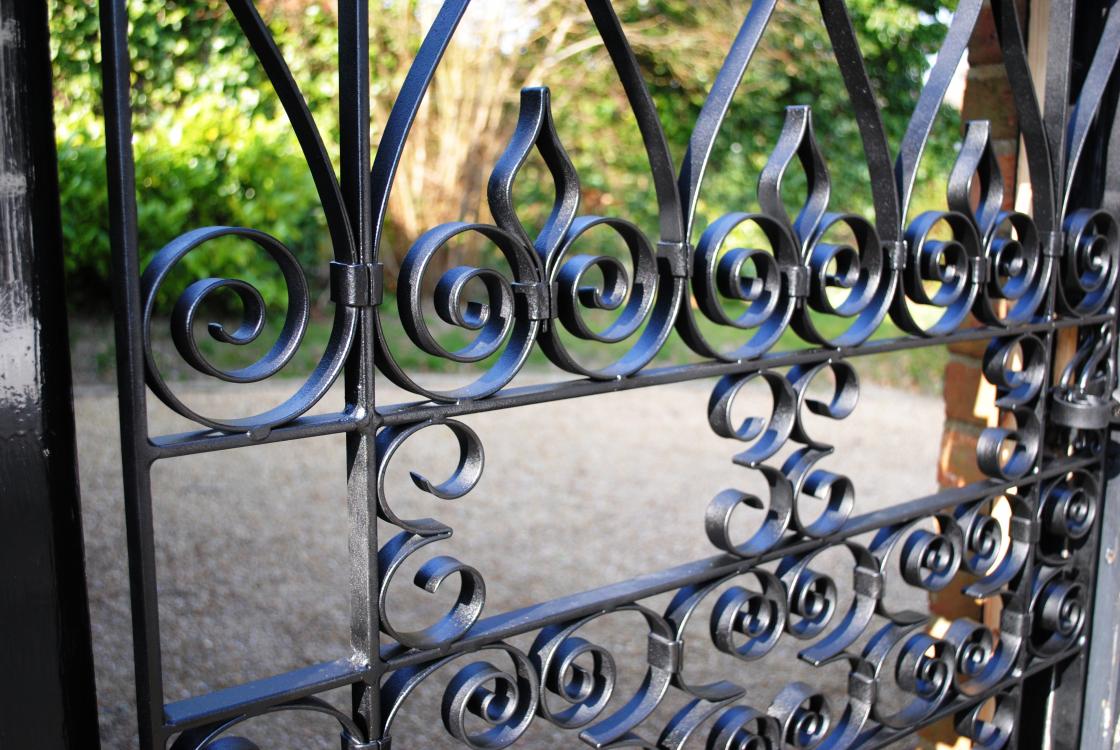
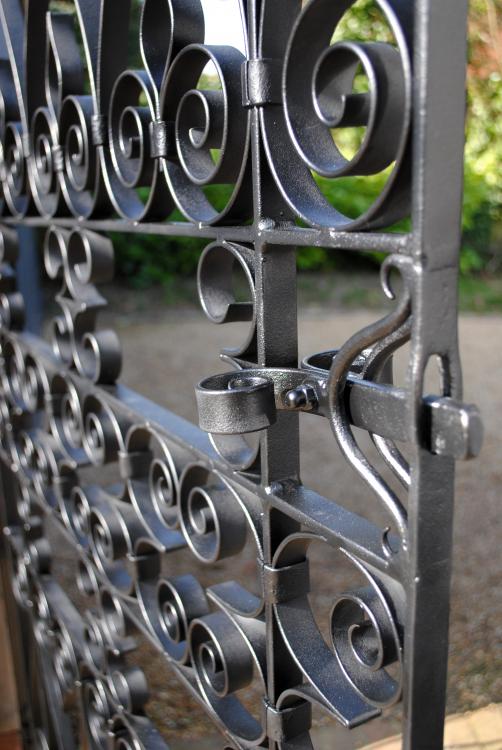
My first two gates, made to match my client's existing driveway gates. Not my taste but having a challenge and getting to use your brain is half the fun. My biggest commissions to date and my first time of using/making a scroll jig. A very valuable learning curve at every stage. Blasted & zinc flame spraying then I etch primed and acrylic satin black top coated them.