Hickory Wind Forge
Members
-
Joined
-
Last visited
-
Accidentally got my gunsmiths mixed, meant to say Jacob Dickert not J. P. Beck.
-
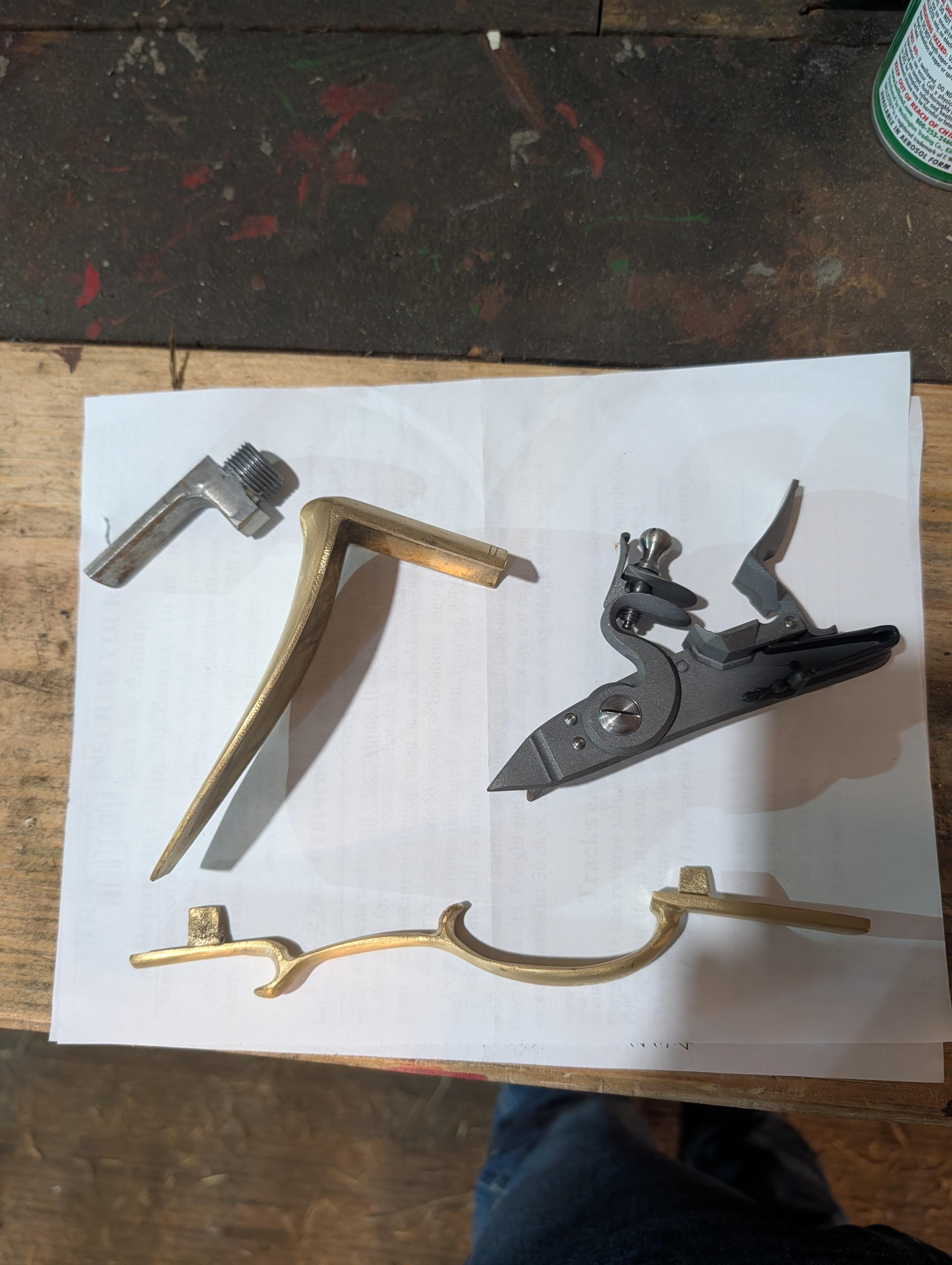
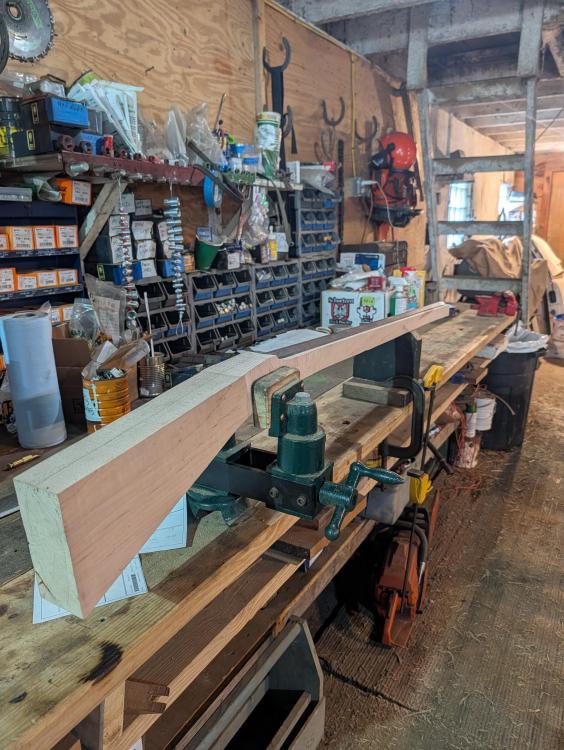
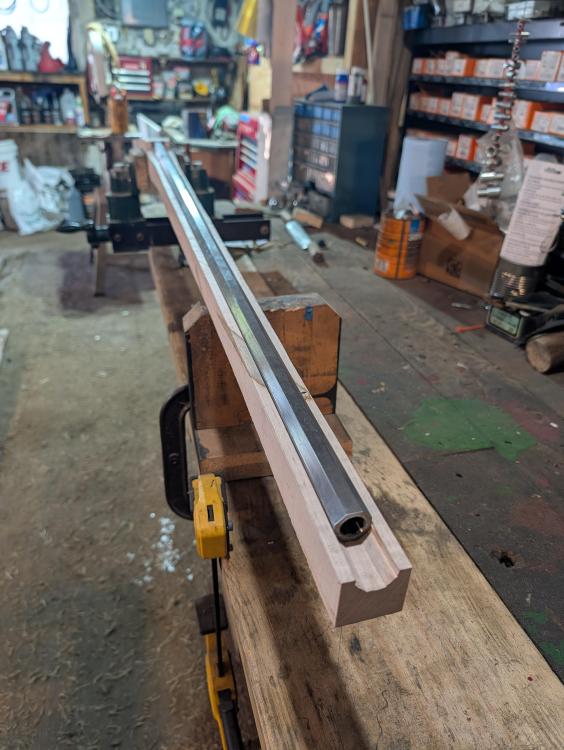
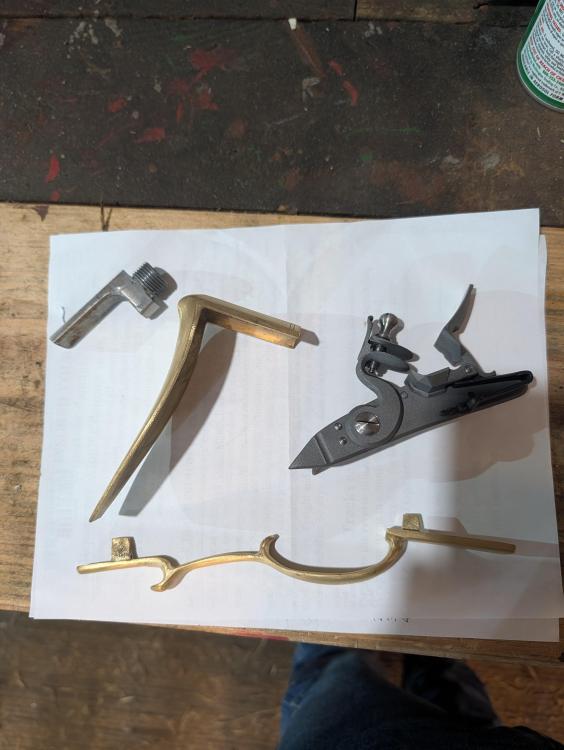
Thought I'd start a thread to chronical my new build, partly to drive myself to actually keep moving forward on it. This is my 2nd build from a blank, last year I did a .36 flinter with a Rice 42" squirrel-weight barrel. That rifle handles like a dream, so now I want one built for deer hunting. Going for an early Lancaster style, largely J. P. Beck influences, heavier build and much wider through the butt than my 1st build. Barrel is another 42" Rice, Golden-age swamped profile in .54 cal, radius groove rifling. Lock is a Jim Chambers Large Siler Deluxe, tripped by a simple single trigger that will be homemade. So far I've got the barrel draw-filed and polished, stock roughly profiled and had a buddy help inlet the barrel. He got done in 4 hours what would have taken me a full day. Progress will no doubt be sporadic but the goal is to have this rifle finished and shooting in time for deer season. Matt.
-
Betcha any compasses within 5 miles of that hammer rack register some "variation".
-
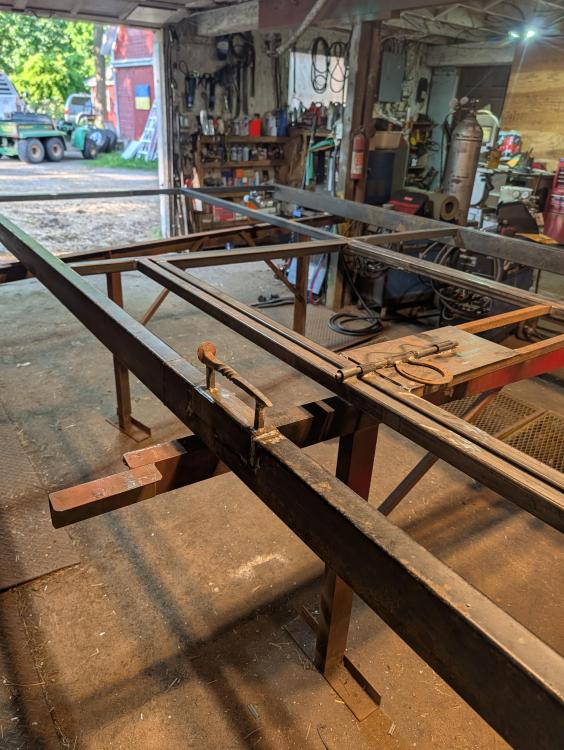
Building new rolling door frames for the neighbor's new pole barn. This door has a man-door framed within it. Jazzed it up a little with a horseshoe for the bolt and a twisted RR spike hand-grab for the main frame. Matt.
-
That's great Goods. Funny how something that's just an inanimate chunk of metal to most people can really tug at the heart. At the start of last week I had no plans whatsoever to buy a power hammer but I came to realize that I would never ever have another chance to buy one from someone who I like and respect and who I knew took the same quality of care of his tools as I do. Finally decided I'd much rather pay what Rand was asking and get a well-maintained cherry than buy one from someone who I didn't know even for half-price. Rand was really glad it was going to my shop also, rather than some stranger. Matt.
-
JHCC, please do. Door is always open to smiths and farriers.
-
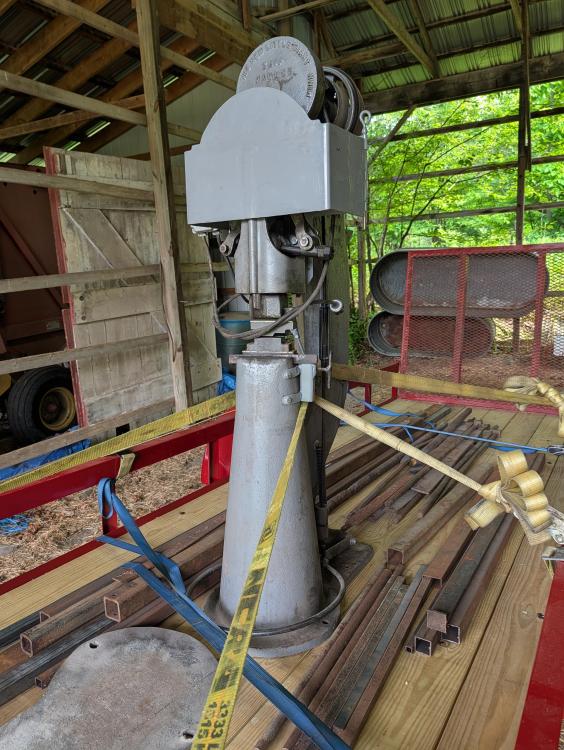
Been awhile since I posted but haven't had much opportunity for real blacksmithing, just a bunch of fab-work. However I wanted to share this: a blacksmith acquaintance just learned he is badly sick and decided to sell off most of his shop to prevent his kids from having to deal with it. Went up to visit last week and Bought a Chile 1 burner forge. Didn't terribly need it but wanted to do something to help him. But while I was there I took an admiring look at his immaculate Little Giant 25lb hammer. Two sleepless nights later I called and told him to save it for me. Hauled it home the other day, got it in the shop and set up today. Already used it on a few RR spikes. Going to think of him every time I look at or use it. Matt.
-
Anyone else from here going? Short notice but this is the first time in years that I've managed to remember to register before it's over. Went a bunch of times as a kid, only lived 15 minutes away. Sounds like an excellent demonstrator this year. Matt.
-
Oh he'll be back. His eyes were bugging out looking at the other aluminum farrier stuff I've built. Plus his little trailer needs all several repairs. Matt. Chad, those horseshoe hearts are slick. Nicely done. Those are the kind of things that will always sell easy. Matt.
-
Thanks Frosty, not yet, gotta make a sheath in the next few days.
-
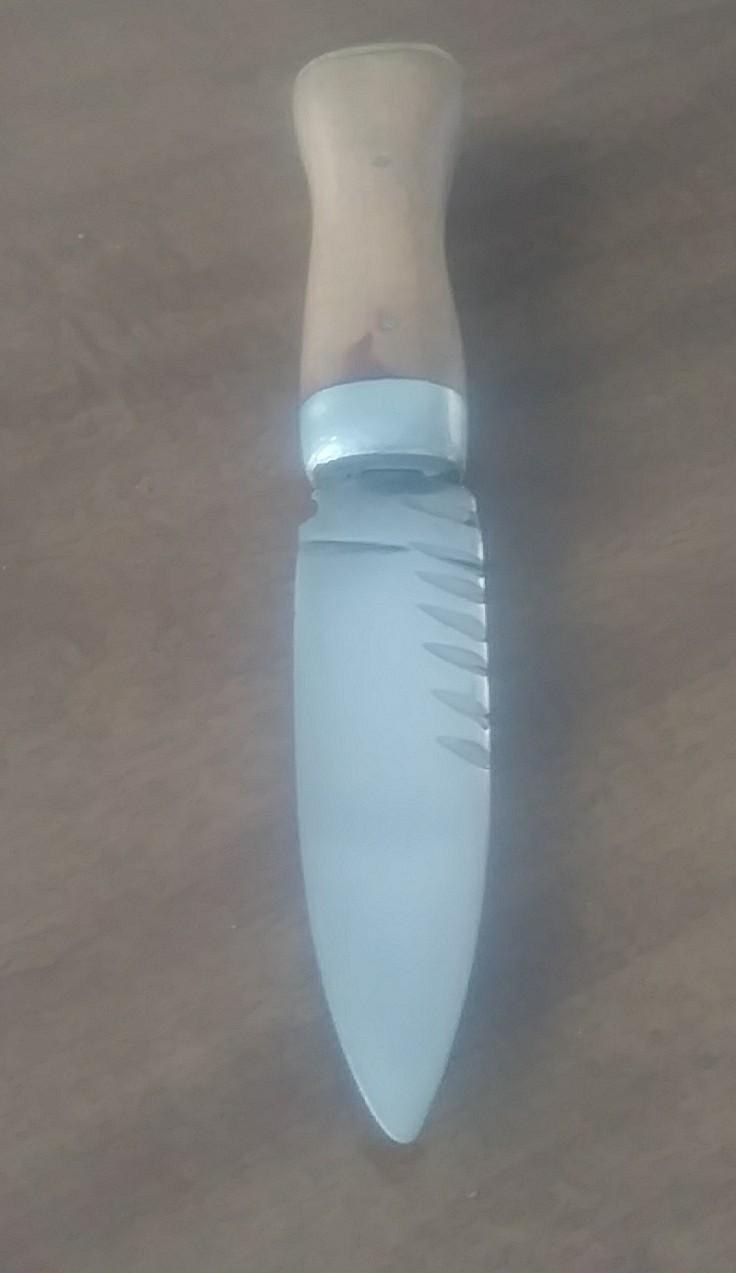
Some time ago my brother mentioned that he'd like to have a small, fixed-blade for handy daily use - opening bags and boxes in the flour-mill, cutting twine.... Lots of Scottish on our father's side and my brother loves heritage themes, so I decided to give him something along the lines of a Sgian Dhu - the little sleeve or stocking knife. Got it done yesterday just in time for his 25th b-day. Steel was originally a discbine hay mower blade. Throws good sparks when ground. Coupons were made and an oil-quench/draw to straw program were settled on. The handle is cherry that we milled right here. 4 inch blade. It can't compete with the gorgeous blades I see on IFI but I'm happy with it. Matt.


-
Sent a trio of my horse-shoe racks out of the shop for a local farrier's trailer. First he ordered 1, then went for 2, then within 10 minutes decided he wanted 3.

-
That's true indeed! Although I will say, one really nice thing about 0-degree nights is when you're standing outside after dark with a clear sky and you realize that you're seeing the stars far better than any other time of year. They look so much bigger, closer, brighter, and tinged with colors that you never recognized before. Matt.
-
Exactly. Usually I would open 1 or both doors in the shop for a decent crossbreeze, but I really like having the fumes captured right at the workpiece. Plus this week temps are struggling to get above 15 degrees - not ideal for leaving doors open! - Matt.
-
Sucks the smoke in thru the tube and draws it over a series of filters. Uses a 1hp motor; technically more properly know as a "fume extractor." I had it running today while welding and was really pleased with how it worked.