bark-eater
Members
-
Joined
-
Last visited
-
One of my long term goals is to have a little cabin out in the woods. Im thinking just big enough to have some sort of cooking hearth, and Id like to make as much of the households iron work items as I can. Any suggestions for books with examples and or instructions? I hesitated on bidding on someones reproductions of a tramel candelabra, rushlight and very elegant andirons at a local house, and now Im just going to have to make my own. Thanks, Woody
-
Right now, I have very little of my own focusable time, and a bit more cash flow. I'm confident I could build a forge, but with all the other projects I've got going on It might take another year to get done. I've pretty much got all the basic tools and materials that I've been opportunistically collecting, so I think I'll focus on rounding up the hammers and tongs, organizing an outdoor work space, get my garden of anvils on stumps, mount a vice on something and set up a table for the forge. I'll probably just order a forge.
-
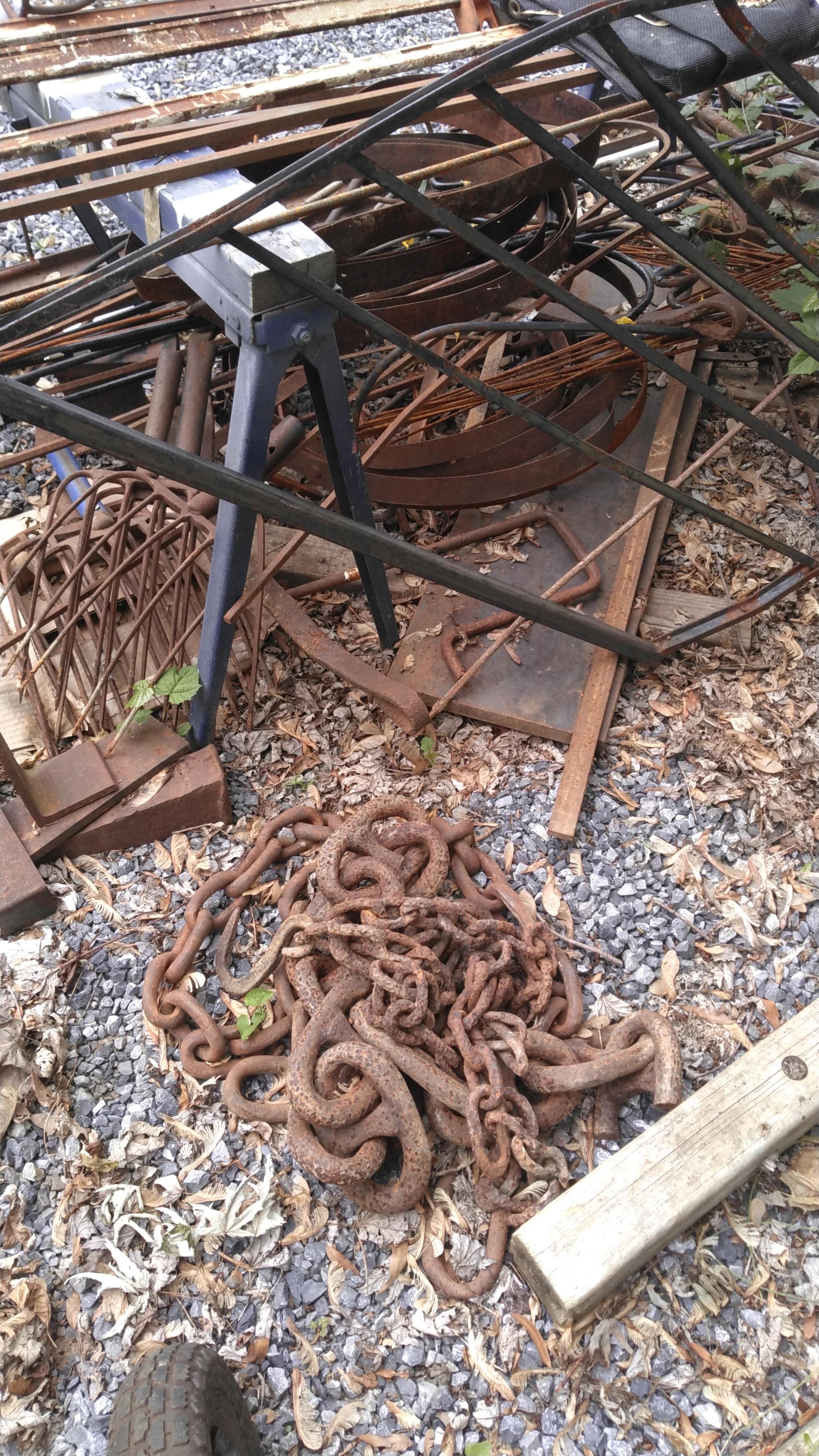
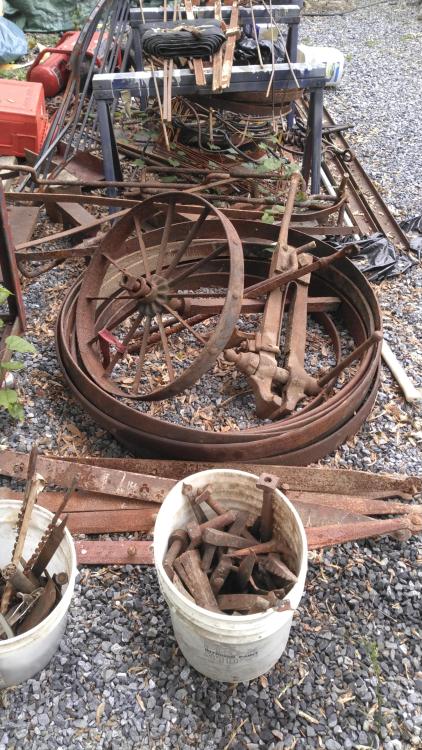
Well I haven't ponied up for the forge yet, but the wrought iron hunt has been going well. Hopefully this summer I can finagle a couple full days to rearrange the out door scrap yard into an actual work space.
-
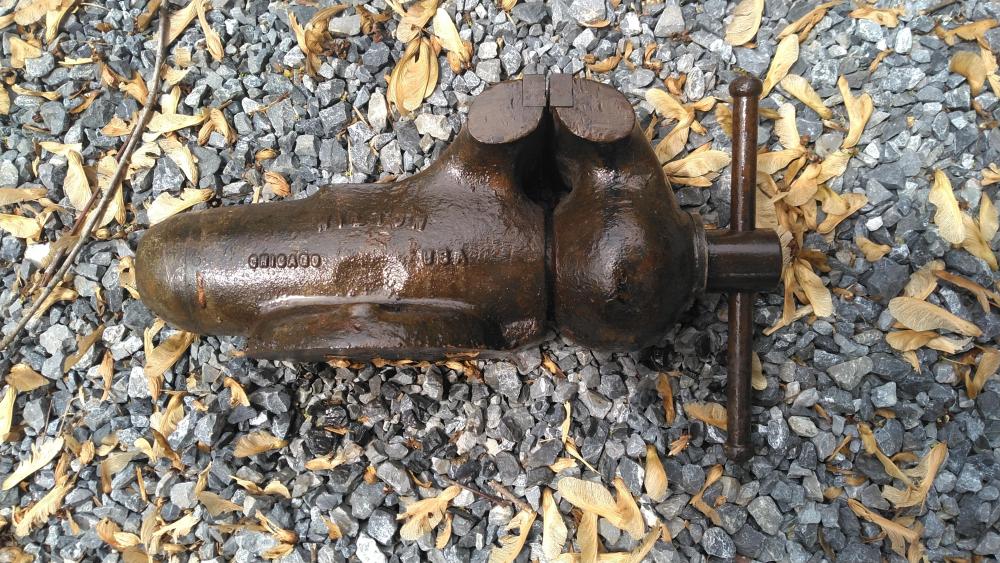
Place is trapped out..... I guess I'm just showing off now. On topic I looked at the Diamond Back forge and I'm thinking that's the way to go, mainly because of the use of fire bricks.
-
Speak of the debble.... That's 7.
-
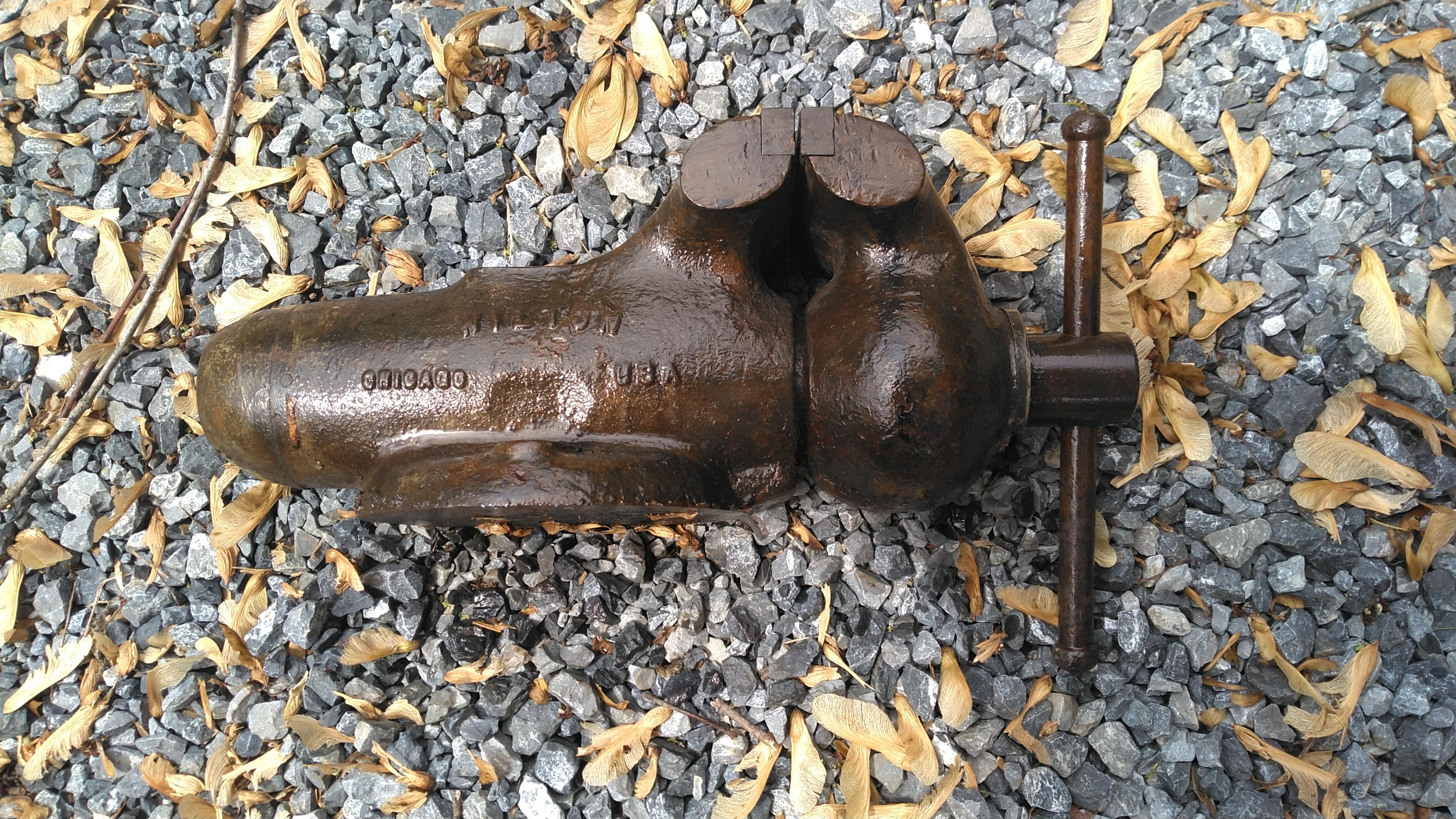
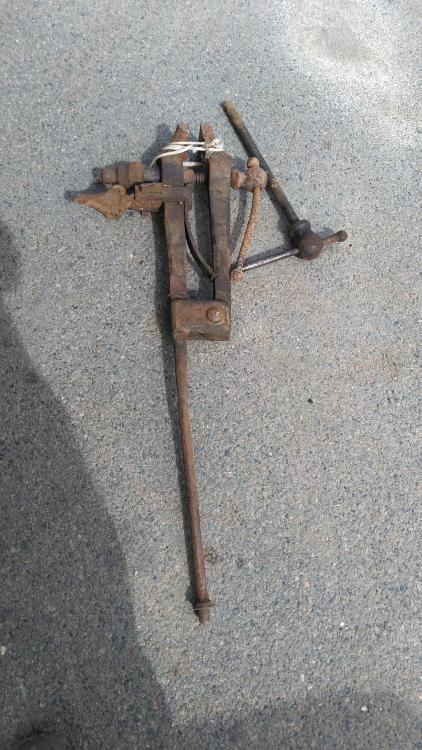
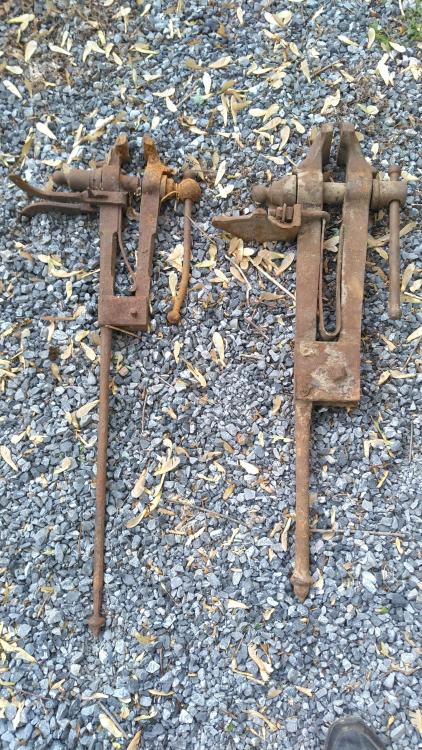
I'm still ruminating on picking out a forge. I had a moment and pulled out the smallest vice. The thread still turns and it looks like it's mostly hand forged. Id like to clean it up with out leaving obvious power tool marks. Maybe an Oxalic acid bath first ? Just for S+Gs I took inventory. There's one 6 1/4 vise, three 5 1/4 vises, one 4 1/2 vise and the wee 3 3/4 vise. I left one in Maine 20 years ago, but I'm pretty sure it got stolen with my anvil out of a buddys shed.... So that doesn't count.
-
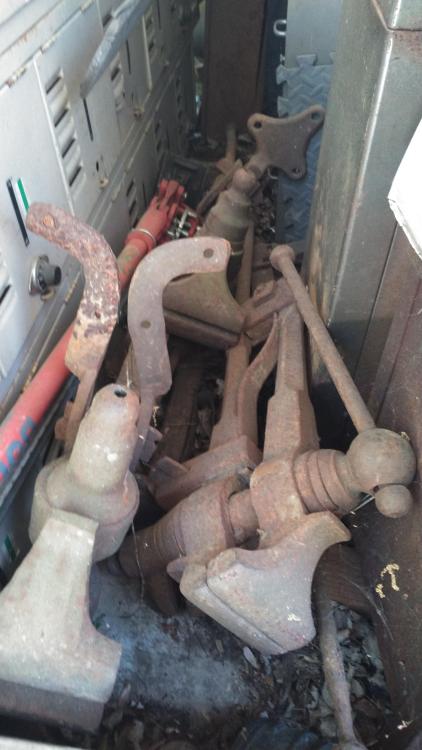
Their so forlorn looking waiting to get crushed at the scrap yard, who could resist.. At the bottom of that pile is a rather dainty small leg vise, that looks like it was in the dirt for a long time. I cant remember what condition the screw is, but I need to dig it out and see if it could get cleaned up for inside fancy work... So on forges: Thoughts on getting the 2 burner forge , and accepting it being less efficient to run for most small stuff?
-
6 or a half dozen...
-
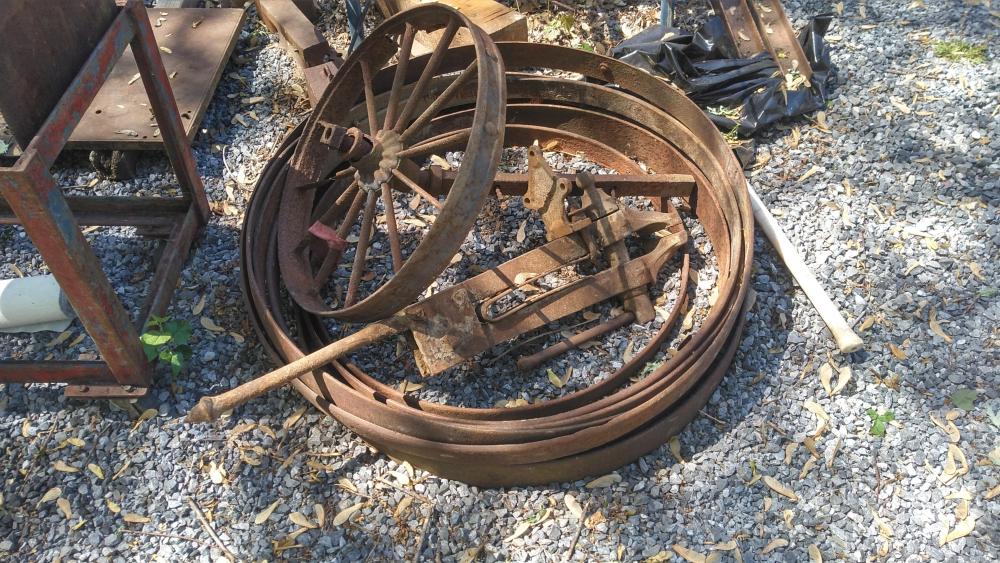
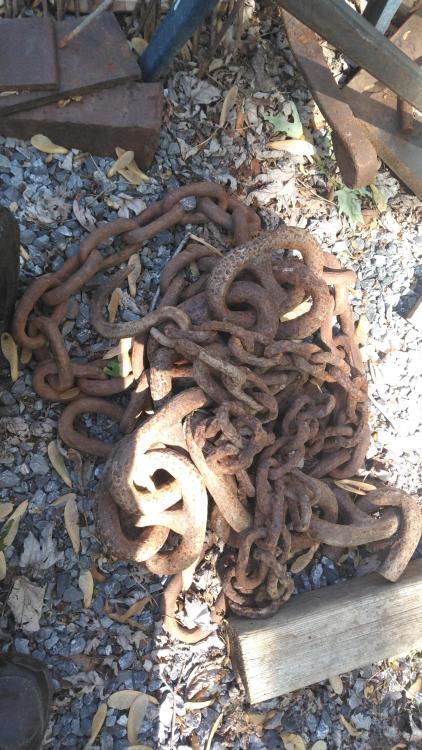
I'm picking up a propane forge this summer. Its the last bit I need to do a little shade tree iron work. The projects I want to do are mostly simple 18th century camp accouchements, so S hooks, trivets, fire irons, tent pegs and the like. One of the things that I want to avoid is using mild steel bar stock for everything. I've managed to collect a good pile of wrought iron scrap and would like to use this as raw material. I understand that wrought iron needs to be worked hotter than mild steel and needs to be very hot to weld. So my question is whether a one burner propane stove will put out enough heat to say straighten and draw out a 1/2 inch chain link or a 2 1/2 x 3/8 chunk of wagon rim? Or forge weld 1/4" material for fabricating kitchen gadgets? If not, will a 2 burner forge be sufficient? I was thinking about getting a "Volcano" brand forge. Are there any options that would be better for the application? Thanks, Woody
-
Thanks for that. I hadn't thought about local resources. I'm still looking at different kind of welding rigs. Right now the "FORNEY Easy Weld 140 Amp 120-Volt Flux-Cored Wire Feed Welder" is winning, just because it has a higher amperage rating than the other "branded" flux core welders, and costs the same as the lower amperage flux core/mig combination machines with out tanks. I'd like to find a dual voltage machine as I have a 220 plug in my shop. Unfortunately I would need to run a 30-40 foot cord to get to where I'd be welding.
-
Here's the 200 lb "primary" the other face is a bit cleaner. This is sort of a "garden of shame" the last couple of years I collect 5 leg vices as scrap. The scrap yard owner has dibs on all the anvils, but these are not on his radar. a couple riveting forges have passed through as well as hoods and other useful stuff, but I was focused on other things..
-
I went out and dug my present collection of chunky stuff out of the snow.
-
Any thoughts on mounting the fork upside down cutting a horn or bick from the upper horizontal blade?
-
I'm assuming the hardness would be effected by the heat, and that the effect would make for an inconsistent working surface after ground flat. And the time spent flattening a "free" cut at the scrap yard might be comparable to the time spent nibbling through with a 4" cutting disk.
-
Hi All, I've got a question about fork lift tines. I've found a couple 4 buried at the local scrap yard. All measurements are eyeballed. The biggest ones maybe 3x8 maximum thickness and the smallest is 1 1/2x6". Last week I dragged home a 6 1/2x 6 1/2x 24" chunk of something hard that weighed around 200 lbs. I also have 8x8 cut off cube as well as various small chunks I've picked up over the years. My question is whether I should have the tines torch cut before I bring them home. Their orphaned single tines, so I can just buy part of them, I figure it will take a long time for me and my 4"grinder to cut , so there's one plus, as well as smaller chunks be easier to transport and handle. I am assuming that I would not want to use the torch cut ends as striking surfaces, even if ground flat. The 200 lb block hasn't been played with much besides making sure it would ring at the scrap yard. Assuming its good enough as a primary working surface, I would like to be able to use the bend of the tine as my "horn". Would that work if I cut most of the "blade" off and leave a tapered "stub" ground to a segment of a cone cantilevered off the side? Or leave it longer and have a horn off at 90 degrees? Maybe use the fork blade cut off on end as a fuller and cutter? The immediate concern is whether to cut or not. I'll have to buy one with in the next couple of weeks, as I've been running around writing my name on all the potential chunks. My goal is to put together some sort of "anvil" work station that will live outside. I have an old no name 120 pound-ish anvil cast with a hardened plate, which I bought after the first was stolen, so its staying in storage until when or if I build some sort of securable shed. Thanks, Woody