picker77
Members
-
Joined
-
Last visited
Everything posted by picker77
-
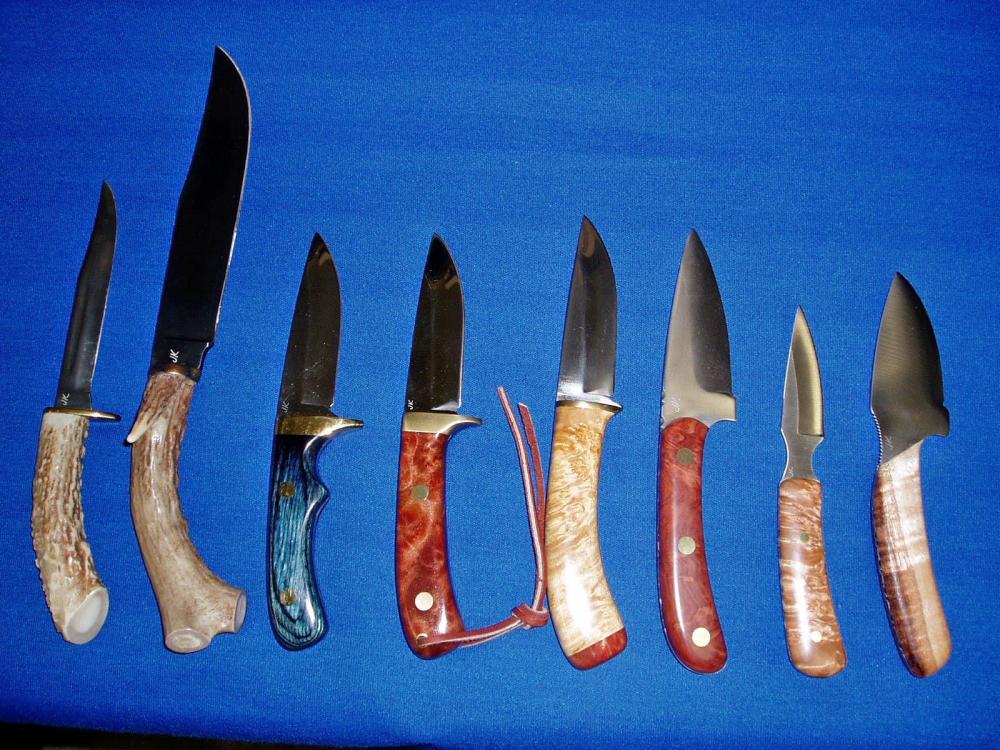
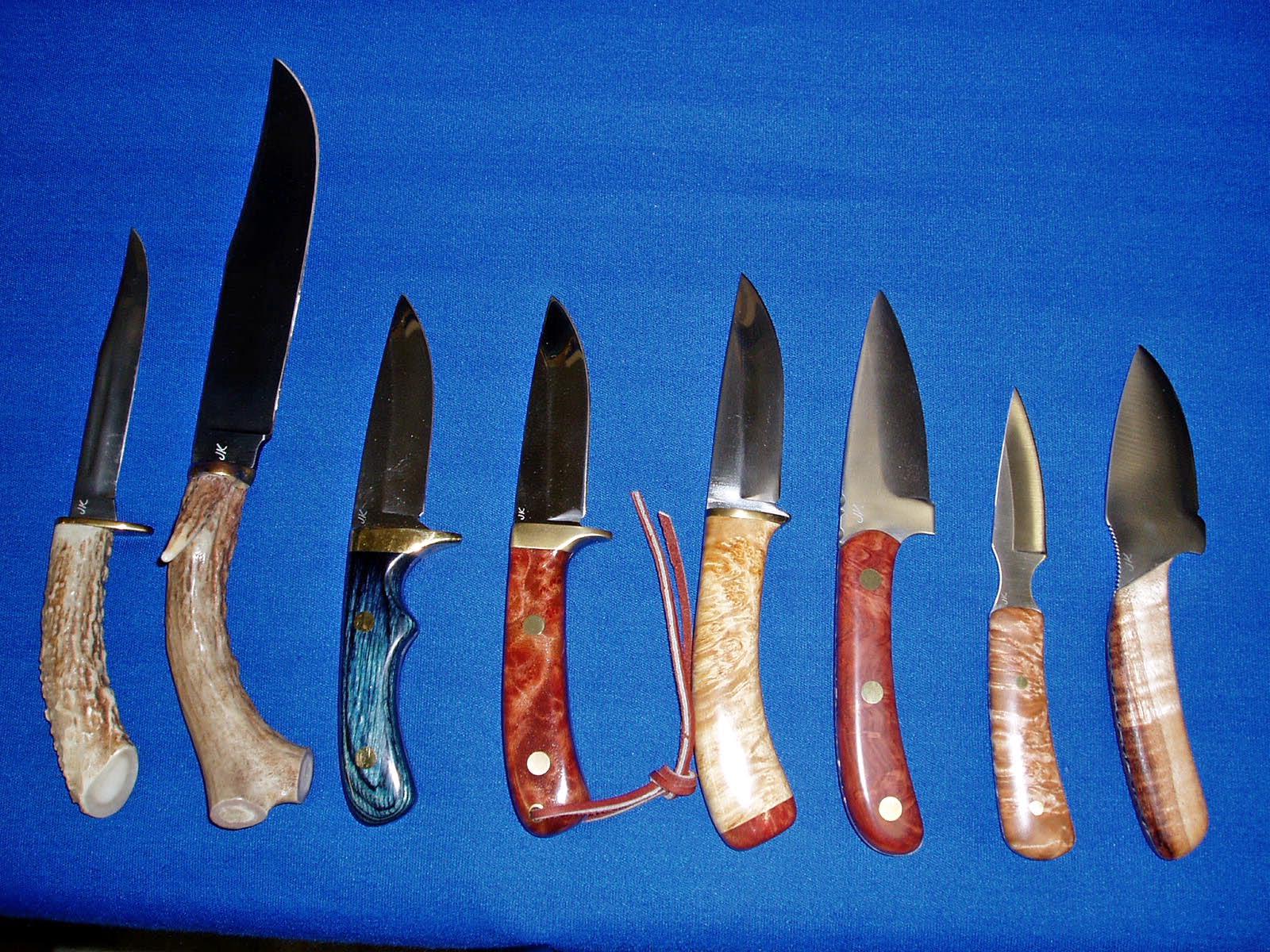
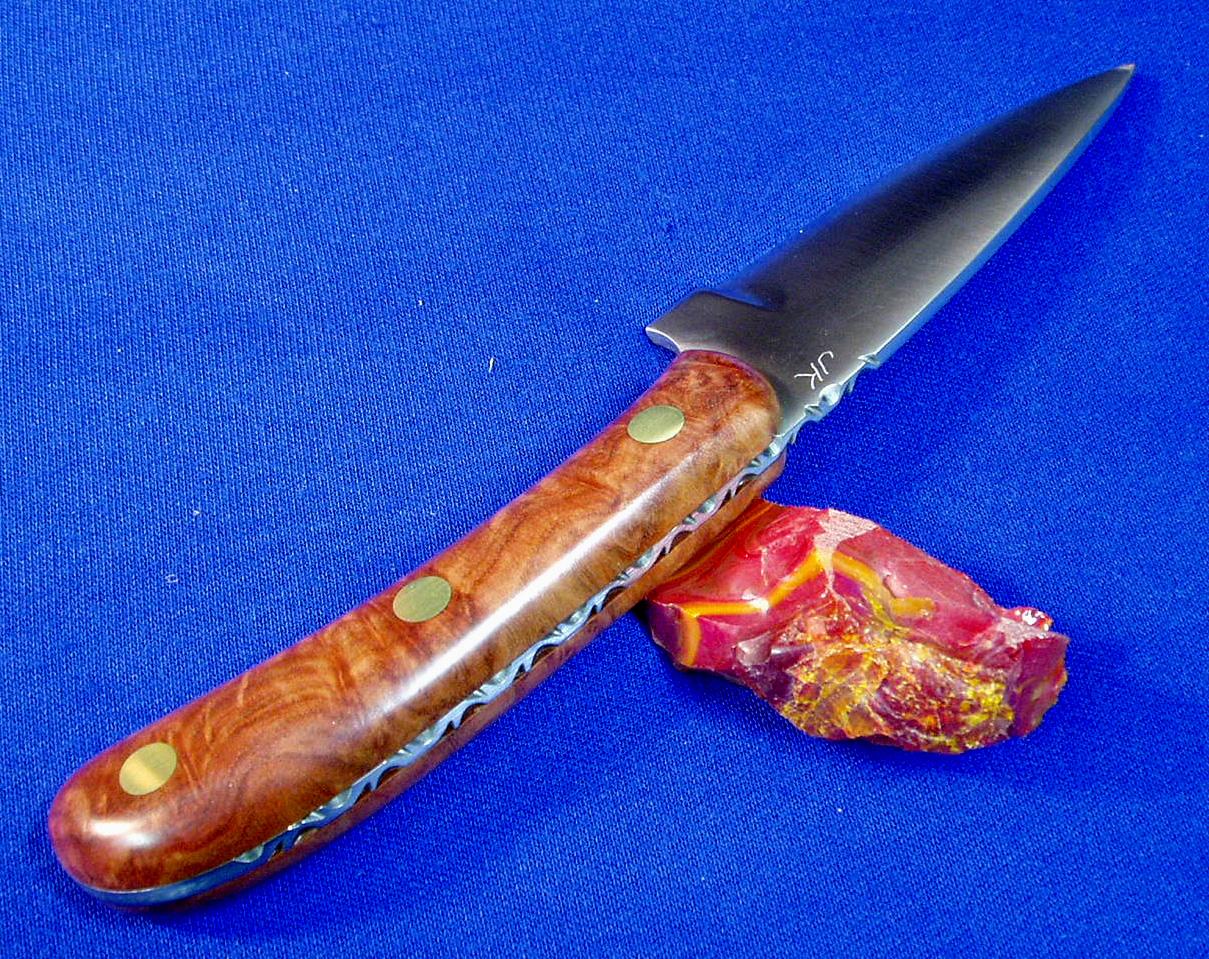
Thanks for the welcome and the nice words. There is enough metallurgical info out there these days to choke a horse now that everybody and the ship's cook is making knives, ha. Most of it is advanced calculus to me, I'm still working on algebra 1 where metal science is concerned. So far I've followed mostly an old book of Wayne Goddard's, hence the edge quench thing. Actually, I'm still just working on having my knives not looking like they were made by a fourth grader, ha. Most I've given away to my sons and grandsons. Have never attempted to sell one and don't intend to. As for the handles, Slag, I have a big box of scale material, but if my feeble memory serves, from left to right the first two are leftovers from deer hunts here in Oklahoma with brass guards shaped to follow the front contours of the piece of antler (#2 also uses an antler tine for part of the guard function), the third is Dymondwood (sp?) stuff from Jantz, I think the fourth is Amboyna burl, the fifth is natural box elder burl with a camphor cap, the sixth is camphor, seventh is stained box elder burl, and the fat skinner on the right end is from a chunk of Koa left over from when I lived in Hawaii years ago and built a couple of guitars from Koa. I'm not gonna run out of handle material for a while, I like to collect and stash bits and pieces of exotic woods, most of which has been stabilized. I use a home built 2x72 belt grinder with a 10" contact wheel which does fine, but I haven't yet figured out how to make it track well with the platen I built for it. Still working on that. I do want a small forge one of these days, though. I can make most tools, but it's beginning to look like I might need to sell my truck to buy a good anvil.
-
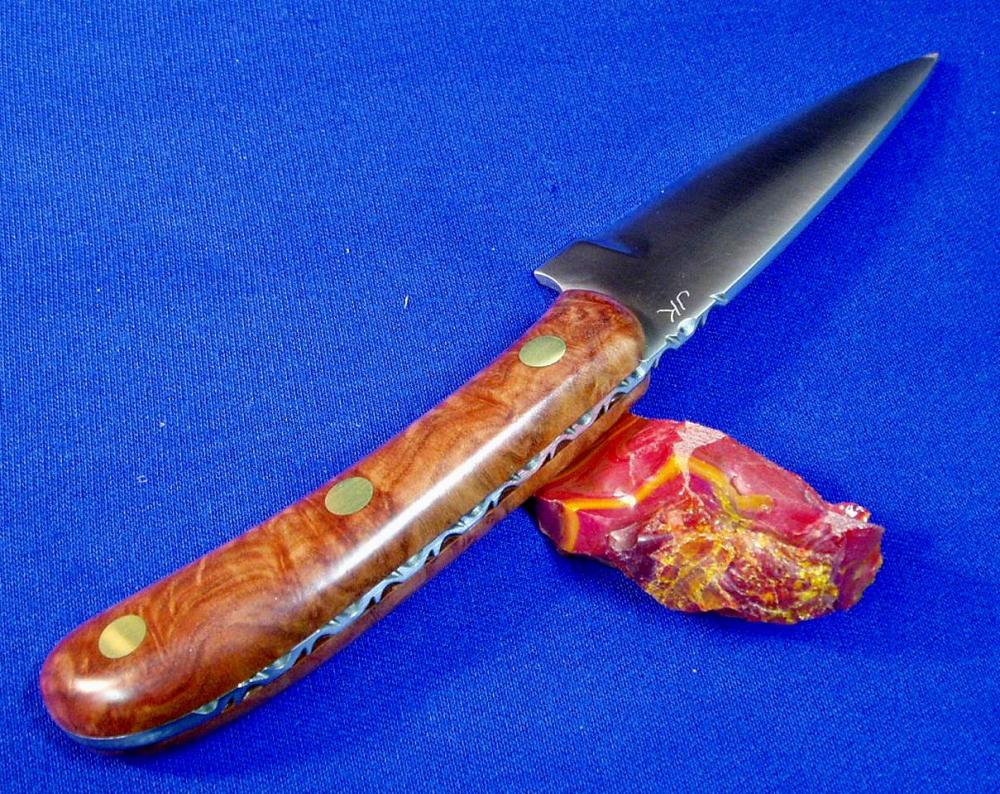
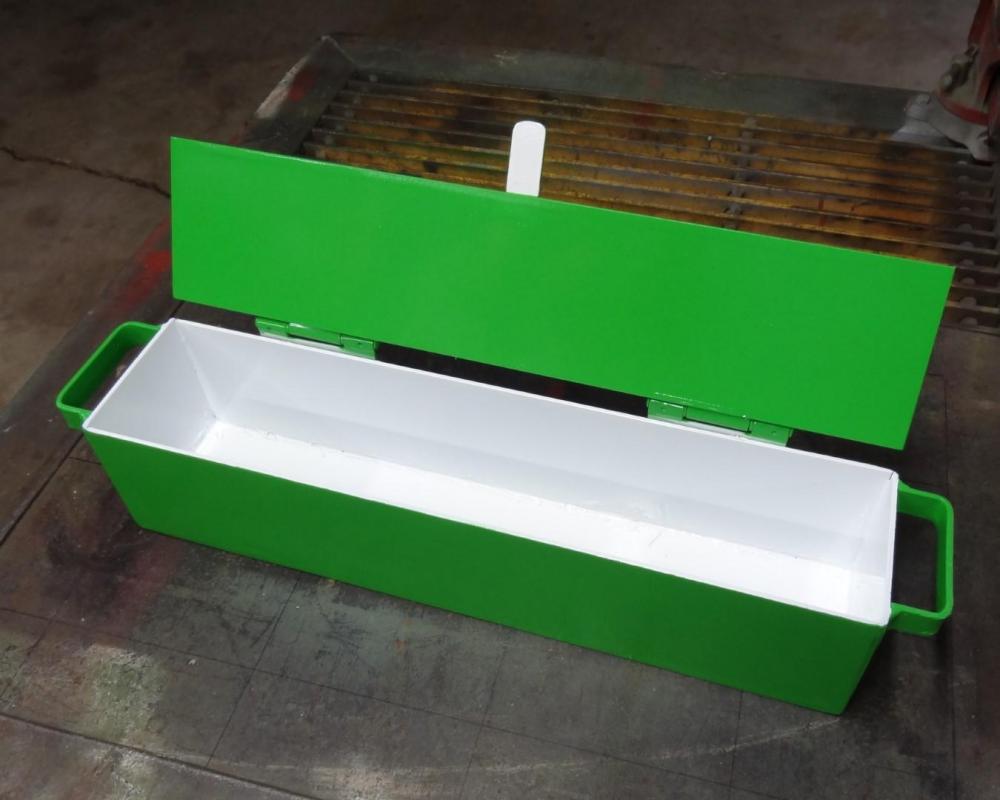
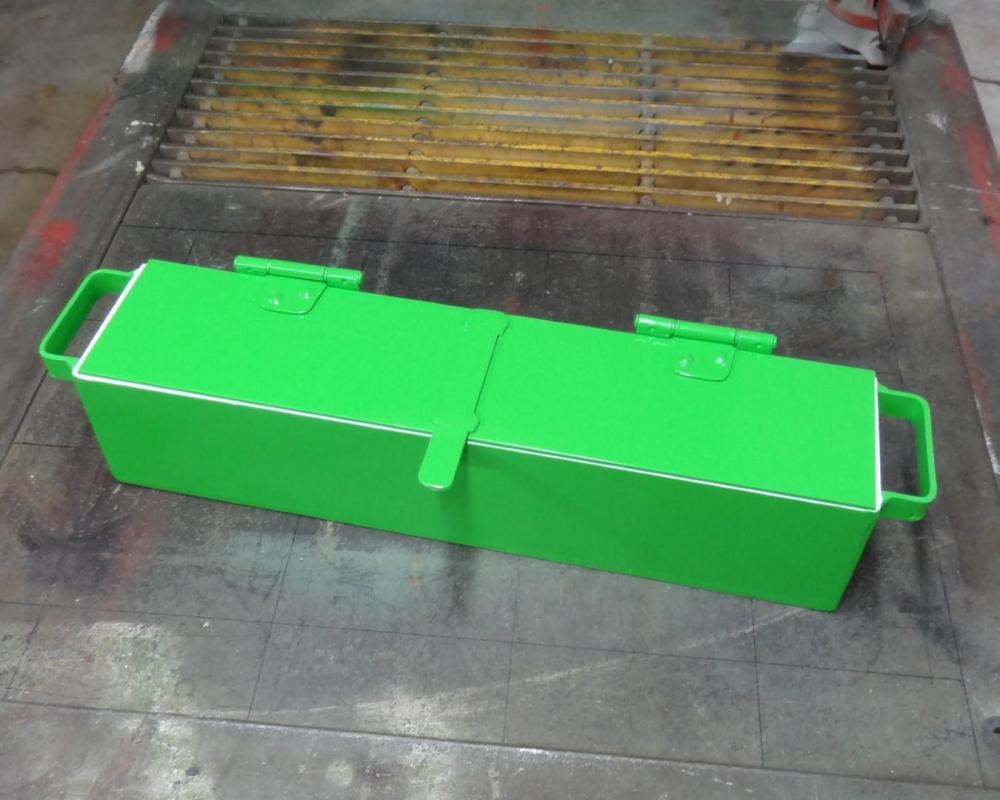
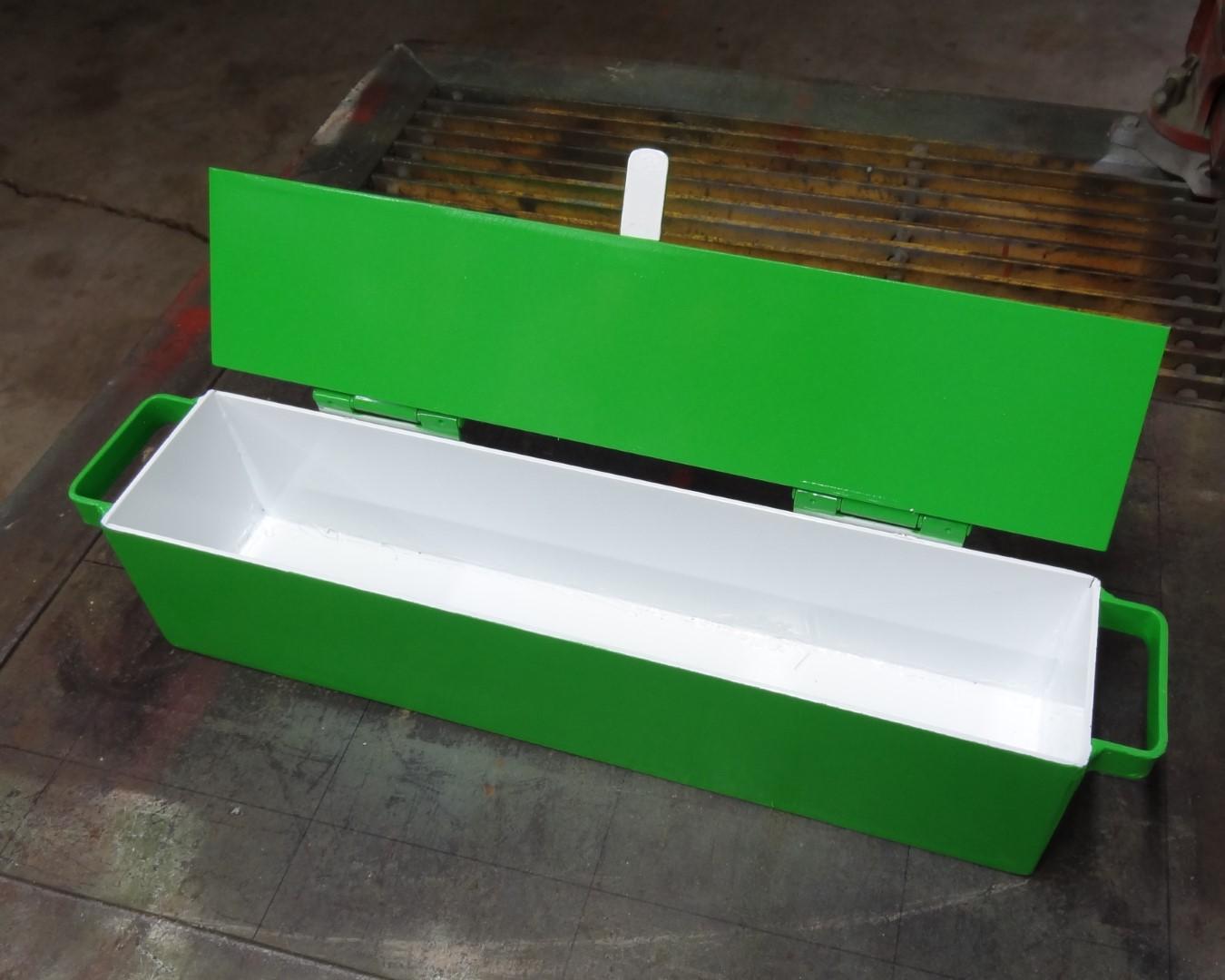
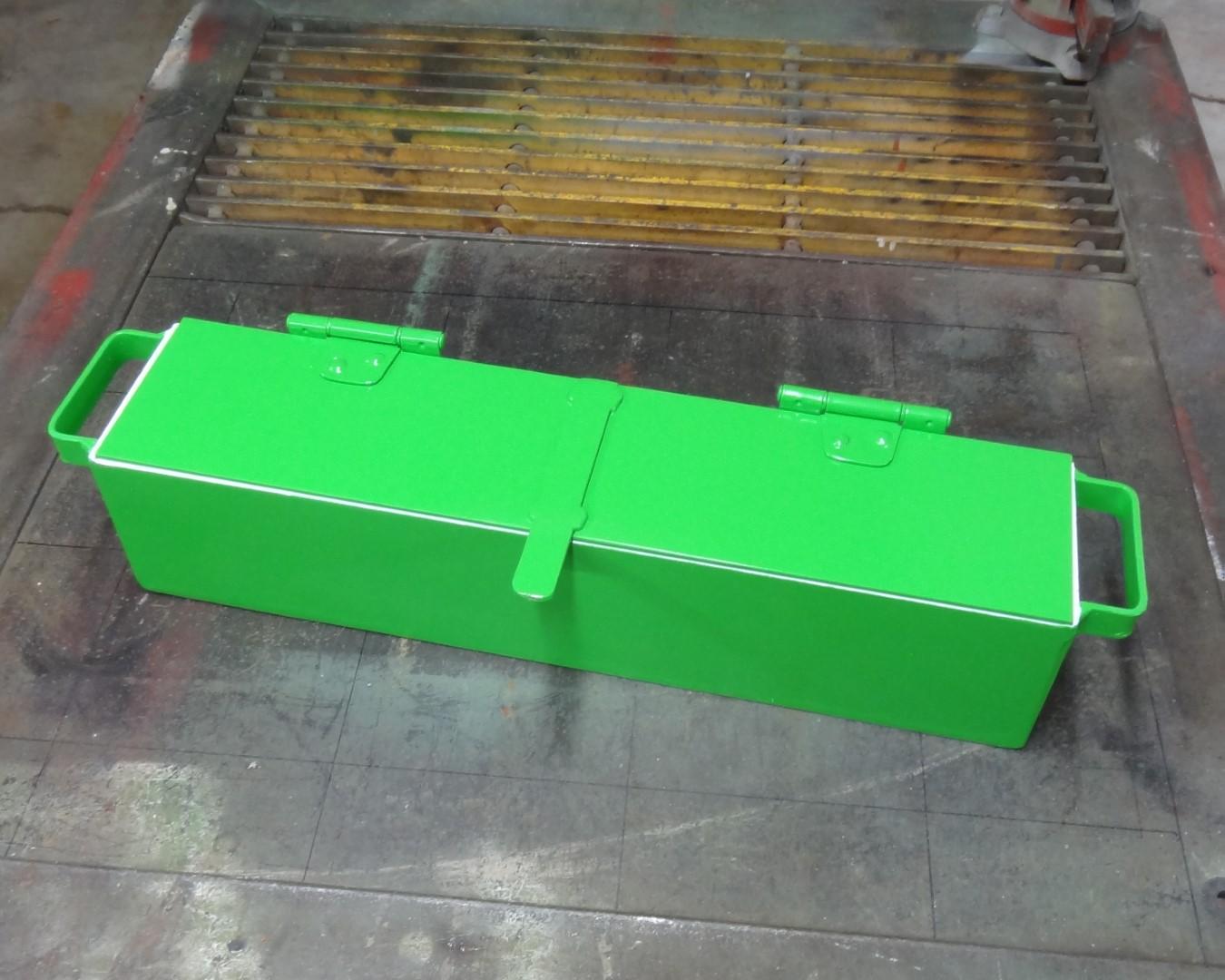
First post, newbie on here. I'm an old dude sneaking up on 78, and I've done a few "finish it yourself" and stock removal knives in the past (some depicted below), but I want to get much better at it and eventually get into simple forging. I needed a better small tank for edge-quenching, so I looked hard online for a low cost off-the-shelf "tank", but everything I saw was either too wide, too deep, too short, or too wimpy. The closest I found was heavy duty commercial steel baking pans intended for making big restaurant-size bread loaves, but they were rather thin metal, and were non-stick coated, which I didn't particularly want. To get exactly what you want, sometimes you just have to build it yourself. With that in mind, I picked up five 18" pieces of 4" wide 11 gauge A36 flat bar from the friendly guys at Metal Supermarket for about $30 including nice clean and square band saw cuts. Material cost was less than cost plus shipping for most of the pans I saw online. From these panels, I assembled the 4 x 4 x 18 tank shown in the accompanying photos. It is built like a tank (sorry) and is the cat's butt for what I need in my little knife-making operation. At 11 pounds empty, it's probably overbuilt, but should be very stable in use, has a nice flip lid for fire safety and to help keep the oil clean, and includes stout handles on each end. The lid intentionally only opens down to a 45 degree angle (because of the tab stop), which allows quickly flipping it closed in the event of a flareup. Since my MIG welding skills are probably a three or four on a 10 scale I didn't want to run my ugly beads the entire length of each panel joint, which in addition to possible porosity and leak problems might also have created major warping, so I cheated: I first carefully fitted and clamped the five panels (three long and two end pieces) for minimal gap, and just lightly tacked them together at the corners and a few places along the long edges with a MIG welder. I then ground all the tack welds smooth on the outside of the tank, and applied JB Quik-Weld along the inside seams. After a few hours, I followed up with Quik-Weld on the outside seams. After letting everything set up hard overnight, I used a small orbital sander to smooth off all the outside seam Quik-Weld, did a leak test with water (there were no leaks), added the hinged lid and end handles, and painted the whole thing with heat resistant engine enamel. I used white for the inside, thinking it might make things easier to see during quenching, but it might not make that much difference. Anyway, for less than buying a less-than-satisfactory commercial equivalent, I now have a very heavy duty little knife and small parts quench tank that fits my needs perfectly. Now I'm off to Wally World for a gallon of Canola oil! I might have somehow double-posted two of the photos, if so can't see how to fix that, sorry!