

SilverDeck
-
Posts
94 -
Joined
-
Last visited
Content Type
Profiles
Forums
Articles
Gallery
Downloads
Events
Everything posted by SilverDeck
-
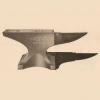
show me your destroyed anvil!
SilverDeck replied to joshua.M's topic in Repairing and Modification to Anvils
I think they were asking something like $150 for it. Needless to say, I decided to pass.... -
show me your destroyed anvil!
SilverDeck replied to joshua.M's topic in Repairing and Modification to Anvils
Here's my favorite that appeared on my local Craigslist awhile back: -
Amazing Time Capsule - Iowa Blacksmith Shop
SilverDeck replied to SilverDeck's topic in Blacksmithing, General Discussion
OK, here we go: All of these images were taken on Memorial Day, (5/25/2015) at the Matthew Edel Blacksmith Shop in Haverhill, Iowa. -
Amazing Time Capsule - Iowa Blacksmith Shop
SilverDeck replied to SilverDeck's topic in Blacksmithing, General Discussion
Thanks, Glenn. Is the best way to post these images by using the "insert image from URL" option? -
Amazing Time Capsule - Iowa Blacksmith Shop
SilverDeck replied to SilverDeck's topic in Blacksmithing, General Discussion
Unfortunately, the pic posted above was one of the better ones I got of that trip hammer. The hammer was in one of the darkest parts of the shop and getting a good image of it was tough. Here is another shot taken from further back of the whole trip hammer apparatus: As you can see, there is a leaf spring on top of the arm to store energy and return it with the downward stroke of the hammer. Feel free to look at the rest of the photos at the link listed above. It may show up in the background of some of the other images. -
Amazing Time Capsule - Iowa Blacksmith Shop
SilverDeck replied to SilverDeck's topic in Blacksmithing, General Discussion
So as not to bog down this thread with nearly sixty images, I have decided to post a link to my Photobucket album where all of the pictures that I took can be viewed. There is even a short (27 second) video of a portion of the shop. I wish there was a way for me to have captured the smell of the place in these pictures. It was unforgettable; sort of mixture of musty wood, earth, soot and old iron.Enjoy! Blacksmith Shop Haverhill IA 5-25-2015?sort=3&page=1&_suid=143273325492608367677414147294 -
While visiting family for the Memorial Day weekend, I had the good fortune of being able to visit the amazing Matthew Edel Blacksmith Shop in the small town of Haverhill, Iowa. The shop was started in 1883 and actively worked until the death of the proprietor in 1940. At that time the family closed the doors but left the shop and contents largely intact for many decades until they decided to donate the property to the Iowa Historical Society in 1986. It was absolutely amazing to be able to this place, and even more amazing that it was preserved (largely through benign neglect) to give this window into the past. I took nearly sixty photos inside the shop, but below are a few of the highlights. The anvil was a 146 lb Peter Wright. The largest post vise in the shop had 8 1/4" wide jaws. Much of the mechanized shop machinery was operated with a belt-drive system powered by a gasoline engine, including a homemade trip hammer. If you ever get a chance to stop and see this place, it is well worth your time. The property is operated by the Iowa Historical Society and futher information about it is available here: http://www.iowahistory.org/historic-sites/edel-blacksmith-shop/site-history.html Enjoy:
-
Arm and Hammer Sales Advertisements
SilverDeck replied to smfg_mendo's topic in Anvils, Swage Blocks, and Mandrels
What did your rebound turn out to be, Eddie. I have a 1913 90 lb Arm & Hammer (marked for Belknap in Louisville, KY) and got results between 90-95% rebound when I did a ball bearing test on it (10" drop height). -
Arm and Hammer Sales Advertisements
SilverDeck replied to smfg_mendo's topic in Anvils, Swage Blocks, and Mandrels
Here are a few that I saved from Google docs (all were from old issues of Blacksmith and Wheelwright magazine: September 1916: April 1920: March 1921: -
AIA in route, but,,,,,
SilverDeck replied to GottMitUns's topic in Anvils, Swage Blocks, and Mandrels
Looks like a Hay-Budden-built ACME. -
Nice to see another person from Lincoln, Nebraska, here on the forum. This makes at least three that I know of ("postleg" being the other one).
-
What a beauty. Nice to see this one fall into your lap. Always love it when great pieces like this show up here in Nebraska!
-
My anvil is uglier than yours!
SilverDeck replied to stuartthesmith2's topic in Anvils, Swage Blocks, and Mandrels
Here's one to contribute that I saw listed for sale on my local Craigslist. I passed on it as the damage looked pretty catastrophic. -
A Rather Remarkable Rail Anvil
SilverDeck replied to SilverDeck's topic in Anvils, Swage Blocks, and Mandrels
Same on mine. Step (table) and face are formed my milling. No hardened steel face plate. -
My first Anvil!! ...Confirm ID?
SilverDeck replied to blackironskillet's topic in Anvils, Swage Blocks, and Mandrels
The holde could have been used for bending some sort of round stock. -
A Rather Remarkable Rail Anvil
SilverDeck replied to SilverDeck's topic in Anvils, Swage Blocks, and Mandrels
Those are some beauties, too. Love the one with the hardie and pritchel holes. -
Looks like an anvil amputee with a prosthetic horn! :D
-
A Rather Remarkable Rail Anvil
SilverDeck replied to SilverDeck's topic in Anvils, Swage Blocks, and Mandrels
Ironmike: Attached are some dimensioned photos. I'm guessing that it may be made out of a section of 136 lb (136 lbs per yard of length) rail but perhaps you can confirm this speculation. 2014 07 30 Rail anvil dimensions.pdf -
A Rather Remarkable Rail Anvil
SilverDeck replied to SilverDeck's topic in Anvils, Swage Blocks, and Mandrels
Here are a couple of shots of the underside of the face, horn, and heel. You can see some of the grind and file marks that were left behind as metal was removed and shaped. I'm guessing that the rail anvil did not receive any special heat treating based on the way that metal has moved around on the edges of the face from blows. I have not yet done a ball bearing test on it, but would expect the results to be marginal. The face has a lot of chisel marks in it and somebody must have used it for a chopping block. -
A Rather Remarkable Rail Anvil
SilverDeck replied to SilverDeck's topic in Anvils, Swage Blocks, and Mandrels
No "grafts" or trickery here, honest! Just a VERY talented fabricator who put lots of time and skill into this rail anvil. I'll post some pics of the underside tomorrow so you can see all of the metal removal that took place to produce this piece. The face is only about 2" wide and the whole thing is about 16" long from horn to heel. Honest to goodness it is all carved out of a single piece of rail using the "stock removal" method. -
A Rather Remarkable Rail Anvil
SilverDeck replied to SilverDeck's topic in Anvils, Swage Blocks, and Mandrels
I need to throw it on a bathroom scale and find out. I think it's about 20 lbs or so. They removed a lot of steel during the shaping process. -
I came across this rail anvil this past July at a local garage sale and ended up bringing it home for $10. I was really impressed by the amount of work and talent that went in to transforming it from an ordinary section of rail into the finished piece. It's almost a piece of machinist's folk art. Anyway, I just completed the process of getting it cleaned up and wanted to post some before and after pics. When I got it, the anvil had been coated with multiple coats (and colors) of paint; all of which was peeling and flaking. I decided to remove the paint but leave the rest of the metal patina intact instead of scrubbing/brushing it down to bright metal. The paint came off with a chemical strip and gentle wire brushing. Any residual stripper was removed and neutralized by a wipe down with mineral spirits. Then the piece was coated with light application to tung oil followed by Renaissance wax to protect the steel surfaces. For some reason the lighting in the "after" pics caused the metal surfaces to look a little more "orange" than they are in real life, but I think you'll get the general idea. Before clean-up: After clean-up: The only identifying marking of any kind that I can find on the anvil is this small little "X" that was ground in on the side below the cutting table. It appears to be very intentionally done and perhaps was the maker's "signature" to identify his work.
-
It's a legit Trenton, just an earlier one before they switched to using the bases with the capsule-shaped indentation.
-
Help with Stamp on Mousehole Foot
SilverDeck replied to nickh's topic in Anvils, Swage Blocks, and Mandrels
Could be an insector stamp or initial. -
Nothing about this anvil being what it first appears to be really adds up. All indicators point to modern markings added to attract attention, especially on the military show circuit where this was sighted. To that end, I'd say the effort was wildly successful. WWII era marked Nazi anvil? Not likely. Recent manufacture anvil with "retro" markings added? I think we have a winner.