Larks
Members
-
Joined
-
Last visited
Everything posted by Larks
-
Thanks for the comments guys - and yes, I’d been thinking French from what I could find so far. Also I just realised that I’d posted “685kg” above in error , I’m blaming that on ARD - Age Related Disfunction (or Defects/Deficiencies/Distraction/Degradation/Dastardliness - whatever suits the occasion) that should have read 685lb - so about 311kg, still an absolute beast.
-
And the outcome???
-
If it’s “HADFIELD” perhaps it’s more likely to be Hadfield and Sanderson ...???
-
I take it you no longer have the pygmy goats Frosty?? They should have molasses at stock feed stores everywhere I’d expect, it’s commonly used as an additive in horse feed. cheers Larks
-
Thanks guys/gals? aaamax I try very hard to get a good enough finish off the anvil that I can minimise grinding, the "print-through" from a surface like this on anything like knives and chisels that I make would require more grinding than would otherwise be preferred, especially on Damasus pattern billets where I’d rather not waste material......and I have a terrific Söderfors/ Lindesnäs anvil with an ideal face that I love working on anyway. Having said that, on some of the more rustic stuff that I’m working on, like hinges, latches and door handles, the print-through might even be desirable - and I wonder if using the anvil might even help dress the face a little over time anyway.
-
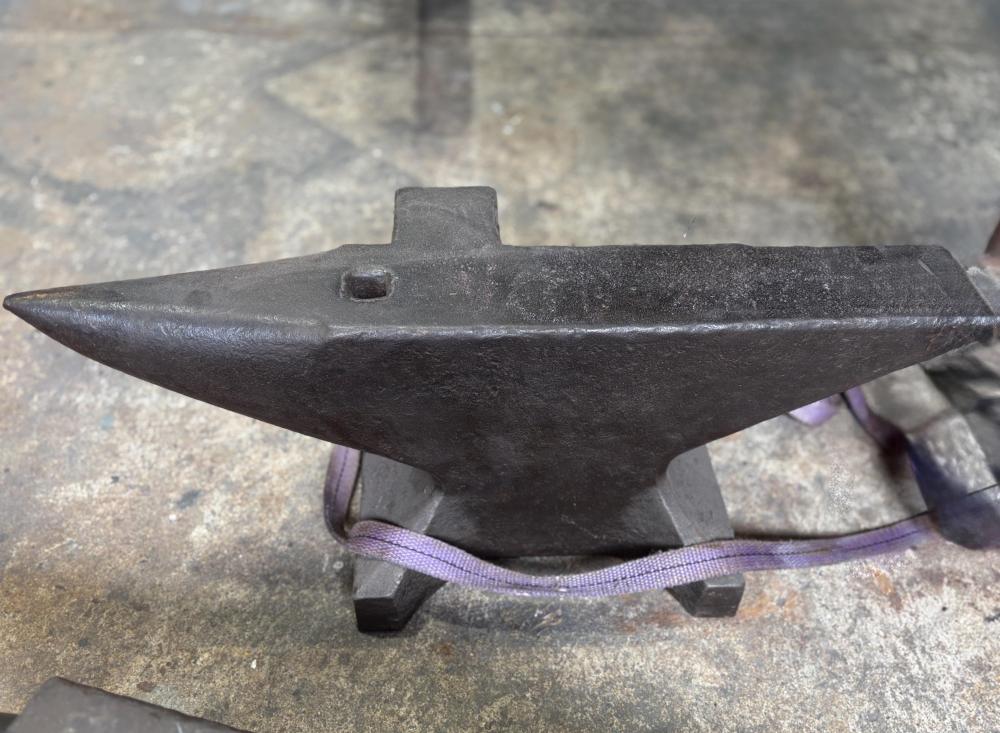
Thanks Frosty, yes I prefer the molasses - it’s effective, cheap, easy to find, non toxic, safe to use and seems to be good for the grass when I tip it out. I pay about $10.00 (Australian) for 20 litres at the local stock feed supplier. The anvil is 685kg - it’s a beast!! No markings that I can find ....so far.
-
I have the “Donkey back” anvil back at home now and have been giving it a bit of a clean up. The “Reckrücken” on this anvil isn’t quite as pronounced as on others shown above and it looks to have been well worked over the broadest area of the horn but otherwise it is in nice shape. The Hardy hole was completely clogged and offered a bit of archeology leaving me wondering what sort of workshop it had come from - hole punch plugs? And for now I’ll leave it resting in a molasses and water bath for a couple of weeks until I come back from a job in Darwin in the Northern Territory then I’ll be able to see how the face really cleans up.


-
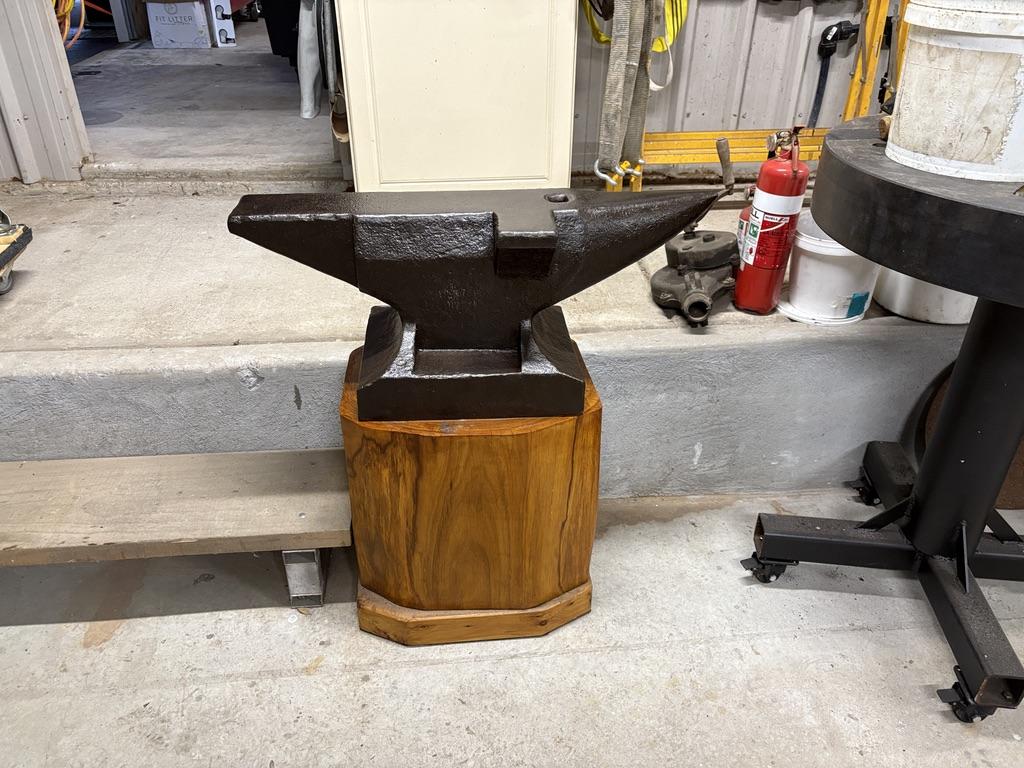
Well I am very pleased to finally have my rather handsome Holthaus "Schweizer mit 1 Horn, Voramboss und geschlossenem Stauchfuß” back home and given a throne for display. It’s definitely not positioned for working on (at the moment anyway) but this one is here for its company rather than its functionality - as unique and as splendid as this anvil is, the somewhat pitted face doesn’t really lend it to the work that I do (and I’m not about to try and dress it down). (Everything is looking a bit clean at the moment because I’ve been working across the other side of the country so sadly the forge hasn’t been getting a great deal of use over the last few months - hopefully that will change for the next few months while it’s still winter and nice and cool here)


-
You’ll never regret buying a heavier anvil. It’s a shame the double horned one with the side shelf and upsetting block isn’t available in the heavier weight, I’ve been finding the tapered flat end and the side shelf very useful on my older Lindesnas/Soderfors anvil and I now much prefer using it over my London pattern anvil.
-
You sound more considered than me, I tend to be a bit spontaneous when it comes to these sort of things - ie what I’d consider luxury or leisure tools, ones that I could probably do without but which would make life a little easier and more fun ...as opposed to necessary tools to get a job done or for work requirements. But, for what it's worth, I do actually plan for that spontaneity so that when the urge arises I have the means: If for example in your case the thought is to spend up to say $1000.00 on a nice anvil, I put that money aside in cash somewhere safe so that it’s out of the hemisphere of daily expenses, credit card payments or bill-paying accounts etc and sort of "forget" that it’s there, or at least studiously ignore it anyway. Treat it as spent but with the safety net of being able to grab it if you really really really need to. Then after a little while if an anvil pops up that you really particularly would like to park in your forge, you won’t feel like you’re spending money that you might need elsewhere and you can be a little spontaneous without even having to buy it drunk one Saturday night.
-
Thanks for that information Bart, it all adds to the picture
-
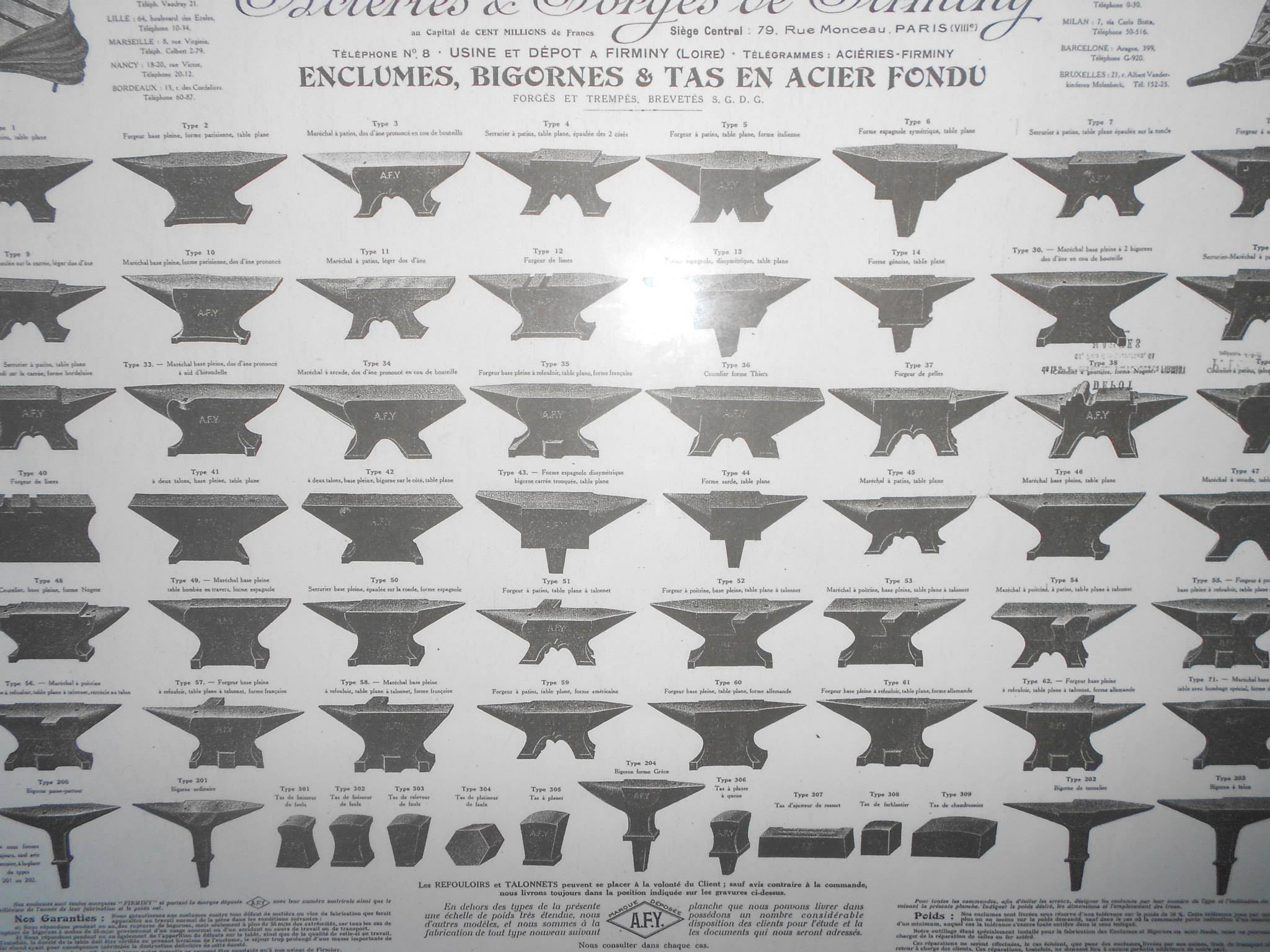
That sounds like far more functional reason for the Eselsrücken/Reckrücken than any other that I’ve seen proposed Julian, it really is ideal for drawing out and I can’t imagine any better explanation. So an anvil mit Eselsrücken/Reckrücken or avec un dos d'âne prononcé is specifically ideal for drawing out. I’m also sure that you are correct in calling the side shelf with the Hardy hole in it a Swallows nest rather than a Swallows tail. The photograph of the catalogue is not very clear when blown up but on looking again it is more likely to read “nid d’hirondelle”, swallows nest, than "sid d’hirrondelle” - I am not a French speaker so relied on Google translate and yesterday it translated that to “swallows tail” but when I reverse checked that just now, as I should have done yesterday, swallows tail would actually be "queue d’hirondelles"
-
Equipped with the correct term I found an older thread on these anvils including an AFY catalogue posted by John Mac. In that catalogue the anvil that I posted above appears to be a type 10 which (if I’m reading it correctly) is described as Marechal base pleine, forme Parisienne, dos d'ane pronunce / Full base marshal, Parisian form, pronounced donkey back and Julians a type 33 Marechal base pleine, dos d'ane prononce, a sid d’hirondelle / full base marshal, pronounced donkey back, with swallow tail I take the “swallow tail” is the offset Hardy hole shelf

-
Thankyou Julian, again you have delivered with just the ideal bit of information - knowing the correct term for it I’ll try a few different searches - and I look forward to seeing your Eselsrücken anvil and reading any information that you might have on it. I don’t have a collection as such Latticino, I really enjoy researching them and finding out more about them and I’ve really only recently discovered the vast variety and wonders of European anvils. I've bought and sold a few more contemporary anvils over the years to "trade up” and find the ones that I most like to work on, so what I own are all in the forge and being used. Or at least up until now that was the case, I think the Holthaus that I’ve just found might fall more into the “collectable” bucket..... But we’ll see once I get it home and clean it up a bit in a few weeks, I’m looking forward to trying it out under some hot metal and a hammer....
-
I can’t say that I’m really seeing the Southern German style Latticino (I have one myself so am familiar with them) but I had also been wondering if perhaps they were more like French or Belgian, being similar to some French “Pig” Anvils that I’ve seen on-line. In saying that: I’d assumed the “Pig” name came from the legs and short stature rather than anything to do with the horn which seems to vary in style on different Pig anvils, making me wonder again if that Rhino style horn might have originated as regional or some trade specific style. Interesting what you say about the Hardy hole location also, I hadn’t picked up on that and wasn’t aware that it was an identifier, thankyou for that gem. A very charming French Pig anvil with the Rhino type horne and French Pig anvils without the Rhino type horn And my Southern German Lindesnäs/Söderfors anvil (I confess that I have just recently sold the UAT......to make room for an 1887 Holthaus ) 996951DC-4D96-4C93-BEA1-1D16D239FBD6.heic


-
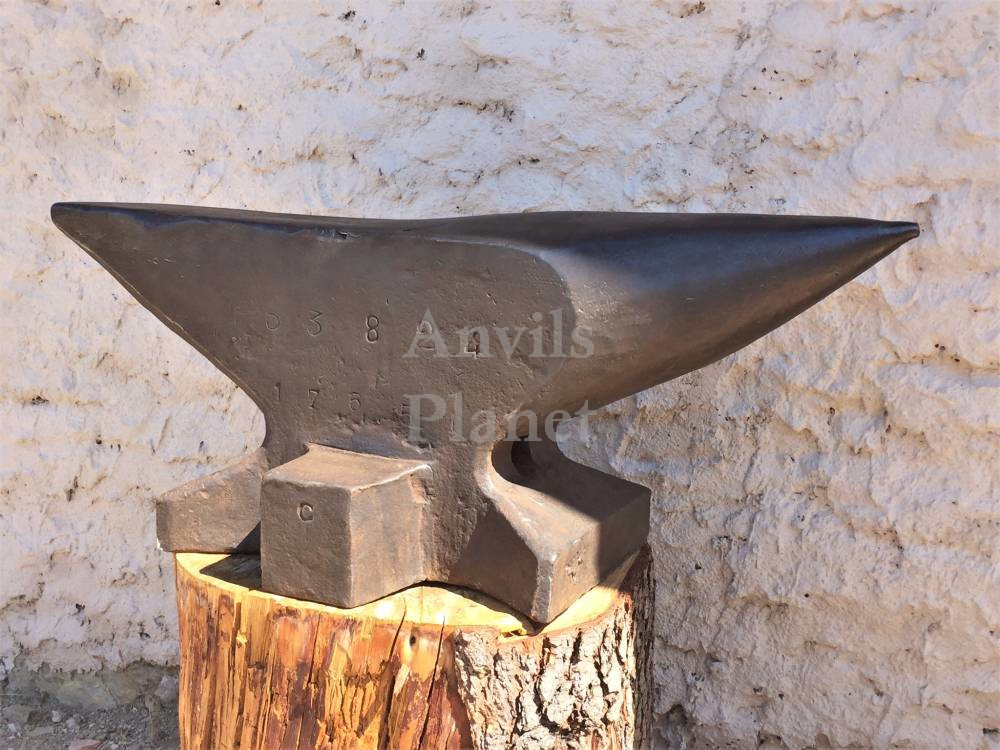
I’ve been looking for information on what I understand to be called Rhino pattern, Rhino back or Rhino horn anvils, ie not the Rhino brand of anvils but the style and shape similar to the pics below. I would appreciate any knowledge or background that anyone here might be able to offer. Firstly am I using the correct term for this pattern? (credit for photos to Anvils Planet - I trust that I am not breaching any rules borrowing their pics to show what shape I’m referring to). Note that I’m looking at this solid base style, with or without the upsetting block, not the French Pig Anvil style with the legs. Is this pattern specific to any particular country, region or maker and is it specific to any particular trade or use? I’ve seen one comment suggesting they were a farriers anvil but I can’t see any reason for that suggestion. The “hump” transitioning into the horn would seem superfluous to any use for a farrier. Does anyone here have such a beast that they can share some photos of? thanks in advance of any history, comments or examples cheers Greg

-
I’m pretty sure it’s referring to the sloping face of the anvil Larry. I found a similar anvil without the closed base/integrated upsetting block that was in the style of No. 10 on the Hammerwerke chart above, described as "Southern German type with "brust und voramboss” which translates to "breast and front-anvil” - I assume the “front anvil” to be the shelf. https://www.bladesmithsforum.com/index.php?/topic/35930-my-old-new-anvil/
-
Thanks Julian, cheers
-
Thankyou Julian, that is terrific information and very much appreciated!! Just the detail that I was looking for. Thankyou Julian, that is terrific information and very much appreciated!! Just the detail that I was looking for. It’s certainly very unique here in Australia and from what I can find online it seems unique elsewhere as well, but would it really be considered so in Europe?
-
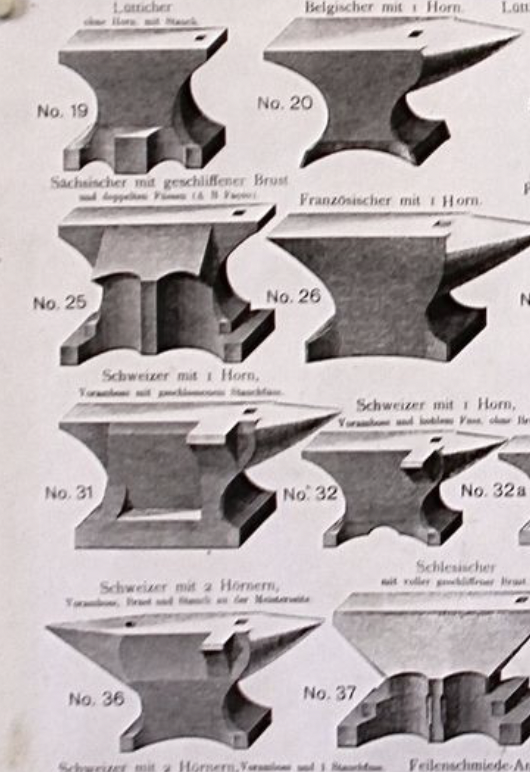
A bit of show and tell but I’m also wondering if anyone has seen anything with an integrated upsetting base like this elsewhere? I’ve seen a couple of examples with both the sloping side and shelf ("brust und voramboss”) but not with a base looking anything like this. Although the markings are quite obscured I make out, amongst the three partially visible markings above and beside the date stamp, the pythagorus theorem squares and triangle that make up the Holthaus stamp. Unless anyone has any other suggestions? Weight is 195kg/430lb. The Holthaus stamp from the “Anvilks Museum San Martino” web site The closest likeness that I’ve found elsewhere is No. 31 here but I can’t read the description:




-
I have Shore but with no answer. I tried emailing them back in October but I’ll try them again with a follow up.
-
A bit of a bump on this one - 'any thoughts on UAT serial numbers?
-
Very useful, thank you for sharing that. Much quicker and I’d say less smelly than my molasses rust cleaning process. I’ve been using an overnight vinegar soak for cleaning forge scale when I’m not in a hurry but this looks worth trying for that as well.
-
Lovely work indeed! Both on the knives and the leather.
-
Frostys jest about the trailer hitch does actually make me wonder if it was something else that was repurposed into an anvil, or an ASO