templehound
Members
-
Joined
-
Last visited
Everything posted by templehound
-
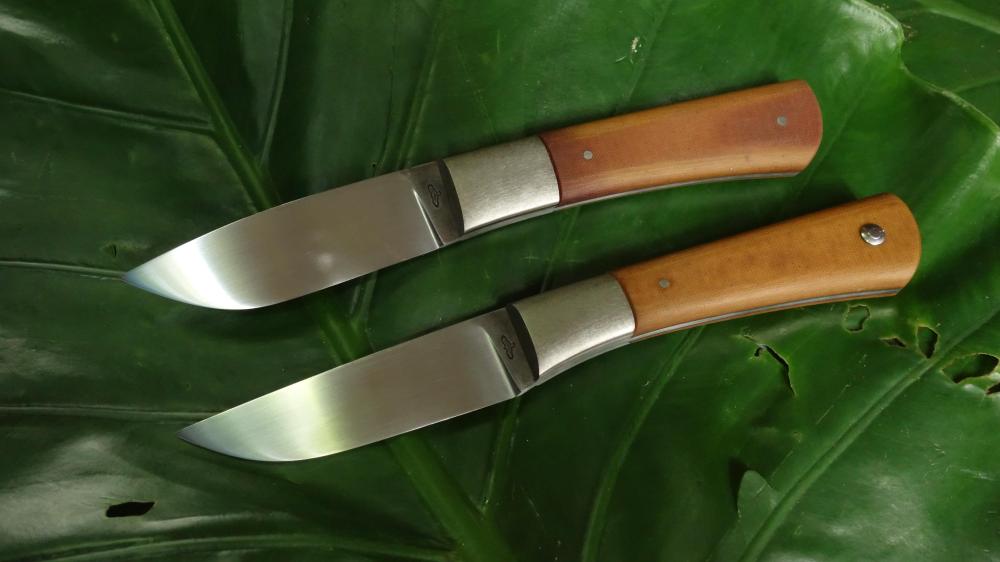
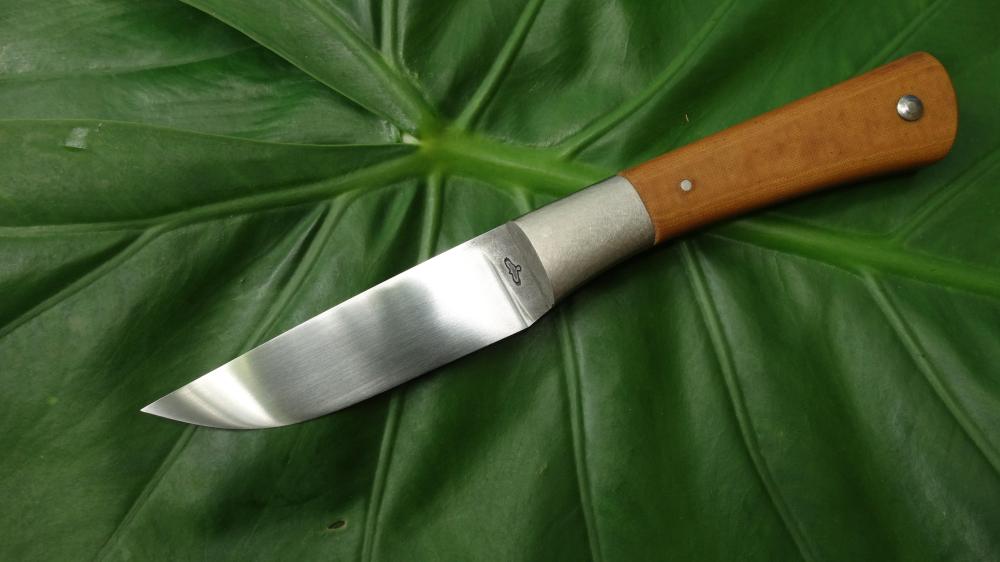
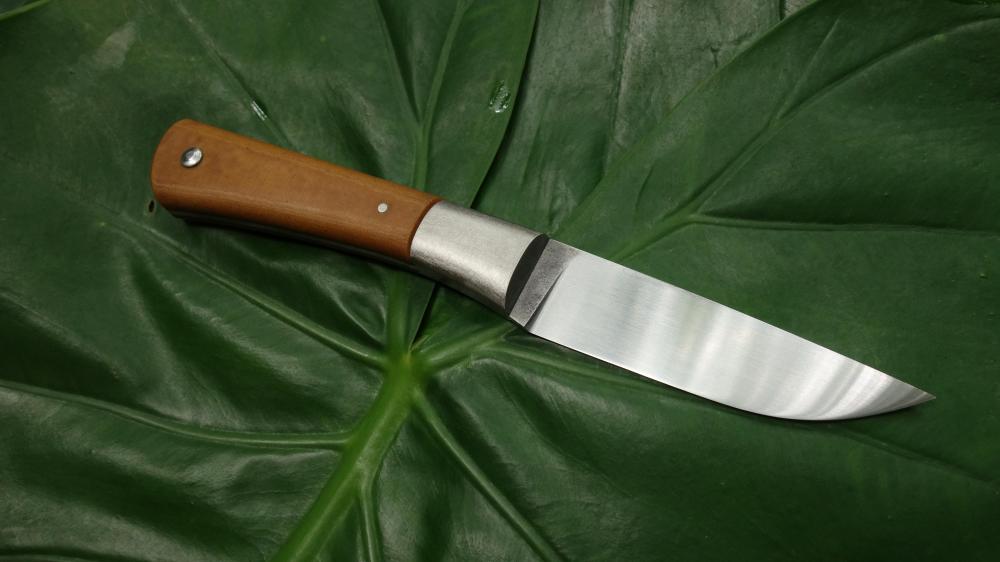
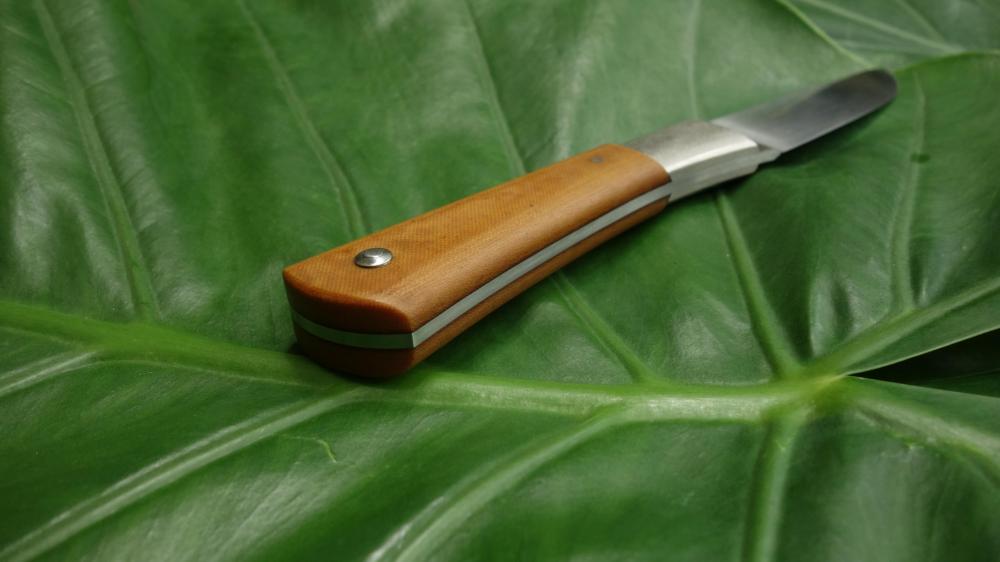
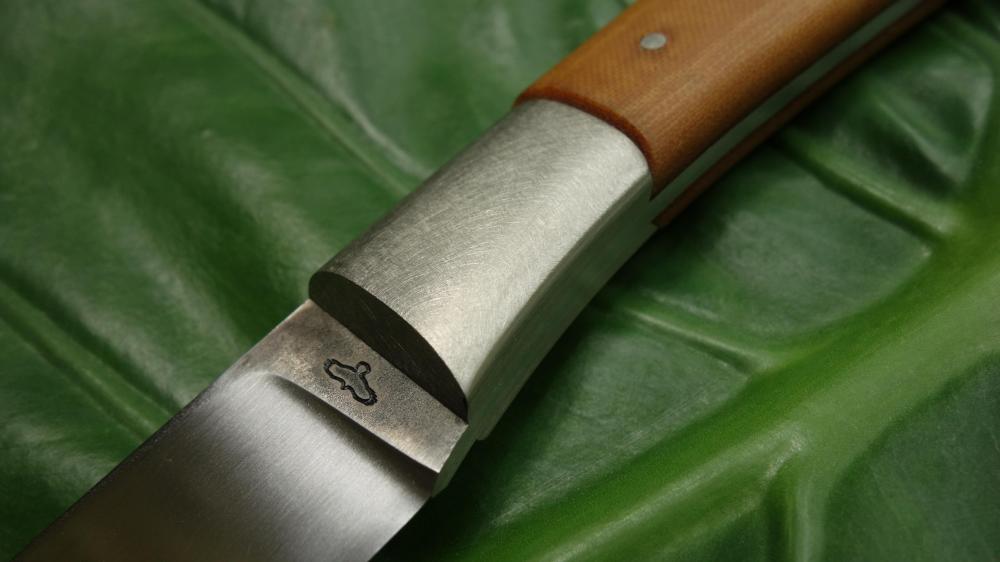
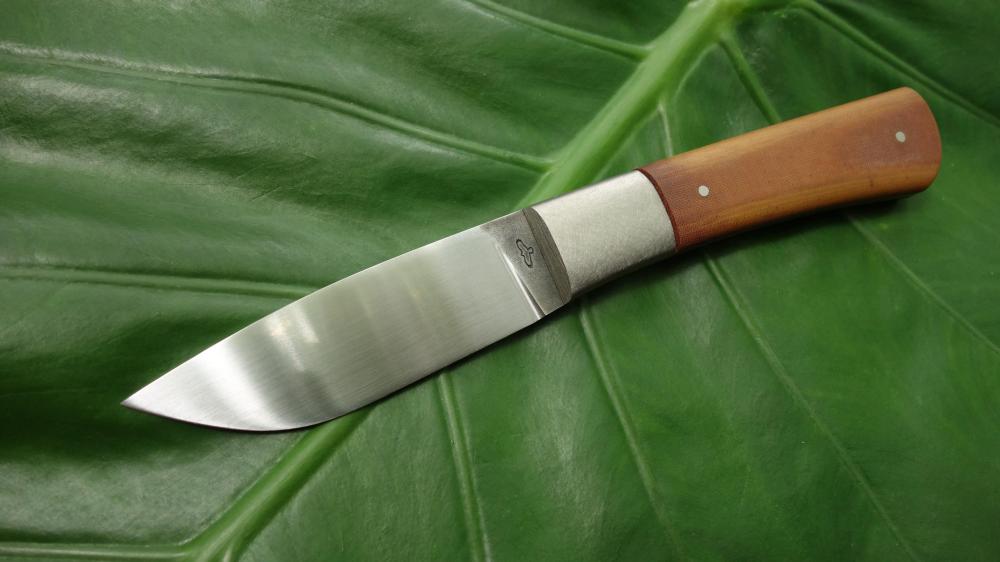
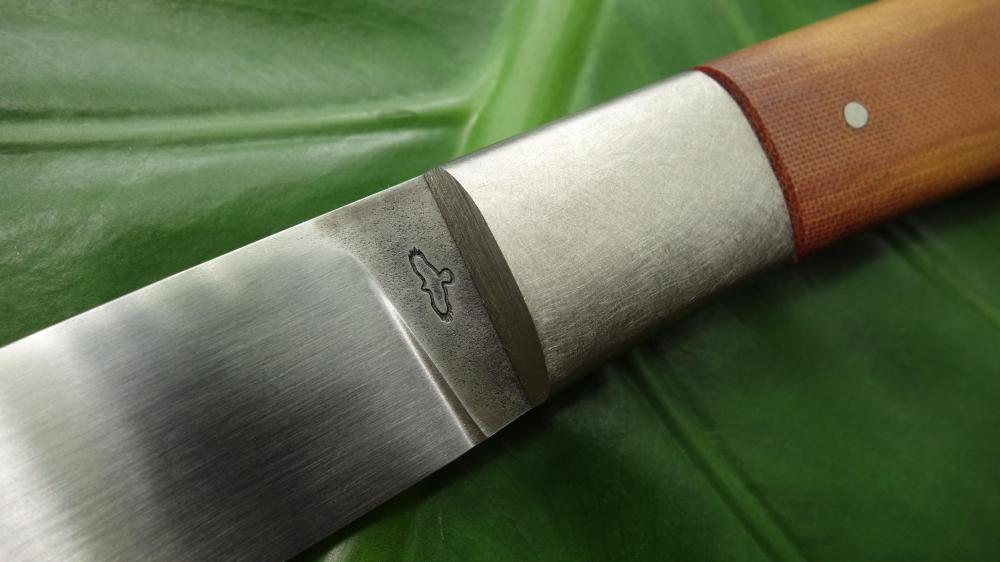
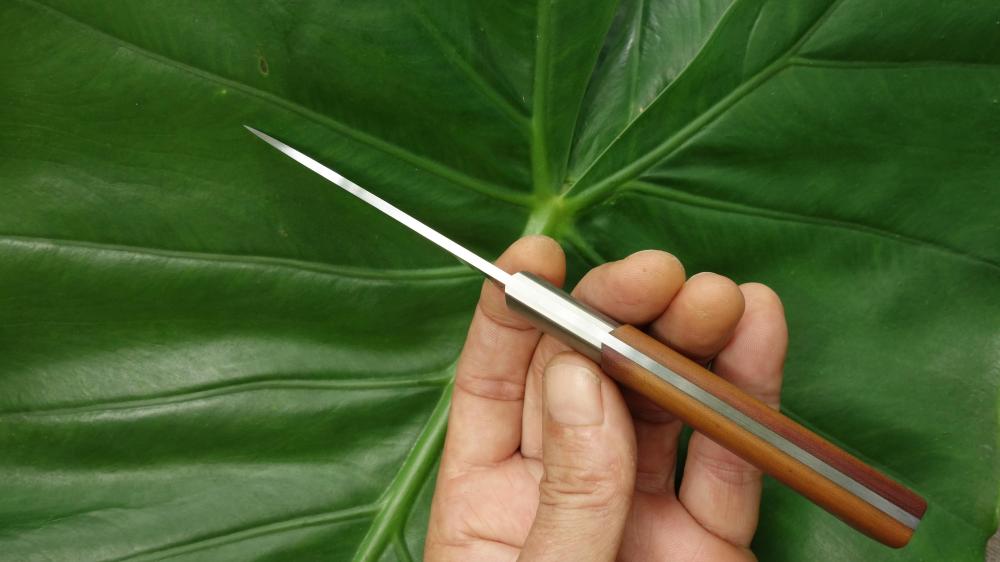
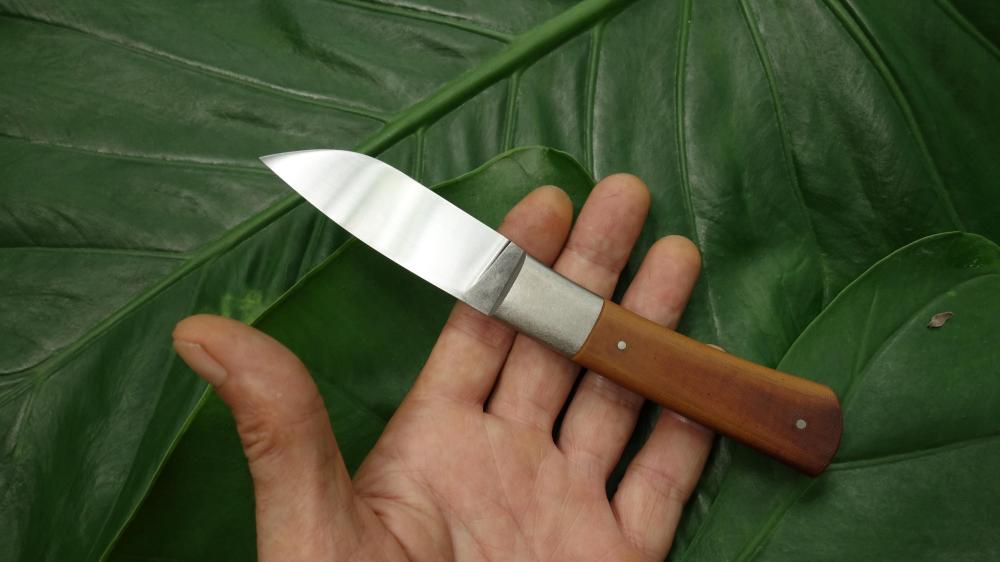
Good Morning Fellas, ....well here in Thailand it is in the Morning....in the States it is still back at least 12 hours back... Titanium and Micarta are both made in 1910 the first time,...over a Hundred Years ago...I think we can call them Vintage. German 105WCr6 Steel (equivalent to Japanese Blue Aogami#2 Steel) those are made ca. 1960...I was born 1962 so I am Vintage as well Two small EDC Users with 105WCr6 Blades. Dove tailed Bolsters, Washers and riveted Pins are made from Titanium and for the scales I took some old vintage Canvas Micarta. The semi-drop point has a length of 88 mm and a total length of 196 mm, the one with the back tip blade measures 92 mm and a length of 202 mm. Cheers
-
David, I must apologize somehow I overlooked your question. With that idea I came up by myself, in the search of more toughness on sheaths. But the fact I didn't saw that yet does not mean it didn't already exists. Thanks David! The same here, sorry Hefty I didn't answer direct to your question. Cheers
-
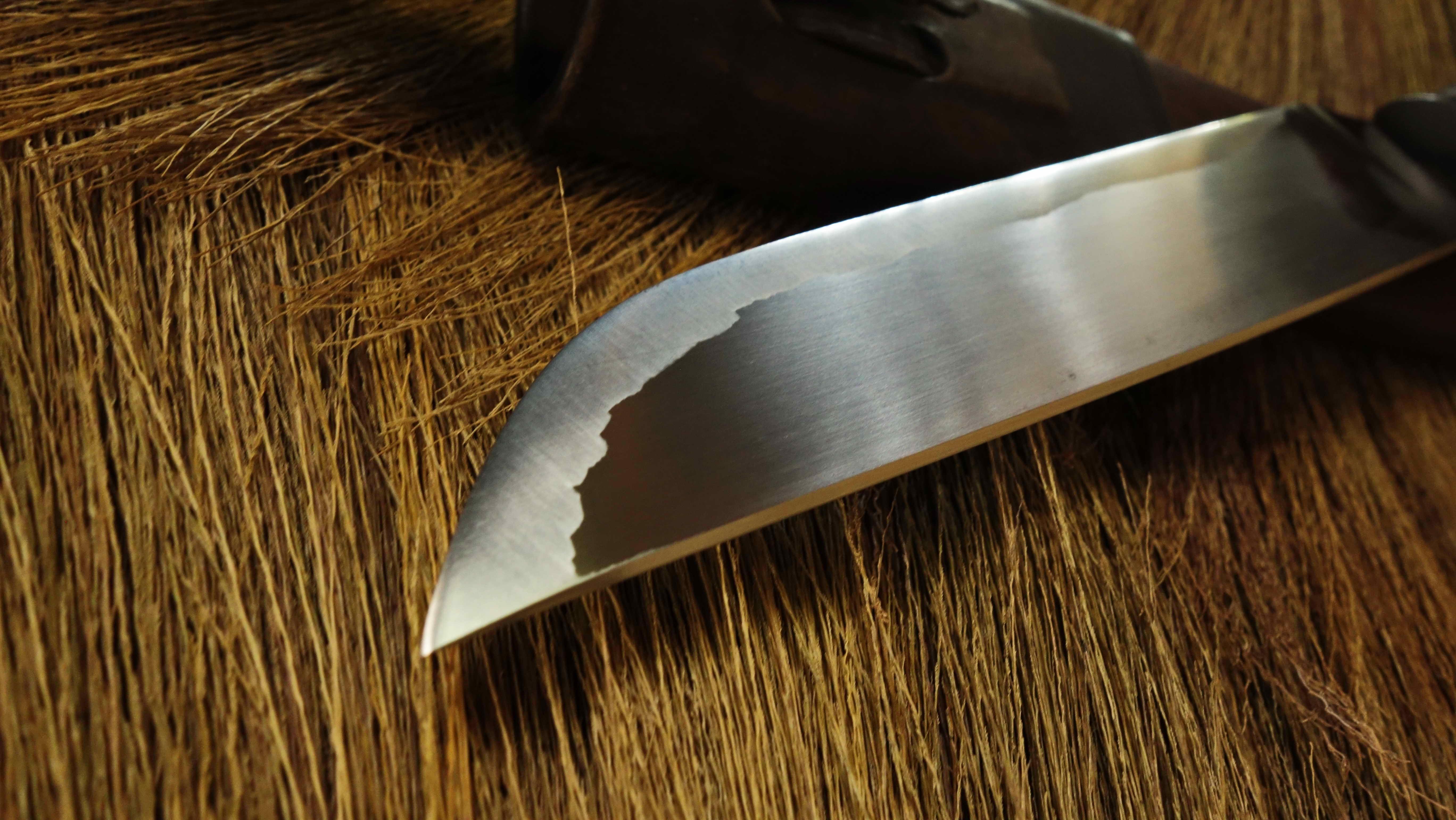
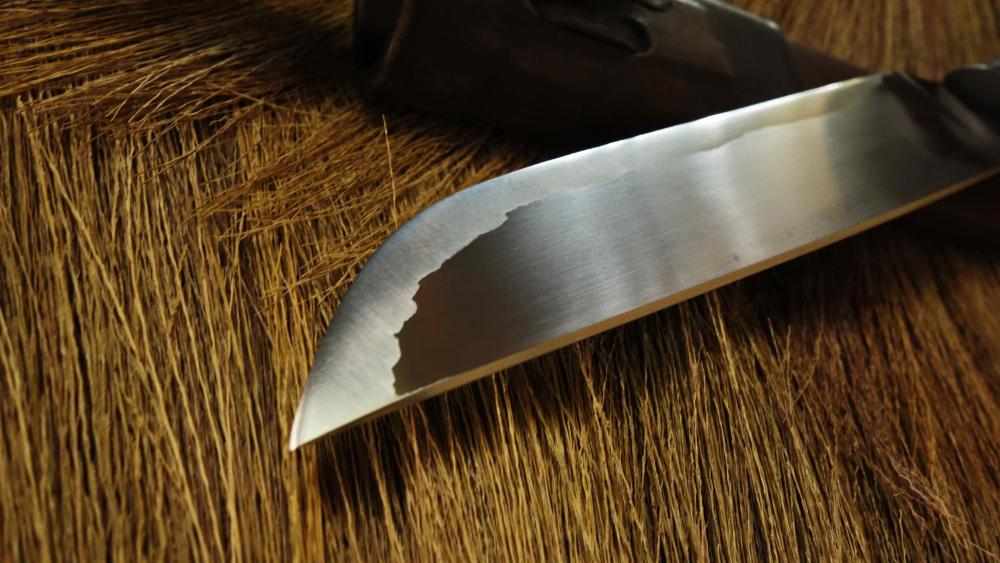
No it is not a line from hardening (Hamon), nor a Temper Line and it is not the edge. It is just a differently polished Section of the Flank. Sisal polished lengthwise and crosswise, that gives the impression of a Hamon...and sure it is different on each side....like a Hamon mostly is. I thought it looked more interesting....at least in my eyes.
-
Gentlemen, thank you very much for the nice comments! Which bevel? The flank bevels, the edge bevel or the back bevel?
-
Mr. sfeile, thanks a lot!
-
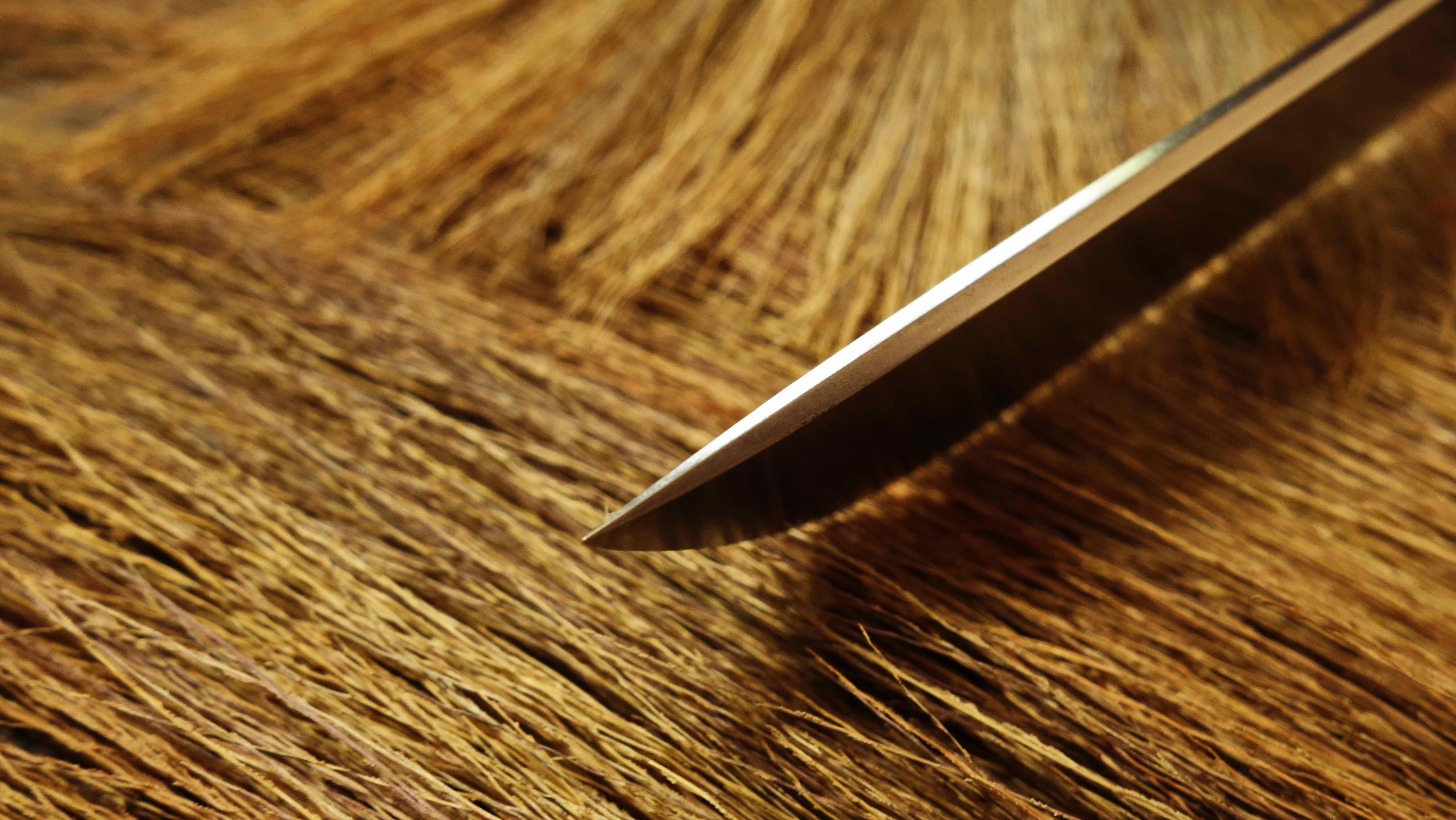
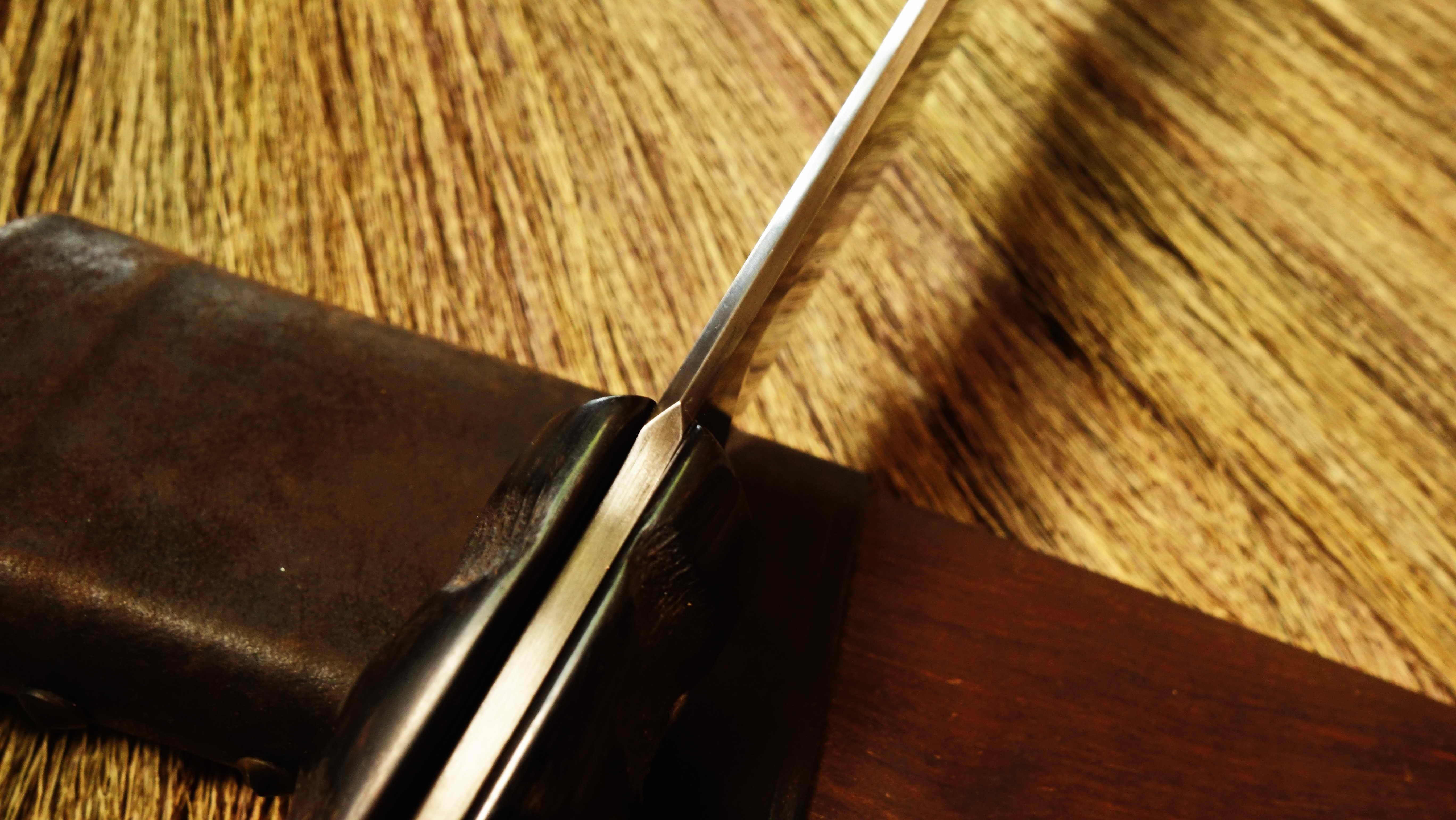
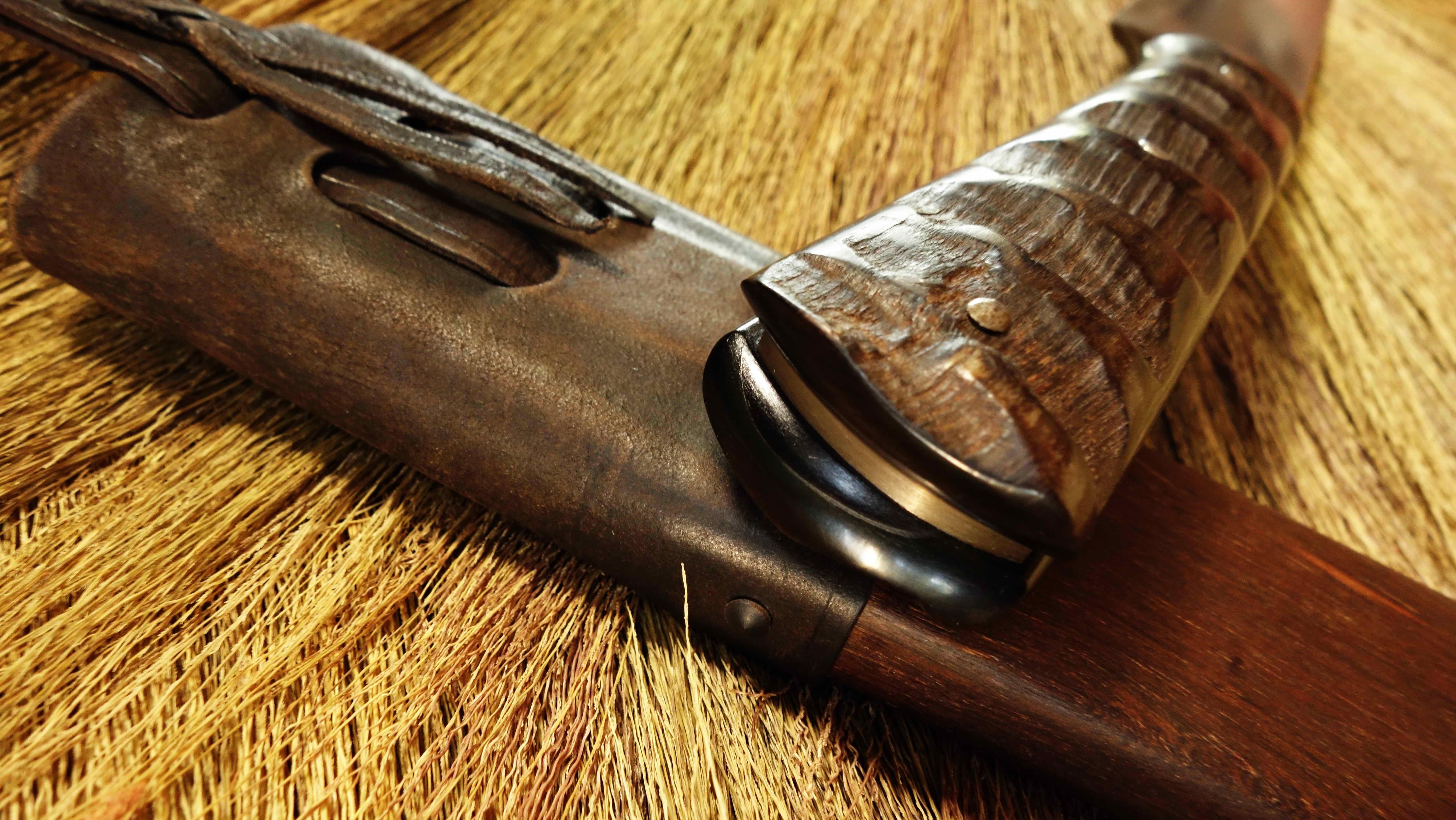
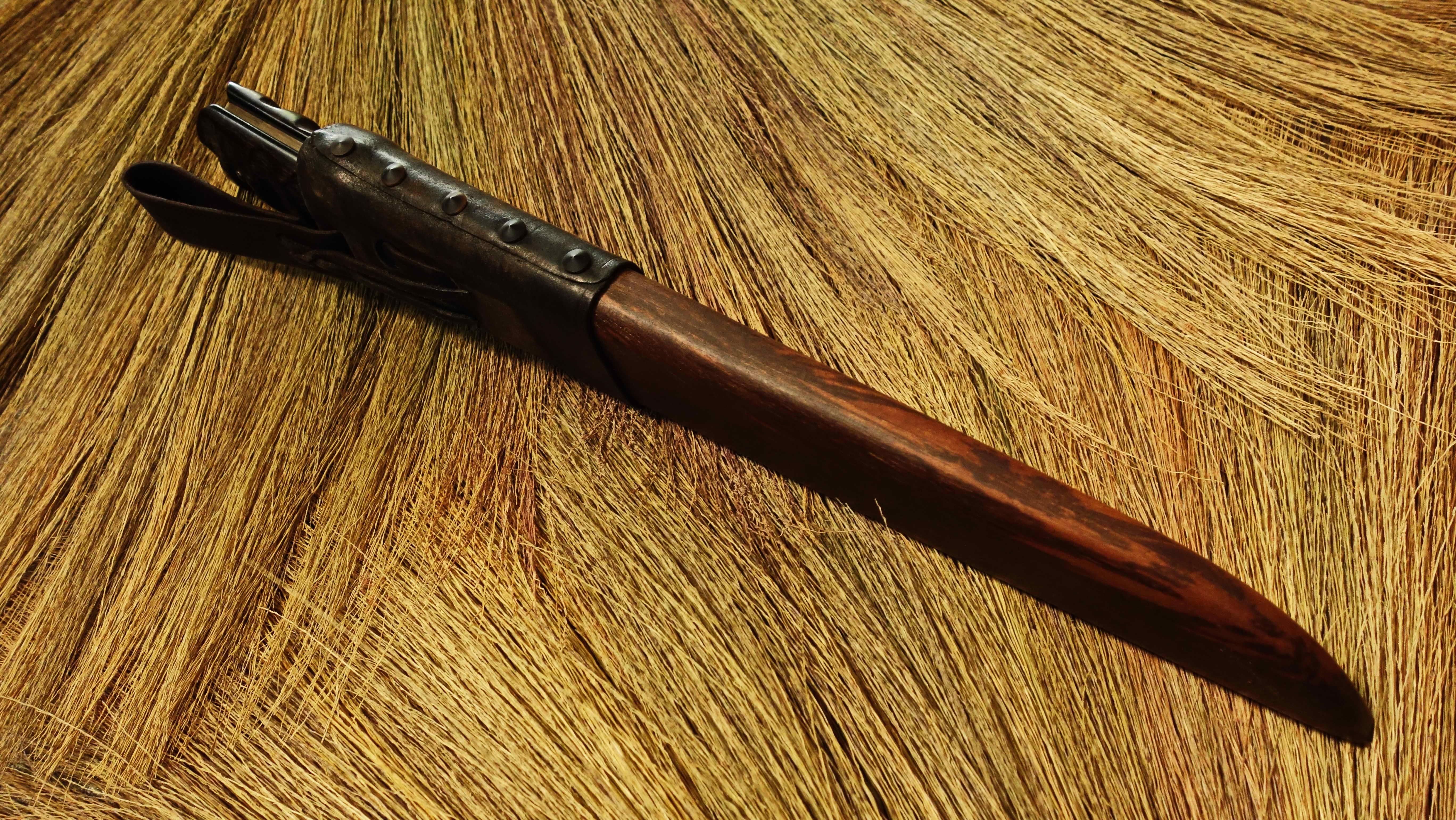
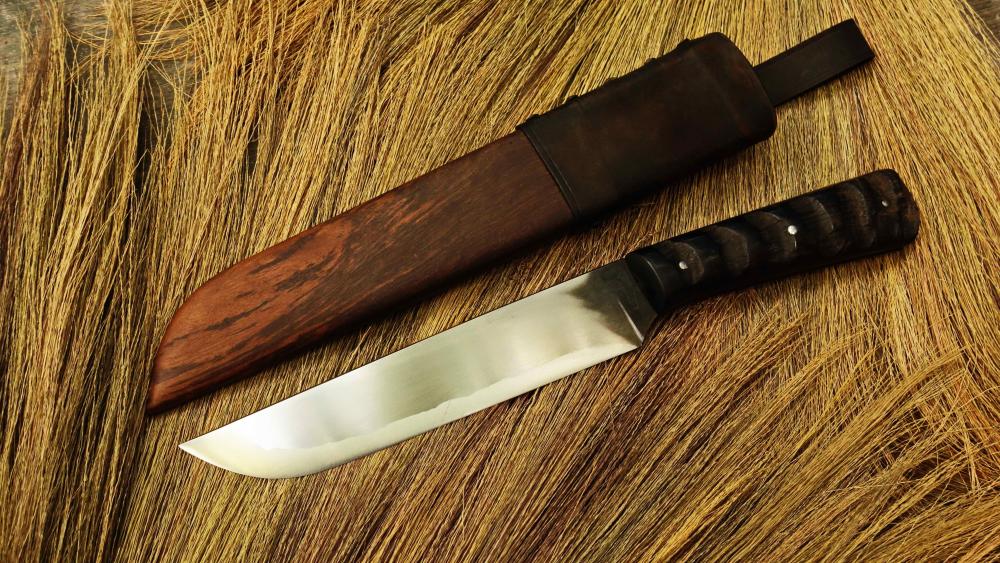
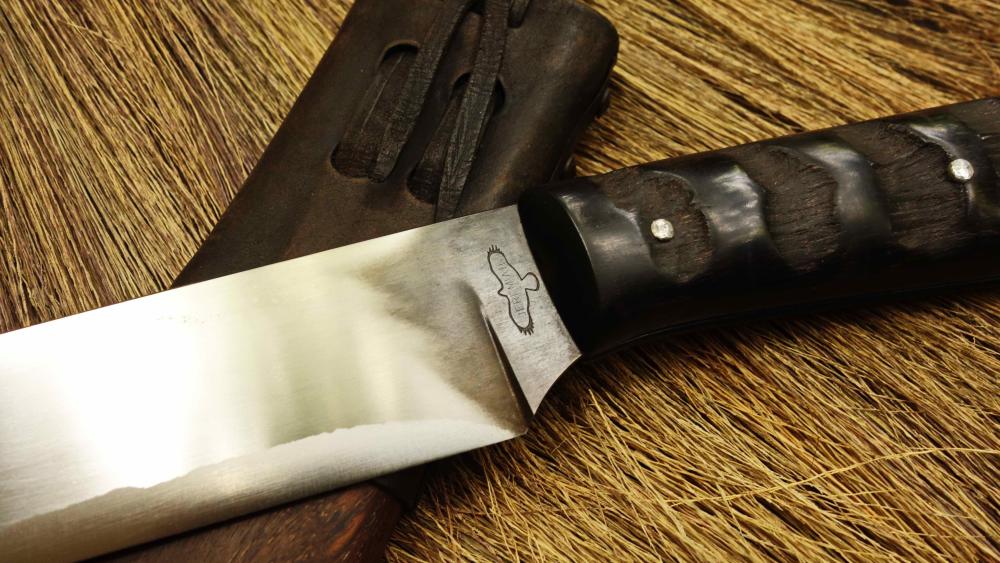
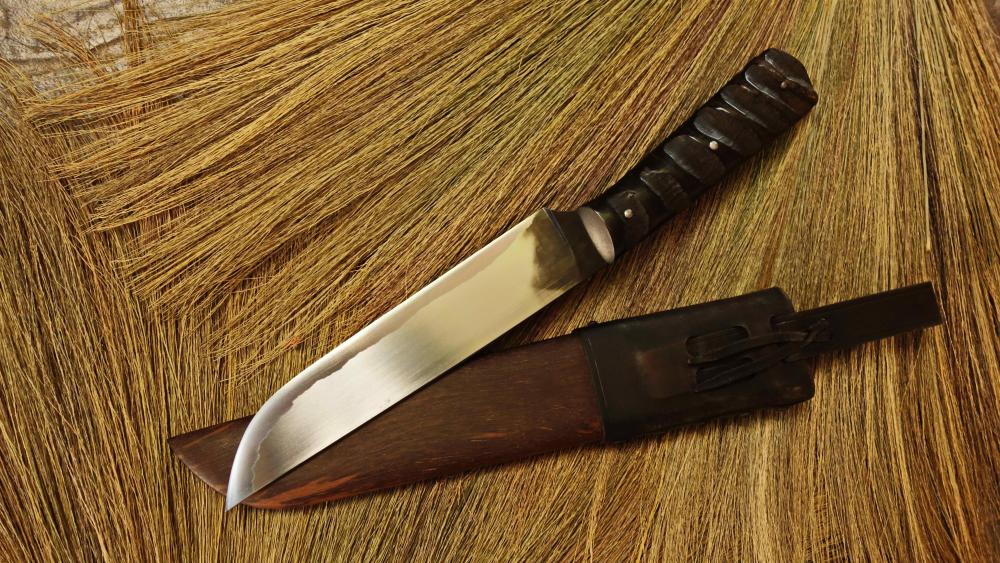
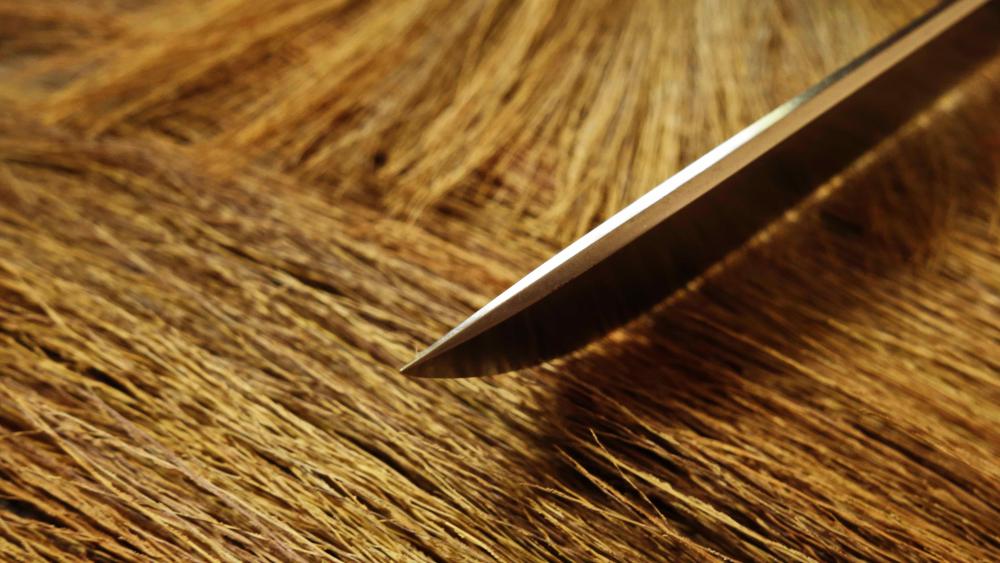
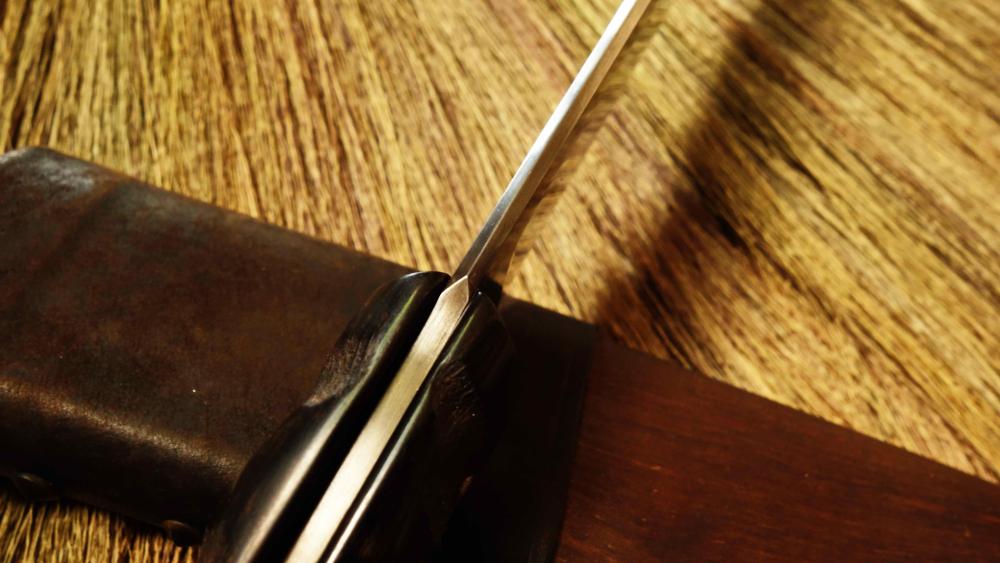
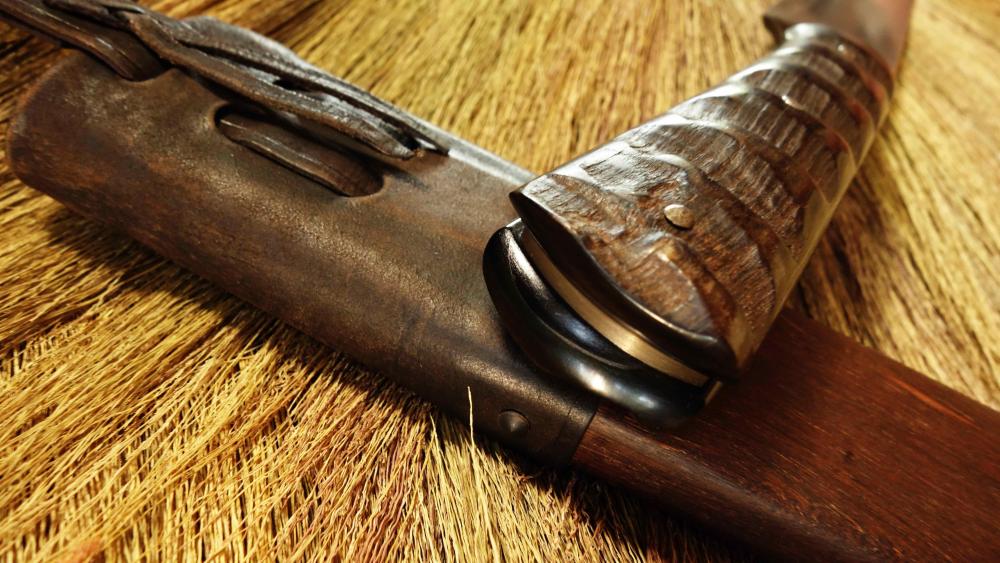
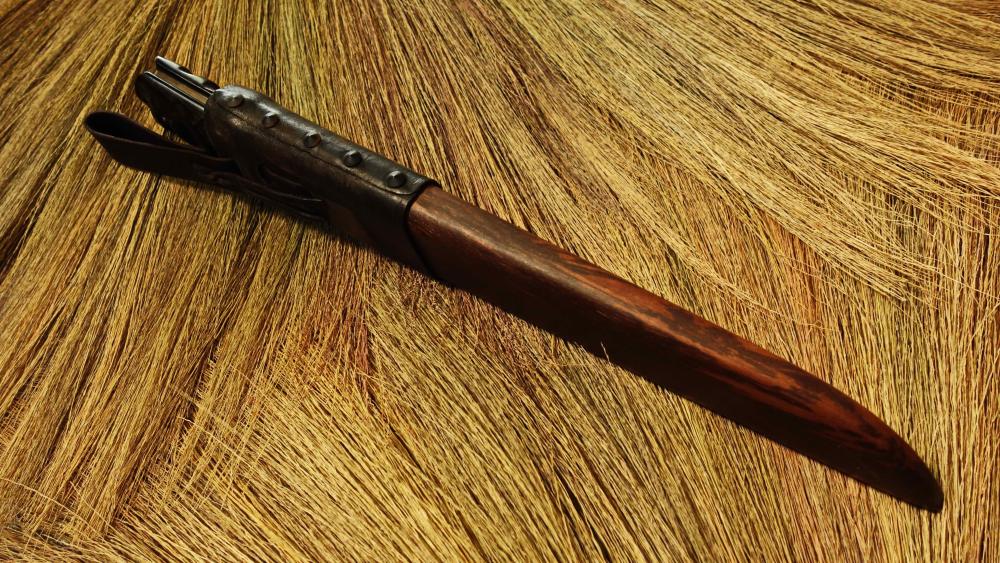
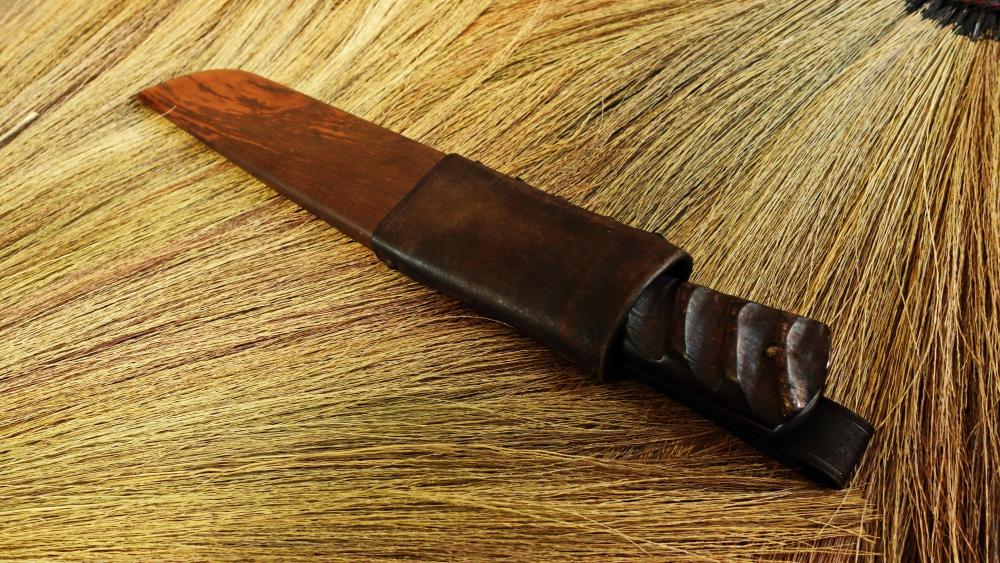
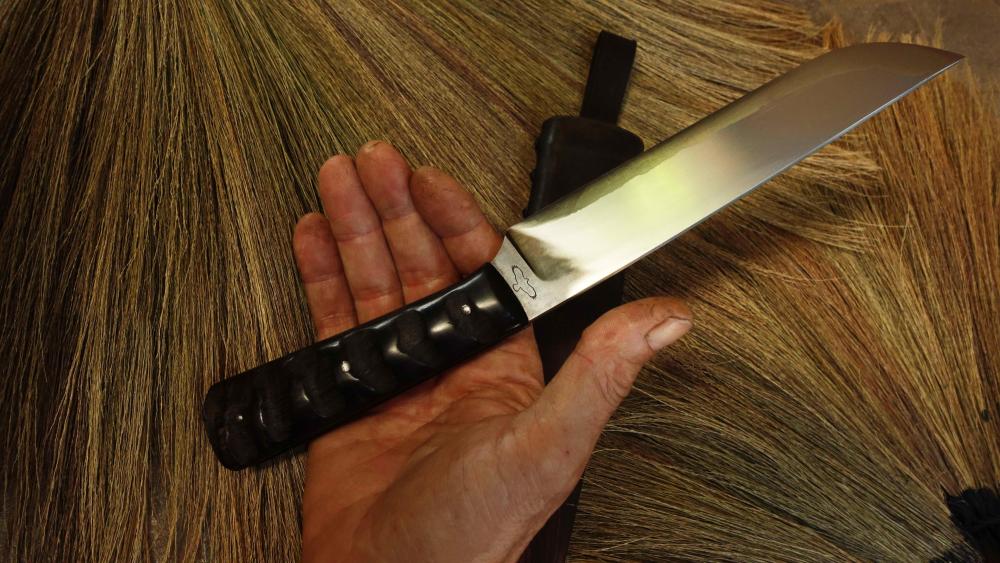
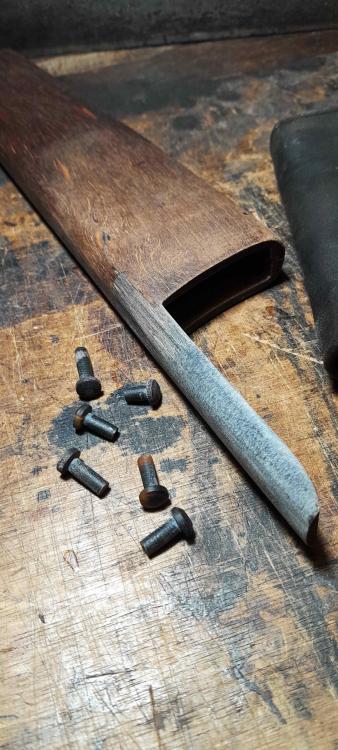
I dove in a bunch of videos on YouTube about the Hadzabe Hunters in Tanzania. Their preferred prey, amongst others, is Baboon. ...the Baboon arrows have the most brutally barbed heads...that tells something about the prey and the hunter. I watched all the Hadzabe videos I could find, because I was interested what kinds and sizes of knives they are using. In all the videos I only saw one small knife in use and this was used collectively. Apart from this, Hadzabe hunting knives mostly seem to have blade lengths from 6-8 inches.... Of course every hunting knife should be tough, sharp, and strong..... but due to their hunting style the knife has to be light weight. Somehow I was motivated to create a knife, that I think the Hadzabe would(could?) appreciate. O1 flat tang blade with 185 mm (7.28 inches) blade length and 3 mm width. For the handle I took steel pinned Thomson's Gazelle Horn Slabs. The sheath is a combination of half tanned leather, unknown hardwood and buffalo horn. Since the seam on the sheath of a knife is theoretically the weakest point...theoretically...I've replaced the stitching here with horn nails. These are glued into a horn frame on the cutting edge side in the leather quiver using a strong adhesive...a remarkably stable material combination. Cheers
-
Thanks for the nice comments, Fellas! Larry, I cut the lines with the outermost edge of a checkering file.

-
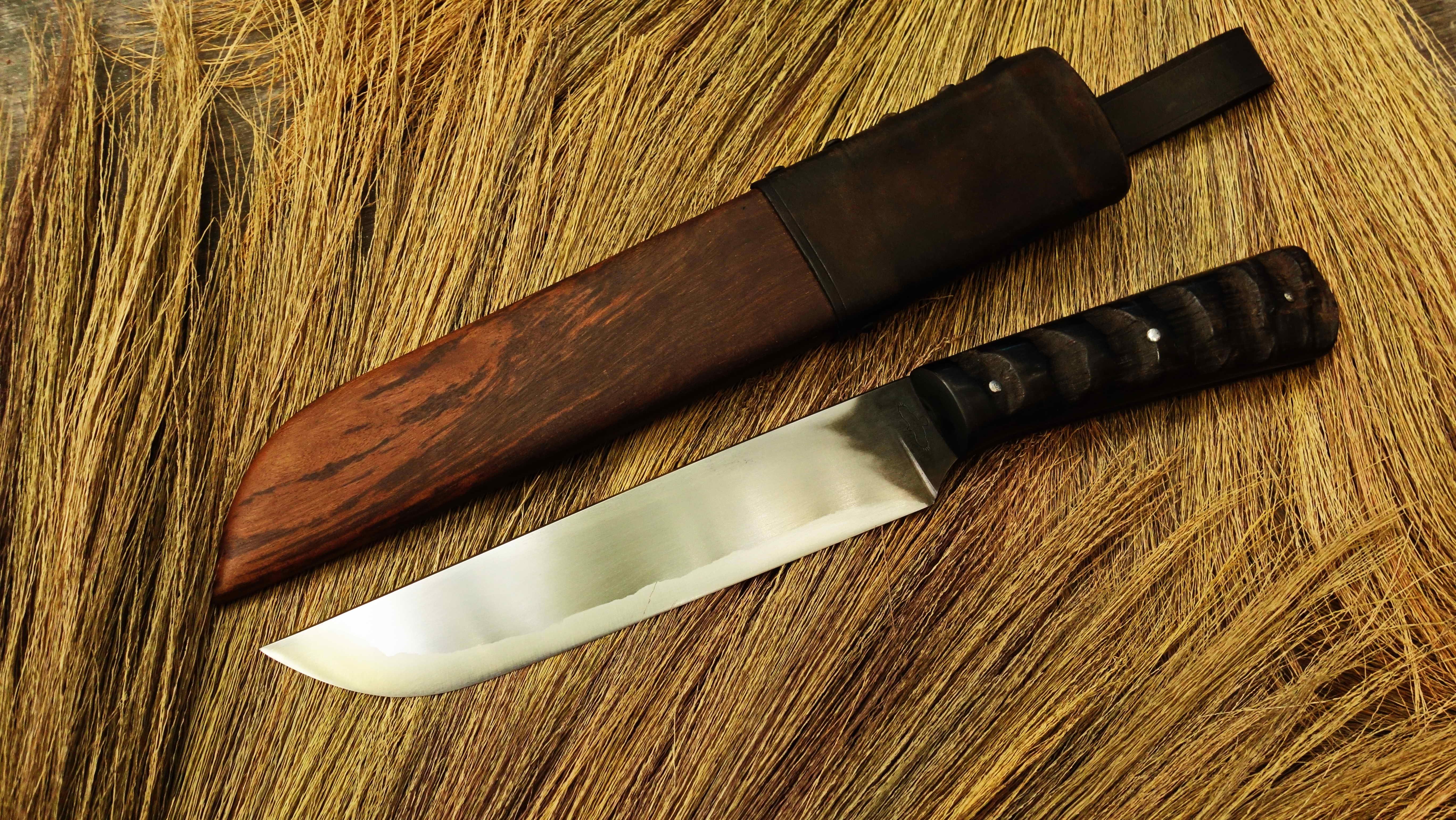
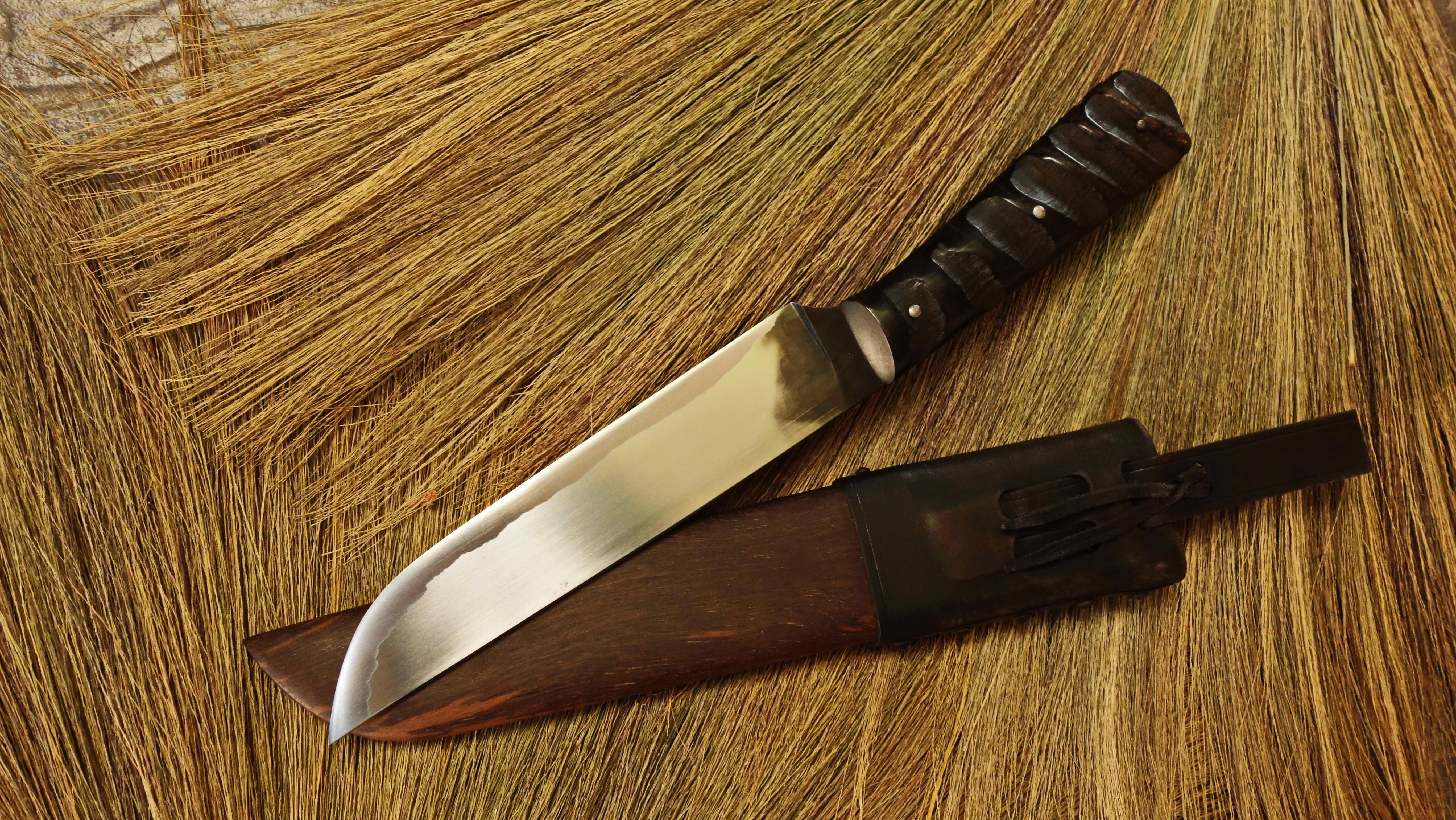
Over the last 15 years I made only four of those big Temple Knives, and its design reminds me always of a Vulture. Cold work Tungsten Tool Steel(1.2419.05),Copper and Ceylon Ironwood. I like this material combination very much because its dark and sinister and no fancy color distracts from the actual forms. The belt clip and the retension spring are made of heat treated high carbon spring steel. Cheers


-
He influenced me a lot and was very important for my first years of knife making. Rest in Peace, Sensei.
-
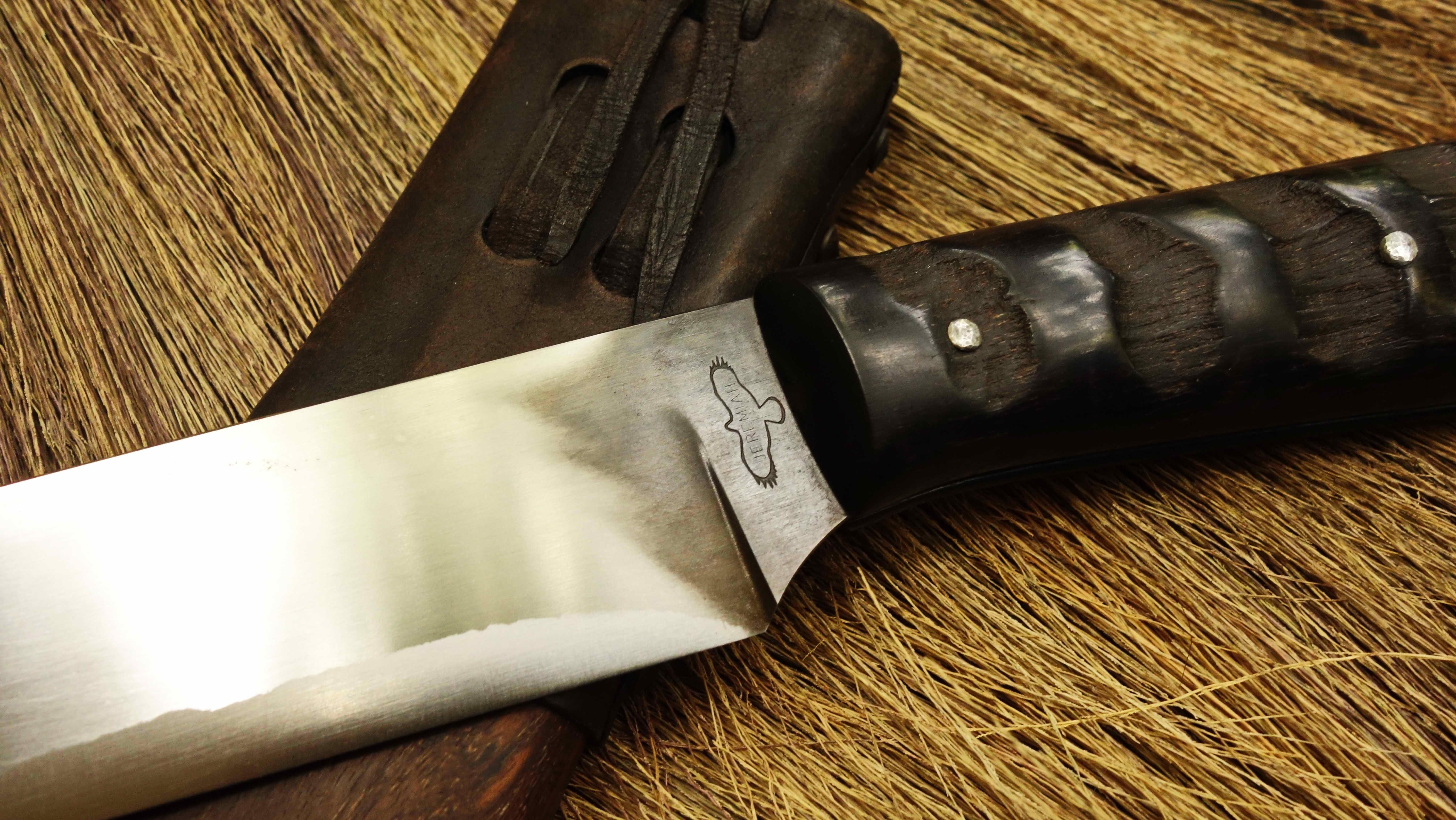
Larry, thanks for your nice comment, much appreciated. the front part of the ferrule with the bevels is 10 mm thick copper.I soldered this on the actual ferrule that wraps around the handle material. with an additional band soldered around.After this the massive part with the bevels is ground flush to the band of the ferrule. The images are from other knives, but the construction is the same.Don't let that confuse you. The blade has a ridged back the whole length. It is the first thing I grind on the knife blank.This gives me a nice center line and guidance to grind the tip to the middle. For me it is much easier than grinding the narrow finished back of the tip. I hope that answers the questions and you can make sense of my weird English.


-
Well, here is an example when I am not sure if I got the sense in English the right way. To prevent a misunderstanding, I hope my words didn't trigger a sign of disrespect.They were meant respectfully. I meant that I trust the fact that Father Marc is able to get much closer and deeper in touch with his subconscious mind than I can because of his disciplined way of life.
-
Gentlemen, my Sunday is already in full swing, while yours is still asleep. So here is one for the Sunday. Most of the time knives are named after predators, but not this one. O7 tool steel blade, copper ferrule and fittings and Sambar stag (the prey) The tang is riveted over the butt forming the pistil of the "wild flower". Cheers


-
JHCC, Apart from the fact that I unfortunately do not practice the abstinence of a monk, I can definitely agree to that.
-
Thanks a lot for the nice comments and response on my thoughts. Larry, I appreciate your words on the age context and I am humbled you get some inspiration out of my work. JHCC, I absolutely agree with your words on the term "tactical"....like, it links to some sort of "military readiness". A look that I really appreciate combined with the antique or vintage look of military weapons and equipment. Like gun blued or blackened steel, checkered textures and simple dark plain sinister wood. Frosty, Thailand is in war with Cambodia, I am lucky to live over 1000 km away.The Cambodian regime does not collect their fallen soldiers, they let them rot where they fell. Thailand collected them at the beginning, put them in coffins with their national flag and sent them to Cambodia. After the second clash Cambodia threatened Thailand if they do it again they will shoot....and the families of the fallen are desperate. It is very easy to pick a side for me in this case, not because my wife is Thai its because of absolute evil actions from the Cambodian regime. ...lots of people also looking to America and worry a lot for world peace....the world is a mess. But enough of that, I just had to say something about it.....its hard to push that stuff out of your mind when you sit hours alone at the bench. But what can I say...I hope you come good through the cold time in Alaska, I guess you would appreciate the weather here. You guys have a nice sunday. Cheers


-
Gentlemen, all the best and happy new year! Two iconic knife shapes which are originally hidden tang designs, translated into much easier to build flat tang constructions. Starting with 2 Tantos, followed by a Puukko, which I might have posted already 2 or 3 years ago, but I am not shure. I added it to give some context according to the topic. As the history of the shapes already presumes, they perform very well if not partially better than their historic hidden tang relatives. This, like already said is due to the easier construction of 3 piece flat tangs, and in use they are much slimmer and less bulky which performs better while they are carried. The handles are as comfortable as thicker hidden tang handles, just don't make them to flat. When the scales left 7-8 mm thick, there is enough meat to form them into a nice oval round form. The time around 1991, when I started making knives, those kind of knives were called "Field Grade Knives" in Ken Warners annual knife books. ....I gained a lot of inspiration form America and those books....that time most knives were more old school, and every edition I saw a bunch of knives that blew me away. ......nowadays I like nearly nothing(my bad), maybe one or two, too much tactical stuff, silly cnc blade geometries....all called tactical. In the early 90's the ones with micarta scales were called "tactical" ....I apologize for my old man rant. If you think in the old days it was all better, then you have clear evidence you are getting old.... The blades are all 1.2419.05 steel.....something like O7 on steroids. Handle scales is steel pinned Ceylon Ironwood and fosile jaw bone. So without further delay, some pictures. Cheers


-
Gentlemen, once again I am humbled by your nice comments, thank you very much! Frosty, this kind of sheath is tucked behind the belt.The clip prevents it from sliding downwards out of the belt and keeps it in position. Hefty, here is a link to the specific tool.Mine is practically the same.Feel free to ask more detailed questions. https://www.bladesmithsforum.com/index.php?/topic/9070-grooverfullering-cutting-tool/page/2/ Cheers

-
Decades ago, I read "Water Music" by T.C. Boyle...what a brilliant book...read it three times...at least. So good that the word "Water Music" has taken on a whole new dynamic for me over a long period of time... ...and it's been clear to me for a long time that I would make a knife called "Water Music" someday. Mother of pearl, copper, and 2519...the timeless shape was already predetermined by the narrow mother-of-pearl scales; it fits wonderfully into the Victorian era...the time when Livingston tore his hair out and tried to "understand" Africa.... An ear for the sheath brings it close to an interpretation of a "Gaucho knife"...the clip is made of heat-treated Ck101. My dear knife making and music making friend "Waldchris", who collaborated with me on the "Andaman Swipe" video, inspired me to complete the project with a video and composed and played the beautiful guitar track. Cheers Send feedback


-
Gentlemen, thanks a lot for the nice comments! Jono, the horn was cut, cooked in hot water and pressed while still hot between two platens.The platen on the structured side needs to be some kind of softer wood not to deform the horn structure.The other platen underneath was steel. It needs to rest in a pressed state for quite some time, at least a few weeks. Cheers

-
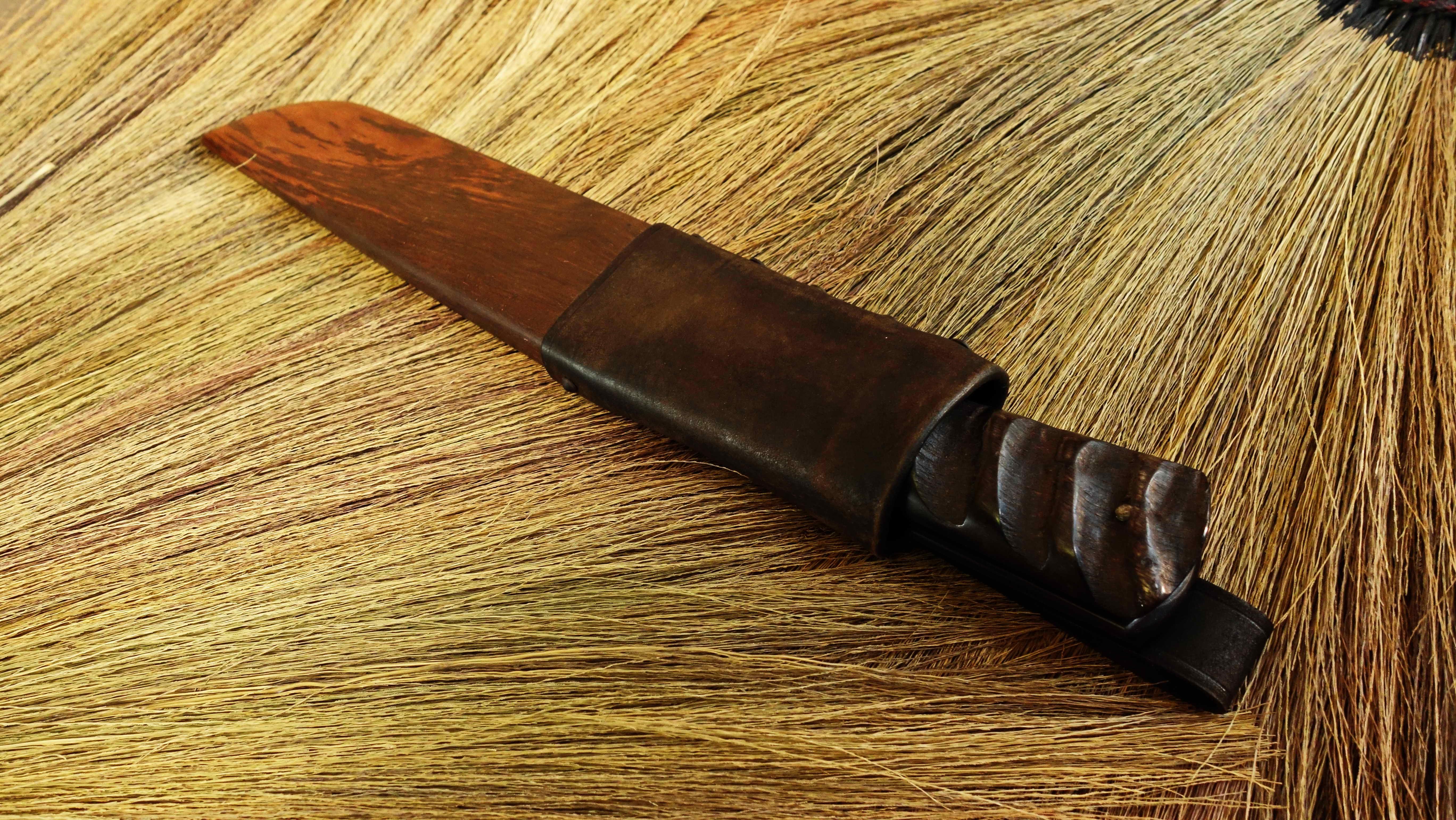
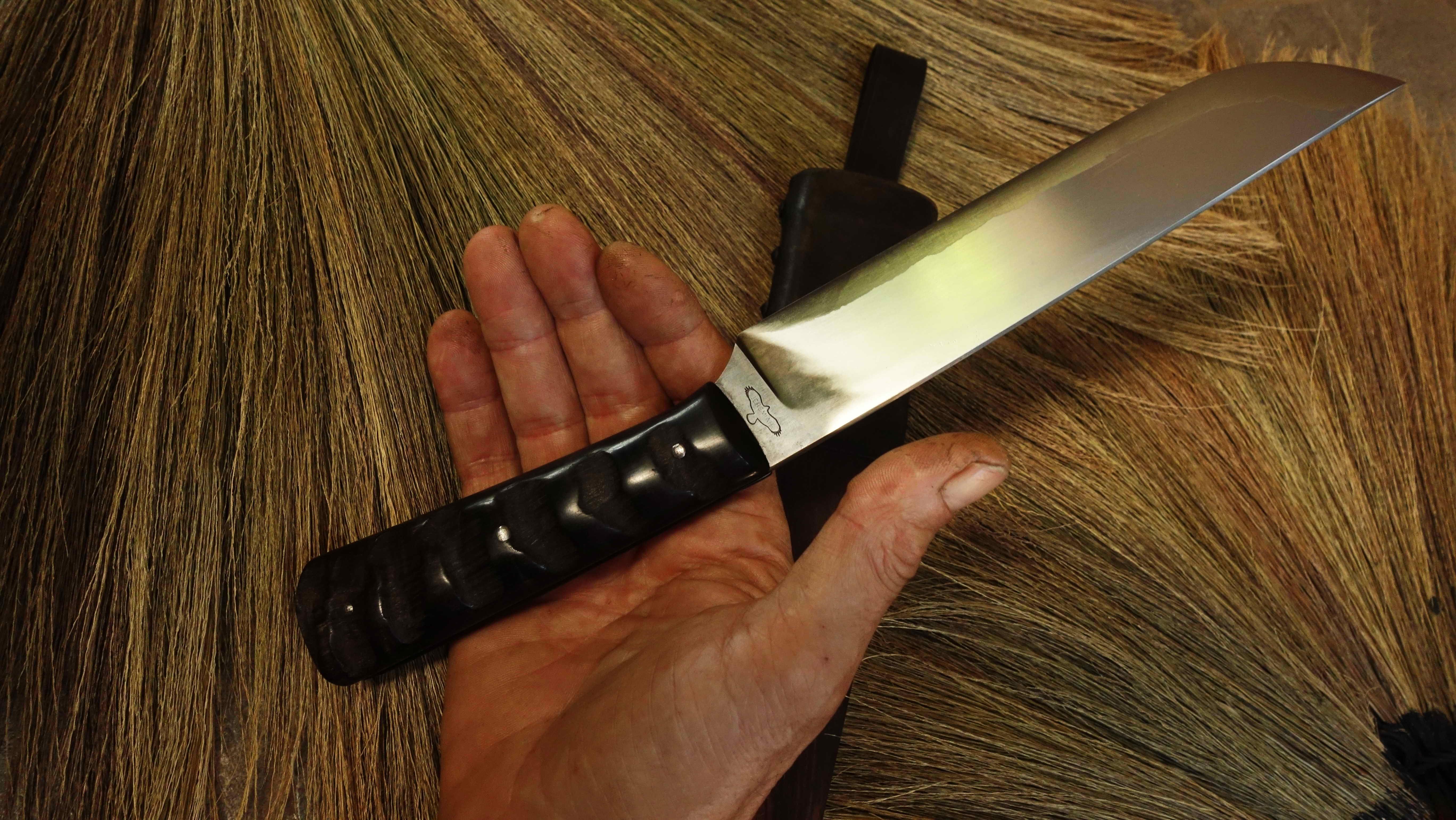
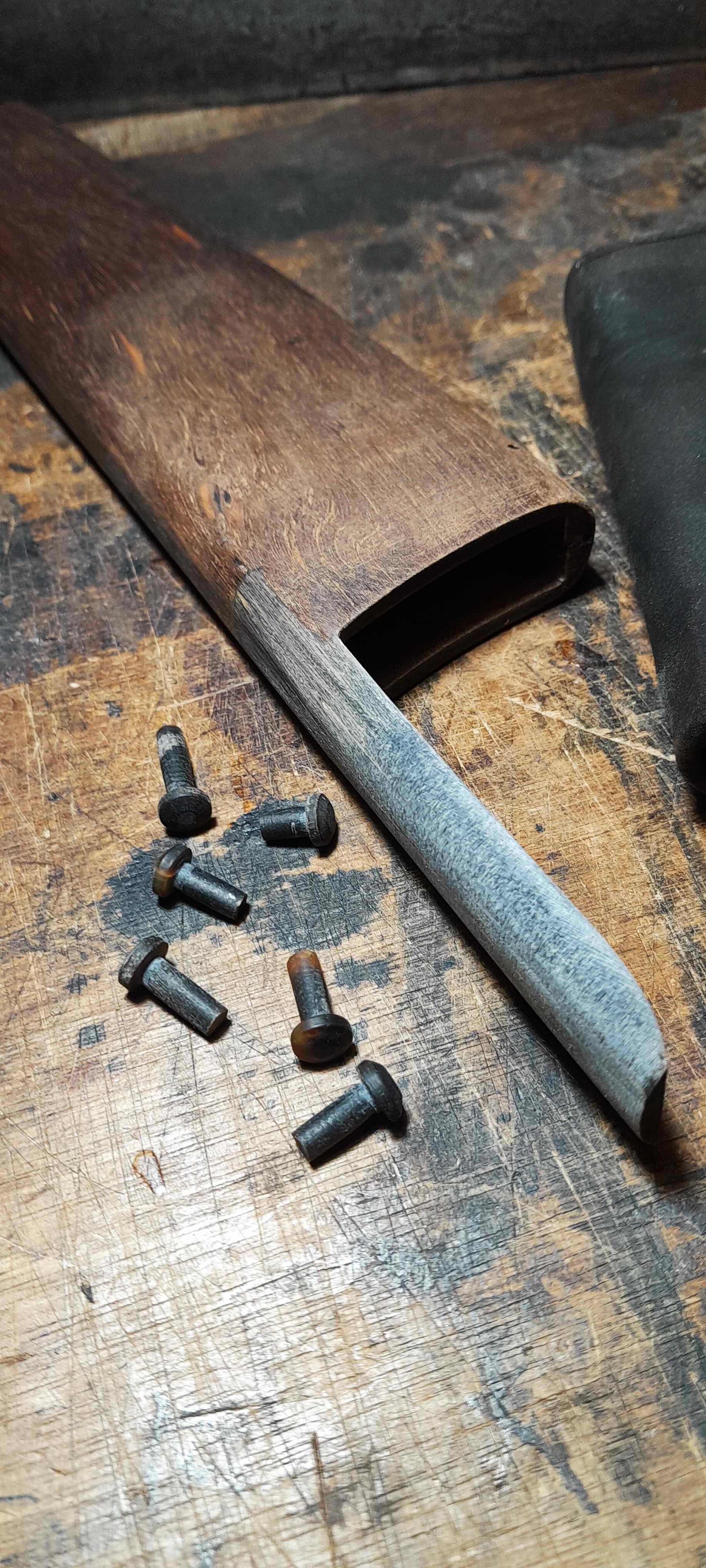
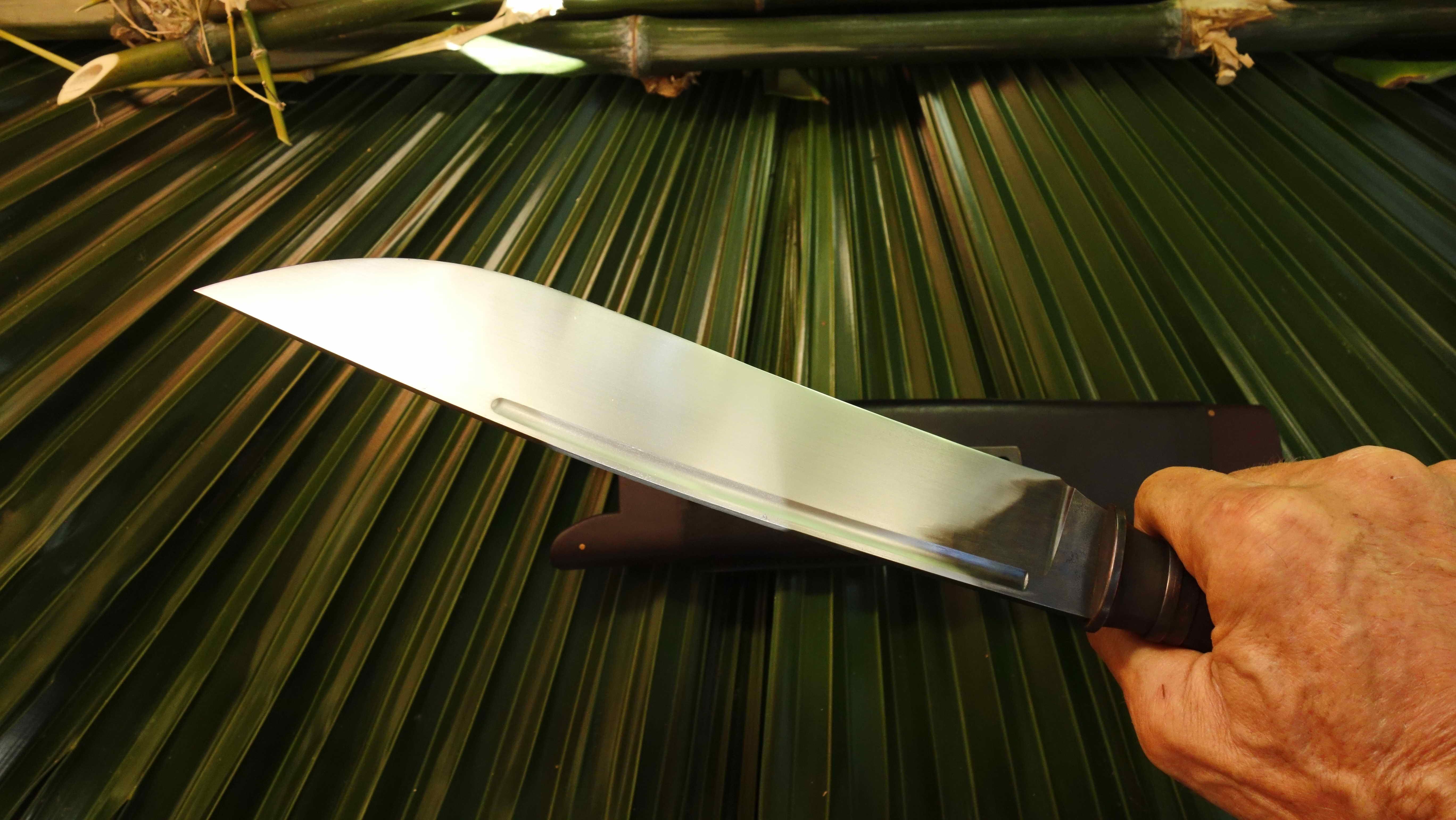
A few days ago I ran across the finish line of a "marathon" with this armored dog. The knife of a historical warrior of an indeterminate culture had to provide the pretext. Actually this kind of knives are my favorite to make. Up to a 10 inch blade, straight users with the flair of a weapon. The size of knife and sheath gives room for lines and details that triggers some kind of "brain movie" of which I often take my inspirations. ....and I have always been fascinated by armor, be it that of the samurai, western scale armor or other cultures around the world. and of course it was a lot of work as these things always were, even if it was only on a knife sheath. The blade has a length of 235 mm, overall length measures 380 mm and it is ground from 1.2419.05 cold work tungsteen tool steel of the Lohmann company in Germany. Bolsters are made from copper and the scales is steel riveted rams horn. The sheath is made from half tanned cow leather with a rawhide core and the velds are made from Steller sea cow bone. Armored with copper, steel and buffalo horn.Every piece is counter riveted from the inside and the belt clip had ist own springsteel heat treatment. Cheers


-
Thanks Frosty!
-
Thanks a lot for the fine comments, Gentlemen, much appreciated! An internal detail about the sheath is still worth mentioning. To protect the leather part as well as keeping the knife in good position, I laminated the throat with some buffalo horn. Cheers


-
I forged the blade in summer 2023 in Germany at the location of a good friend of mine who breeds horses. Lots of horse shoe stuff and horse shoe rasps but nothing suitable for a good knife blade, except a box containing about 50 brand new German high quality files. Not a single one was worn down or even used at all.... so we used new files and I must admit I had to overcome a certain inhibition I have my preferred knife steels mostly Tungsten alloyed but simple plain file steels with 1+% Carbon and a splash of chromium always results in a heck of a blade... ....if every step of the forging and heat treating process is done well. A close up shot of the blade shows a fine wootz-like structure of the matrix and the carbides which is much appreciated. Finished with Bongossi Ironwood, copper, bamboo and water buffalo leather and the tang is riveted over the butt. Cheers


-
JHCC, George and Larry, Thanks a lot for the nice replies !


-
The term "Puukko" is famous all over the knife world....it is remarkable how many different knife shapes are named " Puukko " even if they have no features on the design of an original traditional Puukko....but never mind. And all the different spellings are numerous, but according to Finnish information on the Internet it is spelled with double U and double K. ...and besides that, there are a few Finnish traditional Puukko shapes. All of them have a straight tip blade combined with different handle shapes. One of them is the barrel shaped handle, which is in my opinion the essence of a tool handle. Here is one with traditional rhombic blade ground from O7 with the tang riveted over the butt, copper fittings and a stacked leather handle. The sheath is made from semi tanned leather with a rawhide core. Blade length measures 100 mm and 220 mm overall. A traditional Thai harvesting basket made from bamboo serves as a back drop.... You guys have a nice weekend. Cheers


-