BensonForge
Members
-
Joined
-
Last visited
Everything posted by BensonForge
-
Thanks for the great information and detailed response. Seems like there's a lot I have to learn still since I don't exactly know the answers to those questions.
-
Hi everybody, I'm becoming increasingly more interested in attempting to smelt some iron. I have a lot of learning to do, but I think I have a pretty good handle on the general process. I need to build a furnace, get it hot, then spend an entire day with a few friends loading buckets of ore and charcoal into it, then I have to get the bloom out of the furnace and compress it a little bit on a stump with a big wood mallet. Seems like something I could pull off, but I want to know more of the details before I get started. Any advice and any reading material you can recommend is appreciated. There are lots of good iron ore sources around me. I have some hematite. I also have some strong magnets that I could use to separate black sand. How does the type of ore you start out with affect process and the end product? Would a sluice box be effective for separating iron from sand? If you've ever had the pleasure of visiting a historic blast furnace like the McIntyre blast furnace at the Tahawus mine in upstate New York, it's a real step back in time. You get a serious sense of what those old timers were doing to make iron. I can almost feel what it would have been like to be there when it was operating back in the day. Very awe inspiring. It's all made of stone. When I watch videos of people doing a smelt, most of them are using furnaces made of clay with some straw mixed in. Why do the small furnaces use clay as opposed to a stone structure lined with the clay mix? All the videos I've watched just say "clay" and don't specify anything about it. What qualities am I looking for in the clay? Do I want pure kaolinite to start out, or can I just dig up any old clay and make a smelting furnace with it? Some clay I've found has a kind of sulfuric smell to it. Will that clay ruin the iron? How do you end up with the desired carbon content of the iron or steel? Once the bloom is all done and you've compressed it and then let it cool, how do you refine it into a usable piece of iron, and how do you check to make sure that the iron is good for whatever purpose you want to use it?
-
I paid $50 for the anvil. Good deal?S Frosty said too heavy of a hammer is what probably caused the damage to the anvil. How heavy of a hammer should I be using on this anvil? And holy smokes, I've never seen old rusty simple tools go for as much as post vises. I see one already sold for $1200 near me. most are in the $250-$500 range. I'm all for getting a good old one when I find the right deal. I have a couple Yost vise screws that I was going to use in my wood shop. Are those anything I could use to try to fabricate a post vise? I'm also trying to learn welding, haven't gotten a chance to try stick yet.
-
Thanks everybody!
-
It would be awesome to find a mentor or go to the meetings, I will definitely look into that. Frosty, Maybe I referred to the "liner" as the wrong thing. I haven't gotten a chance to read the Jargon section of the forum yet. Yes, I was talking about a solid fuel pan forge and asking about the sand and clay mix rammed in just as you described. Whatever I'm supposed to call it, thanks for the explanation of how it works. How often does that need to be re done?
-
Thanks for the tips, everyone. I won't try to make a forge that is also a foundry. That is definitely surprising that a forge wouldn't heat a shop. I see that most people use fire clay mixed with sand for forge liners. Does this require any special firing process, or will using the forge fire the clay? I'm also noticing that all of the solid fuel forges I've seen so far are like an open pit and don't have a top, and the gas ones do have a top, more like an oven. No need for a top with solid fuel?
-
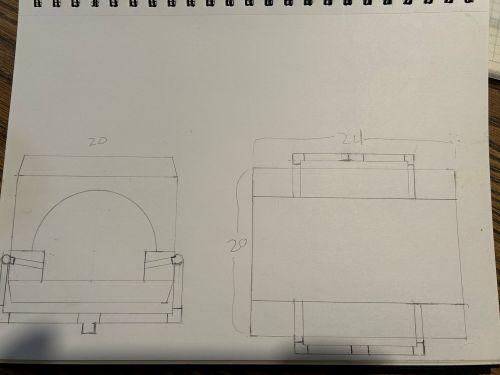
I want to make a forge using some stuff I already have. I'm totally new to all this. Can you make one thing that works well for blacksmithing and also gets hot enough to melt metals like copper, brass, or aluminum for casting? I would like to make something that will get hot enough to try to make damascus or forge stainless steel. It would be cool to make something that I can use inside to heat my workshop in the winter, but also roll it outside for summer time forging. I have 2 old roasting pans, and also 2 brake drums. I came up with an idea for a side blast forge with a 4 way split so air comes in both sides. A couple months ago I made a brick of DIY refractory cement from a recipe I found online, it was type s mortar and perlite. Seems pretty fire proof but I never gave it any real test. Then I came here and saw the warning to not use portland cement. Is perlite a good thing to use? Could I mix perlite and refractory mortar, like Mortaclay-40d to make something I can cast in forms? Here's the stuff I have and a basic plan I came up with. What would you do?
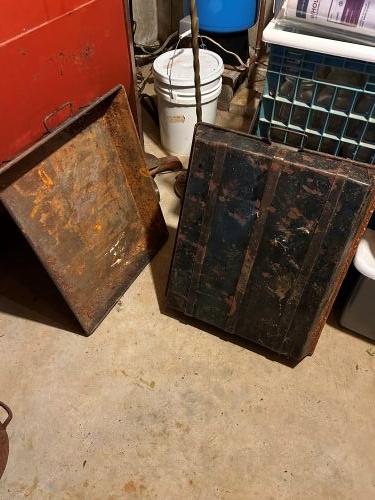

-
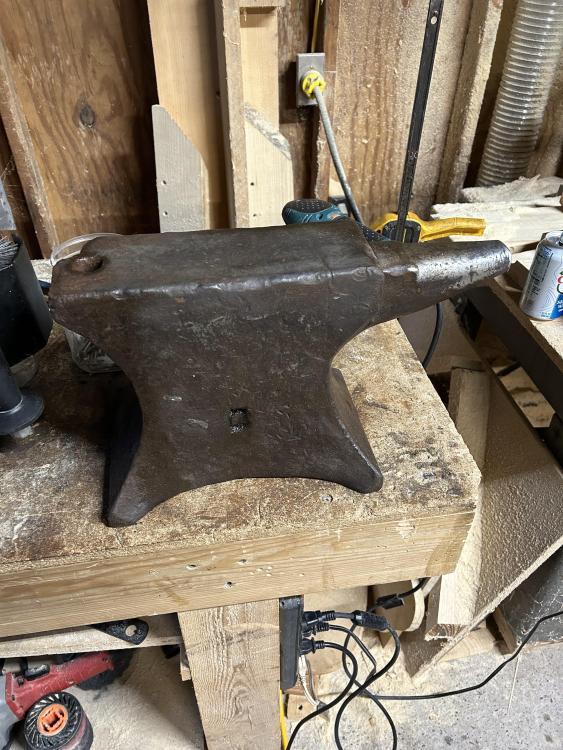
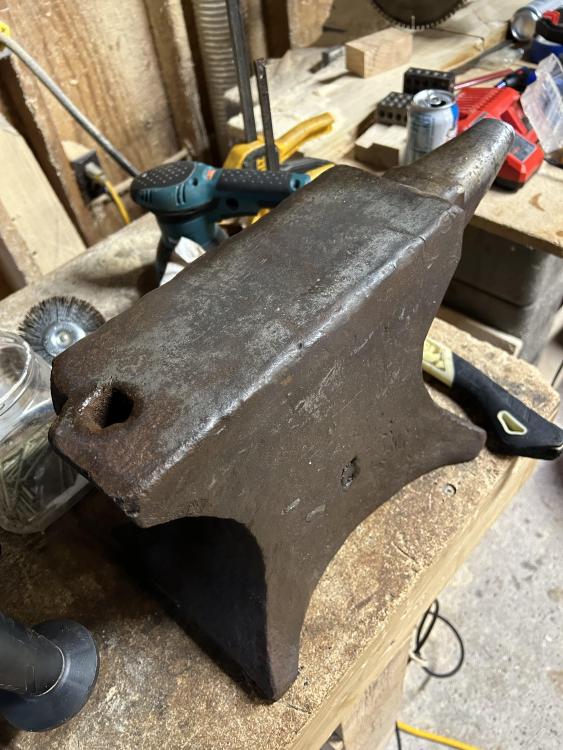
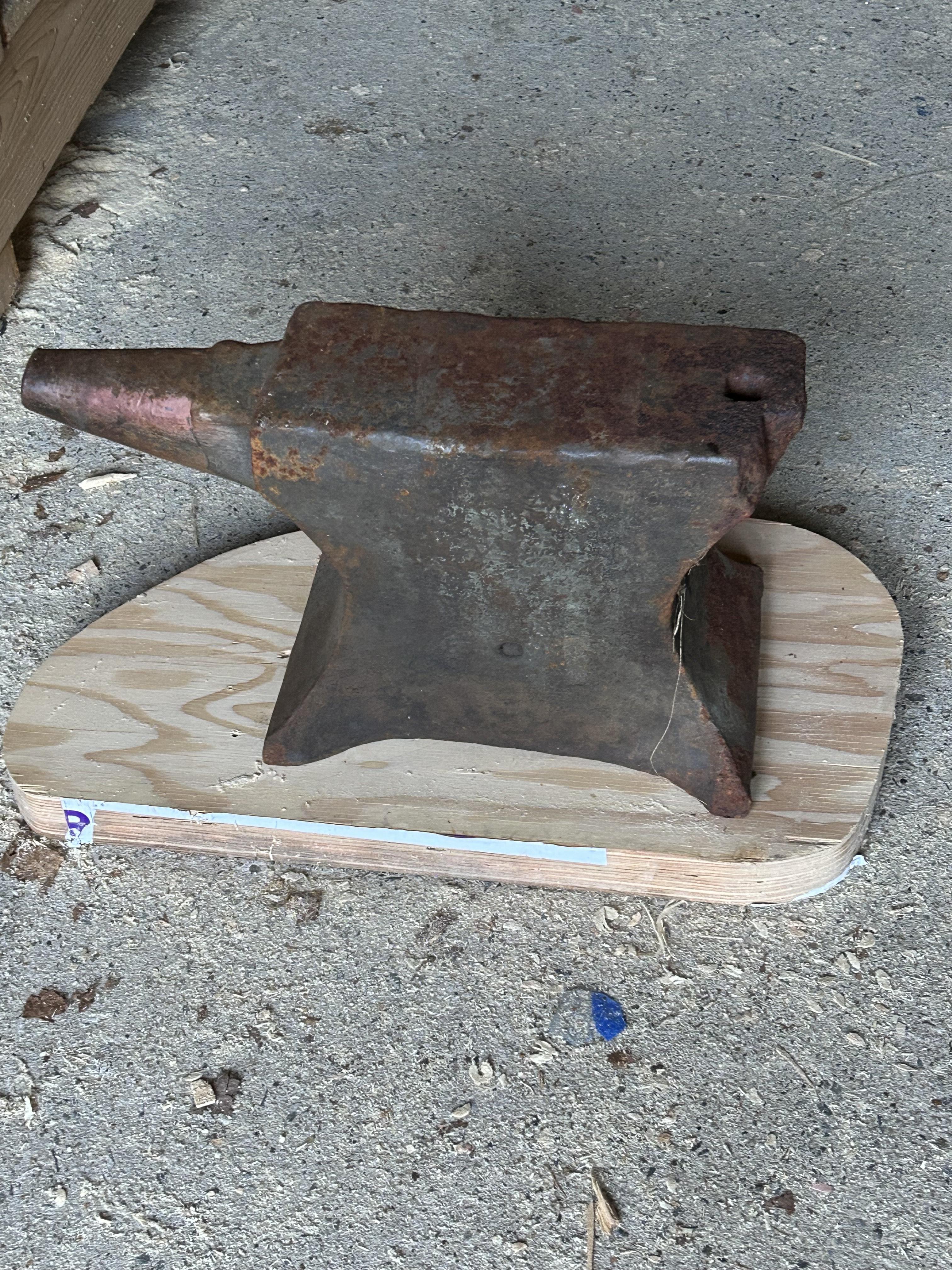
Hey everybody I've always wanted to try blacksmithing, so when my neighbor down the road put an anvil out for sale I grabbed it. I don't really know anything about blacksmithing beyond some of the most basic stuff. It looks like it is a forged anvil because it has mouse holes. I was able to pick it up to get it in my car. I would guess it weighs at least 100 lb but probably not too much more. I don't see any kind of maker marks anywhere on it. It looks like there is a mouse hole that didn't get forged all the way or something, it has the shape of a mouse hole but there is metal inside it. It looks like it has a crack near the horn, and there is also a large chunk broken off the back end of it by the hardy hole. How can I figure out where this thing came from? Should I be afraid of damaging it further while I use it? Like is it gonna break at the crack, or should I not use the hardy hole? I'm wondering about grinding some kind of shape where the chunk broke off. I'm also wondering about making a jig to go onto my Shopsmith 10er that could hold it upside down and pass it over a sanding drum to flatten the face of it. I saw someone using and angle grinder on Youtube to clean up their anvil. Does this hurt the temper at all? I can turn the sanding drum down really slow. Like I said, I have no experience, but it seems like metal bounces off it real nice. How much of a difference will that even make for me? What would you do with it?