zip
Members
-
Joined
-
Last visited
Everything posted by zip
-
I agree with review of the applicable codes, which I have been working through in parallel with this discussion. I thought the best route, before contacting the fire chief, was to educate myself prior to talking the application over with him so that I give the best solution for this situation. I think the alternate design, with the flue at or extending past the face of the building meets NFPA low-heat application. Single wall, non-galvanized pipe would be suitable. Obviously the preference would be extending the flue beyond the building, and I think this could be done without too much hassle. As far as clearance for air intakes, pedestrians, and nearby windows is no issue. The issue gets a little muddy whether a class A chimney is required. If that were the case, a double-walled pipe and termination above the roof line would be required. But, because this isn't a device used as a primary heating source, I'm not sure where that falls exactly. The local codes, of course, mention to refer to the manufacturer's instructions, which there are none. I've considered a propane forge, and would use an extraction hood with it for the CO (along with a monitor), but the issue of storing and using a propane cylinder indoors comes up. OSHA allows storage indoors, but use is another issue. Storing a tank outside and piping through the wall is not possible, either. And, I don't like the idea of a bomb in the same area while forging. Having a concrete-encased acetylene tank is a different story.
-
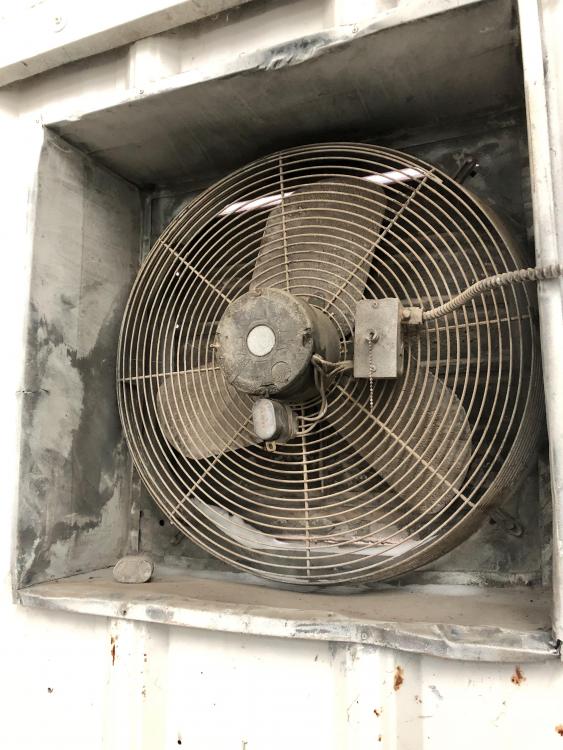
You're correct, the duct was planned to terminate right at the face of the exhaust fan. I don't really have the option to create another penetration through the wall or roof. I've attached a picture showing the wall exhauster. As I do not use the wall exhauster for any other activities in my shop, I have an alternative idea: Not using or completely removing the wall exhauster, and propping open the louvers permanently. The current fan cavity could be capped off and sealed, and the flue could pass through the cap and terminate in the fan cavity. I'd put a draft inducer in-line rated for use with coal stoves, and have it vent through through the sealed wall exhauster opening. So essentially this would be a sidewall / direct vent chimney which I believe there is no issue with this configuration from a building code / safety standpoint. I've attached another quick sketch, this time showing the view from the side. I should also mention there are no doors or windows of any kind of the side of the building where this would vent. It appears that sidewall / direct venting is up to code here as well. Thanks guys!
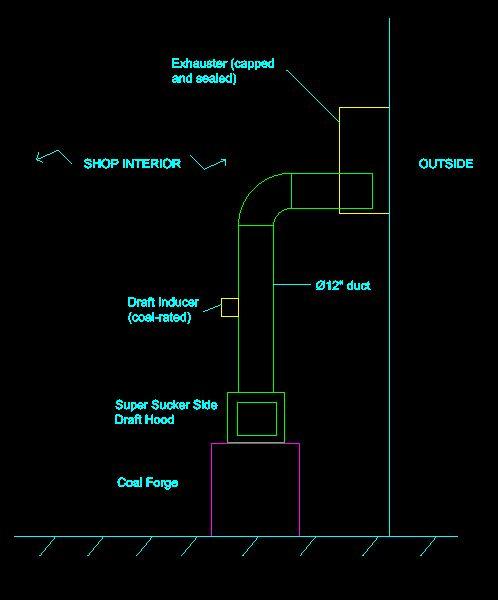
-
Makes sense guys, thanks for the info!
-
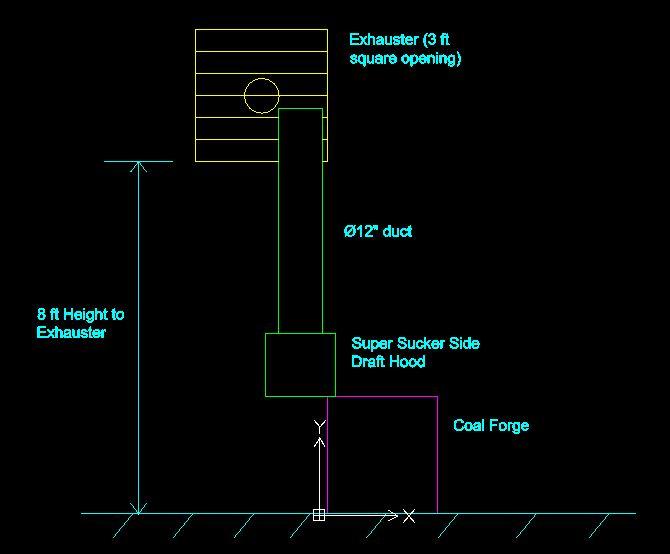
I have not actually set up the hood for the forge yet, I wanted to get some input before I start fabricating the super sucker. My concern is that the wall exhaust fan may cause some of the smoke from the forge to bypass the super sucker, which may allow some soot, etc. to end up on equipment in other parts of my shop. I don't have any issues with the exhauster drawing in room air along with the forge smoke, so long as it doesn't create an issue with the super sucker being bypassed at the forge. The exhauster is used to ventilate the building for other activities in the shop such as welding, or when I use one of the heat treat furnaces. I'm confused on why the wind would be of concern inside the building? Maybe I'm missing something. The view of the drawing is looking at the back wall from the inside of my shop. Thanks for talking this through with me.
-
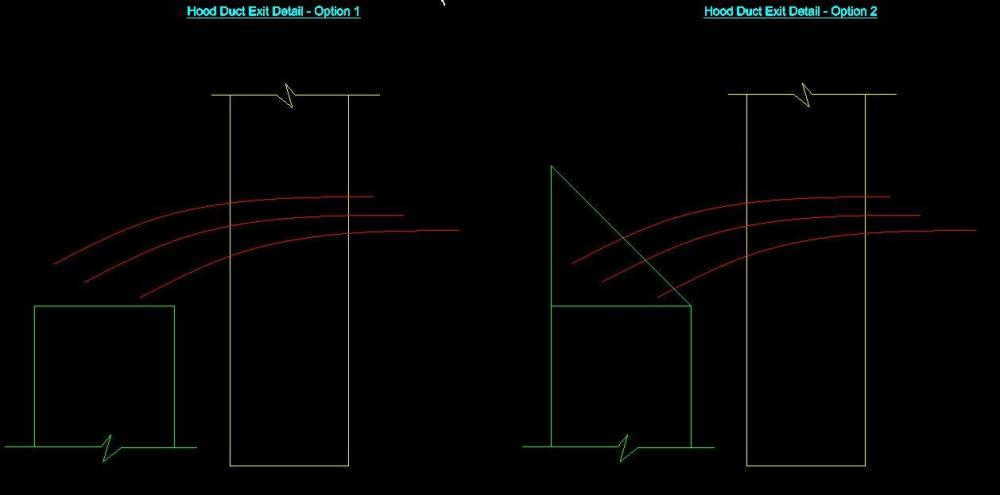
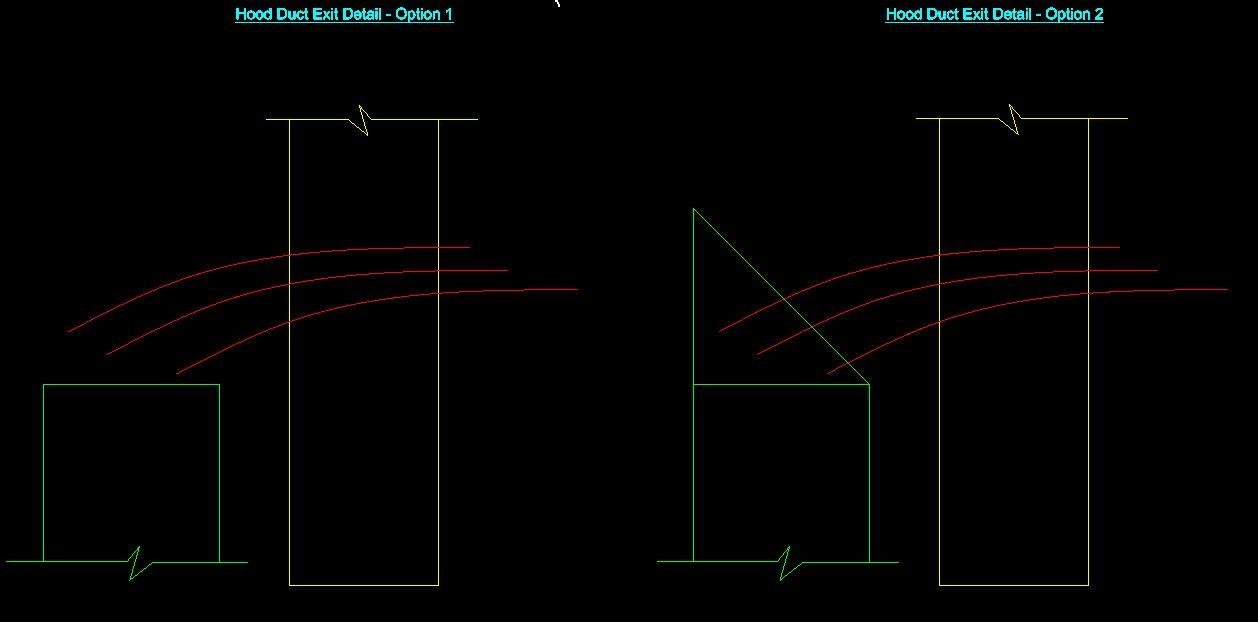
Hi All, I'm new to the forum and have recently acquired a coal forge (Centaur Forge 30" wide model). I'm planning on installing the forge indoors, and had a question about using the super sucker side draft hood in conjunction with a wall-mounted exhauster. I've attached a few sketches to illustrate. The exhauster is roughly 3 ft square and is louvered. If I had to guess at the CFM rating, I'd guess it to be at least 1500 CFM. It's powerful enough to where it will suck the man door closed in my 1500 sq ft shop unless I crack a window open. So the question is, will using a side draft hood in combination with the wall exhauster cause any issues? Will the wall exhauster negate the effects of the side draft hood, making it pretty much useless? I would think if anything the super sucker would help direct the smoke up to the wall exhauster. I've also attached a sketch showing two different duct exit details in front of the wall exhauster. I would guess the 45 degree exit may be more preferable to a cut off duct? Thanks for the input, Ben